REVIEW · CASCAIS
Cascais: Glamour and Decay by The Lisbon Coastline – Private Tour
Book on Viator →Operated by Lisbon Art & Soul · Bookable on Viator
Cascais looks polished, then shows its scars. This private 3 to 4 hour walk along the Lisbon coastline mixes story-heavy landmarks with photo stops, from Praia da Rainha to lighthouse drama and garden calm. You also get the practical benefit of a guide who keeps the route easy on your feet while still hitting the sights that make Cascais make sense.
I especially like the private pacing—this is not a shove-you-along group slog, and your guide can slow down for the parts you care about. I also like that you get a professional photographer guide, which helps you spot good angles and timing without turning the day into an “everyone pose, now” routine.
One thing to consider: it’s a walking tour with moderate fitness expectations, and it doesn’t include transportation or hotel pickup (unless you chose that add-on). If you’re not into lots of steps by the coast, plan for comfy shoes and a steady pace.
In This Review
- Key points before you go
- Why Cascais glamour and decay work so well on foot
- Price and value: what you’re really paying for
- Getting your bearings: Praia da Rainha as the tone-setter
- Centro Histórico de Cascais: the fishermen-citadel-beach triangle
- Palacio Seixas: when Cascais turned court-glam
- Fortaleza de Nossa Senhora da Luz: fort walls plus contemporary art
- Centro Cultural de Cascais: the Sommer House and modern revamping
- Marina de Cascais: Count of Arnoso to a modern shoreline
- Casa de Santa Maria: Raul Lino’s seaside architecture
- Santa Marta Lighthouse Museum: drama with a recent revamp
- Museu Condes de Castro de Guimaraes: one house, multiple style languages
- Marechal Carmona Park: where the seaside noise finally drops
- Walking between Cascais and Estoril: the coastline you came for
- How the photographer guide changes the feel of the day
- Getting the most out of your private guide
- Who this tour is best for
- Should you book this Cascais private tour?
- FAQ
- How long is the Cascais private tour?
- Where do we meet, and where does the tour end?
- Is admission included for the stops?
- What is included in the tour price?
- Do I need my own transportation?
- Is this tour suitable for children?
- Can I cancel for a full refund?
Key points before you go
- Guide-led stories that connect the dots from fishermen to court town to modern art
- Free entry at the listed stops, so your day stays predictable on costs
- Coastal walking with sea views toward Estoril, not just museum-door sightseeing
- Photo support from a photographer guide, useful at viewpoints and facades
- Max 12 people, so it stays personal even on busier days
- Easy start location at Estação de Cascais, with a walk-and-finish route in town
Why Cascais glamour and decay work so well on foot
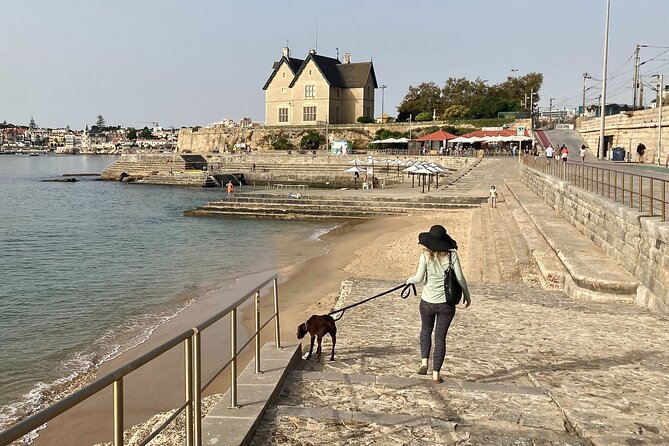
Cascais has two faces. One is neat and sunlit, the other shows the weathering—old fortifications, working-harbor history, and buildings that have clearly lived through different eras.
That contrast is exactly why this tour hits. You’re not just collecting photos of pretty streets. You’re walking through a timeline where the sea, the fort, and the palaces all explain each other. One moment you’re at a beach that sets the scene; the next you’re at landmarks that show how power and money moved in when Cascais became a fashionable court town.
And because it’s private, you get a guide who can answer your questions without waving you back into the crowd. In the past, Luís has handled intense crowd conditions (including when a major figure was in town) by keeping the walk organized and focused. That matters, because Cascais can feel busy in the wrong places and calm in the right ones.
You can also read our reviews of more private tours in Cascais

Price and value: what you’re really paying for
At $36.04 per person for a private tour that runs about 3 to 4 hours, the cost can be a bargain if you’ll actually use the guide time. This isn’t just someone pointing out buildings from a distance. You’re paying for a local who can connect architecture, history, and place names into a story you’ll remember.
Two value boosters stand out:
- Many stops are shown with free admission, which helps keep extra fees from creeping in.
- You’re getting both a professional guide and a professional photographer guide, so the tour gives you more than narration—it helps with seeing and photographing well.
Also, timing matters here. The tour is commonly booked around 44 days in advance on average, which suggests it’s in demand. If you have flexible dates, great. If you don’t, don’t wait until the last minute, especially in peak coastal months.
Getting your bearings: Praia da Rainha as the tone-setter
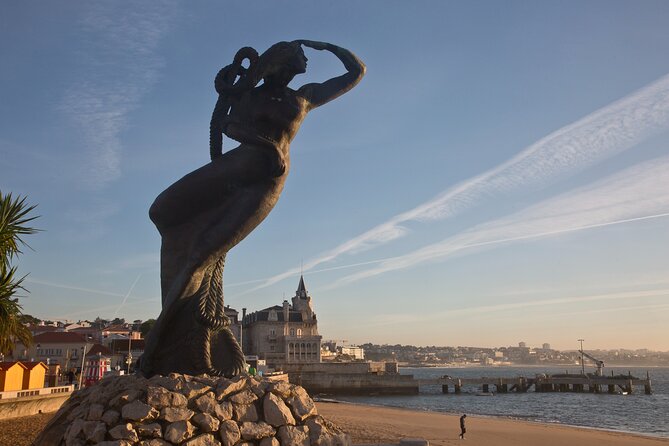
Your walk starts at Estação de Cascais, then moves you toward the iconic Praia da Rainha. This stop works as a launch point. The beach is photogenic, yes—but more importantly, it’s used to explain where Cascais sits and why the town developed the way it did.
Expect a short introduction (about 15 minutes). The goal isn’t to linger at the sand; it’s to get context fast: sea-facing geography, why people settled here, and why the coastline became so important.
If you’re the type who hates arriving on a new place and feeling lost, this first stop is a relief. It helps you understand what you’re about to see before you see it.
Centro Histórico de Cascais: the fishermen-citadel-beach triangle
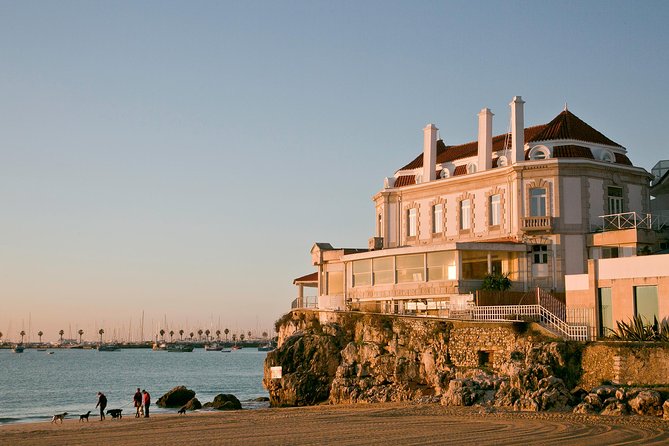
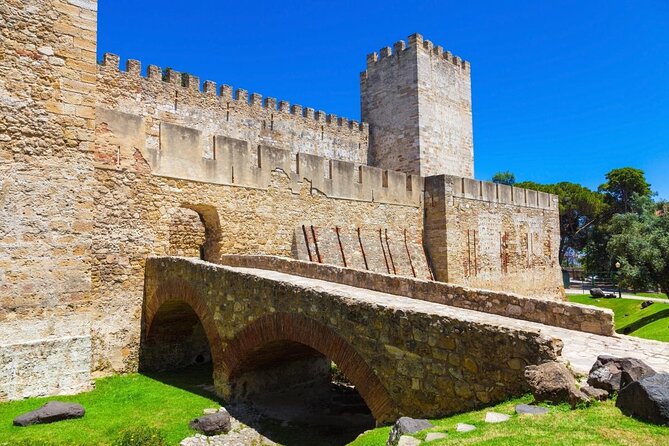
Next comes Centro Historico de Cascais. This is where the town’s working roots meet its walls. You’ll get the feel of the old fishing village, the citadel area, and how the beach and the harbor shaped daily life.
This stop is also short (around 15 minutes), which is perfect for keeping energy up. You’ll get the highlights without turning the afternoon into a slow march through every alley.
A practical note: because this is a walking route, you’ll want to pay attention at the start of the tour. The guide will be telling you what to look for—street scale, facade details, and connections between spots—so if you zone out, you miss the point.
Palacio Seixas: when Cascais turned court-glam
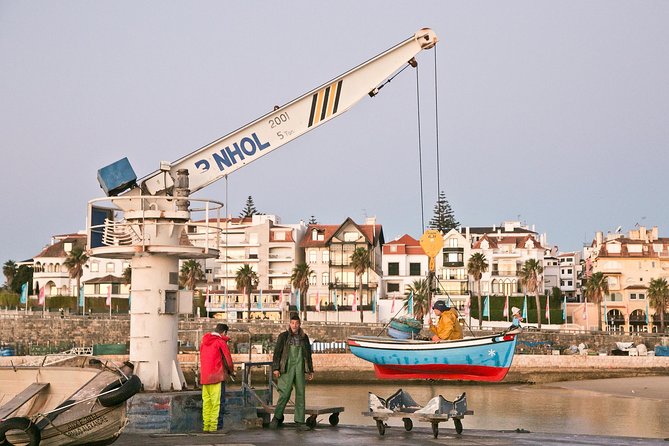
Then you move to Palacio Seixas. This is a turning-point stop. It’s used to illustrate Cascais’s shift from a small harbor to a glamorous court town.
At about 10 minutes, it’s not an in-depth museum visit. Instead, it’s more like a “this is what changed” moment. The value here is interpretation: you’ll understand why people of influence chose Cascais, and what their arrival did to the town’s look and priorities.
If you like history that explains the present—not history that just lists dates—you’ll enjoy this style of stop.






Fortaleza de Nossa Senhora da Luz: fort walls plus contemporary art
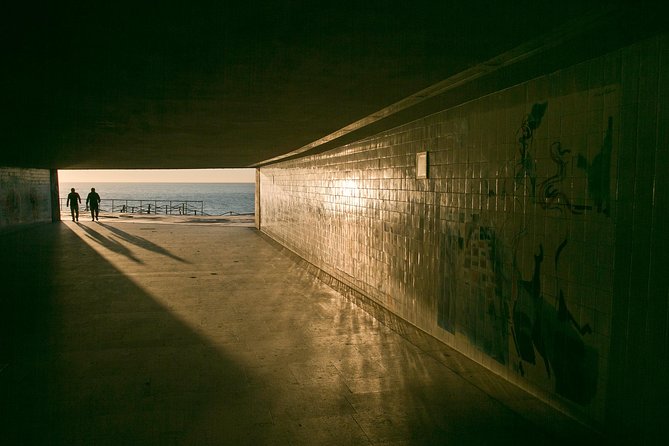
One of the more intriguing parts of the route is Fortaleza de Nossa Senhora da Luz. Yes, it’s about the citadel and historical landmarks. But the stop also points to contemporary art developments, so you’re not stuck in only one era.
Expect roughly 15 minutes here. It’s long enough to get your bearings inside the larger fort setting, but short enough that you keep moving while the day stays bright and your energy holds.
The downside? Fort-style stops can include uneven ground and sightlines that aren’t perfect in every light. That’s not a dealbreaker, but come prepared for a bit of uneven walking and plan to look up as much as you look forward—this place rewards that habit.
Centro Cultural de Cascais: the Sommer House and modern revamping
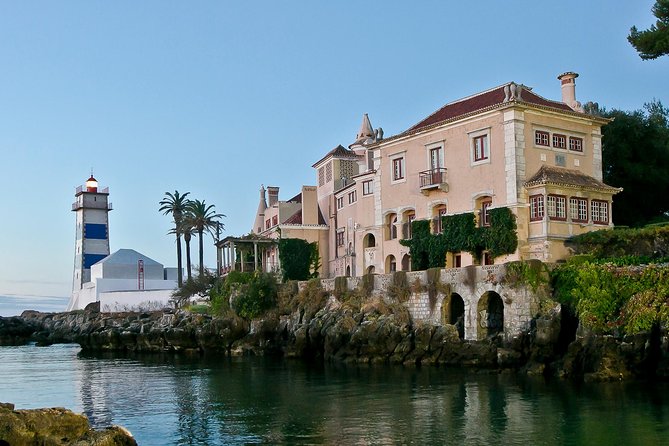
After the fort, you head to Centro Cultural de Cascais for the Sommer House and the cultural center area. This is a longer stop (about 20 minutes) because the architecture and the “revamped” story matter.
This is the kind of stop that pays off if you enjoy design details: how older spaces are used now, how the building works with the setting, and why cultural investment still feels like part of Cascais’s transformation.
If you’re traveling with someone who thinks art stops are boring, this one can still work because the guide frames it as a continuation of how the town evolved—not art-for-art’s-sake.
Marina de Cascais: Count of Arnoso to a modern shoreline
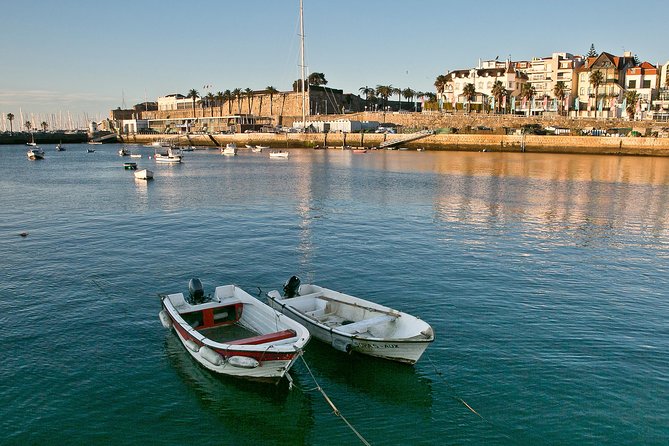
Then you reach Marina de Cascais. This stop is about legacy and change—specifically the legacy of the Count of Arnoso, and then the more recent story of how the marina grew beyond his property.
It’s only about 10 minutes, but it’s an important 10. The marina area can look like a generic waterfront if you don’t know what you’re seeing. With the guide’s explanation, you start recognizing the “why” behind the waterfront’s shape and status.
There’s also a fun reality check here: you’re seeing wealth and leisure, but you’re also standing on ground tied to the town’s harbor roots. That contrast is part of Cascais’s charm.
Casa de Santa Maria: Raul Lino’s seaside architecture
One of the most memorable stops on the route is Casa de Santa Maria. It’s described as an amazing house by the sea, and the guide explains the genius of architect Raul Lino.
You’ll have around 15 minutes, which means you’ll get a focused look at the features that make the building worth attention—especially if you like when architecture is treated like a language, not just a photo backdrop.
If you’re hoping for a long sit-down visit inside a building, this isn’t that kind of stop. But if you want to understand what you’re looking at from the outside and connect it to why the designer mattered, you’ll likely feel like you “got it” by the time you move on.
Santa Marta Lighthouse Museum: drama with a recent revamp
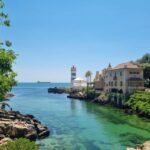
Then comes Santa Marta Lighthouse Museum. The lighthouse is dramatic, and the stop adds another layer: the recent revamping.
This is about 10 minutes. In that short window, the guide’s job is to show you the lighthouse’s presence and explain what changed in the museum experience. That makes it useful even if you’re not planning to spend time on interior displays.
Practical tip: lighthouse areas are often windy and bright. If you’re bringing a camera, keep an eye on exposure and protect your lens from sea spray.
Museu Condes de Castro de Guimaraes: one house, multiple style languages
Next is Museu Condes de Castro de Guimaraes, a house often described as somewhere between a castle and a manor. Here you’ll learn how the building mixes styles—Romanesque, Gothic, Manuelino, and Moorish Revival.
You’ll get around 15 minutes, and this is the stop where a short, guided explanation can make a huge difference. Without context, style mixing can feel random. With the guide’s breakdown, it turns into a pattern: the building is showing how different influences landed here over time.
If you love details (arches, trim, materials), this stop is a good use of your attention. If you don’t, you’ll still come away with at least one clear takeaway: Cascais has always been a meeting place, even in architecture.
Marechal Carmona Park: where the seaside noise finally drops
The final sightseeing stop is Marechal Carmona Park. It’s described as a Romantic garden and one of Cascais’s most popular green spaces. And yes, there are cocks, chickens, and poultry now roaming freely.
This is about 15 minutes, and it’s a smart close-out. The park gives you a breather after forts, palaces, and museums. It also offers a change in pace—more quiet, more shade, more space to look around without being forced into quick-photo mode.
One consideration: parks mean uneven paths and occasional soft ground. If you’re wearing flats with poor grip, you might feel it. It’s not extreme, but it’s real.
Walking between Cascais and Estoril: the coastline you came for
The overall route includes a walk between Cascais and Estoril to admire the coastline scenery. This is the part that often makes the tour feel more like a day out than a list of stops.
The best way to experience it is to stop treating it like a marathon. Let the guide’s story anchor you, then use your eyes to connect the sea views to what you heard—fort walls line up with the harbor logic, and palaces make sense when you understand the “why” of the beachfront appeal.
Daylight can also affect pacing. One guide note from a past tour: when days are shorter, the tour can feel a bit shorter than usual. So if you’re traveling in fall or winter, don’t plan a late-night dinner right after; give yourself a buffer.
How the photographer guide changes the feel of the day
This is not only a talking tour. Because there’s a professional photographer guide included, you can expect extra attention on where to stand and how to frame.
I like this setup for two reasons:
- You avoid wasted time—no fumbling for angles while the group moves on.
- You can get better photos without turning every stop into a performance.
Even if you’re not an avid photographer, this helps you slow down at the right moments. It also makes the day feel more thoughtful, like you’re being shown how locals actually see the places.
Getting the most out of your private guide
A private walking tour works best when you treat your guide like a local friend with authority. Luís, for example, is described as punctual and good at answering questions in a thorough way, and he also sends practical follow-ups after the tour.
To get that same value, come with even one question in mind. Examples:
- What should I do next in Cascais after this walk?
- Are there nearby viewpoints worth the short detour?
- Which parts of town feel most “Cascais” versus “tourist”?
You’ll usually get more than a generic answer when the guide knows you’re paying attention.
Who this tour is best for
This tour fits best if you want:
- A guided orientation to Cascais rather than random wandering
- History and architecture explained in everyday terms
- A manageable walk with a small group
- Better photos without carrying the whole burden yourself
It may be less ideal if you:
- Want lots of long indoor museum time (most stops are brief)
- Need step-free access guarantees (the tour is listed as moderate fitness)
- Are expecting hotel pickup and transportation to each area
Should you book this Cascais private tour?
If you’re visiting Cascais for the first time and want the fastest path to understanding the town, I think it’s a smart booking. The combination of free-entry stops, a private setup, and a guide who connects sea views to the built world makes the time feel well spent.
I’d especially recommend it if you care about architecture, forts, and how Cascais shifted from harbor life into fashionable coastal luxury. If you prefer a relaxed pace and clear story, this is the kind of tour that makes the town click quickly—and keeps you from feeling like you just walked in circles.
One last nudge: wear comfortable walking shoes and plan to start your afternoon at a steady pace. Cascais rewards you when you slow down just enough to notice.
FAQ
How long is the Cascais private tour?
It runs about 3 to 4 hours.
Where do we meet, and where does the tour end?
You start at Estação de Cascais (2750-334 Cascais) and finish at R. Visc. Luz 21 (2750-414 Cascais).
Is admission included for the stops?
The tour lists admission as free for each of the featured stops.
What is included in the tour price?
You get a professional guide, a professional photographer guide, and the private tour experience.
Do I need my own transportation?
Transportation to and from attractions is not included, and hotel pickup and drop-off are not included unless you selected that option.
Is this tour suitable for children?
Children must be accompanied by an adult.
Can I cancel for a full refund?
Yes. You can cancel up to 24 hours in advance for a full refund. Cancellation rules use the experience’s local time.