REVIEW · BELEM TOURS
Lisbon: Tour of Belem and Jerónimos Monastery
Book on GetYourGuide →Operated by Viva´s Tour · Bookable on GetYourGuide
Belém in two hours hits hard. You start in a garden square in Belém and get a guide who puts the Portuguese discoveries into plain terms, then you use skip-the-line entry to step into Jerónimos Monastery. I like how fast you get inside, and I love seeing the cloister and prayer rooms with headphones on.
At $94 for two hours, it’s a solid deal when everything runs on schedule, but you’ll need to plan for no food included (the pastry stop is optional). One other thing to consider: there have been a couple of recent reports of cancellations due to strikes or a no-show, so confirm ahead of time and keep a flexible backup plan for your day.
In This Review
- Key highlights worth your attention
- Starting at Afonso de Albuquerque Garden Square: the walk that makes Belém click
- The Belém pastry stop: optional, but strategically placed
- Jerónimos Monastery entry: why the skip-the-line matters
- Inside the monastery: cloister and prayer rooms you can actually follow
- Monument of the Discoverers: turning history into something you can see
- Belém Tower: lighthouse, prison, and tax office in one
- Tagus River views: a natural finish to a tight route
- Price and value: $94 for a short, guided hit of Belém
- Who should book this Belém + Jerónimos tour
- Should you book this tour?
- FAQ
- Where do we meet for the tour?
- How long is the tour?
- Is entry to Jerónimos Monastery included?
- Does the tour include food and drinks?
- What languages is the live guide available in?
- What should I bring, and are pets allowed?
Key highlights worth your attention
- Skip-the-line entry to Jerónimos Monastery saves you time on a very popular site
- Headphones mean you hear every detail without craning your neck
- Belém pastries stop lets you grab a classic snack if you want
- Age of Discovery stops in a tight route: Monument of the Discoverers, then Belém Tower
- Afonso de Albuquerque context helps you understand why Belém mattered
Starting at Afonso de Albuquerque Garden Square: the walk that makes Belém click

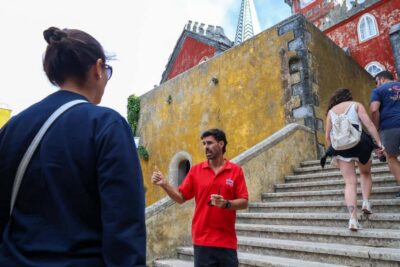
Your tour begins at the Afonso de Albuquerque garden square. It’s a good start point because it immediately anchors the day in a person who matters to Portugal’s overseas push. Your guide shares the story of Afonso de Albuquerque, including how he became the first Portuguese viceroy of the Indies. That detail isn’t just trivia. It gives you a “why” for everything you’ll see later, from religious art to maritime power.
Then you’ll move through Belém as a connected story rather than a list of landmarks. This is one of the real perks of doing it with a professional guide: you can walk fast, but still understand what you’re looking at. You’ll also get the pacing right for a short, two-hour format. If you’ve ever wandered Belém on your own and felt like you missed the thread, a guided route helps you keep hold of it.
Practical tip: Belém is often busy, and this route is walking-heavy for a two-hour experience. Wear shoes you’re comfortable standing and walking in, since the key sites aren’t next door to each other.
You can also read our reviews of more tours and experiences in Lisbon.



The Belém pastry stop: optional, but strategically placed
Before the monastery, there’s a stop at the most famous pastry shop in Lisbon—so you can buy Belém pastries if you want. This isn’t the kind of side quest that derails the tour. It’s short, and it’s timed so you can decide on the spot.
If pastries are your thing, this is an easy win because it’s right there in Belém, where the whole treat has cultural weight. If you’d rather not buy anything, you’re not stuck. You can use the pause to reset your energy before the monastery entry.
Value note: since food and drinks are not included, think of this as a “pay if you want” moment. It’s a nice way to taste the neighborhood without needing to plan a restaurant.
Jerónimos Monastery entry: why the skip-the-line matters
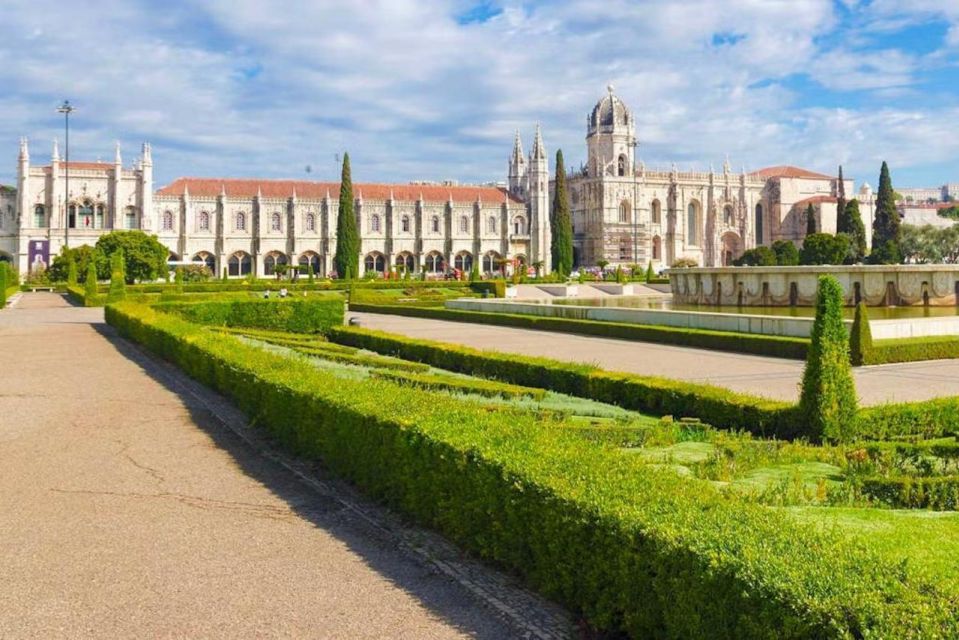
Jerónimos Monastery is the headline. And you’re not just getting a look from outside. The tour includes entry to the monastery, with skip-the-line access. For a popular UNESCO World Heritage site, that matters more than people expect.
Here’s what skip-the-line really buys you: less time waiting, more time absorbing. When you walk into the monastery earlier than the crowd surge, the atmosphere feels more spacious. You also have time to listen. That’s important, because the guide will point out things you might otherwise miss—especially in spaces that are visually stunning but easy to skim.
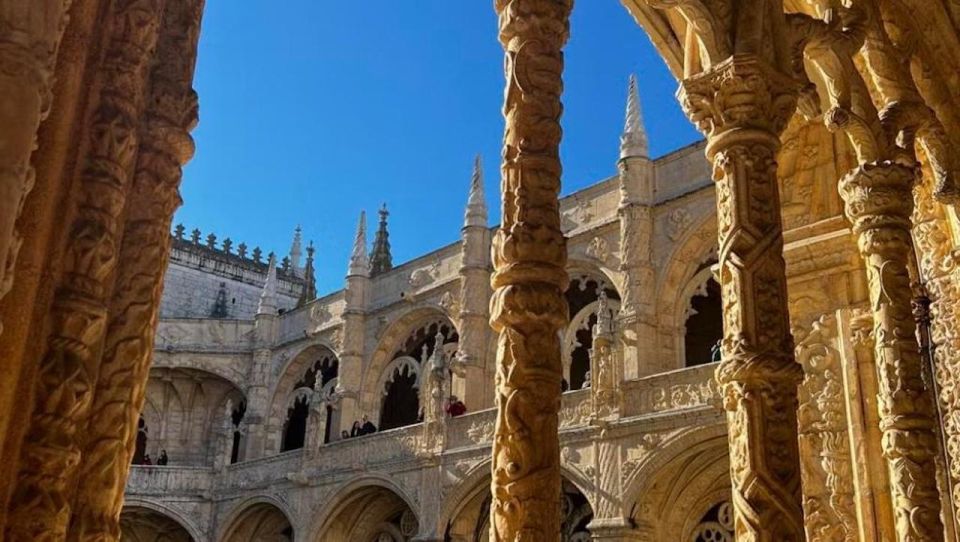
The monastery is described as a majestic Manueline style temple. Manueline is not just a style name; it’s a clue to what Portugal was projecting at the time. The decorative language and the scale of the place connect religion, national identity, and Portugal’s maritime reach. The tour helps you understand that link without turning it into a lecture.
Inside the monastery: cloister and prayer rooms you can actually follow
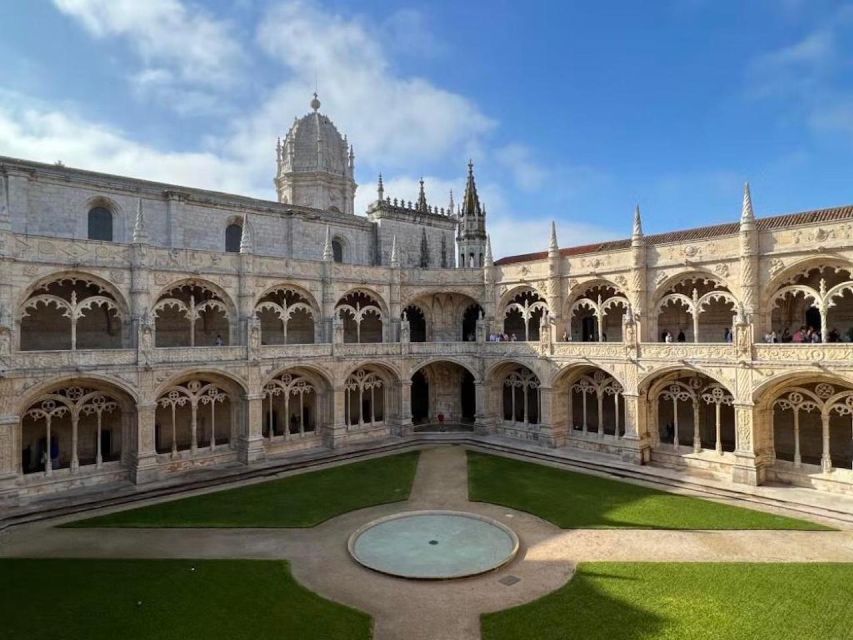
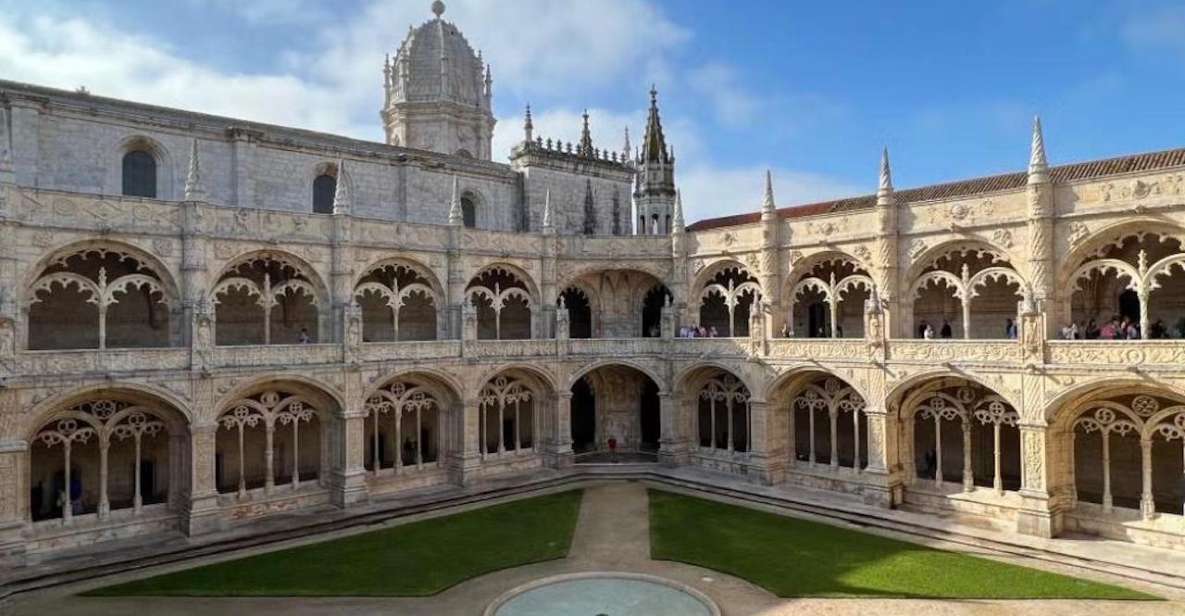
Once you’re in, you’ll tour the different rooms, prayer rooms, and the cloister—highlighted as one of the most beautiful in the world. Even if you’ve seen photos, the cloister is the kind of space where being there changes your perception. It’s built for slow looking: stonework, depth of corridors, and the sense of order inside a place meant for reflection.
What I like about a guided visit here is that you’re not trying to “solve” the monastery alone. Your guide gives you a way to move through the spaces logically: where to focus, what details carry meaning, and how the architecture connects to the broader Age of Discovery era you just heard about.
And because the tour provides headphones, you don’t have to stop your thinking every time someone else speaks. You can keep your attention on the carvings, the layout, and the atmosphere.
What to watch for: if you’re standing still for photos, do it after you hear what the guide is pointing out. A minute of listening first makes your photos better, because you’ll know what you’re capturing.
Monument of the Discoverers: turning history into something you can see
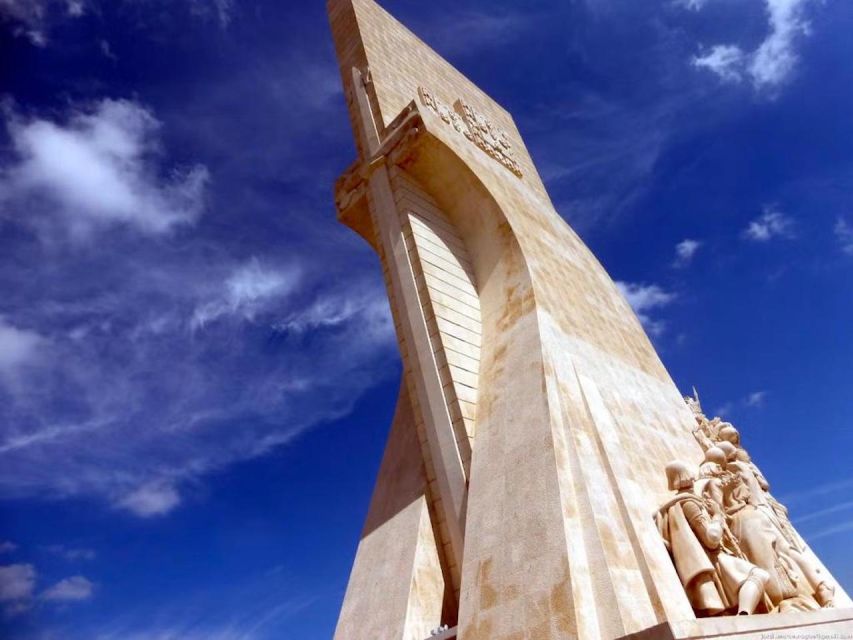
After the monastery, you’ll head toward the Monument of the Discoverers. It’s described as a large caravel-shaped construction. That’s a big visual choice, and it’s not random. The monument represents the starting point of Portuguese ships that explored the New World.
This is where the tour connects architecture and stones to movement and ships. Instead of only talking about explorers, you get a physical symbol of exploration. The location matters too: you’ll be bordering the Tagus estuary, so the river setting isn’t just scenery. It’s part of the story.
If you’ve wondered how Portugal’s maritime plans turned into real routes and real departures, this stop helps you make that mental jump. The guide will keep it focused on what the monument represents, rather than letting it become an abstract monument-spotting moment.

Belém Tower: lighthouse, prison, and tax office in one
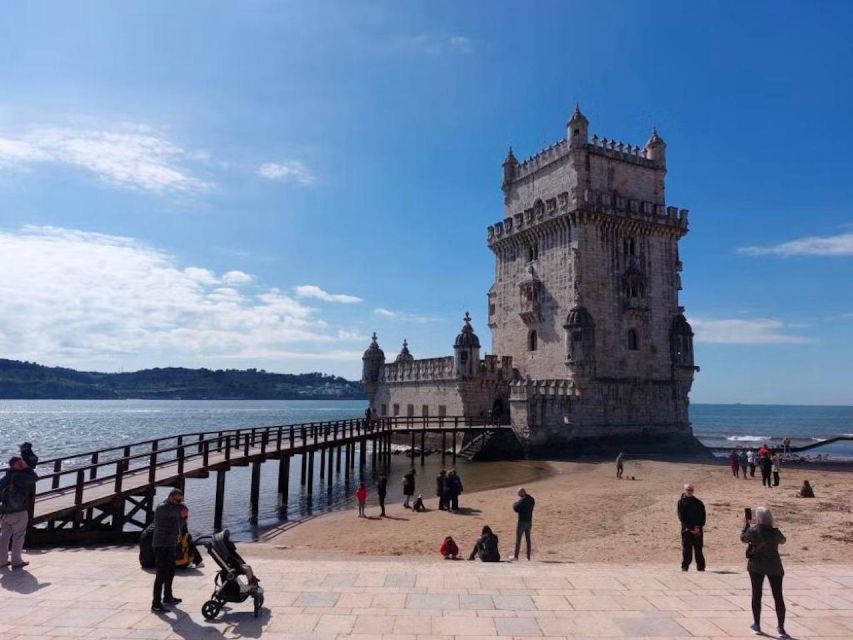
A very short distance from the Discoverers Monument is Belém Tower—one of the most recognizable silhouettes in Lisbon. The best part here is that the tour explains the tower’s multiple functions.
With your guide’s help, you’ll learn how this World Heritage monument served as:
- a lighthouse
- a prison
- a tax collection center
That list changes how you see it. A tower like this isn’t just decorative or symbolic. It’s practical infrastructure tied to navigation, control, and revenue. In other words, it’s part of the machinery of the era.
Even if you only spend a few minutes at the tower itself, the added context is what makes the stop worthwhile. Without it, you’d mostly see an impressive structure. With it, you see a tool of state power.
Photo tip: If you want the classic views, try to position yourself for the river angle rather than only the front face. The tower looks different depending on the angle, and the Tagus setting does half the work for you.
Tagus River views: a natural finish to a tight route
The tour ends with views of the Tagus River. This is the right kind of finale. After you’ve walked through monastery rooms and ship-symbol monuments, it’s satisfying to look at the water and connect it to what the guide explained earlier.
This stop also helps you close the day with something calming. Lisbon’s Belém area can be busy, and a river view gives you a reset before you head off to your next plan—whether that’s another museum, a café, or just a slower wander along the waterfront.
Price and value: $94 for a short, guided hit of Belém
At $94 per person for a two-hour experience, the key question is what you’re paying for. Here’s where the value comes from:
- Jerónimos Monastery entry is included, which is a major part of the cost of visiting on your own.
- Skip-the-line entry reduces waiting time at one of the busiest sights.
- You get a guided tour of the full route with headphones, so you’re not just paying for access—you’re paying for interpretation.
What’s not included is also clear: food and drinks. So if you plan to eat, factor that cost into your day. For many people, the easiest plan is to treat the pastry stop as your snack moment and then save a proper meal for later.
Overall, I think this price makes sense if you value time and you want the route explained. If you’re the type who enjoys reading signs and going solo, you might find a self-guided route cheaper. But you’d lose the fast entry and the “how to see it” guidance that makes the monastery and tower feel connected.
Who should book this Belém + Jerónimos tour
This works especially well if you:
- have limited time in Lisbon and want the main Belém landmarks in a tight two-hour window
- enjoy guided storytelling and want the Age of Discovery context explained clearly
- care about hearing details without fighting for position, thanks to headphones
- want monastery entry handled for you, including skip-the-line access
It’s less ideal if:
- you’re hoping for a food-focused experience (it’s not)
- you need a slower pace with lots of free roaming (the format is concise)
And because there have been reports of cancellations due to strikes or a no-show, I’d also recommend booking only if you can absorb a disruption and still enjoy your day.
Should you book this tour?
If your top priorities are Jerónimos Monastery, a guided explanation of Belém Tower’s roles, and an efficient look at the Tagus area, then I think this tour is worth considering—especially with the included monastery entry and skip-the-line benefit. The headphones also make it easier to actually follow the guide instead of just walking.
Just do two small things before you go: wear comfortable shoes, and confirm your plan the day before (or as close to departure as you can). With a tight route and a popular start point, being prepared keeps the day smooth.
FAQ
Where do we meet for the tour?
You meet at the indicated time in the Afonso de Albuquerque garden square in Lisbon.
How long is the tour?
The tour lasts 2 hours.
Is entry to Jerónimos Monastery included?
Yes. Entry to Jerónimos Monastery is included, with skip-the-line entry.
Does the tour include food and drinks?
No. Food and drinks are not included.
What languages is the live guide available in?
The live tour guide is available in English and Spanish.
What should I bring, and are pets allowed?
Bring a passport or ID card and wear comfortable shoes. Pets are not allowed.