REVIEW · LISBON
Lisbon Small Group Tour
Book on Viator →Operated by RecordTours · Bookable on Viator
First morning in Lisbon shouldn’t feel like a scavenger hunt. This 8-person small group tour is built for fast orientation: viewpoints across the city’s famous hills, narrow old streets, and then a shift to Belém’s Age of Discoveries. You’ll ride in an air-conditioned vehicle with WiFi onboard, but you’ll still get out often enough to actually see what you came for.
I especially like the way you’re guided from lookout to lookout, not just dropped at random photo stops. And I like the variety: old-world Lisbon with Miradouros and churches, then Belém landmarks like Jerónimos and Belém Tower, plus the classic Pastéis de Belém tasting.
The main thing to consider is pacing. It’s a 5-hour loop with lots of short stops, so if you love lingering in one place for a long time, you might wish for a second day in Lisbon’s hills and monuments.
In This Review
- Key things you’ll notice on this tour
- A 5-hour Lisbon orientation that actually gets you oriented
- Miradouros and the narrow-street neighborhoods that make Lisbon Lisbon
- Churches and the Lisbon timeline: São Vicente de Fora and the Sé Cathedral
- Alfama, Saint Anthony’s church, and the little traditions you’ll actually remember
- The city’s grand avenue moment: Restauradores, Rossio area, and Avenida da Liberdade
- Edward VII Park and the Águas Livres Aqueduct: Lisbon’s engineering and scale
- Belém’s Discoveries era: Jerónimos Monastery, Tower of Belém, and the Monument
- Pastéis de Belém: when the classic snack is actually part of the story
- Bridge views and Christ King: Lisbon from river angle
- Price and value: what $115 gets you in a city that loves hills
- Who this tour is best for (and who should skip it)
- Should you book this Lisbon Small Group Tour?
- FAQ
- What is the duration of the Lisbon Small Group Tour?
- How many people are in the group?
- Where does the tour start?
- What time does it start?
- What’s included, and what isn’t?
- Is the tour refundable if plans change?
Key things you’ll notice on this tour
- Maximum 8 people means quieter conversations and easier photo stops at viewpoints
- Seven-hill miradouro route helps you understand Lisbon’s geography fast
- Church and cathedral stops connect you to Lisbon’s timeline from medieval to Renaissance
- Belém focus on the Discoveries gives context before you look at the stones
- Air-conditioned vehicle + WiFi + bottled water keeps the day comfortable
- Pastéis de Belém is built in, so you don’t have to plan a detour for the famous original
A 5-hour Lisbon orientation that actually gets you oriented
Lisbon is a city of viewpoints and curves, which can be great if you’re wandering on your own… but frustrating on day one. This tour is designed to fix that. You get a structured loop that shows the city’s layout quickly—where the river sits, how the neighborhoods climb, and why so many famous spots look the same way you see in postcards.
The small group size is a big deal. With a maximum of 8 people, you’re not squeezed into a “stand here, move there” shuffle. You get time to ask questions, and your guide can adjust if someone wants an extra minute at a view.
And the comfort matters too. You travel by vehicle between areas, so you’re not doing all the uphill walking yourself. That’s a practical win in Lisbon, where streets can be narrow, and the climbs add up.
You can also read our reviews of more tours and experiences in Lisbon.



Miradouros and the narrow-street neighborhoods that make Lisbon Lisbon
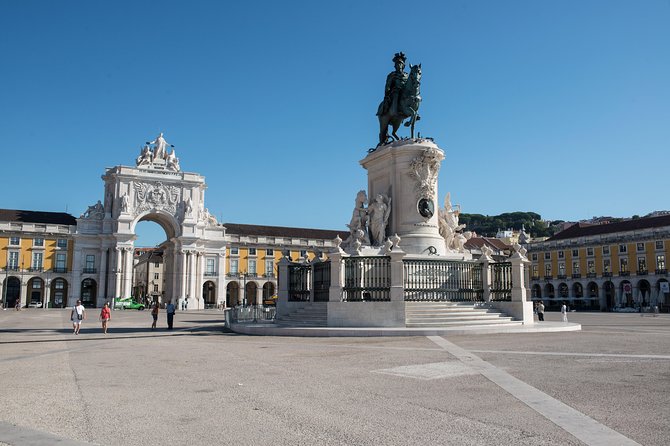
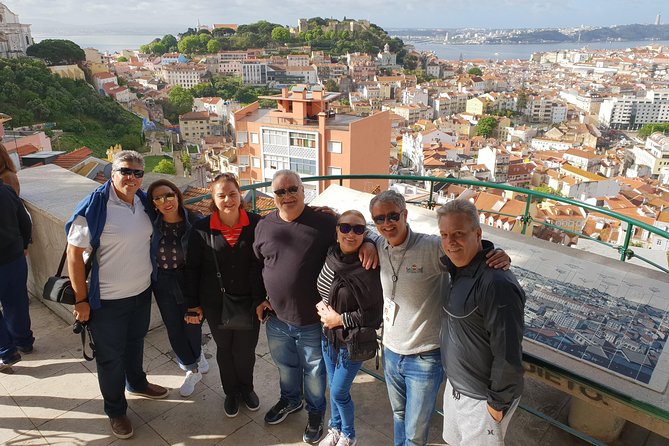
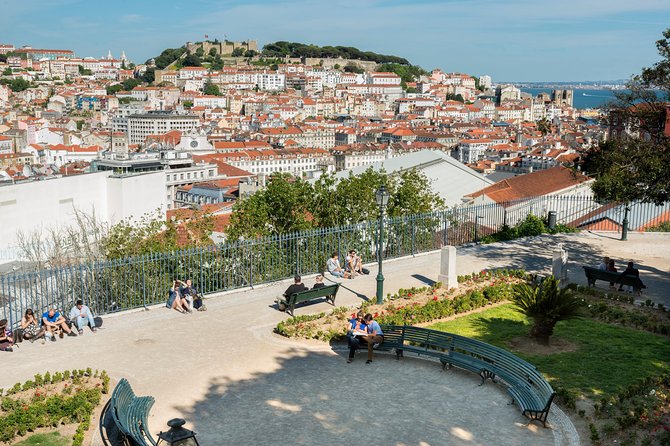
A huge part of Lisbon’s magic is the hills—so the tour starts with that idea. You’ll visit Miradouros with views stretching south over the city and toward the Tagus River. From spots like Miradouro da Senhora do Monte, you get the kind of wide sweep that helps everything click: the Castle of São Jorge area, the Baixa zone, and the estuary spread out in one glance.
Then the route moves you through the older neighborhoods by vehicle—Baixa, Bairro Alto, and Alfama—so you can experience the feeling of Lisbon’s historic core without getting stuck navigating it alone. These are the districts where streets twist and cut between viewpoints, and getting a guide’s sense of what to look for makes the short stops much more satisfying.
One of the best parts is how the viewpoints connect to what you see below. At Miradouro das Portas do Sol, for example, the view isn’t just scenery—it frames Alfama’s winding streets and points you back toward the Tagus. It’s the kind of stop where you start understanding how locals move through the city.
Practical tip: Lisbon light changes quickly. If you can, use your first big viewpoint stop to spot major landmarks, then use later stops to confirm directions.
Churches and the Lisbon timeline: São Vicente de Fora and the Sé Cathedral
You also get the city’s “real story” in stone and design, not just views. The tour includes Igreja de São Vicente de Fora, a church whose history links back to a primitive temple built on the site of earlier worship. It later becomes a larger project starting in the late 1500s, with architects and plans influenced by major European design styles.
What I like about this kind of stop is that it turns Lisbon into more than a set of pretty streets. If you’ve ever wondered why one part of Lisbon feels Renaissance while another feels medieval, this is the kind of context you’ll want on your first day.
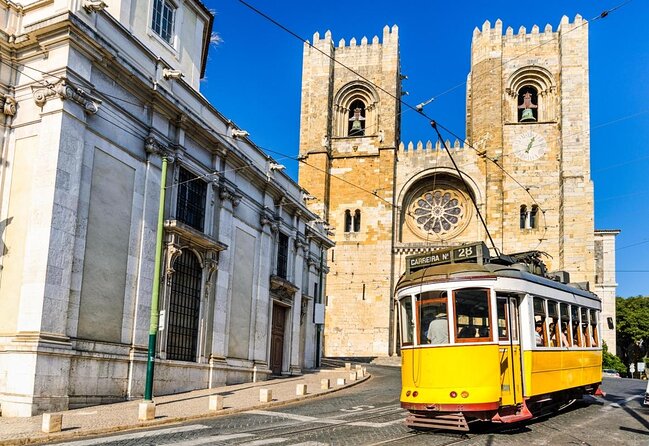
Then you head to Lisbon Cathedral (Church of Santa Maria Maior / Sé), with construction that began after the Christian reconquest and later evolved into a blend of architectural styles. It’s also a National Monument, which is your hint that this isn’t just another church stop.
Because cathedral visits can feel slow when you’re left on your own, having a guide helps you focus on what matters in the time you have. Think of it as getting a quick orientation to Lisbon’s timeline—so you recognize patterns as you move around the city later.
Alfama, Saint Anthony’s church, and the little traditions you’ll actually remember
Not every church stop is about big monuments. Church of St. Anthony (Santo António) is included with a specific tradition attached: young men planning marriage visit the church, pray, and leave flowers for Saint Anthony, the intercessor for newlyweds.
Even if you don’t participate in the tradition yourself, it helps you understand how religion and daily life overlap in Lisbon. You’re not just looking at a building; you’re seeing why it matters to people.
The tour also includes a descent to a crypt area and features modern tiles celebrating a papal visit in 1982. That mix—older devotion with later commemorations—adds a human layer you don’t always get in “big sights only” tours.
The city’s grand avenue moment: Restauradores, Rossio area, and Avenida da Liberdade
After the older quarters, the day shifts toward Lisbon’s wide, formal streets. You’ll stop around Praça dos Restauradores, known for the tall Monument to the Restorers commemorating the liberation of Portugal from Spanish rule in 1640.
Then you continue into the area around Praça Dom Pedro IV, better known by many as Rossio. This is one of those places that makes Lisbon feel like a European capital: space for markets and fairs, and the kind of open square where you can reset after the twisting streets.
From there, you move along Avenida da Liberdade, the grand boulevard that connects key areas of the city. This part of the tour isn’t just sightseeing—it gives you a contrast. Lisbon isn’t only steep hills and alley views. You also get the planned, landscaped grandeur that developed as the city modernized.
Practical tip: If your day starts to feel like “too many stops,” this avenue stretch is a good moment to slow down mentally. It helps your brain map the city’s different moods.

Edward VII Park and the Águas Livres Aqueduct: Lisbon’s engineering and scale
A quick but important stop is Parque Eduardo VII. It’s the largest park in central Lisbon, and it gives you a breather between dense historic areas. Even if you just pause for the view and a bit of air, it helps the day feel less like constant movement.
Then you get one of Lisbon’s most impressive technical landmarks: the Águas Livres Aqueduct (Aqueduto das Aguas Livres). This system collected, transported, and distributed water into Lisbon, with the famous stone arcaria in the Alcântara valley. It was built in the 18th century and is tied to the reign of King João V, with expansions and reinforcement later on.
What I like about including the aqueduct is that it broadens your Lisbon understanding. This isn’t only about monuments and churches. It’s about how the city managed real needs—like water—over centuries. And it’s described as having survived the earthquake of 1755, which is a powerful reminder that Lisbon’s beauty is built on resilience, not luck.
If you’re the type who takes one “structure” stop seriously, make this one.
Belém’s Discoveries era: Jerónimos Monastery, Tower of Belém, and the Monument
Then the tour shifts into full Belém mode: the part of Lisbon linked to Portuguese navigation and the Age of Discoveries. If you want a day where Lisbon’s big theme connects—empire, exploration, art, power—this is the zone.
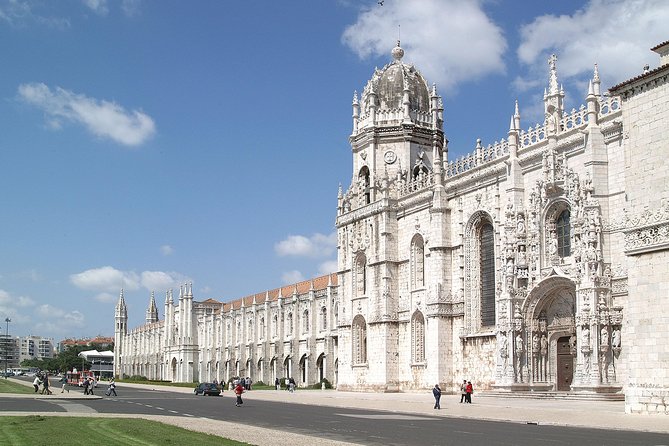
You’ll visit Mosteiro dos Jerónimos, a 16th-century monastery associated with the Order of St. Jerome. It’s tied to King Manuel I and is known for Manueline architecture. The tour frames it as a major Portuguese monastic complex, and since 2016 it has the status of National Pantheon.
You also get Torre de Belém, which was originally surrounded by water and later became connected to the land as the coastline changed. It’s an icon of the reign of D. Manuel I and reflects both medieval tower traditions and modern defensive bulwark ideas. Even in short viewing time, it helps to know the tower’s role in controlling the Tagus.
Finally, you’ll see Padrão dos Descobrimentos (Monument to the Discoveries), a riverfront monument whose modern inauguration is listed as 1960. The design is attributed to architect Cottinelli Telmo, with sculptures by Leopoldo de Almeida. You don’t need a long talk to appreciate the scale here—this one is meant to be seen from a distance and remembered afterward.
Practical tip: Belém is where you’ll get your best “Lisbon as a map” moment. Look for alignments between the river and monuments. It helps you feel the logic of the Portuguese maritime focus.
Pastéis de Belém: when the classic snack is actually part of the story
You don’t just “pass by” for a quick bite on this tour. The experience includes a stop for Pastéis de Belém, described as the original cream pastries recipe from an old bakery dating to 1837.
You’ll also be told the kind of behind-the-scenes context that makes food stops more than a line you join. In other words, you’re not just eating because it’s famous—you’re eating as part of the Belém narrative.
My advice: treat it as a small meal, not an afterthought. This tour is 5 hours and doesn’t include breakfast, lunch, or dinner, so the pastry stop can be your strongest energy moment of the day. Pair it with bottled water provided on board, and save coffee as a later decision.
Bridge views and Christ King: Lisbon from river angle
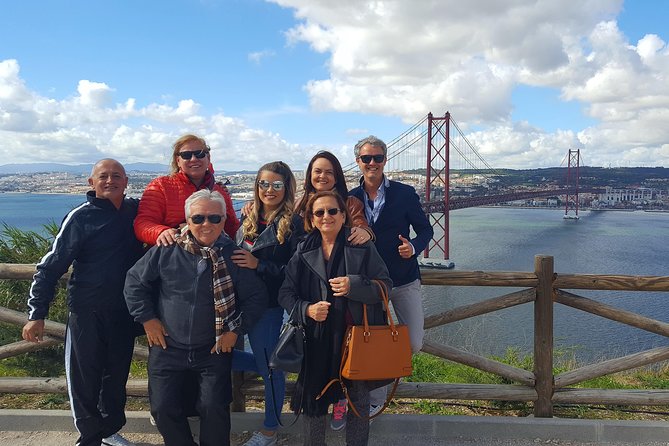
One of the more memorable “change of perspective” parts of this tour is crossing 25 de Abril Bridge, often compared to the Portuguese Golden Gate Bridge due to its look and scale.
After that, you’ll get views from the Statue of Christ King, described as a replica of Rio’s Christ the Redeemer. Even if you’ve seen similar statues in other cities, the key is context: here, you’re looking at Lisbon from a vantage that reshapes how you perceive neighborhoods and the river relationship.
These stops are valuable because they make your earlier viewpoint memories snap into place. After seeing hills and cathedral areas, you can finally connect the view across water, which is what turns Lisbon from pretty to understandable.
Price and value: what $115 gets you in a city that loves hills
At $115.19 per person for about 5 hours, you’re paying for three things: transportation, an informed route, and a tight schedule that hits high-impact sights. The biggest value play for me is the combination of small group size (max 8) and the amount of territory covered.
It’s not an all-day tour, and it’s not priced like a full private driver day where you can spend 3 hours in one museum. Instead, it’s built for getting your bearings and getting the highlights without losing half your time figuring out logistics.
You’ll also have practical perks that can quietly save your trip: air-conditioned vehicle, WiFi onboard, and bottled water. Those sound small until you’re sweaty and tired halfway through a day of hills.
And you’ll get a mobile ticket, which is helpful for modern travelers who don’t want paper hassles.
Who this tour is best for (and who should skip it)
This works best for first-timers who want Lisbon’s main pieces in one go—viewpoints, historic districts, and Belém’s Discoveries landmarks—without committing to a full day.
It’s also a good match if you like your guide to pick the relevant stops. The included guide feedback from clients highlights Joan specifically for teaching Lisbon with passion and choosing the most relevant sites, plus being aided by an excellent driver. That matters, because on a short day, stop selection is everything.
If you’re traveling with very specific interests—say, you only care about museums in Belém or you want long guided time inside major churches—you might find the pacing a bit fast. This tour is more about getting the big picture than slow, in-depth study.
Should you book this Lisbon Small Group Tour?
I’d book it if you want a smart first-day plan. You’ll see major viewpoints, key churches and monuments, and you’ll land in Belém for Jerónimos, Tower, and the Discoveries setting. The 8-person limit keeps it human, and the included Pastéis de Belém means your Belém time feels complete.
Skip it if your travel style is all about lingering. This is a “short stops, big impressions” format. You’ll leave with photos and context—but you may still want to come back for longer, deeper dives on your own.
If your priority is orientation plus highlights in one smooth half-day, this is a strong pick.
FAQ
What is the duration of the Lisbon Small Group Tour?
The tour runs about 5 hours.
How many people are in the group?
It’s limited to a maximum of 8 people.
Where does the tour start?
The meeting point is Pç do Marquês de Pombal 8, 1250-160 Lisboa, Portugal. The tour ends back at the meeting point.
What time does it start?
The start time is 9:30 am.
What’s included, and what isn’t?
Included are air-conditioned vehicle, private transportation, WiFi on board, and bottled water. Breakfast, lunch, and dinner are not included.
Is the tour refundable if plans change?
Yes, it offers free cancellation. You can cancel up to 24 hours in advance for a full refund.