
REVIEW · TUK TUK TOURS
Lisbon: Private Tour by Tuk Tuk
Book on GetYourGuide →Operated by EliricaTour · Bookable on GetYourGuide
Lisbon has a way of revealing itself by the minute. This private tuk tuk tour gives you panoramic viewpoints and historic context, starting near Restauradores Square and moving through neighborhoods and landmarks you’d miss if you only rode the bus or wandered alone.
What I like most is the mix: you get classic Lisbon spots and the angles that make photos actually look like Lisbon. I also really appreciated the storytelling from the local guide—one guide named Diego stood out for his way of making the stops click.
One thing to plan around: this tour isn’t a good fit if you have back problems, are pregnant, or need wheelchair access. You’ll be dealing with hills, uneven streets, and short walking bits at viewpoints.
In This Review
- Key things to know before you ride
- Lisbon’s best views, served in the right order
- From Restauradores Square to Rossio: fast context, not random sightseeing
- Convento do Carmo and Santa Justa: architecture you can actually spot
- São Pedro de Alcântara and the Castle of São Jorge views
- Eduardo VII Park and Marquês de Pombal: Lisbon’s grand, open spaces
- Alfama: fado, earthquake survivors, and June celebrations
- Miradouro das Portas do Sol: the classic view with real purpose
- Miradouro da Senhora do Monte: Lisbon’s highest “big picture” view
- Praça do Comércio: the long square and King José I
- Eco-friendly private transportation and hotel pickup that actually helps
- Price and value: what you get for about $106 per person
- Who should book this tuk tuk tour (and who should skip it)
- Should you book? My practical take
- FAQ
- What’s the duration of the Lisbon private tuk tuk tour?
- Is this tour private?
- Are hotel pickup and drop-off included?
- What languages is the live guide available in?
- Which places are included in the route?
- What’s included in the price?
- Who should not take this tour?
- Is there free cancellation?
Key things to know before you ride
- Private tuk tuk pace: You move efficiently between viewpoints without spending the whole day in transit.
- Miradouros on purpose: Stops like Portas do Sol and Senhora do Monte are built for sightlines, not just photo ops.
- History with names and details: You’re not just shown places; you learn what to look for (including architecture at Carmo).
- Alfama with context: You’ll connect the neighborhood to fado and to stories tied to the 1755 earthquake and June festivities.
- A finale in open-air Lisbon: Praça do Comércio and King José I’s statue give you a big, grounded finish after the hill views.
Lisbon’s best views, served in the right order
Lisbon rewards momentum. If you’re trying to do it with only self-guided walking, you’ll spend half your time recalculating where the hills lead and how to get back down. With a private tuk tuk, you keep your energy for the moments that matter—especially the miradouros, where the city looks layered instead of flat.
I like that the tour is built around viewpoints in a way that feels logical. You’re not just jumping to the highest spot and calling it a day. You get multiple perspectives, so Lisbon reads like a place with geography: ridgelines, river views, and neighborhoods stacked on slopes.
And because it’s private, the guide can adjust. That matters in Lisbon, where weather, light, and foot traffic can change quickly. If you want more time for photos at a viewpoint, or you’d rather hear one extra layer of detail about a landmark, you’re not stuck with a group schedule.
You can also read our reviews of more private tours in Lisbon


From Restauradores Square to Rossio: fast context, not random sightseeing
The tour kicks off in the area of Restauradores Square, which is a smart starting point because it connects you to the city’s main “spine.” You’ll also pass Rossio Station, the link that connects Lisbon to the region of Sintra. Even if you’re not going to Sintra on this day, it helps to understand why Lisbon is a gateway town—people come in, people route out, and the city’s energy reflects that.
The early part of the route is about setting the scene. It’s easy to arrive in Lisbon and think you’ll just follow the tram and aim for the viewpoints. This approach gives you a framework: where transit hubs are, why certain landmarks sit where they do, and how the city’s parts relate to each other.
Practical tip: if you’re the type who likes a plan, take in what the guide is pointing out early. Once you’ve got your mental map, the viewpoints hit harder.
Convento do Carmo and Santa Justa: architecture you can actually spot
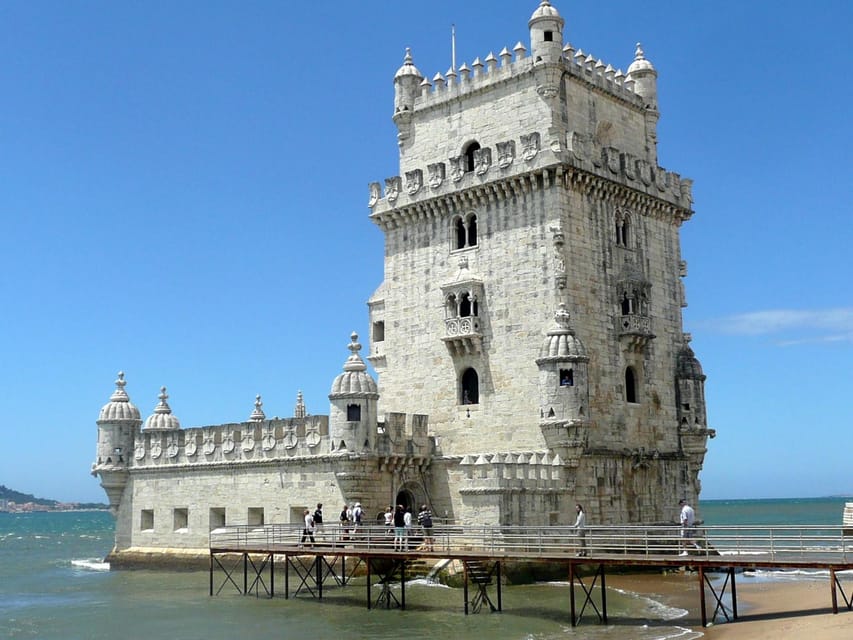
One of the more satisfying stops is the exterior visit at the Convento do Carmo area. You don’t need to be an architecture expert to enjoy it, because the guide focuses on what you can notice right in front of you—details of the site and its architectural story.
Then you connect to the area around Santa Justa elevator. Even if you don’t ride it, seeing it from the outside gives you a sense of how Lisbon solves its own problem: huge elevation changes. Lisbon’s design feels practical as well as beautiful. Places like Santa Justa turn steep terrain into a feature, not an obstacle.
The small “few minutes” stop can feel short if you expect a museum level experience, but that’s not what this tour is. It’s the kind of quick, well-timed stop that keeps you moving while still giving you enough context to recognize what you’re looking at later in the day.
São Pedro de Alcântara and the Castle of São Jorge views
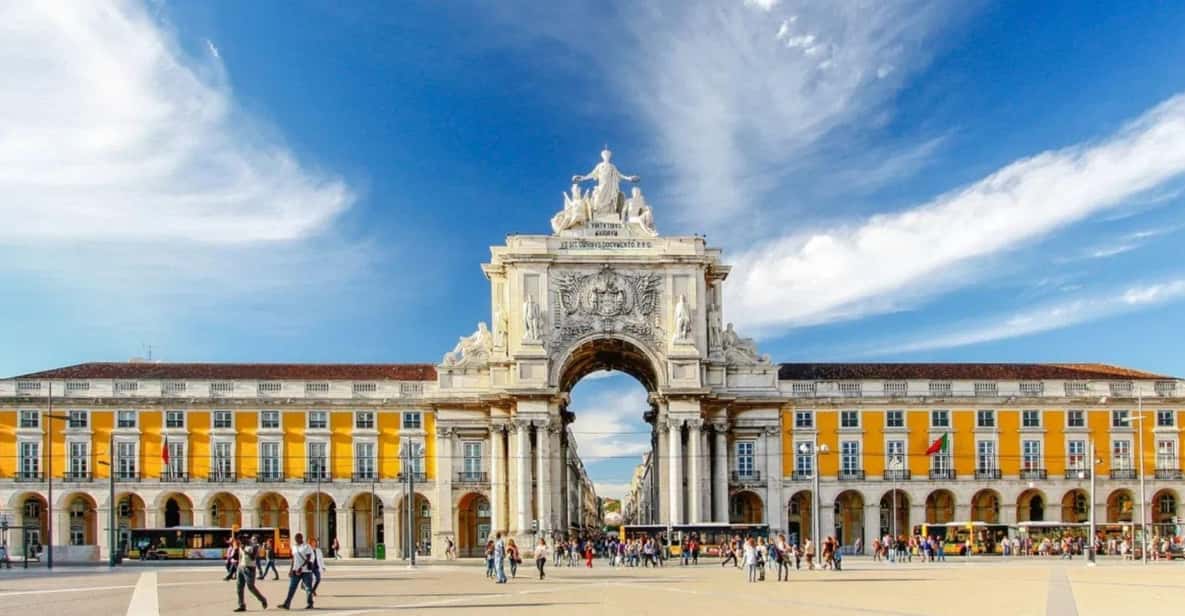
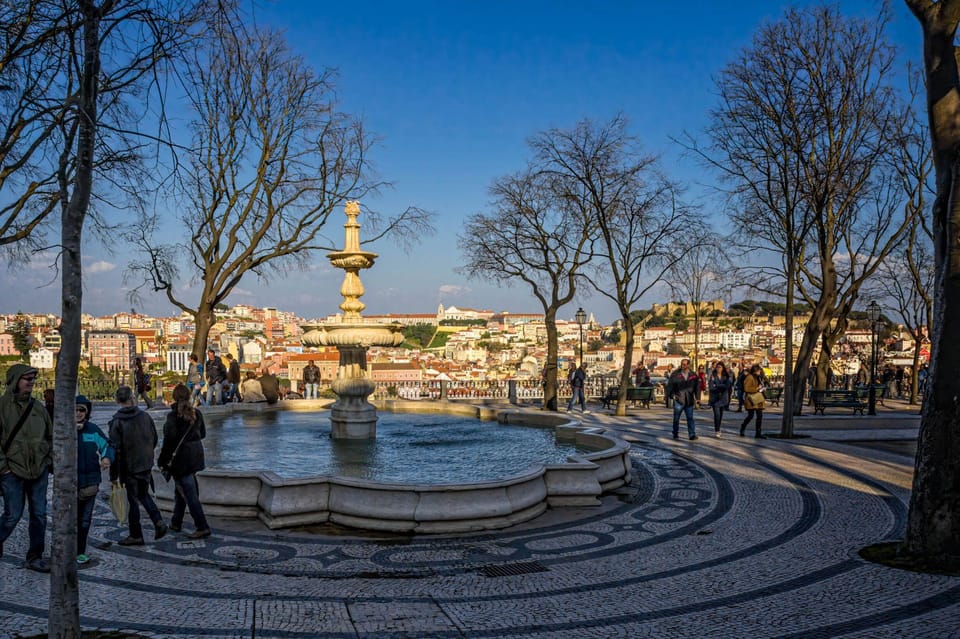
After you leave the downtown core, the tour heads toward the hilltop perspective at Miradouro São Pedro de Alcantara. This is one of those Lisbon viewpoints that makes you understand the city’s scale in seconds. You’re looking out from a spot that feels built for panoramas, with the Castle of São Jorge right there as a reference point.
What makes this stop worth your time is the way it sets up a later comparison. You’re not only seeing the city from one direction—you’re also learning how different miradouros frame different stories of Lisbon.
If you want a photo tip: stand where the guide suggests and check what’s behind you as well as what’s ahead. Miradouros often have a “click” moment where Lisbon’s rooftops align with the horizon and the river or distant neighborhoods come into view.
Eduardo VII Park and Marquês de Pombal: Lisbon’s grand, open spaces
Next comes Parque Eduardo VII, a well-known park and a great breather between neighborhoods. Expect a guided tour and a short walk (around 30 minutes), which helps you reset your legs and eyes after driving through the city’s tighter streets.
From a tourism-value angle, this park stop does something useful: it gives you a sense of Lisbon as more than viewpoints and narrow lanes. You see open space, skyline angles, and a different rhythm of city life.
You’ll also pass the Marquês de Pombal roundabout, another landmark that adds structure to your mental map. If you’re the kind of traveler who likes to understand how a city moves, these big-scale waypoints help.




Alfama: fado, earthquake survivors, and June celebrations
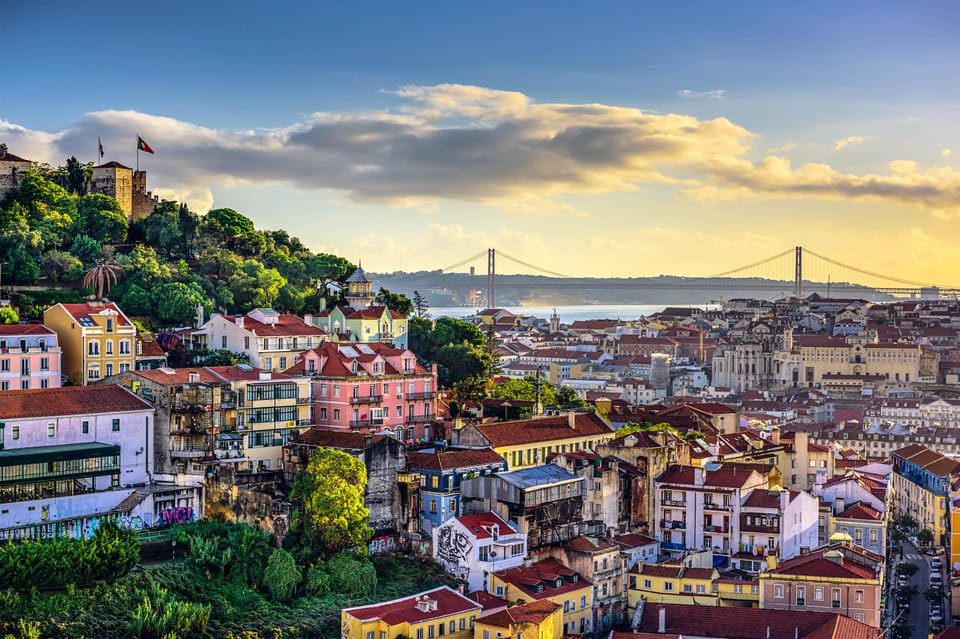
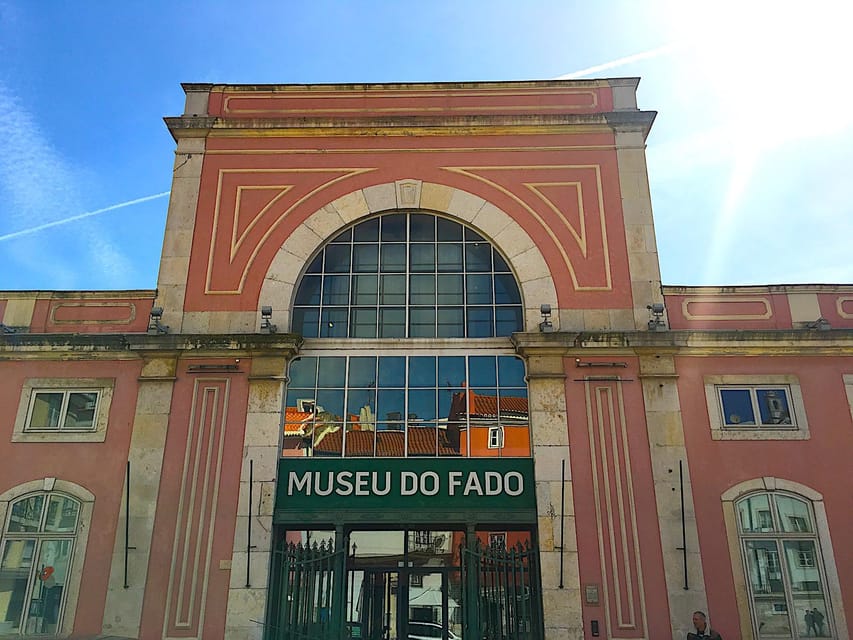
Then comes Alfama, and this is where Lisbon becomes emotional. Alfama is one of Lisbon’s oldest neighborhoods, and it’s also the place where fado is born and kept alive. You’ll hear the neighborhood’s story through the lens of music and daily life, not just postcard scenery.
This stop also pays attention to the 1755 earthquake. You’ll see old houses that survived that terrible event, which is an important reminder that Lisbon’s beauty isn’t only design—it’s endurance. The guide frames what you’re seeing so it doesn’t feel like random old buildings. It connects the past to the street level reality you’re standing on.
There’s even a seasonal note: Alfama is a popular place for the feast of Santo António in June. That detail matters if your visit overlaps the celebration, because you’ll understand why the neighborhood takes on a different energy.
A gentle heads-up: Alfama can mean steep streets and uneven walking surfaces. Even with the tuk tuk, you’re still stepping into a real neighborhood. Comfortable shoes aren’t optional.
Miradouro das Portas do Sol: the classic view with real purpose
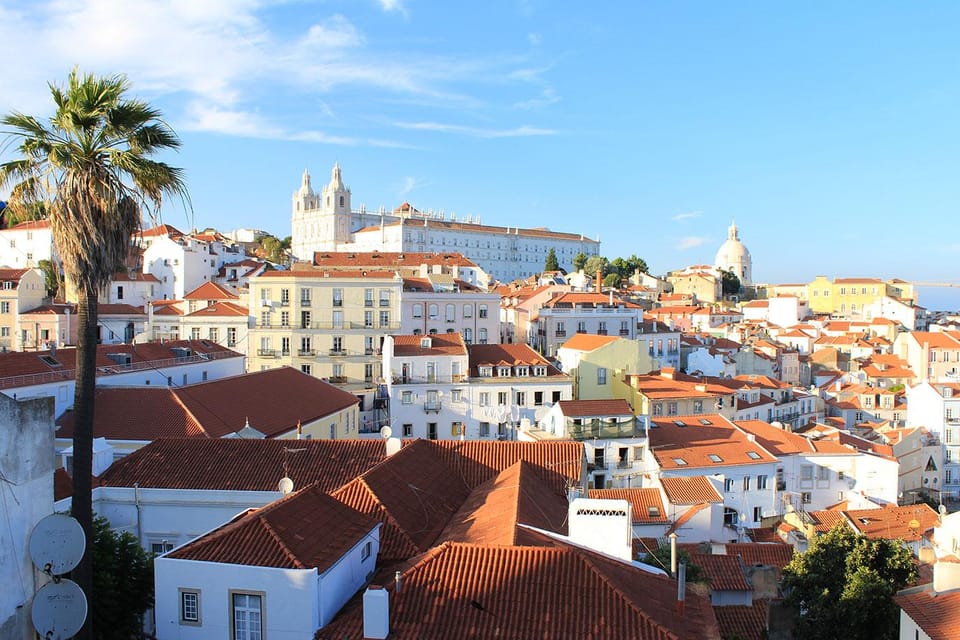
You’ll then reach Miradouro das Portas do Sol, described as one of Lisbon’s most beautiful viewpoints. I like this kind of stop because it’s instantly rewarding: you can see the entire Alfama neighborhood from here.
This viewpoint also does something practical for your brain. Once you’ve seen Alfama from above, you can look down at the street layout and understand why the neighborhood is so charming and so difficult to navigate. You get the street pattern without doing the steep walk ten times.
Photo advice that works: bring your camera strap and use the slower “compose and check” approach. Miradouros are busy, and wind can be a factor. If you wait ten extra seconds for a cleaner line of sight, your photo will thank you later.
Miradouro da Senhora do Monte: Lisbon’s highest “big picture” view
If you’re chasing maximum perspective, Miradouro da Senhora do Monte is the payoff. It’s one of the highest points in the city, and the tour frames it as a more complete perspective—Lisbon from a place where multiple directions make sense.
At this height, you’ll likely notice how neighborhoods layer like tiles: different textures of streets, rooftops, and open spaces. This stop is about understanding Lisbon’s shape, not just seeing pretty rooftops.
Time at the miradouro is guided and built for sightseeing, so you’re not wandering with no direction. That matters because viewpoint quality is partly about where you stand and what the guide points out.
Praça do Comércio: the long square and King José I
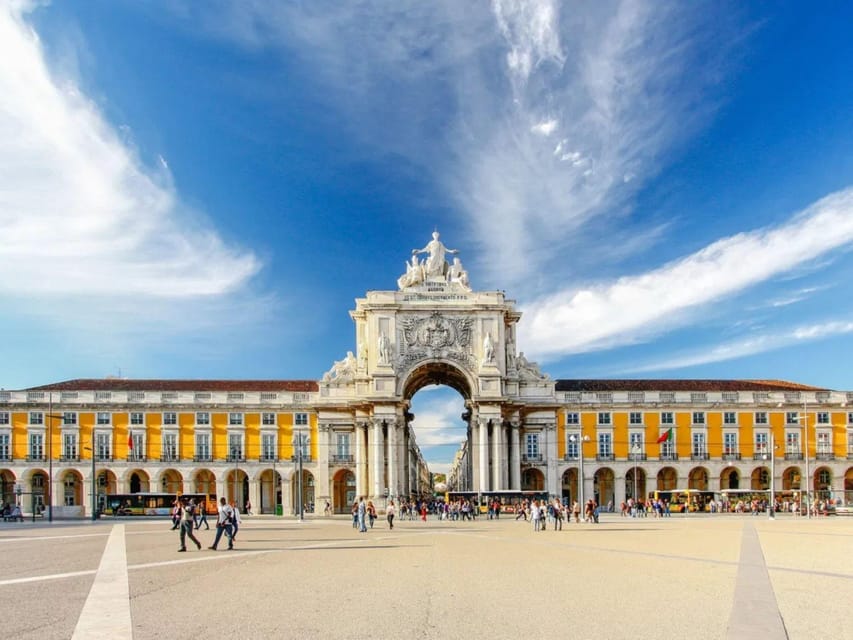
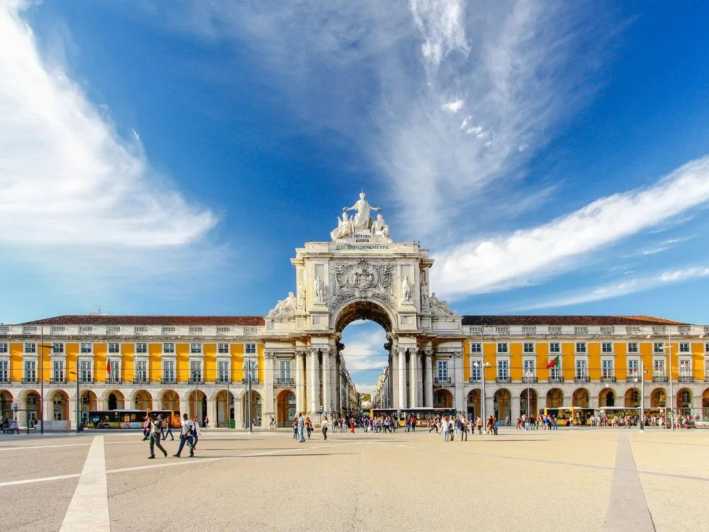
Finally, you get to Praça do Comércio, one of the most important squares in Lisbon and noted for being among the longest squares in Europe. It’s a strong finale because it’s open, grounded, and not perched on a hill.
This square is also where you’ll see the statue of King José I, symbolically crushing snakes in his path. Even if you don’t connect with statues on a personal level, the symbolism gives the square meaning beyond its size. You’re seeing how Lisbon tells stories with public art.
The tour’s ending here makes sense: after hours of climbing viewpoints, you’re back in a place where the city feels broad and navigable. It’s a good moment to stop, breathe, and let what you learned earlier settle in.
Eco-friendly private transportation and hotel pickup that actually helps
The tour uses a private tuk tuk, positioned as an eco-friendly way to explore. Whether you’re sensitive to emissions or you just like not being stuck in city traffic, the vibe is practical: you get compact transportation that matches Lisbon’s scale.
Hotel pickup and drop-off are included (optional, but available), which is a big value add in Lisbon. The city’s best sights aren’t always outside major transit lines. When pickup is handled, you spend less time playing taxi roulette or mapping routes in the moment.
Also included is a bottle of water, which sounds small but matters when you’re moving between sunlit viewpoints.
Price and value: what you get for about $106 per person
At $106 per person, this isn’t the cheapest way to see Lisbon—but it’s not trying to be either. The value comes from three big ingredients:
- Private guide time: Your local guide explains history and details for your group, instead of you reading signs alone.
- Private transportation: The tuk tuk helps you cover ground efficiently, especially when the day includes multiple miradouros.
- Built-in stops that connect: The day flows from viewpoints to neighborhoods to an iconic square, with context added at each turn.
If you’re a solo traveler or a couple who would otherwise spend money on taxis plus guided entrance tours elsewhere, this can be a smart “all-in-one” choice. If you’re traveling with a bigger group, the private part can feel even better because the guide time isn’t diluted.
My advice: treat it as a paid shortcut to better sightseeing decisions. You’re paying for the ability to focus on what to see and where to look, not just for movement.
Who should book this tuk tuk tour (and who should skip it)
This tour fits best if you:
- Want a private day with a local guide and flexible pacing.
- Like viewpoints but don’t want to spend the whole day climbing on foot.
- Prefer history told at street level, with attention to what you can actually see.
- Are visiting Lisbon for the first time and want the “main story” plus extra angles.
It may not be a great idea if you:
- Have back problems or need a very smooth ride.
- Are pregnant (listed as not suitable).
- Need wheelchair access (also listed as not suitable).
Should you book? My practical take
If you want Lisbon with less guesswork, I’d book it. The tour’s structure—Restauradores to viewpoints to Alfama to Praça do Comércio—matches how people actually experience the city: lots of elevation, strong neighborhoods, and dramatic perspectives.
I especially like it for first-time visitors who want more than a checklist. You’ll learn what to look for at places like Convento do Carmo and you’ll get better results at the miradouros because the guide sets the context.
If you’re the type who loves total free time and hates set stops, you might feel constrained by a guided format. But if you’re happy trading a bit of freedom for better sightlines and better stories, this private tuk tuk tour is a solid choice.
FAQ
What’s the duration of the Lisbon private tuk tuk tour?
The duration can be from 2 to 7 hours, depending on the selected option and availability.
Is this tour private?
Yes, it’s a private group experience.
Are hotel pickup and drop-off included?
Hotel pickup and drop-off are included as an option, with pickup included at your Lisbon location.
What languages is the live guide available in?
The live guide is available in English, Spanish, Portuguese, and Italian.
Which places are included in the route?
The tour includes stops around Restauradores Square, Rossio Station (pass by), Convento do Carmo (exterior), Santa Justa, Miradouro São Pedro de Alcantara, Parque Eduardo VII, Alfama, Miradouro das Portas do Sol, Miradouro da Senhora do Monte, and Praça do Comércio.
What’s included in the price?
Included are GST, private transportation, company liability and personal injuries insurance, descriptions and history of each place by the local guide, and a bottle of water.
Who should not take this tour?
It’s listed as not suitable for pregnant women, people with back problems, and wheelchair users.
Is there free cancellation?
Free cancellation is available up to 24 hours in advance for a full refund.