REVIEW · HORSES
Lisbon: Portuguese Riding School Trainig with Lusitano Horse
Book on GetYourGuide →Operated by Book N Tour · Bookable on GetYourGuide
Horse training in costume, right in Lisbon. You spend a morning at Henrique Calado Riding Ring watching Lusitano riders warm up and work key exercises, then you catch the 18th-century court mood in the Nora Patio with period music. I like the close, behind-the-scenes feel around the horses and how clearly the session respects rhythm, health, and each horse’s physical needs. The only drawback: this is a tight morning window, so if you want hours in the stables, you might leave wanting more.
This is a 1-day experience priced at about $17 per person, built around one core idea: see the work that goes into high-level equestrian performance. It runs roughly from 10:00 to 13:00, with 11:00 to 12:30 usually the best time to visit, and you’ll have an audio guide in English, Portuguese, and French to keep you oriented.
In This Review
- Key highlights worth planning around
- Portuguese School training as a morning, not a show
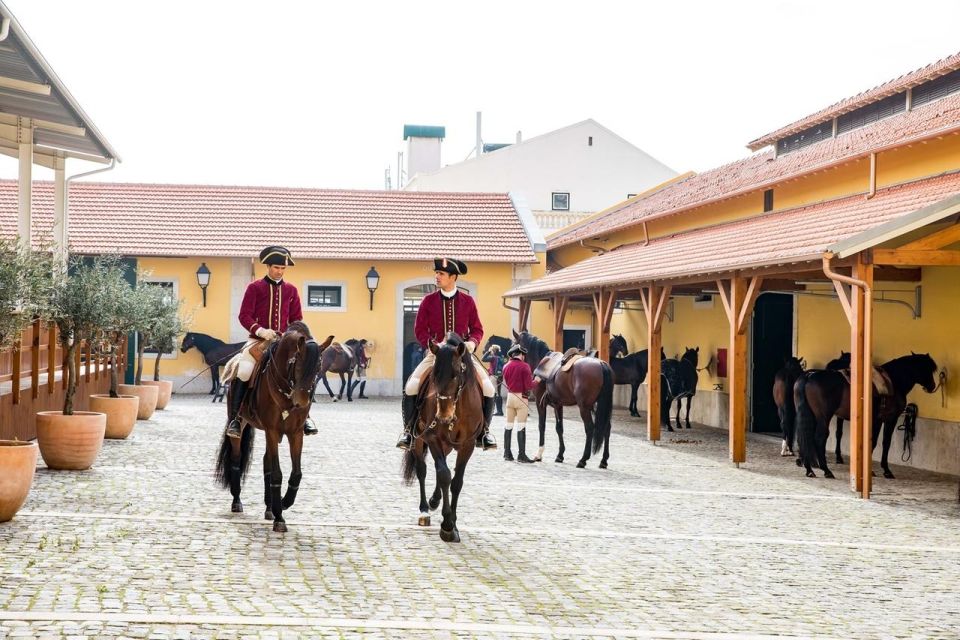
- Where you’ll spend your time: Henrique Calado Riding Ring and the Nora Patio
- The Lusitano horses: Alter Real Stud Farm connection
- The warm-up and resourcefulness exercises you should not rush past
- Behind the scenes: how handlers support the training routine
- Equestrian Art rehearsals in period music and choreographed flow
- Audio guide and what to bring so it actually works
- Price and value: why this $17 session can feel like more
- Logistics that trip people up: ticket type and meeting point
- Who should book this Lusitano training experience?
- Should you book? My honest call
- FAQ
- What time does the activity run?
- How much does it cost?
- Is transport included?
- What’s included with the ticket?
- Do I need to bring headphones?
- What photography rules should I know?
- Is it wheelchair accessible and can I cancel?
Key highlights worth planning around
- Henrique Calado Riding Ring access gives you a real working-stable view, not just a seat-and-watch setup.
- Warm-up and resourcefulness exercises show how riders prepare before the bigger choreographies.
- Handlers in action—you’ll see how horses get cared for as part of the training routine.
- The Nora Patio, court-style atmosphere recreates an 18th-century setting while rehearsals unfold.
- Lusitano-specific training focus stays on rhythm, comfort, and physical health, not just showmanship.
- Audio guide included helps you follow what you’re seeing without guessing.
Portuguese School training as a morning, not a show
If your goal is Lisbon with more substance than another quick landmark stop, this fits the bill. You’re not only watching riders perform. You’re watching the build-up—the pacing, the preparation, and the attention to the horses that makes the later choreography possible.
What makes the morning format special is that it’s not rushed like a ticketed performance. You get time to observe warm-ups and practical exercises, then you move into rehearsals of the Equestrian Art pieces, where everything suddenly looks like a storybook court scene—thanks to period music and period costume.
One practical note: it takes place from 10:00 to 13:00. If you can, aim for 11:00–12:30. That’s the stretch where you’re most likely to catch things in motion without arriving too early.
You can also read our reviews of more tours and experiences in Lisbon
Where you’ll spend your time: Henrique Calado Riding Ring and the Nora Patio
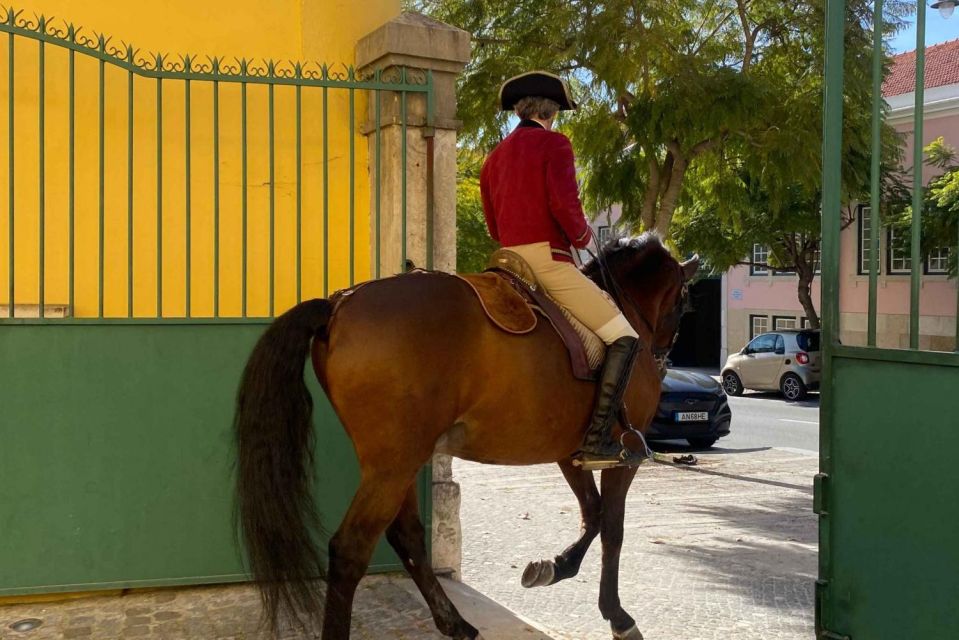
This experience is split between two distinct spaces, and both matter.
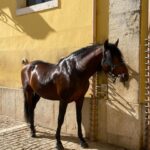
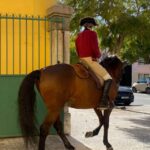
At Henrique Calado Riding Ring, you’ll see training conditions and daily routines up close. The biggest advantage here is that you’re not just watching the rider. You’re watching the system around the rider: handlers, horse care, and the moment-to-moment adjustments that keep training safe and effective.
Then you’ll shift to the Nora Patio, where the “court” feeling takes over. The atmosphere is 18th-century styled, and the session leans into that charm with the sound of period music. In practical terms, it means you get a sense of why the choreography is so precise—because it’s built to look right in a specific formal setting, not just to be correct in theory.
If you’re the type who likes context, plan to let both locations sink in. The ring shows work. The patio shows the performance world that work is trying to create.
The Lusitano horses: Alter Real Stud Farm connection
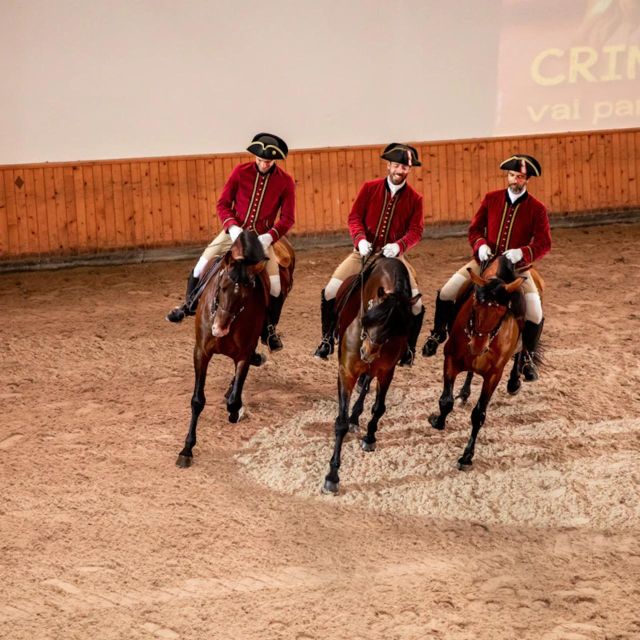
You’ll be watching Lusitano horses associated with the Alter Real Stud Farm training routine. That detail matters because it hints at a particular kind of equestrian culture: horses aren’t treated like props. They’re treated like athletes with routines built for their bodies.
You’ll learn about rhythm, health, and the physical needs of each horse. Even if you don’t know anything about classical dressage, you’ll start noticing patterns: consistency in preparation, care in how horses are worked, and how the training respects the animal’s tempo.
This is also where the experience feels more “human” than some formal shows. Watching handlers care for the horses helps you connect the dots between what you see on the floor and what you don’t see behind the scenes—feeding, grooming, and daily attention that keeps training going.
The warm-up and resourcefulness exercises you should not rush past
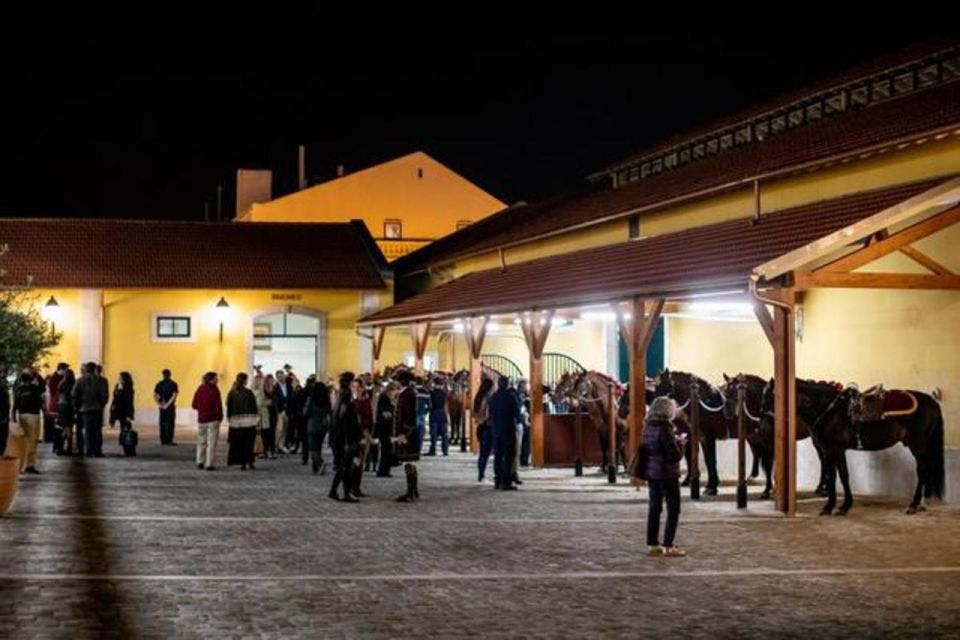
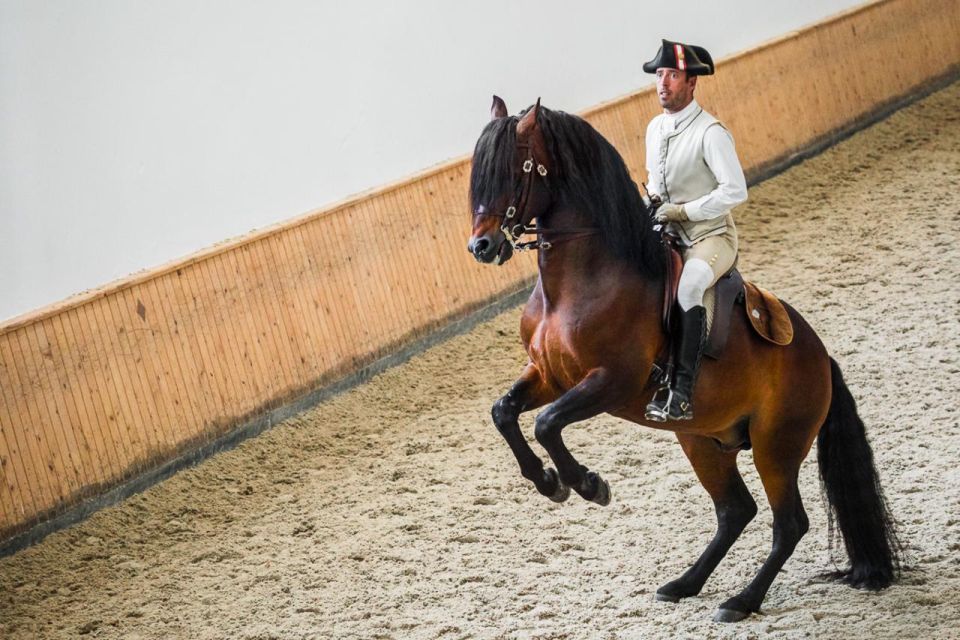
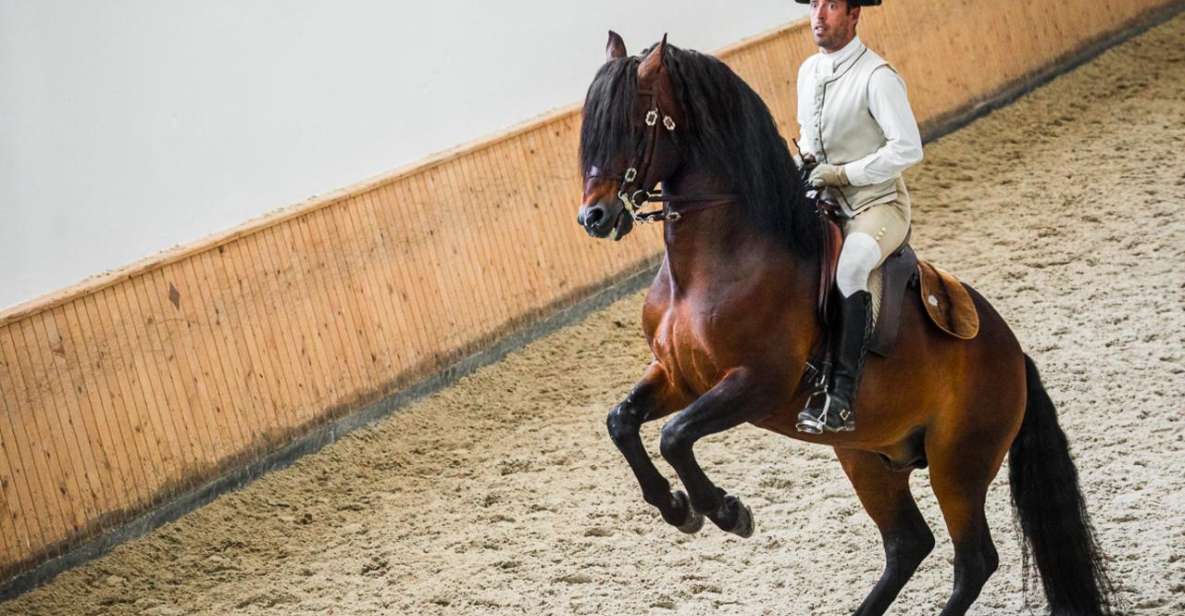
The session starts with the kind of work that most visitors skip. Instead of sprinting straight to what looks flashy, you watch the warm-up and resourcefulness exercises done by riders in period costume.
This part is valuable because it’s training in the real world. You’ll see how riders prepare horses for attention and responsiveness—how they set the tone before the complex bits.
Look closely for the “small stuff” that becomes important later:
- how horses are handled and positioned before exercises
- how riders manage rhythm
- how training progresses in a way that makes sense for each horse’s comfort
If you’re deciding whether to book, this is the main reason to do it. The warm-up is where you understand the method, not just the result.
Also, plan for a comfortable pace here. The audio guide is designed to help you follow what’s happening, but you still want time to watch the horses, not just listen while walking.
Behind the scenes: how handlers support the training routine
One of the best surprises is how much the experience highlights horse care. You’ll see the handlers working with the horses at Henrique Calado Riding Ring, not just the riders on display.
This is more than a feel-good add-on. Training at this level depends on steady, careful handling. The session makes that visible, and it changes how you interpret what comes later. Instead of thinking the riders are doing everything alone, you recognize the partnership: riders + handlers + horses, all working inside a rhythm.
If you care about animal welfare and training ethics, this portion is a big part of why the experience is worth your time. It’s built around respecting the horses’ health and physical needs, and you’re not forced to take that on faith. You see the care practice in the middle of the action.



Equestrian Art rehearsals in period music and choreographed flow
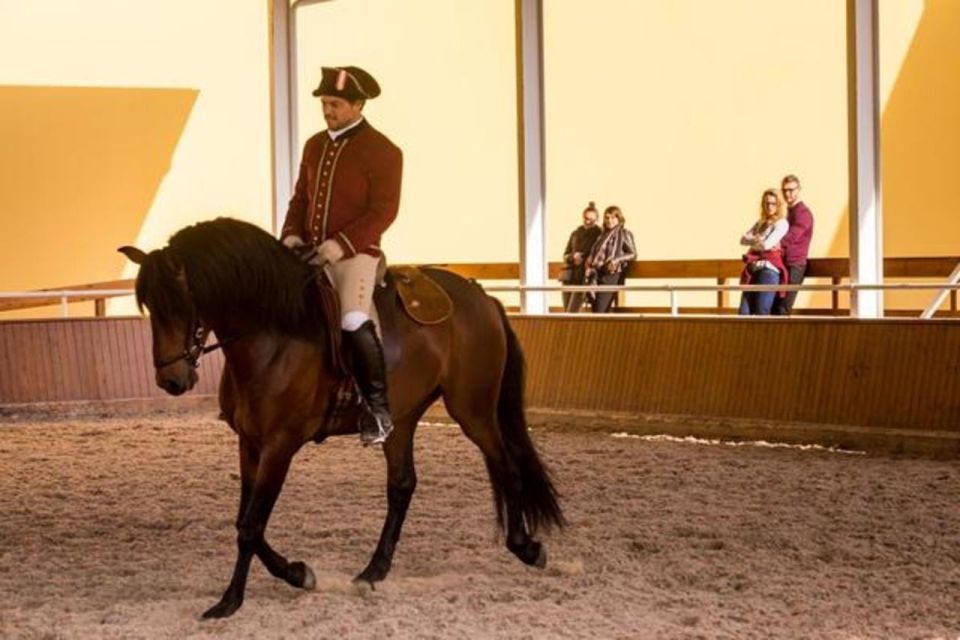
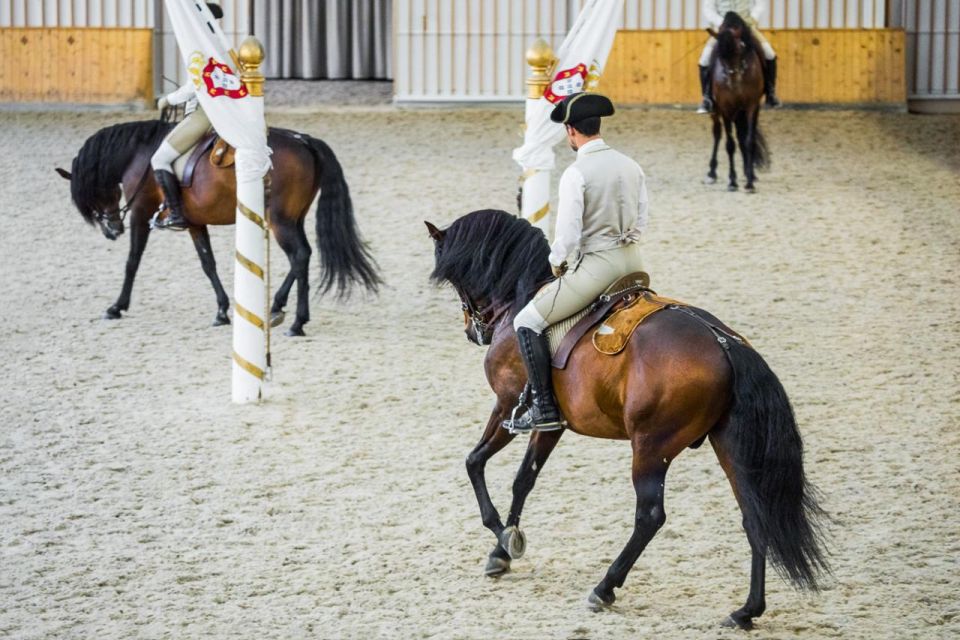
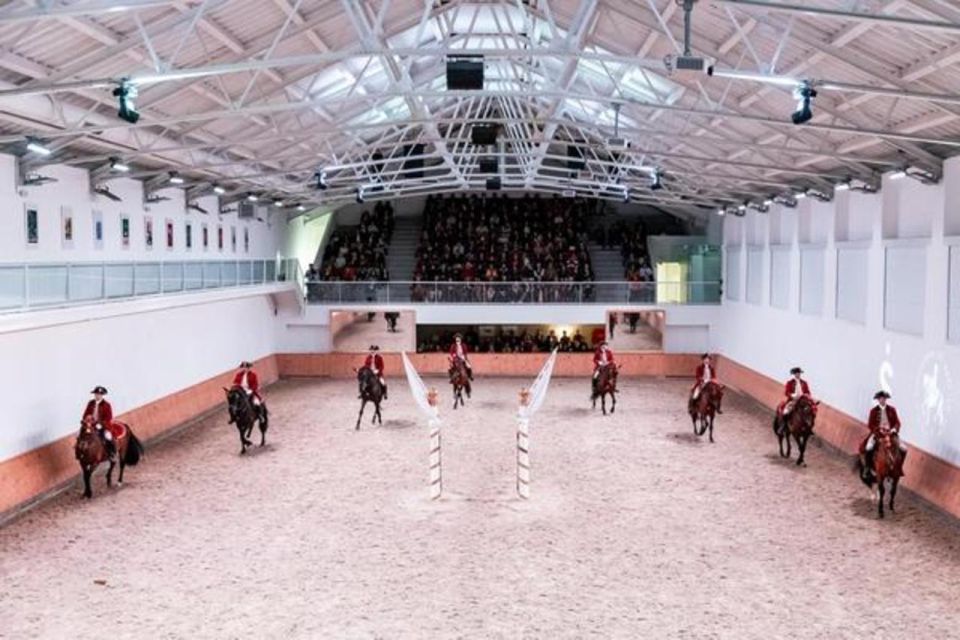
After warm-up, the energy shifts. You’ll attend training and rehearsals of Equestrian Art exercises—complex drills and choreographies created to recreate the charming atmosphere of an 18th-century court.
This is the part that feels most theatrical, especially with the period music and the setting. But the practical win is that you get to see rehearsal logic. Choreography at this level doesn’t happen by accident. You’ll notice how the rehearsal environment turns into something closer to performance as everything lines up.
The audio guide helps a lot here. It explains the spaces and introduces different horses, so you’re not stuck watching pretty movement without understanding the names or the purpose behind what you’re seeing.
One timing tip: don’t treat the rehearsals as purely a “watch and then leave” segment. If you arrive during the better window (around 11:00–12:30), you’ll have a smoother flow of activities and less of that awkward feeling of waiting for the next piece.
Audio guide and what to bring so it actually works
You’ll get an audio guide included, in English, Portuguese, and French. Since headphones are not included, bring your own. Even basic earbuds make the experience more focused, and you’ll miss less while you look around.
The other “don’t forget” item is your phone. Bring a charged smartphone and make sure you have internet access, because after booking you’ll receive an email with instructions to access and download both your ticket and your audioguide. Also check your email spam folder, just in case it hides there.
Comfort matters too. Wear comfortable shoes. You’ll spend time standing and moving between ring and patio areas, and classical equestrian viewing doesn’t usually come with lots of seating comfort built in.
Finally: photography rules matter. Photography isn’t included, and flash photography is not allowed. If you love photos, plan for non-flash viewing only, and treat this as a memory experience first.
Price and value: why this $17 session can feel like more
At about $17 per person, this can look too inexpensive for what you get—but the value is real because you’re purchasing access to multiple layers of the training world.
You’re not paying just for entertainment. Your ticket includes:
- entry to The Portuguese School of Equestrian Art
- watching daily training of Lusitano Horses from the Alter Real Stud Farm
- an audio guide
That combination is what makes the price feel fair. Many attractions sell you one viewpoint. This gives you a working stable angle, plus a rehearsal angle, plus guided context.
What you might pay more for elsewhere is exactly what you’re getting here: the “why” behind the movement—rhythm, health, physical needs—rather than only the final performance look.
If you’re doing Lisbon on a budget, this is one of those rare buys where you feel like you got the story, not just the surface.
Logistics that trip people up: ticket type and meeting point
Here’s the one snag to take seriously: meeting point instructions are strict about what ticket format staff accept.
You’ll need to show your Book N Tour ticket to staff at the reception desk. A GetYourGuide QR code, voucher, or GYG ticket isn’t what they’re asking for. Plan to have the correct document ready on your phone or as directed by your confirmation email.
Also, the experience is hosted/greeter supported in English and Portuguese, so if you arrive flustered, you should still be able to sort yourself out quickly.
If you like planning ahead, do the prep before you go:
- download your audio guide instructions from the email
- locate the right ticket you’re meant to show
- bring headphones so you can use the audio right away
Who should book this Lusitano training experience?
This experience is a strong fit if you:
- like horses and want to see training mechanics, not only final show moments
- care about how trainers respect rhythm and horse health
- enjoy period atmosphere with music, costume, and court-style staging
- prefer short, focused morning activities inside one organized session
It may feel less ideal if you:
- only want a big, fully staged show with maximum spectacle time
- want hours of stables only, with no rehearsals or movement to a second location
- rely heavily on taking lots of photos (flash is banned, and photography isn’t included)
Overall, it’s best viewed as an education-in-motion experience with just enough theatrical flair to keep it fun.
Should you book? My honest call
Yes, you should book this if you want the practical side of classical riding—warm-ups, care routines, and rehearsals—inside a morning in Lisbon. The value is strong for the price because you’re getting guided context plus close viewing of horse training.
I’d only skip it if you’re chasing a long, show-only experience or if you hate the idea of short time windows. Otherwise, this is exactly the kind of Lisbon activity that feels specific and authentic, not generic.
FAQ
What time does the activity run?
The training experience runs from 10:00 to 13:00. The best time to visit is listed as 11:00 to 12:30.
How much does it cost?
The price is listed as $17 per person.
Is transport included?
No, transport isn’t included.
What’s included with the ticket?
Your ticket includes entry to The Portuguese School of Equestrian Art, watching the daily training of Lusitano Horses from the Alter Real Stud Farm, and an audio guide.
Do I need to bring headphones?
Headphones are not included, so you should plan to bring your own if you want to use the audio guide comfortably.
What photography rules should I know?
Photography is not included, and flash photography is not allowed.
Is it wheelchair accessible and can I cancel?
The activity is wheelchair accessible. You can cancel up to 24 hours in advance for a full refund.