REVIEW · CITY TOURS
Lisbon City Tour: THE MOST COMPLETE
Book on Viator →Operated by RM Portugal Tours · Bookable on Viator
Lisbon, in five hours, with big payoff. This private, English-language city tour strings together Alfama, Baixa, and Belém so you understand not just what to see, but why Lisbon looks the way it does. You also get viewpoint time in the mix, so the city makes sense from street level and from above.
I especially like the private-group feel, which keeps the pace comfortable (and can even turn into a one-on-one tour). I also love the Pastéis de Belém factory stop, because it’s the kind of experience that feels practical and real, not just sightseeing. The one drawback to weigh is rare but serious: there’s at least one reported no-show and lack of response, so I’d plan to confirm your timing and keep your guide contact details handy.
In This Review
- Key highlights worth your attention
- Alfama: the maze that explains Lisbon’s soul
- Lisbon Cathedral area and St. Anthony’s birthplace connection
- Baixa and the 1755 earthquake: why the streets look planned
- Edward VII Park viewpoints and the Portugal–England thread
- Belém: shipyard legacy, explorer routes, and the monuments
- Pastéis de Belém factory tasting: the practical cultural checkpoint
- Miradouro Senhora do Monte: quiet viewpoint time
- Miradouro das Portas do Sol: the classic Lisbon balcony view
- Mosteiro dos Jerónimos: the monastery you came for
- Price and value at $208.50 for a 5-hour private loop
- Weather, walking, and how to be comfortable
- What can go wrong (and how to reduce that risk)
- Who this tour suits best
- Should you book Lisbon City Tour THE MOST COMPLETE?
- FAQ
- How long is the Lisbon City Tour?
- What is the price per person?
- Is this tour offered in English?
- Is it a private tour?
- Where is the meeting point and when does the tour start?
- Are attraction tickets included?
- What is the cancellation window for a full refund?
Key highlights worth your attention
- Alfama’s old Medina feel with context on Moorish-era defense and the neighborhood roots of fado and saudade
- Baixa and the 1755 earthquake story tied directly to the city’s wider streets, squares, and rebuilding logic
- Belém’s explorer connection—shipyards, routes to India, Africa, and Brazil, and the monuments linked to that era
- Two miradouros that balance quiet calm (Senhora do Monte) with classic views (Portas do Sol)
- Pastéis de Belém factory tasting that keeps the focus on a made-in-Lisbon tradition
- A guide who can match the weather—one guide reportedly carried an umbrella when it was raining
Alfama: the maze that explains Lisbon’s soul

If you want the Lisbon people actually talk about, start in Alfama, the oldest district. This area has that old-medina vibe—small lanes, tight turns, and rows of houses that feel built for defense. The tour frames it with the historical layer most visitors miss: the neighborhood functioned as part of the defense system during the Arab period in Portugal, from the 8th to the 12th centuries, and then shifted after the Christian reconquest toward what you’d later associate with areas like Mouraria.
Here’s what I like about beginning in Alfama on this kind of loop: it sets the emotional tone early. You’re not just walking streets; you’re getting the idea behind them. The guide also connects fado to Alfama, explaining that this music was born there and tied to the Portuguese feeling of longing, often expressed as saudade. It’s the kind of context that makes fado later feel less like a tourist performance and more like something rooted in place.
Practical note: Alfama is compact but it’s not flat. Plan for uneven streets and bring shoes you trust on cobbles. Even if your schedule is tight, this stop is timed for a focused look rather than a rushed sprint.
You can also read our reviews of more city tours in Lisbon



Lisbon Cathedral area and St. Anthony’s birthplace connection
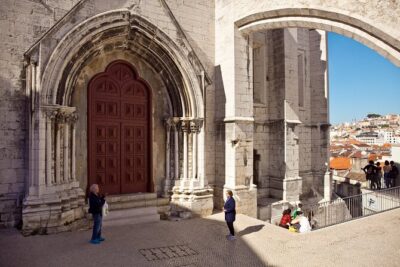
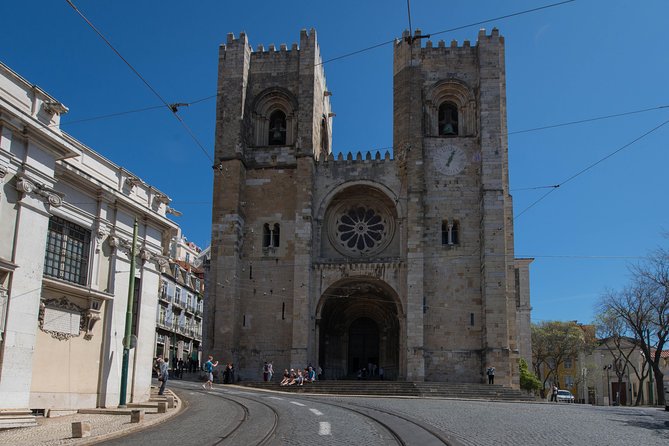
Next comes the Lisbon Cathedral area and the church of St. Anthony, described as being built on the exact place where St. Anthony was born. The tour’s explanation is specific and layered: the building work is tied to D. Afonso Henriques in the 12th century, after Lisbon’s conquest from the Moors, and the site is also linked to an earlier mosque.
The other point you’re meant to carry out of this stop is how Lisbon’s older layers keep getting reshaped. The tour brings up earthquakes felt in Lisbon and how they changed the city over time. That matters because when you later see rebuilding decisions in Baixa, you’ll understand this is not a one-time event in the city’s story—it’s a recurring force.
One consideration: the ticket for this stop is not included, so budget a little extra for entry. If you prefer to travel with a clear idea of costs, I’d check what’s covered for you versus what you’d need to pay at the site.
Baixa and the 1755 earthquake: why the streets look planned
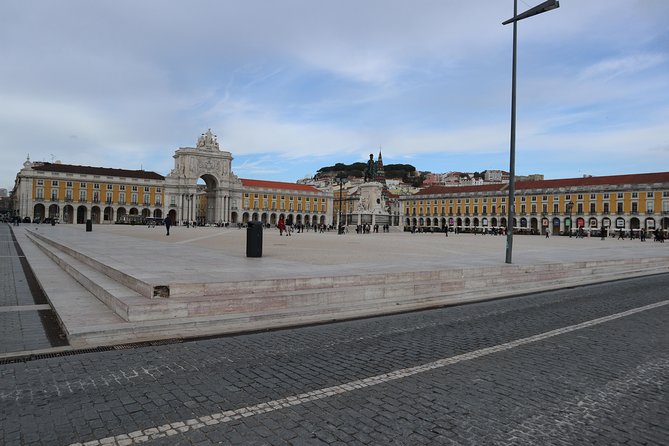
Then you move into the center of Lisbon, Baixa, where the tour turns toward the big turning point: the 1755 earthquake. This is where the tour stops being only scenic and becomes a lesson you can see with your own eyes. The guide explains how the earthquake affected Portuguese minds and even Portuguese architecture—so the city’s look is treated as a response, not just decoration.
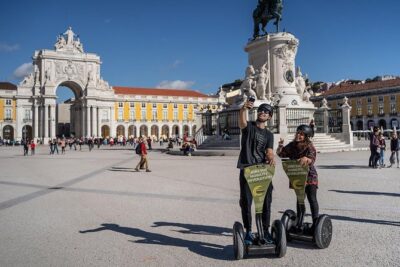
The key detail I take from this part: after the earthquake, the buildings were rebuilt in a different way, with wider streets and many squares. The tour frames these choices as a plan for the future—designing streets and spaces in a way that anticipates something like a repeat disaster. It also notes 18th-century anti-seismic construction and the role of Marquês de Pombal, who was responsible for rebuilding Lisbon along with major economic and social changes that followed.
Why this works on a city tour: once you connect the architecture to the event, you start noticing urban planning decisions you’d otherwise ignore. You don’t just see straight lines and open squares; you understand why someone decided to build that way.
If you’re short on time in Lisbon, this stop is a value add because it gives you a lens. Later, when you wander independently, you’ll remember what the city tried to prevent and how that affected daily life.
Edward VII Park viewpoints and the Portugal–England thread
Next: Parque Eduardo VII, at the top where you can look down over Lisbon. The tour uses this view as more than a photo break. It connects the park location and its namesake—King of England—to a larger story about Portugal and England, including treaties and alliances.
The tour also ties that thread to how these relationships affected Portugal’s colonial story, mentioning the Portuguese colony in Brazil and a later moment when it became independent. It’s presented as cause-and-effect rather than trivia, so it feels like you’re learning the reason Lisbon’s history isn’t only Portuguese—it’s tied into Europe and beyond.
Then the viewpoint becomes a geometry lesson. The tour points out why Lisbon is called the city of seven hills, and it links that idea back to the meaning behind Baixa. Even if you’ve already heard the seven-hills label, a viewpoint like this helps make it more concrete.
This stop is listed with free admission, which is always a nice bonus. What you’ll pay for instead is time in the daylight, so if you can, aim to bring a layer. Views are great, but Lisbon winds can change fast.
Belém: shipyard legacy, explorer routes, and the monuments
Belém is where the tour really shifts gear into grand-scale Lisbon. The district sits west of the center and is described as a mix of historic monuments, museums, gardens, and the Tagus estuary waters. The tour frames Belém as a shipyards and ports zone, and from here, Portuguese explorers in the 15th century set off along sea routes to India, Africa, and Brazil.
This is the kind of stop where context matters because the monuments can feel like they’re telling only one story—ships, kings, stonework. The tour helps you understand that those explorers were funded by wealth from the colonies, and that the prosperity and ambition left a physical mark in Belém.
From there, the tour points you toward the Belém tower and the Jeronimos Monastery area. For the tower stop, admission is not included, so check your expectations and be ready to pay entry if you want to go inside. The good news is that the monastery stop later is listed as free admission in this tour format, so you may get at least one of the big monuments without an extra ticket on top.
One more thing I appreciate here: the tour ties the explorer monuments to a broader timeline, including the 16th-century Jeronimos reference. That keeps the experience from feeling like a single era photo op.



Pastéis de Belém factory tasting: the practical cultural checkpoint
After monuments and viewpoints, you get the most Lisbon of all experiences: Pastéis de Belém. The tour includes a visit and tasting at the factory, calling it a sweet that has survived for a century and has not changed its formula of success.
The tour also highlights a detail that makes the tasting feel more grounded than a generic food break: the desire of the first family members to keep the sweets on sale in one place. That turns the stop into a statement about tradition and consistency, not just sugar on a busy day.
This stop is listed as free admission, which is a strong value perk because food tastings can add cost fast on tours. And even if you’re not a pastry superfan, this is a good way to end a dense history block with something you can actually taste and remember.
I’d suggest you treat it as a timing anchor. Eat here while the tour is still moving, then save room if you plan any independent walking afterward.
Miradouro Senhora do Monte: quiet viewpoint time
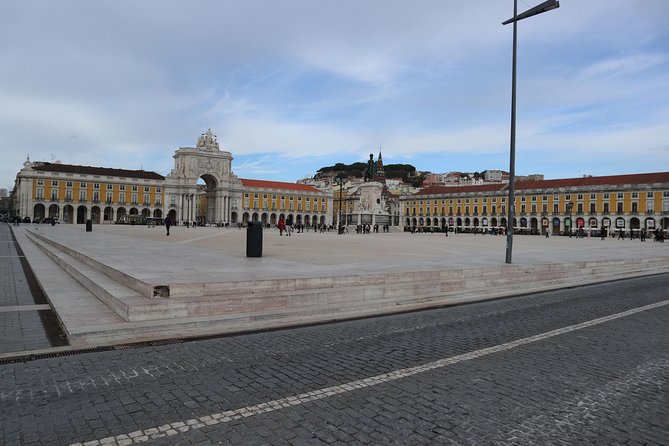
From Belém’s big-canvas feel, the tour heads to Miradouro Da Senhora Do Monte. This viewpoint is described as one of Lisbon’s most important landmarks, yet also among the quietest and less sought-after viewpoints. That combination is rare in a city where most people head to the same few photo spots.
The value of having a less crowded viewpoint on a structured tour is simple: you can actually look. It’s easier to take in the city’s layout without fighting for space, and you can appreciate the hills and angles the tour talked about earlier.
Admission here is free. The real cost is time and walking legs. If you’re prone to getting tired, pace yourself and plan your breaks—this stop is only about 30 minutes, so you’ll want your attention ready when you reach the top.
Miradouro das Portas do Sol: the classic Lisbon balcony view

Then you switch to Miradouro Das Portas Do Sol, described as a kind of balcony Lisboners would want at home. The tour frames the view as the kind that makes Lisbon feel like Lisbon—city blocks, hills, and rooftops arranged into a real pattern rather than a random sprawl.
If Senhora do Monte is the quieter palate cleanser, Portas do Sol is the famous view you want to check off. And because the stop is listed as free, you’re not paying again for another look. You’re paying with your knees and lungs instead—so bring water and go slow.
This is also a smart place to sit for a minute and let the earlier history sink in. When you’ve seen the rebuilding idea in Baixa and the explorer story in Belém, a panoramic overlook gives your brain a way to connect it all.
Mosteiro dos Jerónimos: the monastery you came for
Finally, you reach Mosteiro dos Jerónimos (Santa Maria de Belém). The tour gives you the key facts upfront: it’s a Portuguese monastery, built at the end of the 15th century by King D. Manuel I, and handed over to the Order of Saint Jerónimo. It’s located in the Belém parish in Lisbon.
Admission is listed as free for this stop in this tour structure, which is a major value point. On many Lisbon itineraries, the big monument tickets feel like they pile up. Here, at least one major stop is treated differently.
Also notice how the tour sets this up. You don’t jump straight into the monastery with zero context. You’ve already been told about Belém as a shipyard and departure point for the 15th century. That makes the monastery feel like part of the same story—religion and empire, devotion and power, all in stone.
Time check: this stop is longer than the others—about 1 hour—so you get a real chance to slow down. Use that time to look at details without feeling rushed.
Price and value at $208.50 for a 5-hour private loop
The price listed is $208.50 per person for about 5 hours. Whether that feels like a good deal depends on two things: your need for a guide and how you prefer to spend limited vacation time.
Here’s where this price can feel fair:
- It’s a private tour, so you’re not sharing your pace with a bigger group.
- You’re hitting multiple major districts across Lisbon in a single run: Alfama, Baixa, Belém, and two miradouros.
- You get a Pastéis de Belém factory tasting, which many half-day tours skip or reduce to a quick street purchase.
Where you should be cautious:
- Not every stop lists ticket costs as included. The Lisbon Cathedral/St. Anthony-related stop is marked as not included, and the Torre de Belém stop is also not included.
- If you hate surprise expenses, you’ll want to plan for at least some paid entry.
For me, the best way to judge value is to compare this to doing it all yourself. Lisbon can be easier to enjoy when someone else connects history to street layout and when you’re not guessing what order makes sense. That’s what this tour is trying to do: give you a clean storyline across the city.
Weather, walking, and how to be comfortable
Lisbon tours are never just “stand and look.” Even with timed stops, you’ll be moving between neighborhoods and viewpoints. This format mixes compact sights with elevated viewpoints, which usually means some uphill effort.
One review insight that matters: a guide reportedly had an umbrella when it was raining. That tells me weather can affect comfort here. I’d bring your own small umbrella or a light rain layer, just in case.
Also, since the tour is in English and confirmed at booking, you can expect communication to be straightforward. The private setup can help if you want slightly more time at a viewpoint or if you need to slow down.
What can go wrong (and how to reduce that risk)
Most of what you’ll want is already set up: the meeting point is fixed, the tour starts at 9:30 am, and the experience ends back at the meeting point. Still, one serious concern shows up in the available feedback: one client reported a no-show and no response through the app or phone.
You can’t erase that risk completely, but you can lower it:
- Confirm the day before and again the morning of.
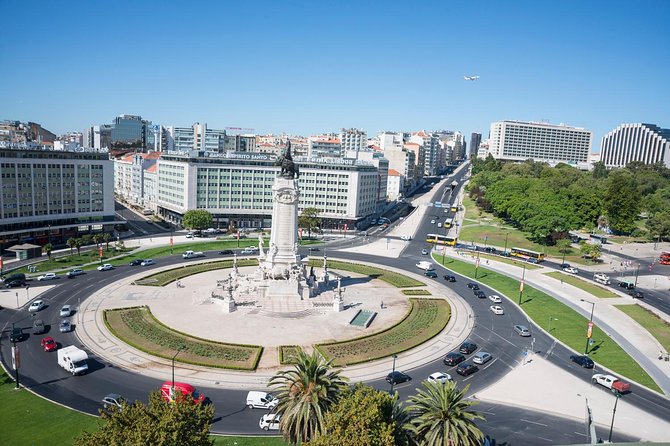
- Arrive a little early at Pç do Marquês de Pombal 8A.
- Keep the provider’s contact method accessible on your phone.
Private tours are generally smoother than big groups, but they still depend on the guide showing up on time. Being prepared is the best defense.
Who this tour suits best
This is a good match if you:
- Want one guided loop that covers major Lisbon areas without building your own route from scratch.
- Care about the connection between landmarks and the city’s turning points—like the 1755 earthquake and Belém’s explorer-era role.
- Prefer a guided explanation while still being able to stop for the views.
It’s especially fitting for early planning because it helps you understand Lisbon’s structure. If your schedule is short, you’ll likely appreciate that your day includes both history-heavy stops and look-outs.
If you’re the type who hates walking or you need fully step-free sightseeing, you might find parts of this day more demanding than it sounds, since Lisbon’s hills and viewpoints naturally involve movement.
Should you book Lisbon City Tour THE MOST COMPLETE?
I’d book this tour if you want a tight, guided hit list that makes Lisbon’s layout and history feel connected. The combination of Alfama’s old-medina atmosphere, Baixa’s rebuilding logic after the 1755 earthquake, Belém’s explorer connection, and two viewpoint moments gives you a full picture without spending days piecing it together.
You should think twice if surprise ticket costs would stress your budget, since at least two areas are listed as not included. And you should be alert to the rare no-show concern by confirming ahead of time and keeping contact options ready.
If you’re willing to do a bit of walking and you want a guided storyline in English, this feels like a smart way to spend a single morning turning Lisbon into a place you understand.
FAQ
How long is the Lisbon City Tour?
The tour runs for about 5 hours.
What is the price per person?
It costs $208.50 per person.
Is this tour offered in English?
Yes, it is offered in English.
Is it a private tour?
Yes. It is private, meaning only your group will participate.
Where is the meeting point and when does the tour start?
You meet at Pç do Marquês de Pombal 8A, 1250-160 Lisboa, Portugal, and the start time is 9:30 am.
Are attraction tickets included?
Some stops are listed as admission free, while others are listed as admission ticket not included. For example, the Lisbon Cathedral/St. Anthony stop is not included, and the Torre de Belém stop is not included. Mosteiro dos Jerónimos is listed as free admission on this tour.
What is the cancellation window for a full refund?
You can cancel up to 24 hours in advance for a full refund. If you cancel less than 24 hours before the start time, the amount paid will not be refunded.