REVIEW · BELEM TOURS
Lisbon (All City) Private Tour – Including Belém & Cristo Rei
Book on Viator →Operated by Yellow Cab TT Tours, Unipessoal, Lda. · Bookable on Viator
Lisbon moves fast when someone sets the rhythm for you. This private 8-hour loop stitches together modern Parque das Nações, old-school Alfama, and the Belém classics, then caps it with the big views from Cristo Rei. You’re also riding in an air-conditioned minivan with hotel pickup and drop-off, which matters when the day runs long.
I love how much you get without feeling rushed. And I like that the plan can be adjusted to your pace, whether that means lingering at a viewpoint or skipping a stop if you’re already over hills and stairs. One possible drawback: it’s a full day, and a few major sights (like Jerónimos and the Cristo Rei area) have admission tickets not included, plus no lunch is provided.
In This Review
- Key Things To Know Before You Go
- Lisbon in One Day: What This 8-Hour Private Loop Actually Covers
- Price and Value: Why $259.50 Can Make Sense
- How the Day Flows: Parque das Nações to Alfama to Belém and Cristo Rei
- Parque das Nações: Expo 98 Engineering and the Vasco da Gama Bridge Views
- Alfama and São Jorge Castle Hill: Old Lisbon Built on Layers
- Miradouro da Senhora do Monte: The View Stop You’ll Actually Remember
- Lisbon Cathedral and the São Jorge–Baixa Transition: Past the Earthquakes
- Baixa Squares and Avenida Zones: Rossio to Praça do Comércio
- Edward VII Park, Bairro Alto Links, and the Big Church on the Hill
- Cristo Rei: The Best View for the Least Effort (Minus the Ticket)
- Jerónimos and Torre de Belém: Manueline Detail and Classic Photo Time
- Padrão dos Descobrimentos: The Monument That Connects the Whole Route
- Who This Tour Fits Best (and When to Choose Something Else)
- Should You Book This Lisbon Private Tour?
- FAQ
- How long is the Lisbon (All City) Private Tour?
- Is hotel pickup included?
- Is this tour private or shared?
- What language is the tour offered in?
- Is lunch included?
- Are admission tickets included for all stops?
- What’s the cancellation policy?
- Does the tour provide a ticket for entry?
Key Things To Know Before You Go
- Door-to-door pickup: you start with less friction and finish without navigating transit at the end of the day.
- Expo 98 meets classic Lisbon: you’ll see modern engineering in Parque das Nações and then head into historic neighborhoods.
- Photo-first viewpoints: Miradouro da Senhora do Monte is built for panoramic shots.
- Alfama is about angles: expect hills and street-level walking around the São Jorge area and cathedral zone.
- A guide who can tailor: one guide, Catarina, was praised for being fun, knowledgeable, and for tailoring the day to what her group wanted, including food tips like where to try sardines.
Lisbon in One Day: What This 8-Hour Private Loop Actually Covers
This is the kind of tour that helps you get your bearings fast. In one day, you cover Lisbon’s two biggest “moods”: the sleek, riverfront Lisbon of Expo 98 and the winding, older streets around Alfama, the cathedral, and the downtown squares. Then you shift gears to the south bank for the viewpoint at Cristo Rei and the historic Belém sites.
Because it’s a private tour, your timing isn’t locked to a mass schedule. If you want more time at a miradouro (viewpoint) or you’re trying to dodge the midday heat, you can ask for changes. That flexibility is a big deal in Lisbon, where the city’s steep streets can turn a “short walk” into a workout.
The best way to think about it: it’s not only sightseeing. It’s a guided route that teaches you how the city is laid out, so the next day you’ll know where you are—without constantly checking your phone.
You can also read our reviews of more city tours in Lisbon



Price and Value: Why $259.50 Can Make Sense
At $259.50 per person for about 8 hours, you’re paying for convenience and a private vehicle, not just a list of landmarks. If you’ve ever tried to string together Parque das Nações, Alfama, and Belém on public transport, you know how quickly time disappears—especially with hills, long walks, and waiting around.
You also get:
- Air-conditioned minivan transport
- Hotel pickup and drop-off
- A mobile ticket
- A plan that can be adjusted to your preferences
Does it cost more than a basic group bus? Yes. But this isn’t just about “more comfort.” It’s about smarter use of your limited time. Lisbon rewards good routing, and this itinerary is clearly built to cover multiple zones efficiently.
One thing to factor in: lunch isn’t included. So if you book this on a day when you’d rather skip planning, you’ll likely budget for your meal somewhere along the route (especially around the Alfama and Baixa areas).
How the Day Flows: Parque das Nações to Alfama to Belém and Cristo Rei
The route is structured to reduce backtracking. You start in the north with Parque das Nações, move into old Lisbon around Alfama, then work through the downtown squares and boulevards, and finally head to the south side for Cristo Rei and Belém.
That order also helps with timing for views and photos. You get a big panorama moment at Miradouro da Senhora do Monte, then you switch from viewpoints to streets and monuments, and later you return to the river to see Lisbon from a higher vantage point at Cristo Rei.
Keep in mind: Lisbon’s hills are real. Even when you’re transported between areas, stops like São Jorge Castle Hill and the Alfama neighborhood involve walking and stairs. If you’re sensitive to uneven cobblestones, tight streets, or steep gradients, plan for slower pacing.
Parque das Nações: Expo 98 Engineering and the Vasco da Gama Bridge Views
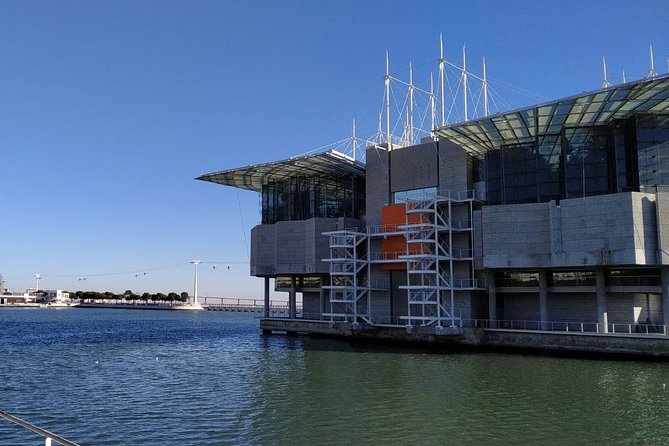
Parque das Nações is Lisbon’s “new city” story. It was built for Expo 98, when the riverfront was brought back into the city’s life. The vibe here is different from the rest of Lisbon: you’ll see contemporary architecture, modern waterfront space, and engineering landmarks set up for big-sky photos.
This stop includes several iconic sights:
- Vasco da Gama Tower (145 meters): a lattice tower named after the explorer.
- Expo 98 main entrance area: a structure tied to the world exhibition legacy.
- Gare do Oriente-style intermodal station designed by Santiago Calatrava: inaugurated in 1998 and known for its large-project recognition.
What I like about starting here: you’re not only visiting a neighborhood. You’re learning Lisbon’s geography. The views toward the Vasco da Gama Bridge help you understand the city’s scale and how the Tagus River shapes movement.
Even if you’re not an architecture nerd, this part works because it gives your brain a visual “map key.” Then, when you later hit old Alfama and Baixa, everything clicks faster.
Alfama and São Jorge Castle Hill: Old Lisbon Built on Layers
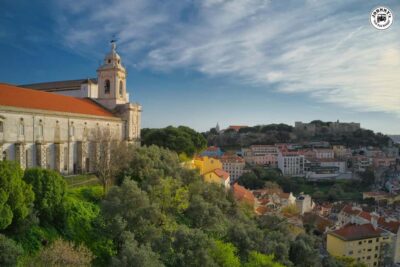
Alfama is Lisbon’s oldest district, arranged on a slope between São Jorge Castle and the Tagus River. It’s the neighborhood where history shows up in layers: the hill has been occupied by different civilizations because it was strategically placed. Today, it’s also famous for fado bars and restaurants, so you’ll likely smell dinner cooking even if you don’t stop.
A highlight here is the São Jorge Castle Hill area. The timeline is the point: the site was used by different peoples, and after Lisbon was conquered in 1147 by D. Afonso Henriques, the castle served as a royal palace, military barracks, national archive, and now it’s a national monument and museum.
Even if you don’t go fully inside every museum area, the hill itself is the experience. From the streets around it, you can feel how Lisbon grew vertically. Just be ready for uneven footing and sudden slopes.
You can also read our reviews of more private tours in Lisbon






Miradouro da Senhora do Monte: The View Stop You’ll Actually Remember
If you like photos—or you just like feeling like you got the “real Lisbon” moment—this is your payoff. Miradouro da Senhora do Monte is one of the highest viewpoints in Lisbon, overlooking neighborhoods like Mouraria and Graça, with major landmarks in the distance.
This is where you slow down. It’s brief (about 15 minutes planned), but it’s exactly the kind of stop that makes the day worth it. You’ll understand where Lisbon’s neighborhoods sit relative to the river, and you’ll have a clearer sense of directions for the rest of the trip.
Practical tip: bring water if it’s warm. Viewpoints can drain energy fast, because you’re standing still, looking up and out.
Lisbon Cathedral and the São Jorge–Baixa Transition: Past the Earthquakes
Next comes Lisbon Cathedral, described as the oldest church in the city. It was built after the 1147 conquest, and it survived major earthquakes while being modified and restored over time. The architecture is a mix of styles, and it became a National Monument in 1910.
Why this works on a private tour: you don’t just walk through a stop. You learn how the city rebuilt itself after disaster—without drowning in dates. Lisbon Cathedral is a good example of how layers of time survive when cities adapt.
From there you move into the wider downtown story around Martim Moniz legend and shifting squares. The Martim Moniz area ties a medieval siege story to a present-day square where multiple cultures mingle. Around the same downtown zone, you also see how the 1755 earthquake reshaped what used to be a hospital area into an open market square and later into an open space.
That shift is the “Lisbon theme” of the day: destruction, rebuilding, and repurposing space.
Baixa Squares and Avenida Zones: Rossio to Praça do Comércio
Downtown Lisbon is where you can feel the post-earthquake planning. Praca Dom Pedro IV (Rossio) is the heart of Baixa, surrounded by buildings from the reconstruction era issued after the 1755 earthquake under Marquês de Pombal. From Rossio you can reach walking streets toward the riverside through Rua Augusta and Praça do Comércio.
You’ll also visit Terreiro do Paço, the big plaza connected to Paços da Ribeira—the royal palace that was destroyed in the 1755 earthquake. After that, the rebuilding plan completely remodeled the area, and today it remains one of the biggest city squares in Europe.
Then there’s Rua Augusta, crowned by the triumphal Arco da Rua Augusta, built in the 19th century to celebrate reconstruction. If you want classic Lisbon “walk-with-your-feet” scenery, this is it.
Finally, the tour moves toward independence symbolism with the Restoration of Portuguese independence focus at the square dedicated to December 1st, 1640, and the Avenida da Liberdade direction where you can also see the traditional calçada sidewalk style made by hand with stone cubes.
This section is great when you want a mix of architecture and easy orientation. You’ll walk less than you would on your own, but you’ll get the right visual anchors.
Edward VII Park, Bairro Alto Links, and the Big Church on the Hill
As the route continues, you pass through the flow between downtown and the higher areas. Eduardo VII Park (26 hectares) is named for King Edward VII of the United Kingdom, who visited Portugal in 1902. It’s a calm contrast after the street geometry of Rossio and downtown plazas.
Then the route includes a segment related to Chiado and Bairro Alto—neighborhoods tied to Lisbon’s growth after the 16th century and later expansion due to commercial development. This part matters because Chiado connects downtown to the more fashion and arts vibe you’ll hear about in Lisbon.
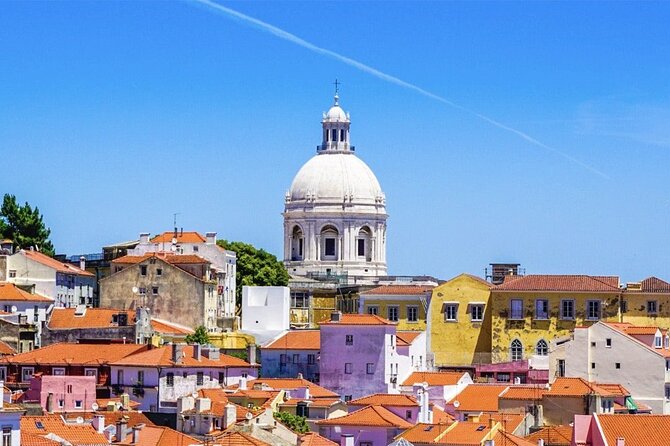
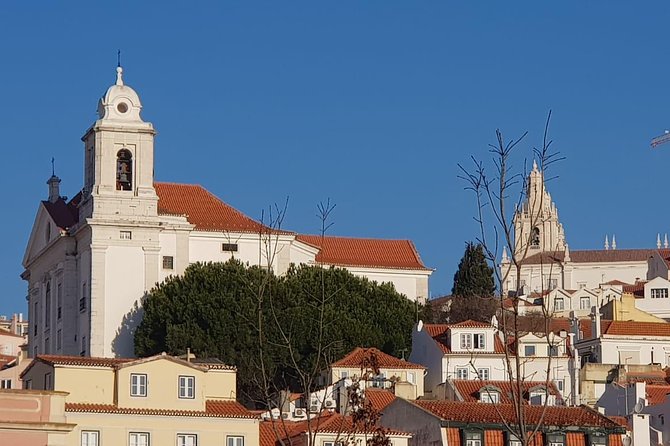
The tour also includes the Basilica of the Sacred Heart of Jesus at a hilltop position. It’s a major Baroque/neo-classical style church with a huge dome and twin bell towers. It was built as part of a vow connected to Queen Maria I’s devotion, and it can be seen from far away.
If you’re only choosing one “big church” moment, this is a strong candidate because it’s built for visibility, not just interior appreciation.
Cristo Rei: The Best View for the Least Effort (Minus the Ticket)
Now for the emotional payoff: the Santuario Nacional de Cristo Rei viewpoint on the south side of the Tagus. Lisbon looks different from here, and the tour explicitly frames this as the best view side of the river.
Cristo Rei is over 100 meters tall and finished in 1959. It was built as a vow tied to the Portuguese episcopate, with the stated goal of keeping the country in peace during World War II. It’s a landmark meant for seeing, not for museum time.
Planned duration is about 30 minutes, and admission isn’t included. That’s a key consideration. If you’re budgeting tightly, check your expected ticket costs in advance. Also, the viewpoint is the point—so if you’re expecting an all-day museum experience, this part is more about the panorama.
Jerónimos and Torre de Belém: Manueline Detail and Classic Photo Time
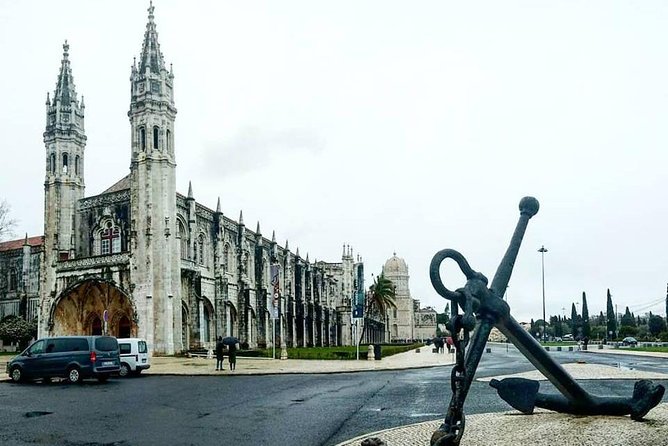
Belém is where Lisbon turns into an “Age of Discoveries” story. The tour includes Mosteiro dos Jerónimos, a UNESCO World Heritage Site and one of the strongest examples of the Portuguese Late Gothic Manueline style.
Construction began in 1501 and took over 100 years to finish. That long build time helps explain why the architecture feels dense—there’s a reason it looks the way it does. Time here is planned for about 30 minutes, and admission isn’t included, so you’ll want to decide whether to buy tickets once you arrive.
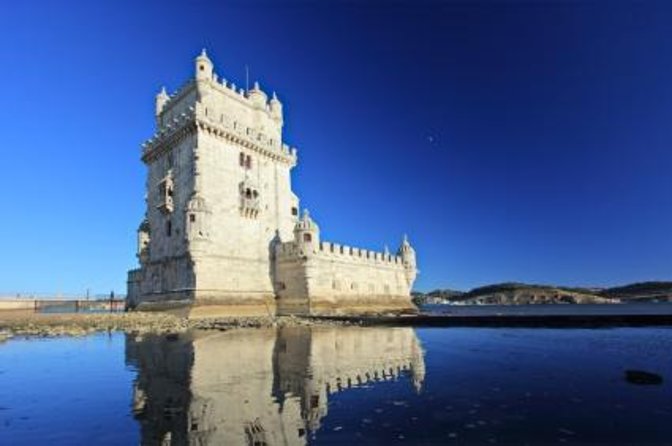
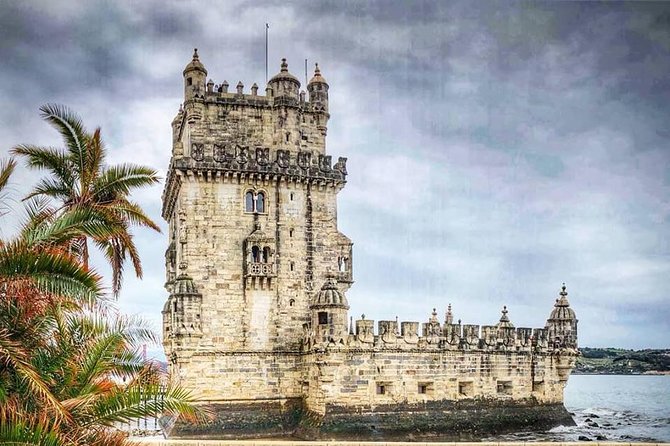
Then comes Torre de Belém. Originally built in 1520 and commissioned by King Manuel I, it was built near the harbor to protect the Portuguese ships setting out overseas. The tower is also flagged as a mandatory photo stop, and even with a short visit, it’s one of those Lisbon icons that immediately reads as “yes, you’re in the right place.”
Planned duration is about 10 minutes, and admission isn’t included.
If your priority is maximizing big-name sights, this is your section. If your priority is slow, deep viewing, you might feel the time is short. Either way, you’ll cover the landmarks people actually come to see.
Padrão dos Descobrimentos: The Monument That Connects the Whole Route
This stop centers on the Padrão dos Descobrimentos, built in 1940 for the Great Exhibition of the Portuguese World. It celebrates the Portuguese Age of Discoveries, and in 1960 it was renewed for the 5th centenary related to Henry the Navigator.
Even if monuments aren’t your main interest, this one helps connect the Lisbon pieces. Parque das Nações gives you modern engineering. Alfama gives you older layers and survival. Belém ties it to expansion and maritime identity. It’s a strong “through-line” for a day like this.
Who This Tour Fits Best (and When to Choose Something Else)
This tour is a good match for you if:
- You want one guided day that covers modern, historic, and waterfront Lisbon.
- You prefer door-to-door pickup and air-conditioned comfort.
- You like having photo viewpoints handled for you, with enough context to understand what you’re seeing.
It might be less ideal if:
- You hate long days. This is an approx. 8-hour schedule with multiple zones.
- You want lunch included or you don’t want to manage your own meal.
- You strongly dislike paying separate entrance fees, since some major sights have admission not included.
Also, Lisbon’s old neighborhoods involve walking on slopes and uneven surfaces. The private vehicle helps, but your time inside Alfama and around the castle-area region still involves real streets.
Should You Book This Lisbon Private Tour?
If you want a smart, efficient way to hit Belém + Cristo Rei plus the key Lisbon neighborhoods without constant transit wrangling, I think this is a solid book. The value isn’t just the itinerary—it’s the pacing, the private guide relationship, and the fact that you’re transported in comfort while someone else handles the “how do I connect these areas” problem.
Before you book, just plan for the practical bits: bring your walking shoes, expect some admission tickets not included at major stops, and plan where you’ll eat since lunch isn’t included.
FAQ
How long is the Lisbon (All City) Private Tour?
It runs for about 8 hours.
Is hotel pickup included?
Yes. Hotel pickup and drop-off are included, and you just share where you’re staying in Lisbon.
Is this tour private or shared?
It’s private. Only your group participates.
What language is the tour offered in?
The tour is offered in English.
Is lunch included?
No. Lunch is not included.
Are admission tickets included for all stops?
Not always. Some stops list admission ticket free, but others (such as Cristo Rei, Jerónimos, and Torre de Belém) show admission not included.
What’s the cancellation policy?
You can cancel for a full refund if you cancel at least 24 hours in advance.
Does the tour provide a ticket for entry?
Yes. You’ll receive a mobile ticket. Confirmation is received at booking time unless it’s booked within 2 days of travel.