REVIEW · GUIDED
Lisbon: 25 de Abril Bridge Guided Climbing Experience
Book on GetYourGuide →Operated by Escala25 · Bookable on GetYourGuide
Climb Lisbon’s iconic bridge in just one hour. This guided Ponte 25 de Abril climbing experience gives you real time on the wall, plus instruction that makes the tricky bits feel manageable fast, especially the auto-belaying setup.
I like the fact that the course is built around what you’ll actually use at the bridge: bouldering basics, how to work in an auto-belay zone, and (if you’re climbing before) rope, knots, belaying, and top roping. One thing to consider: the activity reaches up to about 40 feet, so you’ll want to feel comfortable with heights and follow safety guidance closely.
In This Review
- Key highlights you’ll feel right away
- Why the Ponte 25 de Abril is such a fun climbing venue
- Choosing the right course: newcomer basics vs middle-level rope skills
- The meeting moment: getting from Pilar 7 to the bridge zone
- What happens in the 1-hour climbing course
- Auto-belaying and bouldering: learning fast without feeling rushed
- Rope, knots, and top roping basics for the middle-level group
- After your lesson: how to use the rest of the day at Ponte 26 de Abril facilities
- Gear, comfort, and what to bring (so the session feels easy)
- Price and value: is $35 per person worth it?
- Who this is best for, and who should skip it
- Instructor impact: why the coaching style matters
- Should you book the Ponte 25 de Abril guided climb?
- FAQ
- How long is the climbing experience?
- What’s included in the price?
- What’s not included?
- What heights will I climb?
- Do I need prior climbing experience?
- What language is the instruction offered in?
- Where do I meet, and how do I get my ticket?
- Who is it not suitable for?
Key highlights you’ll feel right away
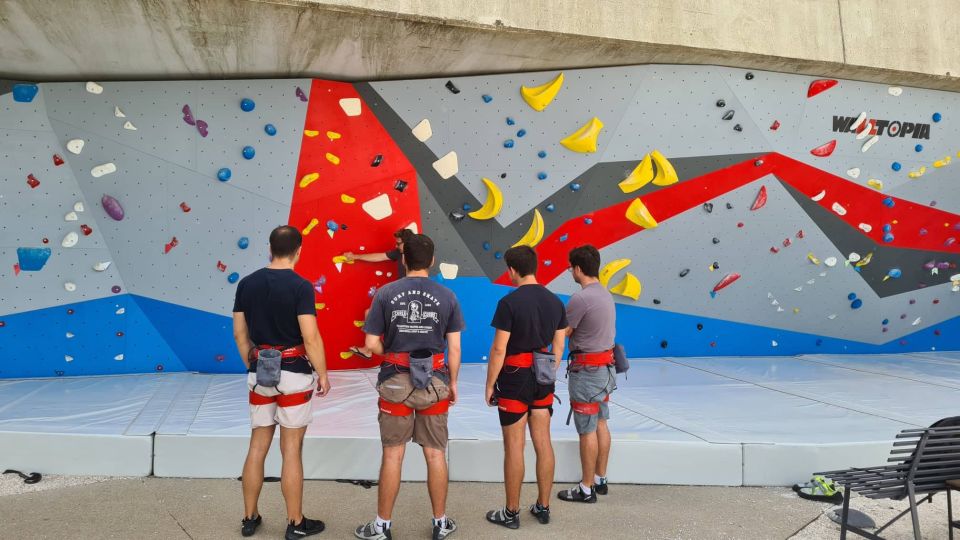
- Auto-belay practice on the Ponte climbing zones, so you can focus on movement and control
- Two level options: newcomer basics or a middle-level intro focused on rope skills
- Small group size (up to 10), which helps you get questions answered without a long wait
- Access included to the bouldering and auto-belay areas after your course
- English and Portuguese instruction, plus safety gear provided
- Perfect for solo or pair climbing once you’re trained and ready to try routes your way
Why the Ponte 25 de Abril is such a fun climbing venue
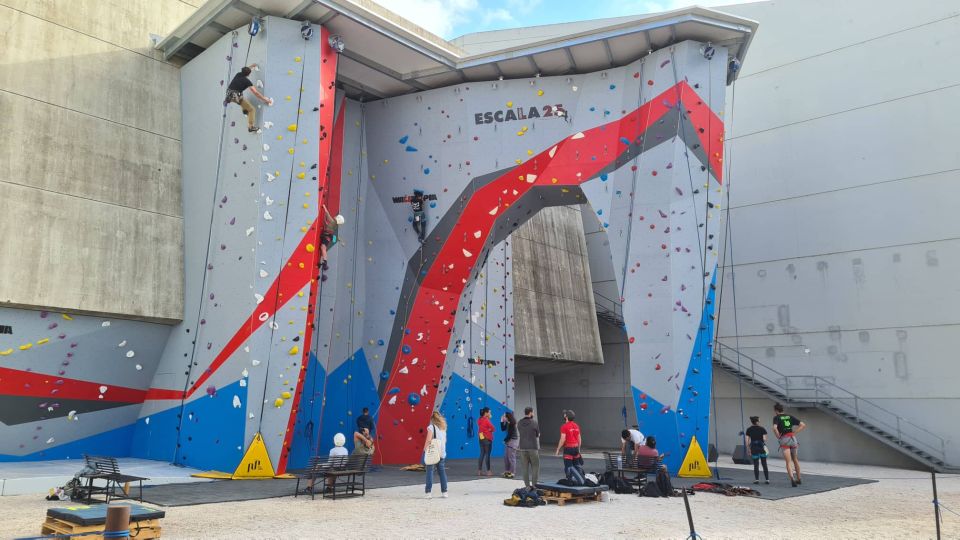
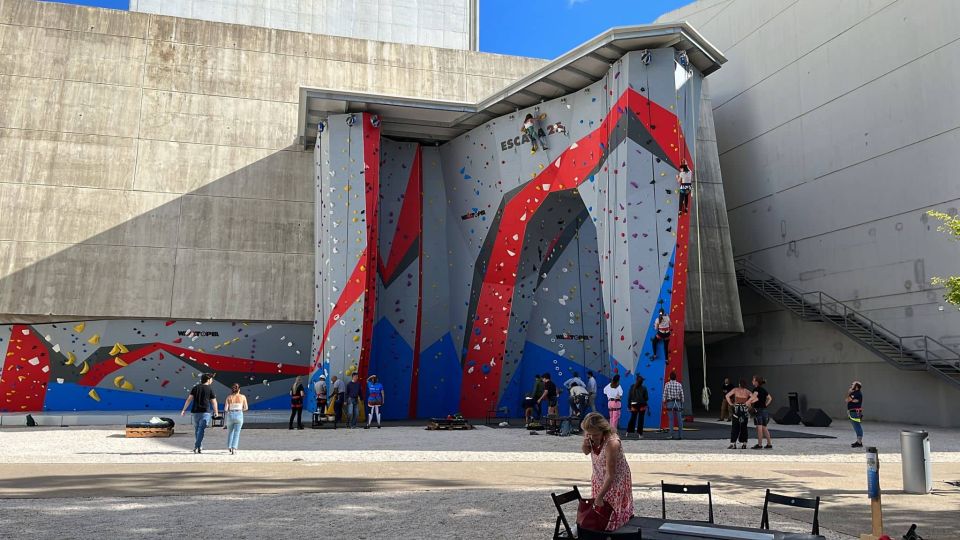
Lisbon doesn’t have many places where you can climb something this iconic and still keep it practical. The Ponte 25 de Abril setting makes the session feel like more than just a workout. You’re not stuck inside a gym box. You’re learning on a structure that’s built for outdoor climbing zones, so the whole experience feels grounded in real conditions.
The big win is that the climbing areas are set up for learning. You get a chance to try routes in a bouldering and auto-belay section, where you can build confidence without immediately jumping into complicated rope systems. That matters because the skill you’re after isn’t just height. It’s comfort with the gear and the movement.
The views aren’t the main goal, but they do add weight to the moment. Even when you’re focusing on technique, you still get that sense of scale that makes you pay attention.
You can also read our reviews of more guided tours in Lisbon



Choosing the right course: newcomer basics vs middle-level rope skills
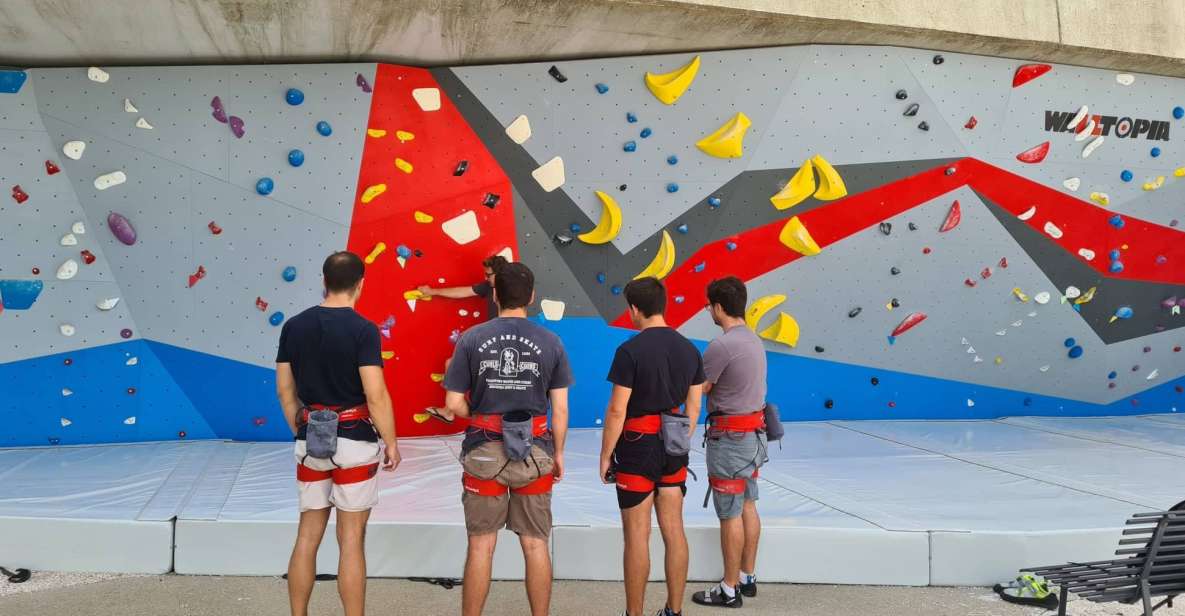
You’ll choose between two course levels based on what you already know.
If you’re new (or you just want a clear start), you’ll take the newcomers’ class. It’s designed for beginners of all ages and abilities, with a structured introduction to climbing essentials. You’ll work on bouldering problems, learn how auto-belay systems work, and get the basics of climbing technique in the zone you’ll use afterward.
If you’ve climbed before, you’ll likely be happier in the middle-level intro course. This version leans more toward rope climbing. Expect rope and knot work, belaying basics, and top roping technique. The goal is not to replace a full course, but to help you build a safer, more confident foundation with rope systems.
Here’s the practical tip: if you’re unsure which to pick, choose the one that matches your comfort with knots and belaying. The courses are only one hour long, so getting the right level keeps your time from feeling rushed.
The meeting moment: getting from Pilar 7 to the bridge zone
Your start is simple. Meet from the Pilar 7 Experience parking lot, then head to the reception area to collect your entry ticket.
That matters because it removes guesswork. You’re not trying to find a climbing wall and figure out the schedule on the fly. Once you’ve got your ticket, you can focus on the training itself.
From there, the day flows toward one main thing: getting you into the climbing areas as quickly as your course allows.
What happens in the 1-hour climbing course
This is a short session by design: about 1 hour of guided instruction. That means every minute counts.
Expect the instructor to cover safety gear use first, then move into technique. Depending on your course level, you’ll spend your time learning in the bouldering and auto-belay areas. You’ll also get guidance on climbing habits that prevent common mistakes, like how to move with control and how to handle the system instead of fighting it.
During the newcomer option, the emphasis is on:
- bouldering basics and problem-solving on the wall
- getting comfortable with auto-belay procedures
- learning how the climbing process works step by step in this specific setup
For the middle-level option, you’ll shift toward rope skills like:
- rope handling fundamentals
- knot and rope work
- belaying and top roping technique
The instructor is there to correct you early, not after you’ve practiced the wrong motion for an hour. That’s why a small group (limited to 10 participants) is helpful. You’re more likely to get direct feedback when you need it.
Auto-belaying and bouldering: learning fast without feeling rushed
Auto-belaying is often misunderstood when people first hear the term. In plain terms, it’s the system that helps manage your safety while you focus on climbing movement. In this experience, you’ll learn how auto-belay works in the bridge’s climbing section, then you’ll use it immediately.
That turns instruction into action. Instead of spending your hour watching, you’re practicing with feedback and building trust in the system.
Then there’s bouldering. The route style in the bouldering area helps you learn the core climbing skills without the full commitment of rope climbing. You work through problems, try different holds, and learn how to read the wall. It’s a more hands-on way to improve quickly, especially if you’re the kind of person who learns by doing rather than by listening.
One more point I really appreciate about this format: it’s practical for confidence. You can test your balance, body position, and movement choices without turning every attempt into a long endurance grind.
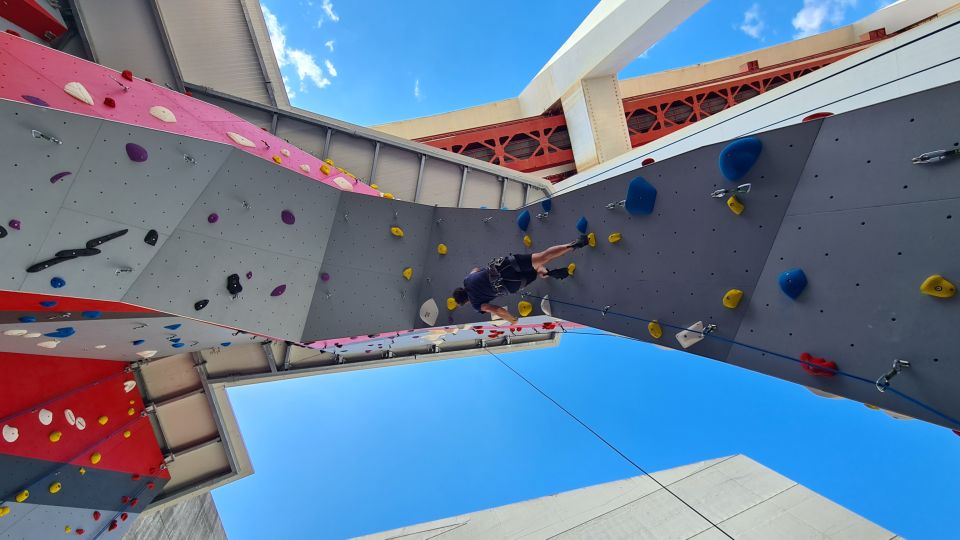
And yes, you’re climbing heights up to around 40 feet, so you should take the height seriously. But because the learning is guided, you’re not left figuring it out alone.





Rope, knots, and top roping basics for the middle-level group
If you choose the middle-level course, you’re opting into the skills that often make people feel stuck: knots, rope handling, belaying, and top roping.
The value here is that you don’t just learn the idea. You practice the mechanics with an instructor present. Rope work gets safer when your hands know what to do. Knots get easier when you understand why they’re tied the way they are. Belaying gets more confident when you learn what to check before you move.
In short: this course targets the parts that can be intimidating if you’ve never been trained properly. It’s also a good step if you’re planning to keep climbing after your Lisbon trip, because rope competence is what makes that future easier.
If you’re very experienced already, you might find the time limited for deep skill development. But if you want a structured refresher with guidance, it’s a solid match.
After your lesson: how to use the rest of the day at Ponte 26 de Abril facilities
Once your course is done, you get to explore on your own. You’ll spend the rest of the day checking out climbing facilities connected with the Ponte 26 de Abril setup.
This part is where the whole experience starts to feel like value rather than just a class. The access you get after instruction means you can repeat what you learned, test variations, and try routes at different levels. You’re not trapped in “demo mode.” You can turn your practice into actual progress.
Also, this facility setup can work well if you like to climb solo or with a partner. The routes cover different difficulties, which is important for mixed comfort levels within a pair.
Practical caution: since the core course is only one hour, don’t assume you’ve mastered everything after it ends. Treat the rest of the time as practice time. Use your newfound knowledge, keep safety rules in mind, and move at your speed.
Gear, comfort, and what to bring (so the session feels easy)
Good news: safety gear is included. That removes a big headache, because climbing gear can get confusing fast.
You still control your comfort. Bring:
- sunscreen
- water
- comfortable clothes
Wear clothes you can move in. You don’t want fabric that restricts your hips or shoulders right when you need reach and balance. And yes, sunscreen matters because you’re outdoors, and heights make you feel more exposed.
What about food and drinks? They’re not included, but you can buy them on-site. So plan to eat before you climb, or bring a simple plan for after—especially if you’re going to spend the rest of the day exploring.
Price and value: is $35 per person worth it?
At $35 per person, this is one of those activities that can feel surprisingly fair once you look at what’s bundled in.
For that price, you get:
- a 1-hour climbing course
- an instructor
- safety gear
- access to the bouldering and auto-belay areas
That combination is the key to value. A class without gear and access would be less useful. And access without instruction would be risky or frustrating. Here, you get both the training and the chance to apply it in the same day.
It’s also a small-group experience (up to 10), which adds practical value: you’re more likely to get time with the instructor rather than waiting your turn.
If you’re trying to fit Lisbon into a tight schedule, the one-hour format helps. You get a real “Lisbon activity” moment without burning your whole day.
Who this is best for, and who should skip it
This experience works especially well if:
- you want a structured intro to climbing outdoors
- you’re curious about auto-belay systems and want to learn them safely
- you’re comfortable following instructions and paying attention to safety
- you want a short course now, then extra time to practice on your own
It’s a strong fit for couples or friends, since the facility can support solo or pair climbing after training. It’s also appealing if you like hands-on learning and want feedback while you climb.
It’s not suitable for:
- children under 6
- people with mobility impairments
- people over 95
Also consider height comfort. The activity reaches up to about 40 feet. If heights make you tense or you can’t stay calm with movement, be honest with yourself before booking.
Instructor impact: why the coaching style matters
The instructor quality is a big deal in climbing. One of the standouts here is that instructors (including a coach named Luis) tend to explain clearly and keep you comfortable while you learn. That encouragement is not fluff. In climbing, it affects how you breathe, how you try the next move, and how quickly you trust the system.
With a small group and a short course, you don’t have time for confusion. You’ll want an instructor who can correct technique quickly, and Luis-style coaching fits that need.
English and Portuguese are supported, which also helps if you want to ask questions without a language barrier.
Should you book the Ponte 25 de Abril guided climb?
Book it if you want an efficient way to try real bridge climbing in Lisbon—with gear, safety support, and instruction focused on the climbing setup you’ll use immediately.
Skip it if you know you’re not comfortable with heights up to roughly 40 feet, or if mobility limitations make the activity impossible for you. Also, if you’re looking for a long guided day of climbing, remember the instruction portion is only one hour, and the rest is self-guided exploration.
If you’re the kind of person who likes learning by doing, this is a smart bet. You’ll get trained quickly, then you’ll have enough time after to turn that training into actual attempts on multiple routes.
FAQ
How long is the climbing experience?
The course is 1 hour. After the course, you spend the rest of the day exploring the climbing facilities on your own.
What’s included in the price?
The price includes a 1-hour climbing course, safety gear, access to the bouldering and auto-belay areas, and an instructor.
What’s not included?
Food and drinks are not included, though you can purchase them on-site.
What heights will I climb?
The activity involves climbing to heights of up to about 40 feet.
Do I need prior climbing experience?
Not necessarily. Beginners can join the newcomer introduction. If you’ve climbed before, there’s also a middle-level intro course with more focus on rope and knots.
What language is the instruction offered in?
Instruction is available in English and Portuguese.
Where do I meet, and how do I get my ticket?
Meet from the Pilar 7 Experience parking lot, then go to the reception area to collect your entry ticket.
Who is it not suitable for?
It is not suitable for children under 6 years, people with mobility impairments, and people over 95 years.