
REVIEW · LISBON
Half Day Tour to Modern Lisbon
Book on Viator →Operated by TOPTOUR PORTUGAL® · Bookable on Viator
Modern Lisbon never feels like a side quest. This half-day tour swaps the usual postcards for Expo-era Park of Nations energy and futuristic Belém architecture, with the Tagus River showing up again and again. I especially like the combination of a private guiding style with smart design-focused stops, so you’re not just looking at buildings, you’re learning how Portugal is thinking about art, research, and technology.
One consideration: key sites involve paid entry, and the write-up clearly notes tickets aren’t included for places like MAAT and the cable car, so your total cost will depend on what you choose to enter.
In This Review
- Key things you’ll notice on this modern-architecture loop
- Why modern Lisbon in 4 hours works
- Park of Nations: cable car panoramas over the Tagus estuary
- Champalimaud Foundation: research architecture facing the river
- Centro Cultural de Belém: a modern icon with a gentle touch
- MAAT Museum: the roof, the tiles, and the art-architecture-technology idea
- How the tour feels with a private guide (and why flexibility matters)
- Price and value: what $168.20 buys you
- Practical tips for a smoother modern Lisbon day
- Should you book this half-day Modern Lisbon tour?
- FAQ
- FAQ
- What parts of Lisbon does this tour focus on?
- How long is the Half Day Tour to Modern Lisbon?
- Is pickup included?
- Are tickets included for MAAT and the cable car?
- Does the tour include a private guide?
- What is the cancellation policy?
Key things you’ll notice on this modern-architecture loop
- Park of Nations cable car views across the Tagus estuary and marina at Parque das Nações
- Belém’s futuristic contrast: sea-history vibes (Torre de Belém area) next to biomedical research architecture (Champalimaud Foundation)
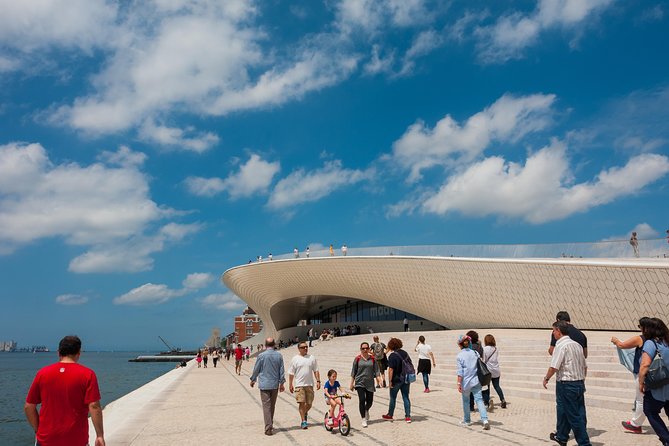
- MAAT’s roof-and-tile design: an arching structure with 15,000 glazed tiles and a building you can actually walk across
- Big-name modern icons at Centro Cultural de Belém, designed by Manuel Salgado and Vittorio Gregotti
- A flexible private experience, where a guide may swap in nearby modern culture stops when timing works better
Why modern Lisbon in 4 hours works
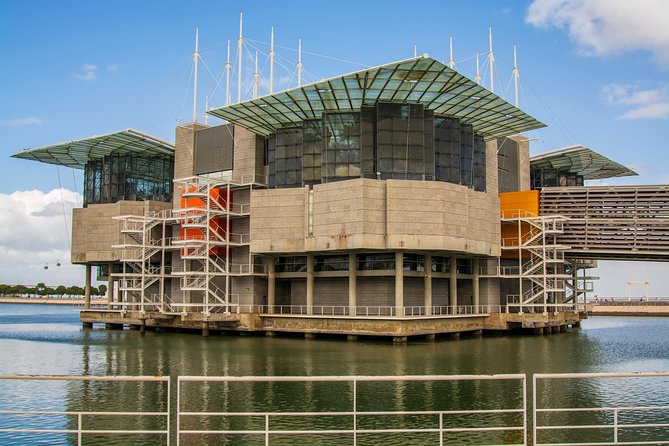
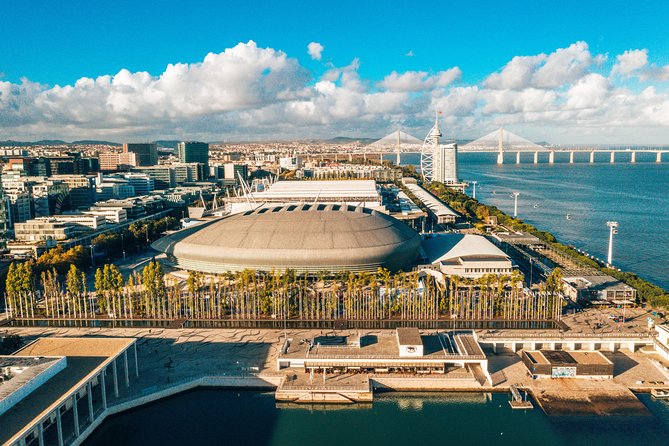
Lisbon’s classic layers are hard to beat, but the modern side has its own story arc. This tour is designed as a short, high-impact sampler: you’ll move through Belém’s contemporary museum zone and then finish with a cable-car ride over the Parque das Nações area, created for the 1998 World Expo.
That matters because modern Lisbon isn’t just one neighborhood. It’s a mix of post-Expo planning, big institutional architecture, and a creative reuse of industrial-scale spaces. In a single half day, you get the feeling of how the city treats design as public space, not just background.
The pace is also a big plus. At about four hours, you can do this even on a packed day without turning it into a full logistics project. You’ll use the air-conditioned vehicle for transfers, and you’ll get bottled water for the in-between moments.
You can also read our reviews of more tours and experiences in Lisbon.



Park of Nations: cable car panoramas over the Tagus estuary
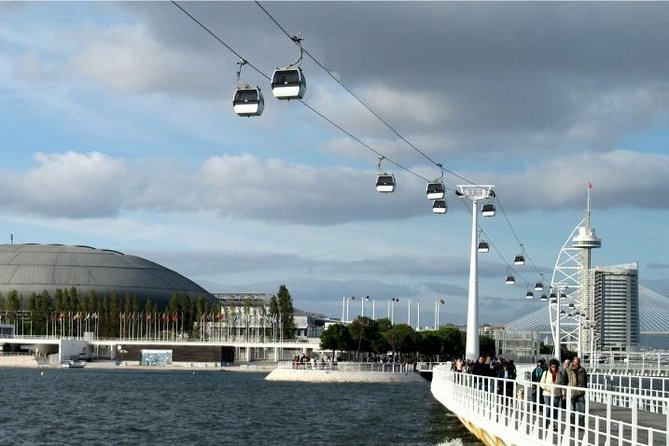
The signature finale is the Telecabine Lisbon cable car ride, specifically from the North Station area. Even if you’re not the type who loves rides for the sake of rides, this one is about perspective. You’re lifted above the marina and looking over the Tagus estuary nature reserve.
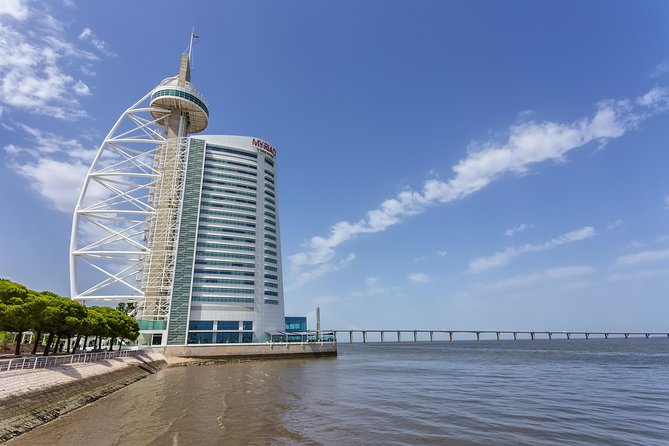
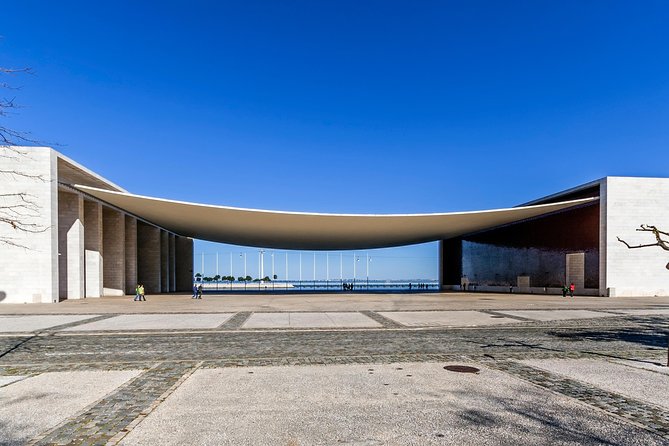
You also get a visual sweep of buildings tied to the World Expo legacy. One highlight is the Portuguese Pavilion by Álvaro Siza Vieira, which is built from two side-by-side volumes separated by a visible construction seam. One volume is a covered square, with a large concrete canopy supported by porticoes, using thin concrete reinforced with stainless steel tie rods. It’s the kind of detail you can’t really appreciate from ground level—so the cable car angle helps.
Practical thought for you: the cable car portion is short, but plan to stand to get photos. You’ll want a couple of minutes just to frame views of the water and the sharper modern lines around the marina.
Champalimaud Foundation: research architecture facing the river
The first stop centers on one of Lisbon’s most striking modern institutions: the Champalimaud Foundation. It sits facing right onto the Tagus, positioned between the nationalistic seafaring tradition of the Torre de Belém zone and the work-linked history of the Doca de Pedrouços area.
What you’re seeing here is architecture used as a message. The building is known for its biomedical research mission, and it’s also referred to as the Centre of Research into the Unknown. The design language is often described as sculpture-level architecture—meant to raise the role of building design into something that feels closer to art, not just function.
Architect Charles Correa is named in the tour description, and the site placement makes a huge difference to your experience. The riverfront setting gives you a natural two-sided comparison: old maritime symbolism nearby, and then this futuristic research landmark that feels like it’s built for the next era, not the last.
A small caution: the tour description frames the sites as points of interest, and it also notes not all named places may be visited. So if Champalimaud is your main target, treat it like a priority and ask your guide to confirm how the schedule lands on the day.
Centro Cultural de Belém: a modern icon with a gentle touch
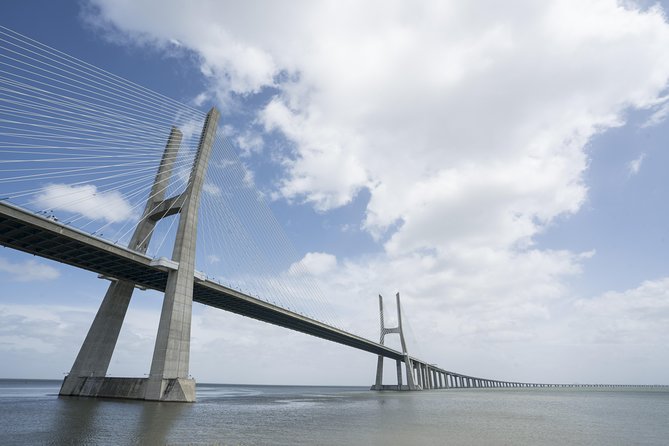
Next up is the Centro Cultural de Belém, described as one of modern Lisbon’s biggest icons. It’s designed by Manuel Salgado and Vittorio Gregotti, and it was built on a special site that’s meant to create a smooth contrast.
That contrast is the point. Lisbon’s old core can feel like a strict museum lane—tiles, stone, and history stacked close together. Centro Cultural de Belém offers a different approach: modern architecture that contrasts with some of the iconic older surroundings, but it does not fight them. The result is the kind of city planning that helps you understand Lisbon as a living place, not a theme park.
For your photo planning: look for how the building edges relate to nearby streets and older structures. Even when you don’t know the architects, modern buildings tend to show their logic through line, shadow, and how they treat open space. This stop is a good place to slow down for a minute and really compare old and new.
MAAT Museum: the roof, the tiles, and the art-architecture-technology idea
If you like design concepts you can actually see, MAAT (Museu de Arte, Arquitetura e Tecnologia) is the emotional center of this tour.
The museum is described as a place where art, architecture, and technology overlap in a space for debate and international dialogue. That sounds abstract, but the building itself is part of the message. Designed by the Amanda Levete Architects studio, the structure arches along the riverbank and is built as a continuation of the promenade.
Here are the practical details that make MAAT memorable:
- The structure is covered in 15,000 glazed tiles
- The form is designed so visitors can walk over the roof
- It’s physically connected in concept to the Central Tejo Power Station, a prominent early 20th-century example of industrial architecture
Admission isn’t included, so you’ll pay that separately if you want to enter. But even if you’re just outside appreciating the building massing from viewpoints, the scale of the form reads fast.
Timing tip for you: plan to wear shoes that work well on outdoor surfaces. The roof-walk design means you’re moving around outside, and you’ll want footing that feels steady.


How the tour feels with a private guide (and why flexibility matters)
This is set up as a private tour, so the guide isn’t herding a big group down a checklist. That’s not just comfort—it’s how you get a better modern-architecture experience.
In one real outing, the guide Nelson L was on time and friendly, and he took the group to three of the four named sites. Instead of forcing a rigid schedule, Nelson added other modern-culture stops, including street art and LX Factory, which ended up being a fun and interesting detour.
This kind of adjustment is a big deal in Lisbon, because modern architecture is often intertwined with creative neighborhoods. If the day’s timing, crowding, or access changes, you’ll still get value. That said, the tour description also notes the listed monuments are “indication of places of interest,” which means you should mentally treat it as curated guidance rather than a guarantee of every single stop in the written order.
If MAAT and Champalimaud are non-negotiable for you, say so upfront. With a private setup, your priorities can steer the pacing.
Price and value: what $168.20 buys you
At $168.20 per person (for about four hours), the pricing makes more sense when you break it down into what’s actually included.
Included items:
- Air-conditioned vehicle
- WiFi on board
- Private transportation
- Bottled water
- Mobile ticket
Those aren’t just perks. In Lisbon, where neighborhoods have steep bits and transfers take time, private transport is what keeps the half-day from turning into a transit marathon.
What isn’t included:
- Tickets and meals
- Gratuities
- The fine print also lists private guide as not included, even though the tour description emphasizes private guidance and the experience description centers on a guide-led visit. So the safest approach is to check what’s bundled at checkout for your exact booking.
Either way, your biggest variable cost is entry tickets. MAAT and the cable car ride can add to the total, so think of the price as the cost of transportation plus guided framing, while entry fees are on you.
If you’re traveling with someone who also likes architecture and design, this can feel very reasonable for a half day—especially when you value not having to plan the route yourself.
Practical tips for a smoother modern Lisbon day
A few things will make this tour easier on you:
- Bring a light layer: modern waterfront spots near the Tagus can feel cooler, especially when you move between open viewpoints and indoor entrances.
- Plan for ticket decisions: MAAT has a ticket requirement noted, and the cable car also isn’t included. If you want the full experience, budget time and money for these entries.
- Use the mobile ticket: it’s included, which simplifies check-in once you reach each stop.
- Ask about the exact stop order: because the listed monuments are described as points of interest and not strictly guaranteed, checking the plan at the start helps you know where you’ll land first.
- Shoes matter: roof-walking is part of the MAAT building concept, and you’ll do more moving around than a typical “walk and look” tour.
One more smart move: if you’re the type to photograph architecture, carry your phone or camera ready for short photo windows. Modern Lisbon often looks best in the middle of the river-facing angles, not only from one perfect street corner.
Should you book this half-day Modern Lisbon tour?
Book it if you want Lisbon that feels less like a postcard routine and more like a design-minded city. You’ll get Tagus views from multiple modern angles, plus a rare mix of major names and strong building concepts: Champalimaud Foundation, Centro Cultural de Belém, and MAAT. Add the cable car panoramas over the Parque das Nações marina and the Expo 98 legacy, and you’ve got a half day that stays interesting without asking you to commit to a full day of museums.
Skip it (or adjust expectations) if you need a strict, every-stop guaranteed itinerary. The tour notes that the places listed are indications of interest, and guides may pivot—like adding street art and LX Factory when timing works better. That flexibility can be a win, but only you can decide if that uncertainty is worth it.
FAQ
FAQ
What parts of Lisbon does this tour focus on?
It focuses on modern Lisbon, including the Park of Nations area connected to the 1998 World Expo and the Belém area, with stops tied to buildings like the Champalimaud Foundation, Centro Cultural de Belém, and MAAT, plus a Telecabine Lisbon cable car ride.
How long is the Half Day Tour to Modern Lisbon?
The duration is listed as 4 hours (approx.).
Is pickup included?
Pickup is noted as offered. The tour also mentions a meeting point is near public transportation, so confirm the exact pickup details at booking.
Are tickets included for MAAT and the cable car?
No. The information provided states admission tickets are not included for the MAAT stop, and ticketing for the cable car is also listed as not included.
Does the tour include a private guide?
The tour description emphasizes a private guide, but the details also list Private Guide under not included. Check what your specific booking includes.
What is the cancellation policy?
Cancellation is free if you cancel up to 24 hours in advance of the experience start time for a full refund.