REVIEW · FATIMA, NAZARE & OBIDOS DAY TRIPS
From Lisbon: Day Trip to Porto, Óbidos, and Nazaré
Book on GetYourGuide →Operated by World Experience · Bookable on GetYourGuide
One day, three very different parts of Portugal. This Lisbon-to-Norte outing clicks because you get medieval Óbidos first, then the Atlantic drama of Nazaré, and finish with UNESCO Porto. The payoff is seeing iconic places without the stress of trains, transfers, and figuring out routes on the fly.
What I like most is the way the stops feel themed—walls and castles in Óbidos, surf-fame viewpoints in Nazaré, and grand city architecture in Porto. The other big win is that the walking tour in Porto ties together the Douro River bridges and major landmarks into one easy route.
The main drawback is the pace: you’ll be moving a lot, with fairly short time windows in Óbidos and Nazaré, so if you want to linger for shopping or long café breaks, this format may feel a bit tight.
In This Review
- Key things to know before you go
- Price and Logistics: what $97 really buys
- Óbidos Walls, Rua Dereita, and that Castle View
- What you’ll do in Óbidos
- The Óbidos time trade-off
- Nazaré: Forte de São Miguel and the walk up O Sitio
- Forte de São Miguel: why it’s famous
- O Sitio: religious layers and fortifications
- The practical Nazaré note
- Porto Walking Tour: Douro bridges and the big-ticket landmarks
- What you’ll see in Porto
- Why this walking portion is good value
- Time Reality: why it can feel rushed even when it’s well run
- Bus Comfort: what matters and what to watch for
- Food planning: one meal you control
- Who this tour fits best
- Tips to make your day smoother (and more fun)
- Cancellation and weather: how flexible you need to be
- Should you book this Lisbon to Porto, Óbidos, and Nazaré day trip?
- FAQ
- FAQ
- How long is the trip from Lisbon to Óbidos, Nazaré, and Porto?
- What stops are included on this day trip?
- Is transportation included, and how do you travel between stops?
- How long do you spend in each town?
- What’s included in the price?
- Is lunch included?
- What languages are available for the live guide?
- Do I need to bring identification?
- What happens if the tour is canceled due to weather or poor conditions?
- Is it possible to stay in Porto instead of returning to Lisbon?
Key things to know before you go

- Óbidos Castle and the medieval walls: a 12th-century fortress vibe with Roman-era roots and sweeping rampart views
- Nazaré’s Forte de São Miguel: world-famous for winter giant waves and the lookout that surfers chase
- Climb through O Sitio: religious buildings, old fortifications, and a mix of church eras as you go uphill
- Porto walking tour highlights: Igreja do Carmo, Estação São Bento, Igreja de São Francisco, and Ponte Dom Luís
- Guides can make the day: names that come up often include Gui, Ricardo Dias, Francisco, Rui, Pedro, Paulo/Paolo Carmo, and Maria in Porto
- A long day on the road: plan for travel time, not just sightseeing time
Price and Logistics: what $97 really buys
For about $97 per person and roughly 12 hours, you’re buying convenience plus guided context. You get round-trip transportation from Lisbon by air-conditioned coach, a local guide, and structured visits across Óbidos, Nazaré, and Porto. Food isn’t included, so you’ll still decide where to eat—but the schedule handles the sightseeing parts.
This is also a practical choice for a first-timer in Portugal. If you only have a short window in Lisbon, you can still see a UNESCO-listed city (Porto), a walled medieval town (Óbidos), and one of the country’s best-known seaside viewpoints (Nazaré) in a single day.
One real thing to watch: it’s not a slow “roam and shop” tour. Expect more walking and time-boxed stops than relaxed hanging-out.
You can also read our reviews of more tours and experiences in Lisbon



Óbidos Walls, Rua Dereita, and that Castle View
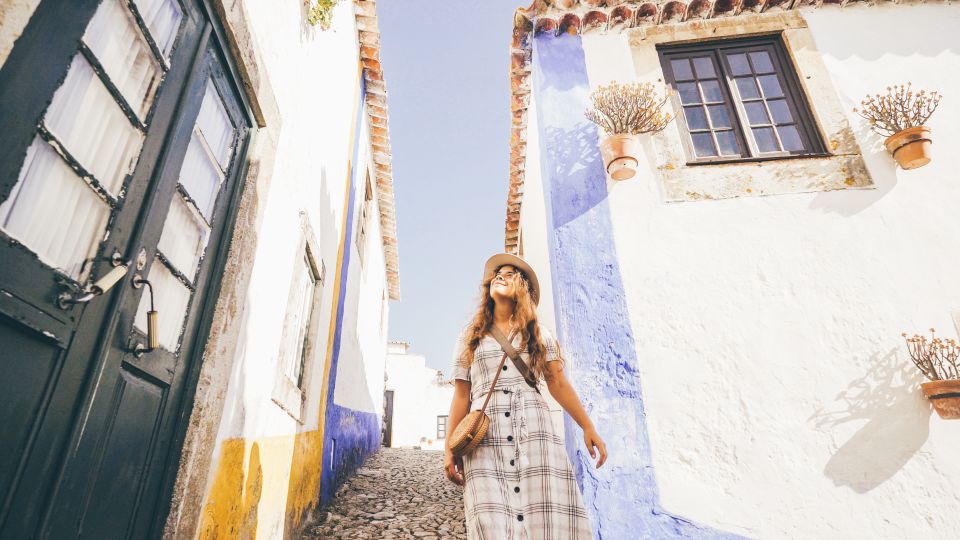
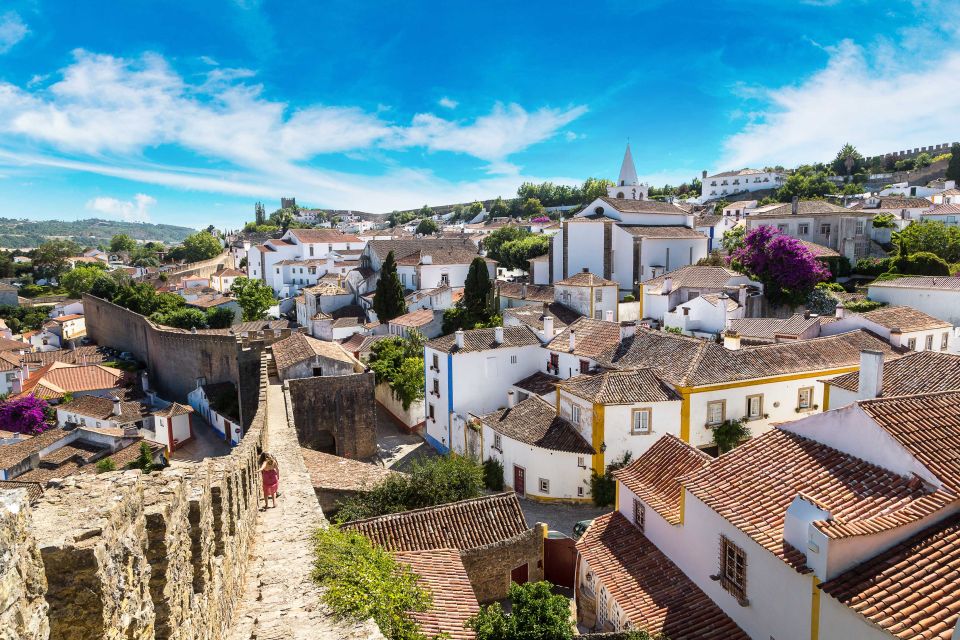
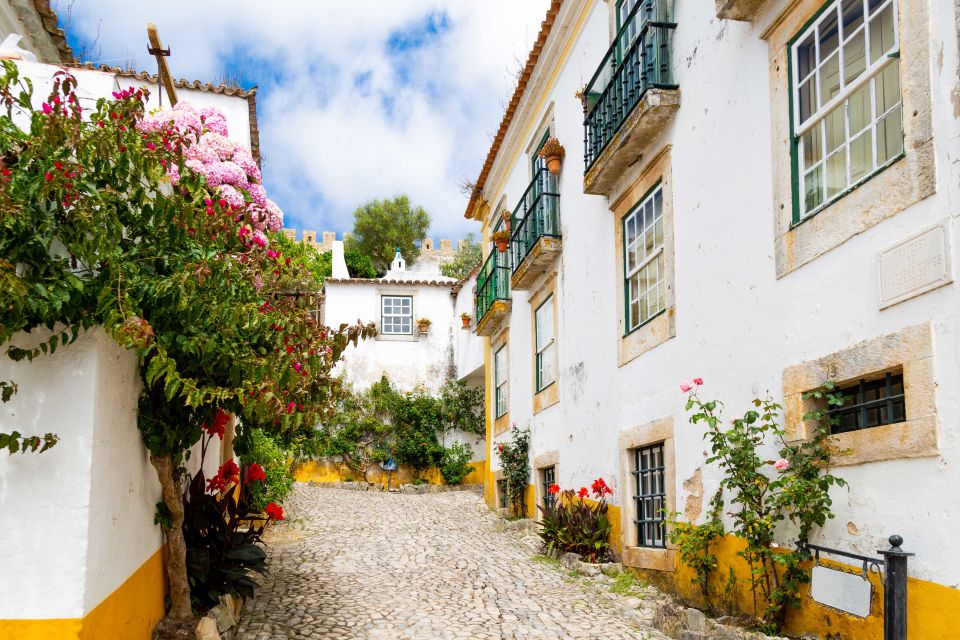
Óbidos is the warm-up act, and it works. You arrive and get a guided visit that focuses on the town’s best-preserved medieval feel—cobblestone lanes, old houses, and key monuments wrapped by ancient walls. It’s one of those places where you instantly get why day-trippers keep returning.
What you’ll do in Óbidos
Your route starts near the main gate, then moves through narrow streets that feel like they were built for wandering, not rushing. You’ll also visit the secret Jewish neighborhood with white-painted houses and good photo angles. From there you’ll head toward Rua Dereita, the town’s most famous street, lined with traditional shops and restaurants.
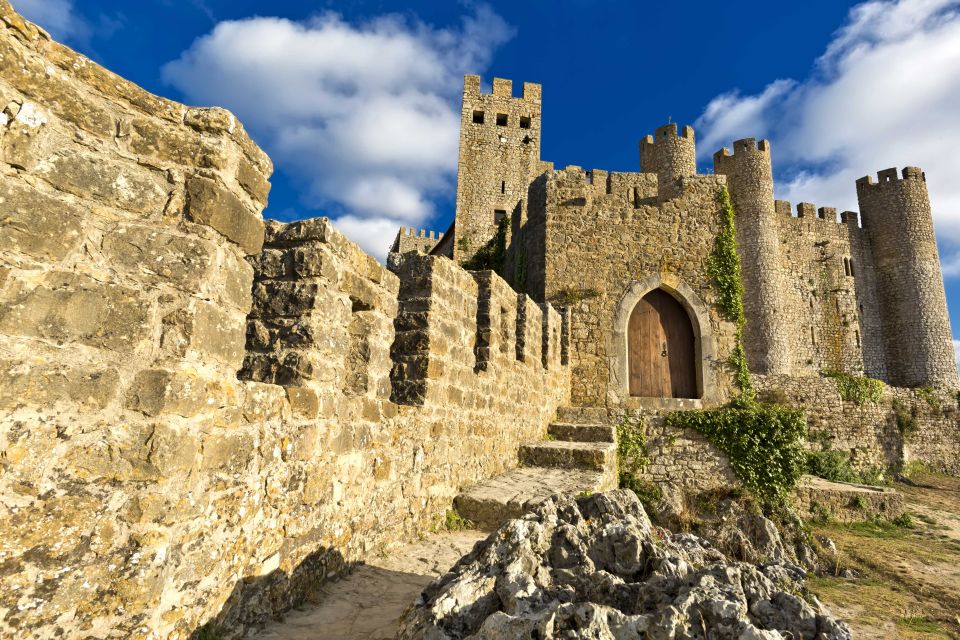
Then you reach the top area for the big moment: Castle of Óbidos. The fortress dates to the 12th century, though it has Roman construction origins underneath. It’s known for being one of the country’s best-preserved and largest fortresses, and it’s often listed among the Seven Wonders of Portugal. Even if you’re not a fortress fanatic, the views from the castle area help you understand how Óbidos controls its own story.
You’ll also look out over the Óbidos wall, one of the town’s signature symbols. It’s the kind of sight that makes the rest of the town feel more “real,” because you see the town’s defensive design and scale instead of just reading about it.
The Óbidos time trade-off
You get about 45 minutes with a guided visit here. That’s enough to see the main structure of the town and get a feel for the maze—but it’s not enough to shop every street or grab a long sit-down lunch in the historic center. If Óbidos is the only place you care about, I’d treat this as a fast tasting and plan a return later on your own.
Nazaré: Forte de São Miguel and the walk up O Sitio
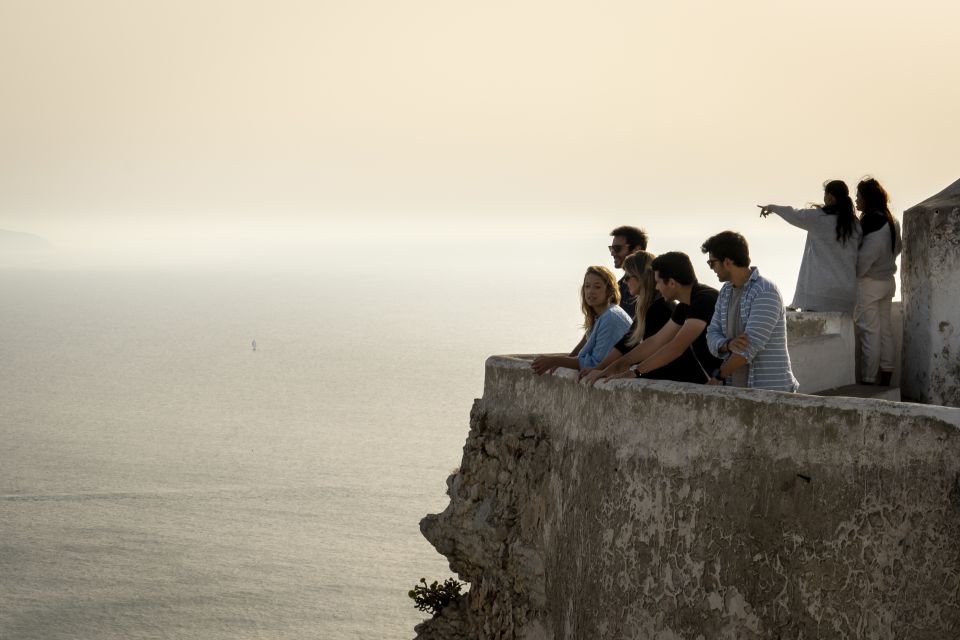
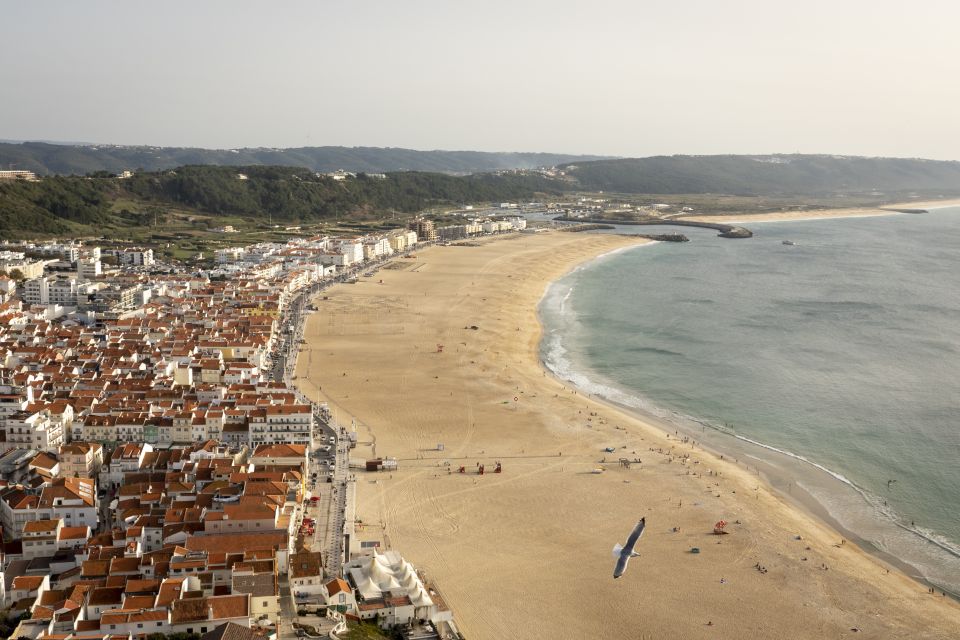
After Óbidos, you’re heading to the ocean—and Nazaré doesn’t do subtle. Even if you’re visiting outside surf season, the setting is dramatic: cliffs, viewpoints, and that sense of weather and power that makes people talk about winter waves.




Forte de São Miguel: why it’s famous
Your Nazaré stop includes Forte de São Miguel, which is world-renowned because of the giant waves that hit the coast every winter, drawing surfers from around the world. The fortress area is less about museum time and more about getting the viewpoint right. You’ll understand why people come here with cameras, boards, and patience.
O Sitio: religious layers and fortifications
Next you walk through O Sitio, where the famous streets concentrate religious buildings, and it’s a well-known pilgrimage area. You’ll hike your way up toward the summit, where you find medieval fortifications, 17th-century churches, and modern shrines.
As you go, you’ll move through courtyards and plazas surrounded by ornate structures and statues. The timing and uphill walking can be a lot for some people, but it’s also what makes Nazaré more than a quick sea-view stop. You’re seeing a whole vertical town idea: ocean viewpoints below, sacred and historic spaces higher up.
The practical Nazaré note
You also have about 45 minutes for the guided Nazaré visit. It’s great for the highlights—Forte de São Miguel and the O Sitio atmosphere—but it won’t satisfy anyone who wants to relax for hours on the beach or do a slow, photo-by-photo climb without watching the clock.
If you’re the type who likes comfortable breaks, bring your own snacks plan in mind. Food and drinks aren’t included, so you’ll want to be strategic.
Porto Walking Tour: Douro bridges and the big-ticket landmarks

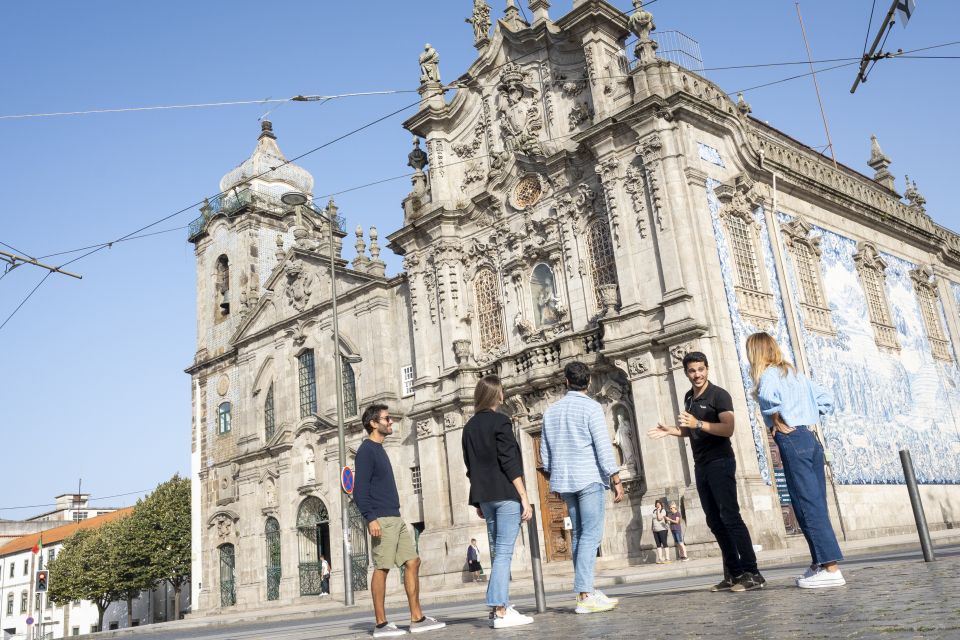
Porto is where the day gets “wow” in a different way. You get a 1.5-hour walking tour focused on Old Town on the Douro River, including famous bridges and major churches and sights.
What you’ll see in Porto
You’ll admire key landmarks such as:
- Igreja do Carmo
- Estação São Bento
- Igreja São Francisco
- Ponte Dom Luís
…and you’ll get context that the area sits around the river’s dramatic bridge setup (including the idea of multiple bridges linking neighborhoods).
Estação São Bento often comes up for its interior visual impact. One detail that stood out in guidance you might hear on tour: it’s the former convent story that ties into why the station space feels more than modern transport. You’ll also hear how the tiles depict scenes connected to Portuguese history, so it’s not just pretty decoration—it has a narrative purpose.
Why this walking portion is good value
The tour connects major sights so you’re not zig-zagging the city trying to “find” everything yourself. If you’ve never done Porto on foot, this is the efficient way to get your bearings fast.
If you do end up loving Porto (and many people do), this tour gives you a short list of where to return. You’ll leave with the shapes of the city in your head: the river, the churches, the iconic station, and at least one bridge perspective.
Time Reality: why it can feel rushed even when it’s well run

This is a classic “three stops, one day” structure. Transportation fills a good chunk of the schedule, including 105 minutes to Óbidos, 35 minutes to Nazaré, then a longer transfer to Porto, followed by the return ride.
Then the guided sightseeing is time-boxed:
- Óbidos: about 45 minutes
- Nazaré: about 45 minutes
- Porto: about 3 hours total, including a 1-hour lunch break on your own
That lunch hour is helpful. It gives you energy before Porto’s walking. But remember it’s on your own—so you’ll want to decide ahead of time whether you’ll eat something quick or sit down. If you like to explore menus slowly, this might be where you feel the schedule pinch.
Also, be ready for timing to stretch a little depending on road conditions. Plan for it mentally; don’t structure your next day with zero buffer.
Bus Comfort: what matters and what to watch for
Most of the time, the coach is described as comfortable and air-conditioned, and the drivers are professional about getting everyone in and out of tight areas. There’s also a practical plus: you can arrange for staying in Porto and not returning to Lisbon, and they can check space for your luggage on the minibus.
That said, comfort isn’t guaranteed in every single vehicle. In at least one account, the bus was described as older with air-conditioning not working and no charging ports. Another recurring “small friction” note: some guides don’t always broadcast clearly unless you’re near the front, so a headset-style setup would be nicer.
My advice: bring a light layer, because the bus temperature swings can happen. And if you rely on phone navigation or photos, consider a portable charger.
Food planning: one meal you control
Your lunch in Porto is not included, and it’s on your own during the free time block. That’s a good setup if you want Portuguese comfort food or something local you already have your eye on.
Just don’t wait until the last minute to eat. With a long day and set return timing, you’ll waste more time than you think if you hunt for the perfect place.
Also, this tour sells itself as “architecture and history,” so you may not spend much time wandering restaurants in Óbidos or Nazaré unless you manage it during the short stop windows.
Who this tour fits best
This day trip is a strong match if:
- you want a big sampler of Portuguese places without planning logistics
- you’re okay with short guided stops in each town
- you’d rather have a structured route than worry about getting around
It’s also worth considering if you’re traveling solo. Many guides on this type of day trip know how to keep a group together without making people feel herded, and several named guides—Gui, Ricardo Dias, Francisco, Rui, Pedro, Paolo/Paulo Carmo—got credit for keeping energy up through the long day.
If you’re a “linger, shop, and snack nonstop” traveler, you’ll likely want a different format: either separate day trips or more time in Porto alone. This one is built for highlights.
Tips to make your day smoother (and more fun)
A few small moves can make the pace feel less stressful:
- Wear comfortable walking shoes. Óbidos has cobblestones, and Nazaré’s O Sitio walk goes uphill.
- Bring a passport or ID card; it’s explicitly required.
- Bring a light rain layer if you’re going in changeable weather. Inclement weather can cause rescheduling or cancellation, and you’ll want to stay comfortable on the way up and down.
- For photos, aim for the castle and viewpoint moments first. In both Óbidos and Nazaré, the best angles come with a little patience and positioning.
If you care about hearing the guide clearly, pick a spot where you can see and hear easily, especially during the walking parts in Porto.
Cancellation and weather: how flexible you need to be
The tour includes free cancellation up to 24 hours in advance for a full refund. The operator can also reschedule or cancel based on inclement weather.
So if you’re traveling during a season known for fast weather shifts, keep your plans flexible. This is one of those tours where the scenery is better when the sky cooperates.
Should you book this Lisbon to Porto, Óbidos, and Nazaré day trip?
I’d book it if you want a time-efficient Portugal hit: medieval walls in Óbidos, Nazaré’s ocean drama and climb to O Sitio, then Porto’s UNESCO-listed Old Town highlights. The structure is the value here—transportation plus guides plus an organized walking route.
I’d skip it (or switch to a slower option) if you’re the type who needs lots of free time for wandering, shopping, and long meals in each place. With about 45 minutes in Óbidos and 45 minutes in Nazaré, you’ll see the essentials but you won’t “own” the pace.
If you want my simple rule: book this when you’re planning a first trip and you want direction. Book something longer when you already know you’ll fall for one of these towns and want to live in it for a day.
FAQ
FAQ
How long is the trip from Lisbon to Óbidos, Nazaré, and Porto?
The duration is 12 hours.
What stops are included on this day trip?
You’ll visit Óbidos, Nazaré (including Forte de São Miguel), and Porto.
Is transportation included, and how do you travel between stops?
Yes. Transportation is included by bus/coach with an air-conditioned vehicle.
How long do you spend in each town?
Óbidos is about 45 minutes, Nazaré is about 45 minutes, and Porto includes about 3 hours of guided time. Lunch time in Porto is about 1 hour and is on your own.
What’s included in the price?
Transportation, a tour, and a guide are included.
Is lunch included?
No. Food and drinks are not included, though you do get time for lunch in Porto on your own.
What languages are available for the live guide?
The live tour guide is available in English, Spanish, and Portuguese.
Do I need to bring identification?
Yes. You should bring a passport or ID card.
What happens if the tour is canceled due to weather or poor conditions?
The tour is subject to cancellation or rescheduling based on inclement weather. If minimum customer numbers aren’t met, you’ll be offered an alternative date, another tour of equal or superior value, or a full refund.
Is it possible to stay in Porto instead of returning to Lisbon?
Yes. You can ask to stay in Porto and the provider will check if there is space for your luggage on the minibus.