REVIEW · 1-HOUR EXPERIENCES
City of Neighborhoods Tour 1H 30M Private Tour by Tuk Tuk
Book on Viator →Operated by Tejo Tourism - Guided Tours · Bookable on Viator
A tuk tuk makes Lisbon feel manageable. This private 1.5-hour neighborhood loop gives you a fast orientation plus a few big-hitting landmarks, with the route adjustable to your interests. I also like that pickup and drop-off are central at D. Pedro IV Square, so you’re not wasting time crossing the city. One thing to consider: communication about the meeting spot needs extra care, so I’d plan to arrive early and confirm where to wait.
You’ll ride through Lisbon’s layers, from the old hill neighborhoods like Alfama to the riverfront openness of Praça do Comércio, then finish with a classic viewpoint. It’s a strong fit if you want context, not just checklists, and it works well for families or a laid-back date where you still want to see real places.
In This Review
- Key things that make this tour work
- Tuk tuk orientation in Lisbon: the ride, the pace, the pickup
- Praça Dom Pedro IV: starting in the city’s true heart
- Alfama’s narrow lanes: the steep-hill neighborhood vibe
- National Pantheon and the celebrity tomb skyline icon
- Feira da Ladra: an old used goods fair tradition
- Praça do Comércio and the riverfront story of rebuilding
- São Vicente de Fora: a major monastery and a royal pantheon link
- Igreja Santo António: Baroque style with a palace-like facade
- Lisbon Cathedral (Sé): the oldest church and the earthquake survivor
- Miradouro da Senhora do Monte: the quick panoramic payoff
- Customizing your route without breaking the clock
- Price and value: what you pay for, and what you don’t
- Practical tips: making pickup and timing feel effortless
- Should you book this City of Neighborhoods Tuk Tuk Tour?
- FAQ
- How long is the City of Neighborhoods Tour by tuk tuk?
- Where does the tour start and end?
- Is pickup included?
- How much does it cost and what size group is it for?
- Is the tour private?
- What language is the tour offered in?
- Are monument entrance fees included?
- What if I need to cancel?
- Is it available every day?
Key things that make this tour work
- Private, small-group feel: you’re in control of the pace and the priorities
- Start and end at D. Pedro IV Square area: simple logistics in the middle of Lisbon
- Short, well-chosen stops: sights are spaced so you get views without getting exhausted
- Neighborhood variety: Alfama lanes, historic churches, the Sé, and a big panorama
- Panoramic finish at Miradouro da Senhora do Monte: quick, satisfying city views
Tuk tuk orientation in Lisbon: the ride, the pace, the pickup
Lisbon can overwhelm you fast: hills, tight streets, and a city layout that makes you feel like you should be lost (even when you’re not). A tuk tuk neighborhood tour is a practical way to get your bearings quickly. In about 1 hour 30 minutes, you’re not trying to do everything. You’re learning the shape of the city: where the old districts sit, where the river opens things up, and where the best quick views tend to land.
This one is set up as a private tour, so the experience doesn’t feel like a conveyor belt of strangers. The group size is listed two ways: the price is for a group of up to 3, and the activity info also notes a maximum of six people per booking. Either way, you should expect a small group and a guide/driver who can respond to your pace.
Pickup is offered from a centrally located meeting area by Praça Dom Pedro IV (with the departure point listed as Largo do Regedor 2, behind the D. Maria Theather near Rossio). That matters because getting to the tour start is half the battle in a city like Lisbon. If you’re staying nearby, you can keep the morning or afternoon flexible and avoid a complicated transit plan.
One more practical note: if you need hotel pickup, it can be arranged, but you need to select that option (it’s listed as not included unless chosen). There are also alternate pickup locations possible for an extra cost. If you’re on a tight schedule or your hotel is hard to reach by road, it’s worth arranging this ahead of time.
You can also read our reviews of more city tours in Lisbon



Praça Dom Pedro IV: starting in the city’s true heart
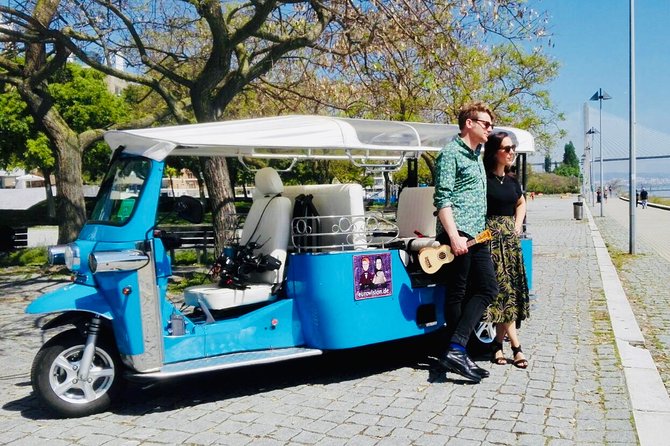
The tour begins with Praça Dom Pedro IV, Lisbon’s main central square and often considered the city’s core. Starting here is smart. It’s open, recognizable, and it gives you an easy reference point for the rest of the neighborhoods you’ll see.
A square like this is more than a photo stop. It helps you understand Lisbon’s “pull” between big civic spaces and the older hillside districts. From here, the city’s personality shifts quickly: the flatter riverfront energy gives way to steeper streets and historic architecture. If you’re arriving fresh, this is where you learn what kind of Lisbon you’re dealing with.
You’ll also be dealing with Lisbon’s walking reality even on a tuk tuk tour. Some streets and viewpoints are close together, but the terrain can still be uneven. Starting at a central square is a good way to begin without already feeling like you’ve climbed half the city before the tour even starts.
Alfama’s narrow lanes: the steep-hill neighborhood vibe

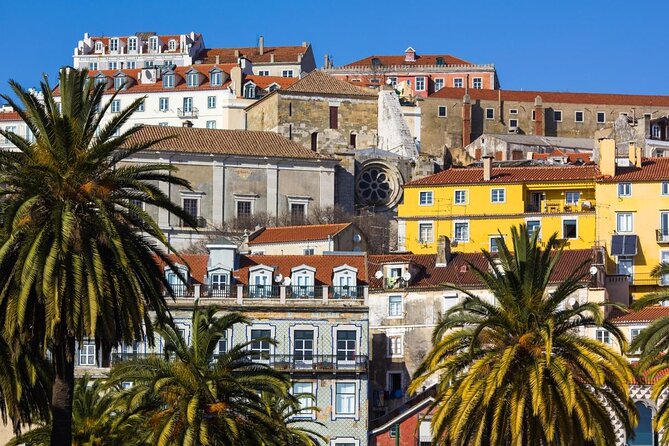
Next you’ll head into Alfama, Lisbon’s classic maze of narrow cobbled streets and ancient houses. Alfama is built up on a steep hill climbing from the Tejo Estuary toward the Castelo de São Jorge area, so the neighborhood naturally teaches you something: Lisbon’s history isn’t flat.
This stop is listed for about 15 minutes, with admission free. In that short window, your goal should be orientation. Look at how the streets funnel upward, notice how views appear between buildings, and get a sense for why people keep coming back to Alfama even when they’ve already seen it once.
What I like about Alfama as a tour stop (even if you don’t go inside every church you pass) is that it explains Lisbon’s street-life. You’re not just looking at a landmark; you’re seeing the living grid that shaped the city. If you’re visiting for the first time, this is the stop that helps the rest of Lisbon click.
Possible drawback: if you’re expecting a lot of time to wander on foot, this may feel brief. The tour is designed to cover multiple neighborhoods in a limited timeframe, so the Alfama experience is more “glance and understand” than “wander for hours.”
National Pantheon and the celebrity tomb skyline icon
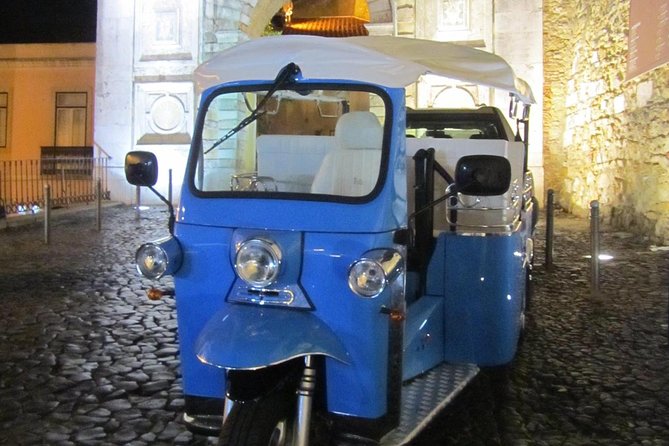
One of the tour stops is the National Pantheon, described as an icon on Lisbon’s cityscape with a privileged location. It’s tied to the tombs of Portugal’s major historic celebrities.
Even with limited time, a stop like this is useful because it adds a different kind of Lisbon landmark. It’s not just a church or a square. It’s a visual anchor you can recognize later from other parts of town. If you’ve been struggling to place where key historic structures sit, the Pantheon gives you a clearer mental map.
Also, because entrance fees aren’t included for monuments in general, don’t plan on this stop becoming a long inside visit unless you decide to pay separately once you’re there. Still, even a quick exterior look can help you connect the architecture to the city’s story.
Feira da Ladra: an old used goods fair tradition
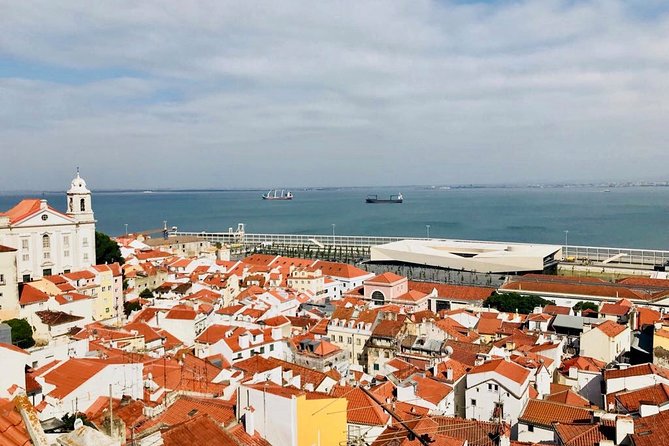
The tour also includes Feira da Ladra, a popular used objects fair. What makes this stop interesting is its long origin story. It traces roots back to the 13th century, and it historically moved between locations before settling at Campo de Santa Clara in the São Vicente parish.
For you, this stop is valuable in two ways. First, it gives you a sense of how Lisbon’s marketplaces shaped everyday life long before modern shopping centers existed. Second, it adds variety to the tour. Not every stop is a church dome or a famous square. This is more about local culture and the idea of reusing, trading, and browsing.
Because the tour is short, you should treat this as a cultural snapshot rather than a full shopping hour. If you like antiques, books, handicrafts, or simply watching how markets operate, you’ll likely enjoy it more than someone who only wants “big monument” time.
You can also read our reviews of more private tours in Lisbon






Praça do Comércio and the riverfront story of rebuilding
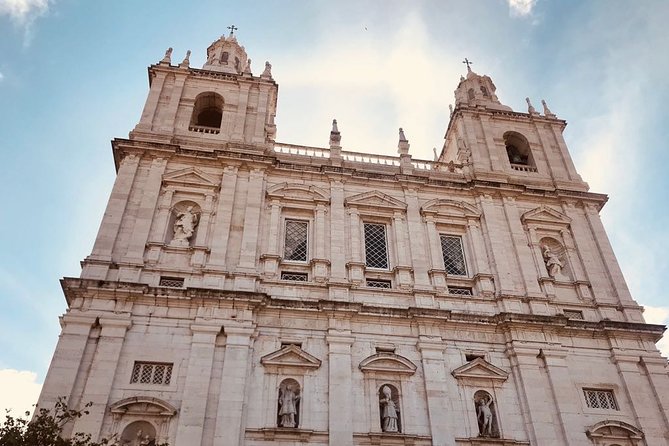
Then you’ll reach Praça do Comércio, near the Tagus River. The square is also known as Terreiro do Paço, because the Royal Ribeira Palace was located here until it was destroyed during the 1755 Lisbon earthquake.
This is one of those stops where context matters. The square was rebuilt as part of the Pombaline Downtown plan ordered by Sebastião José de Carvalho e Melo, the Marquis of Pombal. In other words, you’re not just seeing a pretty open plaza. You’re seeing a design response to catastrophe—Lisbon rebuilding itself in a more organized way after a seismic reset.
I like this stop because it changes your perspective. Lisbon’s old quarters can feel tight and vertical. Praça do Comércio is the opposite: open, long sightlines, and a strong sense of “this is where the city faces the sea and the world.” If your brain needs a reset between hill neighborhoods and churches, this is where you get it.
Admission fees typically aren’t the issue here; you’re experiencing the space. Just keep in mind that the tour is timed, so you’re getting the highlights rather than a deep hours-long linger.
São Vicente de Fora: a major monastery and a royal pantheon link
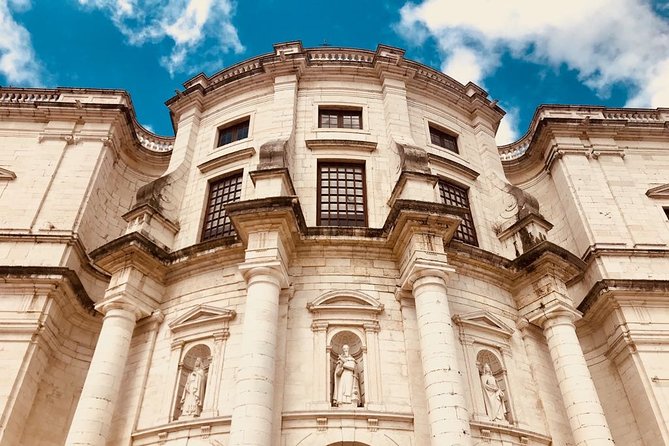
Next comes São Vicente de Fora, a church and monastery described as a key 17th-century landmark and one of Portugal’s most important monasteries and mannerist buildings. The monastery also contains the royal pantheon of the Braganza monarchs.
This stop is meaningful because it connects two ideas: religious architecture and national history. A monastery that houses a royal pantheon isn’t just a building; it’s a statement about how Portugal remembered its leaders and anchored authority in sacred spaces.
The tour time here is limited, so again, think “see and absorb” rather than “read every inscription.” But even a short exterior-to-interior glimpse can help you recognize the architectural style and understand why this site matters to the broader story of Lisbon.
Igreja Santo António: Baroque style with a palace-like facade
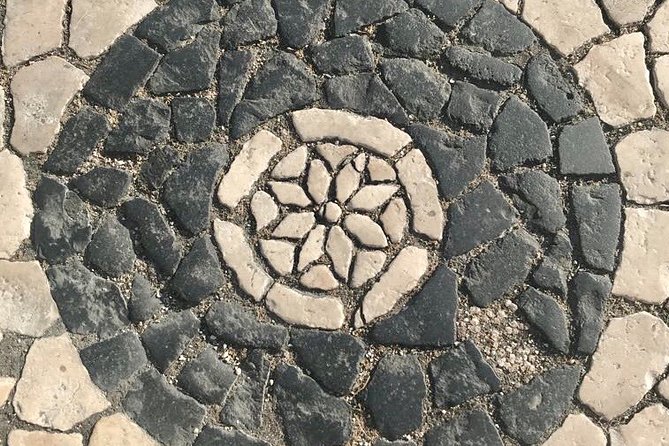
The tour also includes Igreja Santo António in Lisbon, a church dedicated to Saint Anthony, the patron saint of Portugal. The key detail here is how it looks: the exterior façade is described as late Baroque and more like a grand residence than an obvious religious building.
That’s a fun way to experience Lisbon. Sometimes churches are built to feel solemn and fortress-like. Here, the facade is more theatrical and civic. If you’re the kind of visitor who likes noticing artistic choices, this stop gives you something to look at beyond just the big “must-see” name.
This is also a good moment to remember that entrance fees aren’t included by default. If you want to go inside, you’ll likely need to pay separately.
Lisbon Cathedral (Sé): the oldest church and the earthquake survivor
Then you reach Lisbon Cathedral, called the Sé. It’s listed as the city’s oldest church, with construction noted as dating to 1147. The cathedral has survived many earthquakes, and it has been modified and restored through the years, creating a mix of architectural styles. It’s classified as a National Monument since 1910.
Even if you don’t spend a long time inside, the Sé is worth seeing because it’s a time marker. A building that’s lasted this long—and has been reshaped—helps you understand why Lisbon looks the way it does today. It’s layered. Renovated. Resilient.
Catching the Sé as part of a tuk tuk neighborhood circuit is also efficient. You’re not just collecting churches one-by-one. You’re seeing how Lisbon’s oldest anchor sits among later history and later rebuilding.
Miradouro da Senhora do Monte: the quick panoramic payoff
To end strong, you’ll stop at Miradouro da Senhora do Monte. It’s known for panoramic views of Lisbon, and the name ties to a small image of the Virgin at the viewpoint.
This is the kind of stop that makes short tours feel worth it. A viewpoint isn’t just about the photo. It helps your brain stitch the city together in real time: where hills rise, where neighborhoods stack, and how the riverfront connects everything.
The tour lists this as about 10 minutes, with admission free. That’s the right length for a viewpoint on a paced schedule. Bring a bit of patience for wind or crowds if you’re going at a popular time, but the payoff is usually immediate: you see the city’s shape, and the rest of your visit becomes easier.
Customizing your route without breaking the clock
A big selling point is that you can customize the itinerary to your preferences. Private tours are good for this because the driver/guide can adjust the emphasis while keeping the route sensible for the 1.5-hour window.
Here’s how I’d use that customization, practically:
- If you’re more architecture-focused, you might want to put extra attention on sites like the Sé and São Vicente de Fora.
- If you’re more about street atmosphere, you’ll probably enjoy maximizing the time around Alfama and any market energy tied to Feira da Ladra.
- If you’re traveling with kids or you want maximum comfort, prioritize viewpoints like Miradouro da Senhora do Monte and keep church visits as quick looks unless you’re ready to add entrance time.
The tour is built to be flexible, but it’s still timeboxed. If you tell the guide you want longer museum-style stops, you may end up cutting something else. That’s not a bad thing—it just means you should choose your “must slow down” moment ahead of time.
Price and value: what you pay for, and what you don’t
The price is listed at $161.77 per group for up to 3, and it includes taxes, fees, and handling charges. You also get a qualified local driver/guide, private tour service, and pickup/drop-off in central Lisbon at D. Pedro IV Square area.
What you don’t get automatically: entrance fees in monuments. That’s important for budgeting. Lisbon’s major sights can add up if you decide to go inside everything you see. If your plan is mostly exterior viewing plus a few paid entries, this tour can be great value. If your plan is a heavy inside-visits day, you might consider budgeting additional entrance costs up front.
I also like the “value per comfort” angle. In Lisbon, getting between hill neighborhoods can be tiring. Paying for a tuk tuk orientation can save your energy for the rest of the trip—restaurants, day trips, and wandering where you actually want to spend time.
Practical tips: making pickup and timing feel effortless
This kind of tour lives and dies on timing. Pickup is offered from a specific central departure area, and confirmation is supposed to come at booking. Still, the meeting spot details can be confusing in dense city centers, so treat it like a real logistics task.
A few tips that help:
- Arrive a bit early at Largo do Regedor 2 near Rossio/D. Maria Theather area, so you’re not searching while the tuk tuk is waiting.
- If you’re using the mobile ticket, have it ready on your phone before you reach the meeting point.
- If your hotel pickup is arranged, ask where the vehicle can actually meet you, since some streets can be tricky.
For clothing and comfort: Lisbon’s famous streets can be uneven, and the tour includes hillside neighborhoods and viewpoints. Comfortable shoes help, even if you’re not walking long stretches.
Finally, this is offered daily, and the guide may be multi-lingual. English is listed as offered, which is a plus if you want clear explanations without needing to translate in your head.
Should you book this City of Neighborhoods Tuk Tuk Tour?
Book it if you want a high-comfort orientation to Lisbon’s neighborhoods in a short time. It’s ideal for families, couples, or first-timers who want to see key places like Alfama, the Sé, and the riverfront Praça do Comércio, plus a viewpoint at Miradouro da Senhora do Monte.
Skip it (or pair it with other plans) if your main goal is long, deep monument visits. This tour is timed for overview and smart sampling, not hours inside major sites. Also, if you know you’ll have trouble with meeting points or last-minute plan changes, you’ll want to be proactive about confirming exactly where you’ll meet.
If you want a smooth start to your Lisbon days and a route that helps you understand what you’ll see later, this one is a strong bet.
FAQ
How long is the City of Neighborhoods Tour by tuk tuk?
It lasts about 1 hour 30 minutes.
Where does the tour start and end?
It starts at Largo do Regedor 2, 1150-277 Lisboa, Portugal and ends back at the same meeting point.
Is pickup included?
Pickup and drop-off are included in the central Lisbon meeting point area (D. Pedro IV Square). Hotel pickup can be arranged if you select that option.
How much does it cost and what size group is it for?
The price is $161.77 per group up to 3. The activity info also notes a maximum of six people per booking.
Is the tour private?
Yes. It’s listed as a private tour/activity, meaning only your group participates.
What language is the tour offered in?
English is offered, and the guide may be multi-lingual.
Are monument entrance fees included?
No. Entrance fees in monuments are not included.
What if I need to cancel?
You can cancel for free up to 24 hours in advance for a full refund.
Is it available every day?
Yes, it’s listed as daily.