REVIEW · BELEM TOURS
City Center – Belém
Book on Viator →Operated by Coffee Time Tour Lisbon · Bookable on Viator
Lisbon hits you fast on this route. You get a quick city-center to Belém overview with onboard Wi‑Fi and included Portuguese pastries, plus tea/coffee/juice, but the big trade-off is there’s no restroom on board and it’s a tight 1-hour loop. In other words, it’s a great way to get your bearings without wandering the streets for hours, and you’ll end in the Jerónimos/Belém area ready to keep exploring. One more thing I’d watch: because the tour ends near major sights, you’ll want to plan your next stop immediately instead of assuming you’ll have time to “park” afterward.
You’ll ride through the city passing famous landmarks and receive commentary along the way. The group is limited (max 44), the bus is air-conditioned, and you’ll have a mobile ticket for smooth entry. Expect a practical, fast introduction to Lisbon’s key stories—from merchant squares to riverside engineering.
In This Review
- Key Things I’d Pay Attention To Before You Go
- How the 1-Hour Lisbon City-Center to Belém Route Really Feels
- Monumento dos Restauradores: An Obelisk That Tells You What Lisbon Was Fighting For
- Avenida da Liberdade and Marquês de Pombal: Lisbon’s Grand Avenue and Its Builder-Boss
- Rossio Square: The Old Square Where Lisbon Keeps Holding Important Moments
- Praça do Comércio (Terreiro do Paço): Merchants, Scale, and the Feeling of an Open Stage
- Cais do Sodré, Praça dos Remolares, and Ribeira Velha: The Working-Port Side of Lisbon
- Christ the Redeemer Mention: How Lisbon Borrowed an Idea Across the Ocean
- 25 de Abril Bridge: Tagus-Edge Views and Engineering Ahead of Its Time
- Cordoaria Nacional, MAAT, and Tejo Central: From Navy Cables to Contemporary Art
- Cordoaria Nacional (Cordoaria / Cordoaria Nacional)
- MAAT
- Tejo Central
- Palácio de Belém and Jerónimos: Lisbon’s Ceremonial Side
- Palácio de Belém
- The Jerónimos Monastery area
- Torre de São Vicente (Belém Tower) and the Monument of Discoveries: Two Ways to See Lisbon’s Sea Dreams
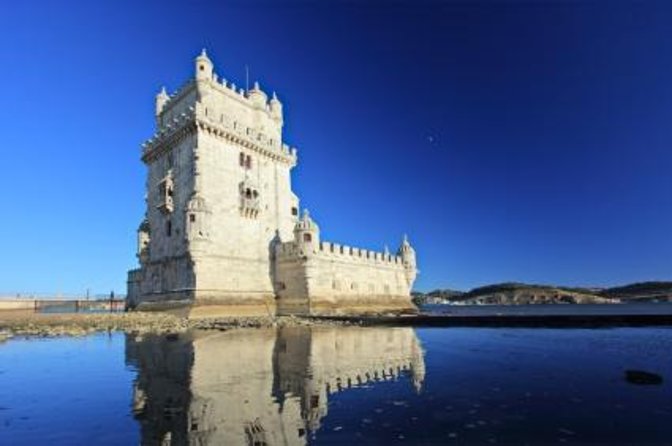
- Torre de São Vicente (Torre de Belém)
- Monument of the Discoveries
- Price and What $15.43 Buys You in Real Life
- Who This Tour Fits Best (And Who Should Pass)
- Quick Tips So You Don’t Waste Your One Hour
- Should You Book City Center – Belém?
- FAQ
- How long is the bus tour?
- What does the tour include?
- Is Wi‑Fi available during the ride?
- Where are the meeting point and end point?
- Are children allowed on board?
- Is there a restroom on the bus?
- What is the cancellation policy?
Key Things I’d Pay Attention To Before You Go
- Onboard Wi‑Fi keeps your maps and messaging working while you’re rolling
- Included pastries + coffee/tea/juice makes the ride feel like a mini food stop
- A fixed 1-hour circuit means you’re seeing a lot, not soaking in one place
- End point near Belém’s big sights (Planetarium at Belém / Jerónimos area) sets up your next move
- No restroom on board is the main planning detail you shouldn’t ignore
How the 1-Hour Lisbon City-Center to Belém Route Really Feels
This is a short hop-by-bus tour—about 1 hour—built for orientation. You start at Restauradores (Restauradores 1249-970 Lisbon) and finish at Mosteiro Jerónimos (1400-206 Lisbon), specifically ending in front of the Planetarium at Belém. That finish point matters, because it drops you near one of the easiest areas to continue on foot.
The bus is air-conditioned, and the experience includes Wi‑Fi on board. With Wi‑Fi, you can track what you’re seeing, then quickly decide which stop you want to revisit later (if any). The group size is capped at 44, so you’re not stuck in an ultra-large mass, but it’s still a shared ride—less “private,” more “efficient.”
One practical note: since there’s no restroom on board, treat this as an “in-and-out” outing. Use the restroom before you arrive, then plan a break after you exit in Belém.
You can also read our reviews of more city tours in Lisbon

Monumento dos Restauradores: An Obelisk That Tells You What Lisbon Was Fighting For
Your ride begins at Restauradores, home to the Monumento dos Restauradores—a 30-meter-high obelisk. It was inaugurated on April 28, 1886, built to celebrate Portugal’s liberation from Spanish rule on December 1, 1640.
Even from the bus, this stop is useful because it frames Lisbon’s mindset: this city has always been shaped by big political moments, not just art and cafes. On the monument’s pedestal, you’ll see bronze figures representing victory, with symbols like a palm and a crown, and Liberty as the theme.
Consideration: the monument itself is best appreciated up close. Since this tour is short, you’re mostly getting the story while passing by. If the political details hook you, plan to revisit later on foot.
Avenida da Liberdade and Marquês de Pombal: Lisbon’s Grand Avenue and Its Builder-Boss
Next comes Avenida da Liberdade, Lisbon’s main avenue linking Restauradores Square to Marquês de Pombal Square. This is a classic “Lisbon in motion” corridor: big buildings, wide street energy, and a sense of how the city channels foot traffic and history at the same time.
Then you roll past Marquês de Pombal, tied to a figure born in 1699 who was responsible for major architectural changes in Lisbon. It’s a reminder that Lisbon didn’t just evolve slowly—it was reshaped by leaders and big rebuilding moments.
What I like about this stretch: it helps you connect the dots. Even if you’ve never heard of the reformer, the tour’s quick explanations make the city feel planned, not random. The drawback is similar to the first stop: you’ll be seeing the story from a distance, not photographing every detail at eye level.
Rossio Square: The Old Square Where Lisbon Keeps Holding Important Moments

Your bus moves through Rossio Square, one of Lisbon’s oldest and most beautiful squares. The key point here is time: for more than six centuries, Rossio has been the stage for important events in Lisbon’s history.
This matters because Rossio isn’t only a pretty place. It’s one of those central squares that helps you understand how daily life and major events share the same space. If you’re the type who likes getting a “Lisbon timeline” without doing homework, this explanation on the move is exactly the kind of guide value you want.
Consideration: since you’re not stopping long, you won’t get to experience Rossio like a wanderer with a coffee. If you want to linger, you’ll need to plan a later walk after the tour ends.
Praça do Comércio (Terreiro do Paço): Merchants, Scale, and the Feeling of an Open Stage
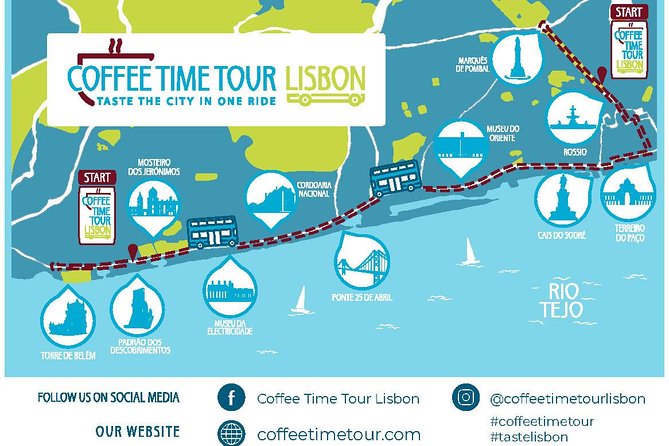
Then you hit one of Lisbon’s showpieces: Praça do Comércio, also called Terreiro do Paço. It’s one of the largest squares in Europe, roughly 36,000 m² (about 180 m x 200 m).
The tour’s commentary ties this scale to Lisbon’s identity as a merchant city. It’s easy to see why the square works for that story—an open, powerful space made for movement, business, and crowds. Even in a bus window view, you feel how it must function: a place designed for arrivals, departures, and the flow of trade.
If you’re sensitive to crowds, a tip: the square is huge, which can actually help. After the tour, if you return at a quieter time, you’ll likely find more breathing room than you’d expect from a famous central landmark.



Cais do Sodré, Praça dos Remolares, and Ribeira Velha: The Working-Port Side of Lisbon
This part of the ride is where Lisbon feels less like postcards and more like a working city.
You pass through the area with names that were used for a long time—Cais do Sodré and Praça dos Remolares—before the statue of the Duke of Terceira was built in 1877. The “remolares” name connects to the past: workers who handled oars for tugboats, tied to the idea of tug work along the port.
In 1906, the Regulador clock was built, and for many years it marked the legal hour of Lisbon. That’s the kind of detail I love because it turns a street corner into a time machine. You realize this city used technology and systems to organize daily life, not just scenery.
The tour also points you toward the Ribeira Velha Market, explained as a response to merchant activity. It was located in front of the Casa dos Bicos. Again, the value here is perspective: Lisbon’s famous buildings make sense when you understand the economic habits behind them.
Christ the Redeemer Mention: How Lisbon Borrowed an Idea Across the Ocean

One of the more surprising bits of commentary involves Rio de Janeiro. The statue of Christ the Redeemer in Rio inspired a similar monument in Lisbon in 1934, during a visit by the Cardinal-Patriarch of Lisbon, Mons. Manuel Gonçalves Cerejeira.
Why this is worth hearing while riding: it’s a reminder that Lisbon’s identity isn’t isolated. Ideas traveled. People connected. Even religious symbolism and large-scale monuments didn’t stay boxed in.
You don’t need to be a “monument person” to appreciate this—this kind of tidbit helps the whole day feel connected instead of random stops.
25 de Abril Bridge: Tagus-Edge Views and Engineering Ahead of Its Time
Now you get a big-ticket icon: the 25 de Abril Bridge across the Tagus River (Rio Tejo), connecting Lisbon (north bank) to Almada (south bank).
The tour explanation gets specific about the bridge crossing the Tagus at its final and narrowest part—the Tejo bottleneck. It’s also said the bridge’s design is similar to the Golden Gate Bridge in San Francisco. The commentary adds a technical angle: it was structurally conceived ahead of its time, with later support for the train added to the bridge.
Even if you’re not into engineering, this section gives you a stronger sense of Lisbon’s geography—how the city hugs the river, and how the river becomes both boundary and connector. If you like wide river views, this is one of the moments that often makes short tours feel worth it.
Cordoaria Nacional, MAAT, and Tejo Central: From Navy Cables to Contemporary Art
This stretch turns the riverfront into a story about work changing into culture.
Cordoaria Nacional (Cordoaria / Cordoaria Nacional)
You’ll pass the National Factory of Cordoaria Nacional, explained as a Portuguese Navy cable-making site. Built in 1771, it made cables, sisal ropes, sails, and flags that equipped Portuguese ships. Today, the building is a national monument.
MAAT
Then there’s MAAT (Museum of Art, Architecture and Technology), Lisbon’s contemporary art museum. The project emphasizes the river-facing facade, with the back side meant to merge with the urban space. If you’ve ever wondered why some modern buildings feel like they belong to the water, this is the example to remember.
Tejo Central
The tour also points out the old power-and-industry story: originally known as Tejo Central, built between 1908 and 1951. It followed western iron architecture, with brickwork that decorates the sides, described as ranging from new art to classicism.
Why I think this trio works: you’re seeing how Lisbon reused major infrastructure. One area can hold a navy factory, a contemporary museum, and a power station timeline—without pretending they’re all the same era.
Palácio de Belém and Jerónimos: Lisbon’s Ceremonial Side
Next you reach the official-government and royal-religious mood.
Palácio de Belém
In 1912, after the proclamation of the republic, the Palácio de Belém became the official residence of the President of the Republic. The guide notes that presidents of the First Republic had to pay income to the State to reside there, not receive a privilege tied to the previous regime.
This kind of detail adds context beyond “big building, big view.” It explains how power worked in practice.
The Jerónimos Monastery area
The tour also brings you to the Monastery, described as a cultural landmark that drew artists, chroniclers, and travelers for its five centuries. It served as reception and burial for kings, and later for poets. In modern times, the definitive project (decided in early 1988) turned the area into a cultural and conference center in 1993, with programming emphasizing music, theatrical arts, and photography.
Even if you can’t stop to read every stone, these notes help you look at the place with the right expectations.
Torre de São Vicente (Belém Tower) and the Monument of Discoveries: Two Ways to See Lisbon’s Sea Dreams
Your final Belém moments are built around two iconic symbols of the sea.
Torre de São Vicente (Torre de Belém)
The tour explains the tower’s original setting: Torre de São Vicente (also called Torre de Belém) was located where Belém beach once existed, surrounded by waters around its perimeter. Over centuries, it ended up incorporated onto the mainland as the coastline changed.
Monument of the Discoveries
Then comes the Monument of the Discoveries, built in 1940 for the Portuguese World Exhibition. Designed by Cottinelli Telmo, it’s a tribute to Infante D. Henrique, celebrating not only him but also collaborators and followers.
This pairing works well for short tours: one monument ties to the physical geography of the river and coast; the other ties to the myth and ambition of exploration. Together, they give you the “Belém feeling” in one final stretch.
Price and What $15.43 Buys You in Real Life
At $15.43 per person, this is priced like a value-oriented city introduction, not a premium private guide situation. For that money, you’re getting:
- Air-conditioned transportation
- Wi‑Fi on board
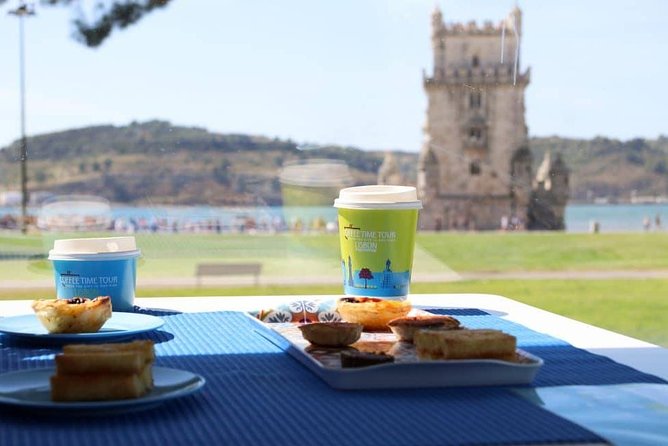
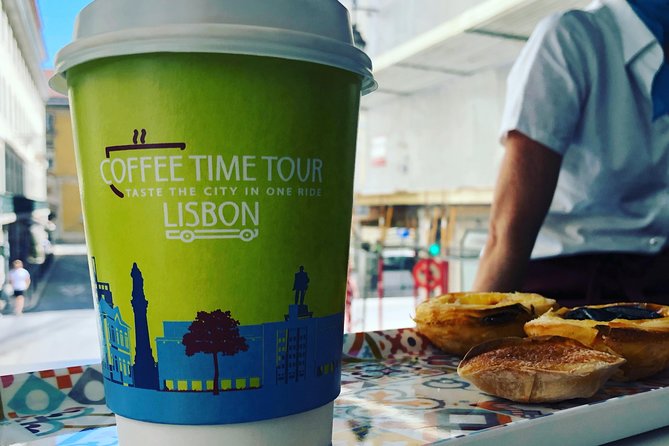
- Portuguese pastries plus coffee and/or tea (also juice)
- Commentary that links many landmark stops into a few themes: merchant power, Lisbon’s rebuilding, river engineering, and Belém’s cultural symbolism
The biggest “cost” isn’t money—it’s time. At about 1 hour, you won’t get depth at any one place. You’ll be choosing later: revisit the stops that pulled you in, and skip the ones you didn’t.
The no-restroom detail is also a real factor in value. If you’re the type who needs a restroom break during travel, the ride being short doesn’t fully solve that.
Who This Tour Fits Best (And Who Should Pass)
This tour is ideal if you want a fast, structured orientation. You’ll likely enjoy it most if:
- It’s your first time in Lisbon and you want a quick “big picture” route
- You’re time-limited and want to see both central highlights and Belém’s iconic area in one go
- You like learning short explanations while traveling instead of only stopping to read plaques
- You appreciate small comfort touches like Wi‑Fi and staying in an air-conditioned bus
It’s less ideal if:
- You want to linger in one sight for photos and slow walks
- You strongly rely on restroom access during outings (since there’s none on board)
- You’re traveling with a child under 6 (children under 6 are not allowed on board)
Quick Tips So You Don’t Waste Your One Hour
Here are the small choices that matter for a tour this time-efficient:
- Arrive a bit early at Restauradores 1249-970 Lisbon so you can board without rushing.
- Use the Wi‑Fi (if available on your phone) to look up what you’re passing—then decide where to go next after you exit.
- After the tour ends near the Planetarium at Belém / Jerónimos area, plan your next stop right away. This route is designed as a connector, not a final destination.
- Since there’s no restroom on board, handle that before boarding.
Also keep in mind this tour runs with a maximum of 44 travelers. That’s small enough to feel manageable, but still not private.
Should You Book City Center – Belém?
I’d book it if you want a short, efficient “Lisbon overview to Belém” that includes comfort and snacks. The price is low enough that you can treat it as orientation, then build a second day (or even a second hour) around the sights that pull you in.
One caution to keep in mind: a past complaint claimed the provider offering the tour was closed after the Covid period. I can’t confirm current operations from the info here, but since the tour offers free cancellation, you can reduce risk by booking in a window that still gives you time to cancel if something feels off with the operator, Coffee Time Tour Lisbon.
If you’re aiming for value, Wi‑Fi, and a guided route that lands you near Belém’s major sights, this is a solid choice.
FAQ
How long is the bus tour?
It runs for about 1 hour.
What does the tour include?
You’ll get a variety of Portuguese pastries, coffee and/or tea (and juice), Wi‑Fi on board, and an air-conditioned vehicle.
Is Wi‑Fi available during the ride?
Yes, Wi‑Fi is included on the bus.
Where are the meeting point and end point?
You start at Restauradores 1249-970 Lisbon. The tour ends in front of the Planetarium at Belém, at the Mosteiro Jerónimos area (1400-206 Lisbon).
Are children allowed on board?
Children under 6 years old are not allowed. Children pricing applies for ages 6 to 14.
Is there a restroom on the bus?
No restroom on board is listed as included.
What is the cancellation policy?
You can cancel for a full refund if you cancel at least 24 hours before the experience’s start time.
If you want, tell me what day of the week you’re going and what time you want to reach Belém, and I’ll suggest the most practical follow-up plan after you get dropped near the Planetarium.