
REVIEW · LISBON
Caparica Surf Experience
Book on Viator →Operated by Get Stoked · Bookable on Viator
Surfing Portugal starts with a simple lesson. Costa da Caparica has the Tejo River meeting the Atlantic, plus consistent swells and fossil-cliff scenery that make the whole outing feel like more than just another activity. I like that you get full surf equipment (and wetsuits) included, and I like the friendly instruction that helps you get on the water without mystery or attitude.
One thing to consider: even with a small group cap, it can feel a bit crowded in the water on busy days, and technique feedback can vary a little from instructor to instructor. If you want extra attention, the private option (with optional in-water video) is worth thinking about.
In This Review
- Key Highlights You’ll Care About
- Costa da Caparica Waves: Why This Area Works for Real Learning
- What You’re Paying For: $35.95 Value That Actually Makes Sense
- The 2-Hour Flow: Praia da Mata to Fossil Cliffs
- Stop 1: Praia da Mata
- Stop 2: Arriba Fossil da Costa de Caparica
- What the timing feels like
- Coaching Quality: Friendly Teaching and Technique Checks
- Group Size, Crowds, and How to Make It Better
- Equipment and Wetsuits: The Comfort Piece People Forget
- Optional Upgrades: Private Class and In-Water Video
- Best Time to Go: Morning vs Afternoon Sessions
- Who This Is Best For (And Who Should Skip It)
- Should You Book Caparica Surf Experience?
- FAQ
- FAQ
- How long is the Caparica surf lesson?
- What’s included in the price?
- Is this lesson offered in English?
- Can I choose between morning and afternoon?
- Where do we start, and what spots do we surf?
- Do I need to bring a wetsuit or can I get video footage?
- What is the group size limit?
- Do I need to be able to swim to join?
- What happens if weather is bad or I need to cancel?
Key Highlights You’ll Care About
- Equipment and wetsuit included so you can focus on surfing, not shopping
- Praia da Mata used as a great starting point with beginner-friendly conditions
- Small groups (max 20), with a teaching ratio often around 1 instructor for every 4–5 people
- Two surfing stops: Praia da Mata and Arriba Fossil da Costa de Caparica
- Secure valuables while you change and learn
- Upgrade options for private lessons and an optional in-water videographer
Costa da Caparica Waves: Why This Area Works for Real Learning
Costa da Caparica sits right where the Tejo River (Tagus) flows into the ocean. That geography matters because it helps create a steady mix of swell and wave behavior, so your 2-hour session is less about gambling and more about getting reps in.
The coast is also shaped by erosion, with fossil cliffs along the way. Even when you’re focused on fundamentals, it’s nice to know you’re surfing in a protected area with real geology, not just a generic beach strip.
This setup is why the spot tends to work for both total first-timers and people who already know how to pop up. First-timers get time building basics, and returning surfers can still use the session to tighten form without committing to a full multi-day program.
You can also read our reviews of more tours and experiences in Lisbon.



What You’re Paying For: $35.95 Value That Actually Makes Sense
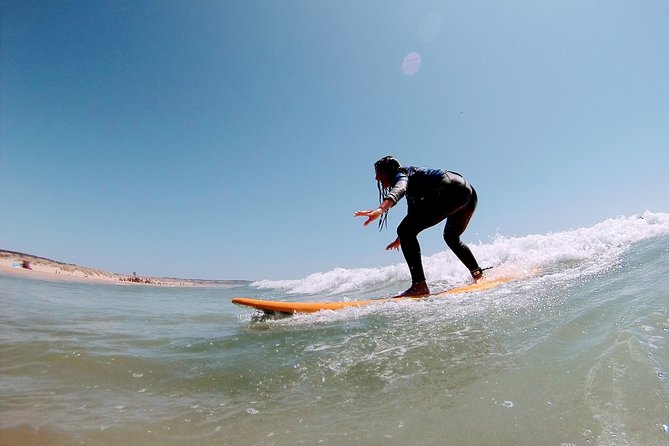
The price is $35.95 per person for an approximately 2-hour group lesson. The value shows up in what’s included: full surf equipment, wetsuits, an experienced instructor, and sports insurance.
That matters because surf gear and wetsuits are usually extra costs elsewhere. Here, you don’t have to figure out rentals, sizing stress, or extra add-ons just to get wet. If you’re only in Lisbon for a short time, this “all-in” structure saves both money and mental load.
Also, you’re not paying for a lecture. The better feedback points to lots of actual time in the water, with coaching that starts from basics and then builds. That’s exactly what you want at this price point.
The 2-Hour Flow: Praia da Mata to Fossil Cliffs
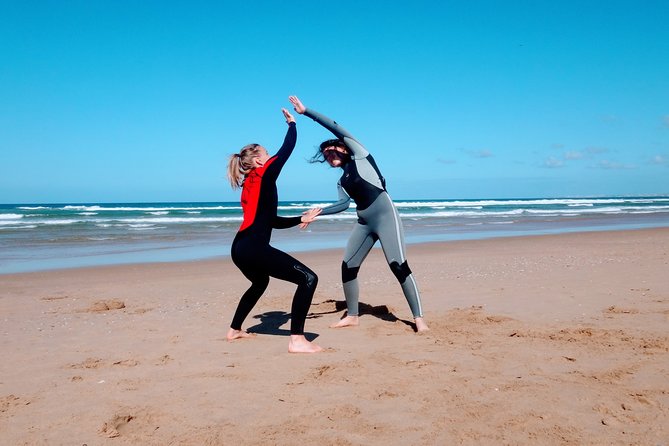
This session is designed around two stops, which is a smart way to keep things interesting while still practicing the right skills.
Stop 1: Praia da Mata
Praia da Mata is the start point, and it’s a good choice for learning. In plain terms, you want a beach that makes it easy to get organized, gear up fast, and practice without huge waves stealing your focus.
Expect your first steps to include basic instruction, then quick movement into hands-on practice. The coaching style described in feedback emphasizes starting from fundamentals and then progressing, rather than tossing you straight into the hardest conditions.
One practical win: Praia setups like this tend to include soft sand around you, so you can reset without feeling like every break is a grind.
Stop 2: Arriba Fossil da Costa de Caparica
Arriba Fossil da Costa de Caparica is the second surfing stop. Even if you’re not thinking about the cliffs while you’re balancing, the change of spot usually helps keep your session feeling varied.
This part of the coast also reinforces the “waves with options” idea. You’re not just doing one repeated shape over and over. That can help you learn how wave conditions influence timing and board control.



What the timing feels like
Two hours is a sweet spot for beginners. Long sessions sometimes turn into fatigue before you’ve made progress. Here, the format is built so you can get enough time to feel real improvement during a single outing, not just an introduction.
Coaching Quality: Friendly Teaching and Technique Checks
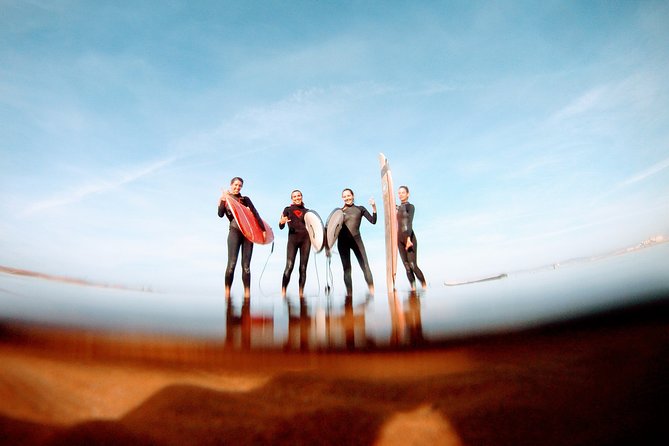
The most praised part of this experience is the instruction. People consistently describe instructors as encouraging, helpful, and tuned in to what each surfer needs.
You’ll also see a pattern in the feedback about teaching style:
- Beginners get started with clear theory, then move quickly into real practice
- Warm-ups can feel like a full-body routine, not just a pre-surf stretch
- Coaches watch your form and give targeted tips
For names, a few instructors show up strongly in the praise:
- Mauro is credited with technique watching and tips, plus warm-ups that felt like a yoga-style session
- Filipe is highlighted for individualized attention and making safety feel normal
- Miguel is mentioned for teaching ability and storytelling style that keeps people engaged
- Nuno comes up as engaging and competent
One small caution: one piece of feedback notes that not every tutor gives the same amount of technique feedback. If you’re hoping for deep, step-by-step coaching, that’s where the private lesson upgrade can help you get the attention you want.
Group Size, Crowds, and How to Make It Better
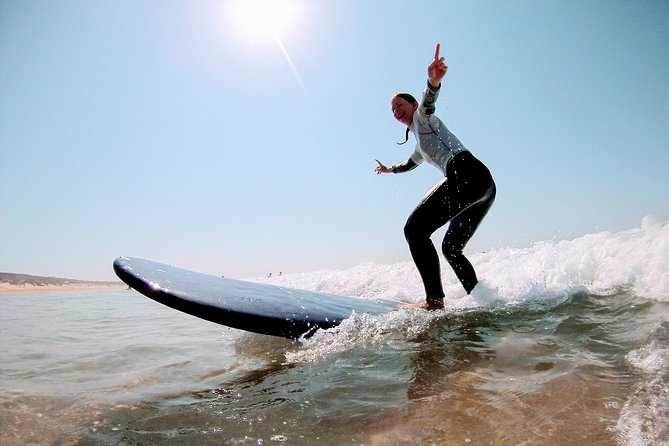
The group max is 20 people, and the teaching ratio often lands around 1 instructor for every 4–5 surfers. That’s good on paper, and it usually supports the “lots of time in the water” idea.
Still, there’s a real-world factor: if the beach is busy and everyone is learning similar skills at the same time, the water can feel a little crowded. That doesn’t mean you won’t enjoy it. It just means you should keep your mindset practical.
How you can make it easier:
- Focus on one skill at a time during each attempt (pop up timing, stance, or paddling rhythm)
- Don’t chase every wave; let the coach’s plan guide you
- If you want space and more feedback, consider the private upgrade
That’s the key tradeoff. Group lessons usually give better value, but private instruction gives better spacing and more direct corrections.
Equipment and Wetsuits: The Comfort Piece People Forget
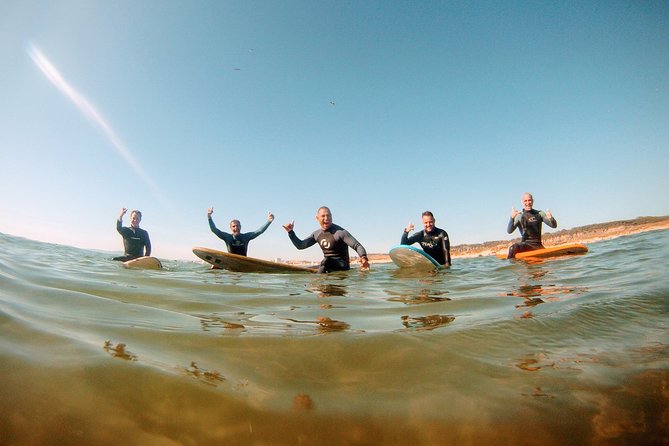
Full surf equipment and wetsuits are included. That’s not a small detail. In Portugal, water and wind can change how fast you tire, and comfort affects your learning rate.
A wetsuit also gives you confidence to spend more time in the ocean without feeling like the cold will shut you down early. And when you’re comfortable, you’re more likely to try again after a wipeout—exactly how you improve.
There’s also an important practical note in the feedback: valuables are kept securely while you’re learning. That’s a relief for first-timers who might otherwise worry about phones, keys, or cards while they’re in and out of the sand.
Optional Upgrades: Private Class and In-Water Video
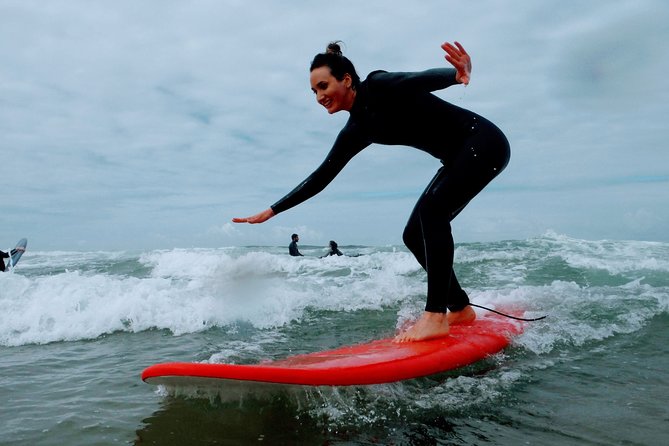
If you’re the type who wants a closer look at technique, there are two upgrade paths:
- A private class option
- Optional in-water videographer
This is useful if you’re trying to fix one specific problem. Surf is visual and timing-based, so being able to review your movement can speed up adjustments. Even if you’re a beginner, a short clip can show what your body is actually doing when your board slips.
If your goal is confidence plus coaching attention, the private format is the cleanest upgrade. If your main goal is learning how to adjust your posture and timing, video can be a helpful supplement.
Best Time to Go: Morning vs Afternoon Sessions
You can choose a morning or afternoon session, or even book both. The “best” choice depends less on the surf lesson itself and more on how you plan your Lisbon day.
If you want your beach time to feel simple, morning often works well because you can do it early, then still have energy for lunch and city wandering afterward. Afternoon can also be great if you’re the kind of person who likes a slower start.
Either way, the experience requires good weather. Conditions matter for safety and for getting decent wave time. If weather is poor, you’ll be offered a different date or a full refund.
Who This Is Best For (And Who Should Skip It)
This is a moderate physical activity, and it’s for people who can swim confidently in ocean waves. If you’re not comfortable swimming out in surf conditions, don’t fake it. Surf needs that baseline.
It’s not suitable for people with bone and joint problems in the lower and upper limbs. That includes scenarios where paddling, wiping out, or repeated movement could aggravate pain.
Who tends to love this format:
- First-timers who want basics without overthinking
- People who want lots of water time in a single 2-hour block
- Anyone who appreciates friendly, encouraging coaching and clear progression
If you have surf experience, this still makes sense. The session is built to work across levels, and good instructors can adjust cues without making you feel ignored.
Should You Book Caparica Surf Experience?
If you want a Lisbon surf lesson that’s efficient, beginner-friendly, and good value, this is an easy yes. The biggest strengths are time in the water, friendly coaching, and the fact that you’re not paying extra just to get the gear and wetsuit.
I’d book it if:
- You’re okay with a group setting (max 20)
- You can swim confidently in ocean waves
- You want practical instruction that starts from basics and builds
I’d hesitate or upgrade to private if:
- You feel you need extra individualized feedback
- Crowds in the water would stress you out
- You want a sharper technique focus, with optional video
Net: for $35.95, the included equipment, insurance, and coaching make this a strong match for a real first surf day in Portugal.
FAQ
FAQ
How long is the Caparica surf lesson?
It’s about 2 hours per session.
What’s included in the price?
You get a 2-hour surf session, full surf equipment, a wetsuit, a certified surf instructor, and sports insurance. Food and drinks are not included.
Is this lesson offered in English?
Yes, the experience is offered in English.
Can I choose between morning and afternoon?
Yes. You can pick a morning or afternoon session, or book both.
Where do we start, and what spots do we surf?
You meet at Praia da Mata, 2825 Costa da Caparica, Portugal. The session includes Praia da Mata and Arriba Fossil da Costa de Caparica, and it ends back at the meeting point.
Do I need to bring a wetsuit or can I get video footage?
You do not need to bring a wetsuit because they’re provided. There is also an optional upgrade that can include an in-water videographer.
What is the group size limit?
The maximum group size is 20 people.
Do I need to be able to swim to join?
Yes. You must be confident to swim in ocean waves.
What happens if weather is bad or I need to cancel?
The experience requires good weather. If it’s canceled due to poor weather, you’ll be offered a different date or a full refund. You can cancel for a full refund up to 24 hours before the start time.