REVIEW · LISBON
3h30 Tour | Lisbon Essentials: See, Taste and Learn with a Local
Book on Viator →Operated by Wanderwisr · Bookable on Viator
Lisbon can feel like a maze, so this 3h30 tuk-tuk loop helps you get your bearings fast while tasting the city’s flavors. I like that you cover major neighborhoods and viewpoints in one smooth route, and I also like the practical focus on local treats like pastel de nata and a sip of ginjinha. One thing to consider: most of the time is spent riding between stops, so if you want long museum-style wandering, this format is more about quick, well-timed moments than deep indoor time.
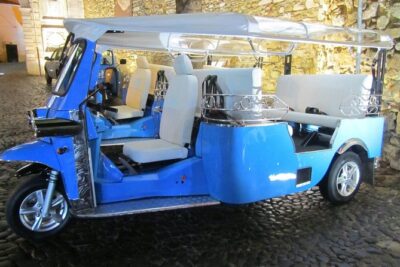
The experience runs with a private, engaging local guide, and you’ll move through tight streets in a quiet, eco-friendly tuk-tuk. Hotel pickup and drop-off make the whole thing low-friction, especially if it’s your first day.
Because it’s built around good weather and outdoor viewpoints, you’ll want flexible plans. Also, it’s not for people who want zero humor and zero personality in the narration.
In This Review
- Key highlights worth your attention
- Lisbon Essentials in a Tuk-Tuk: the smart way to start your trip
- Price and what you really get for $144.49 per person
- Tuk-Tuk comfort and hotel pickup: the logistics that make it easy
- First stop energy: Restauradores Square, custard tart, and instant orientation
- Miradouros for photos: Portas do Sol, Senhora do Monte, and Sao Pedro de Alcantara
- Historic Lisbon beyond the viewpoints: Sé, monastery, and the Pantheon area
- Alfama walking and ginjinha: where Lisbon feels like a village
- Pink Street and Bairro Alto during the day: nightlife culture, without the chaos
- Finishing sweep: squares, riverfront energy, and return to Restauradores
- Food and drink: pastel de nata and ginjinha, with the practical 18+ rule
- Who this tour fits best (and who should skip it)
- The weather reality: what happens if conditions are bad
- Should you book this Lisbon Essentials tour?
- FAQ
- How long is the Lisbon Essentials tuk-tuk tour?
- How much does the tour cost?
- Is pickup and drop-off included?
- What language is the tour offered in?
- Are food tastings included?
- Do I need to be 18 to drink the ginjinha?
- Is this a private tour?
- Does the tour run in any weather?
- What’s the cancellation window for a full refund?
Key highlights worth your attention
- Quiet, eco-friendly tuk-tuk rides that keep you comfortable as you hop between hilltop viewpoints and historic quarters
- Hotel pickup/drop-off that saves you time and reduces Lisbon stress
- Two big viewpoint stops for classic photos: Miradouro das Portas do Sol and Miradouro da Senhora do Monte
- Alfama time for ginjinha plus narrow-street walking through a neighborhood that still feels like a village
- A short but focused sweep of historic Lisbon including the Sé (Lisbon Cathedral) from the outside and major squares for context
- Optional food and alcohol tastings (pastel de nata and cherry liqueur only if you’re 18+)
Lisbon Essentials in a Tuk-Tuk: the smart way to start your trip

If your first day in Lisbon includes the usual questions—Where do I go first? What’s worth seeing? How do I fit it all in?—this tour is built for that exact moment. The idea is simple: hit the landmarks that help you understand Lisbon’s layout, then tie it together with viewpoint stops and local flavors.
You’re not stuck with a long bus ride and awkward timing. Instead, you’re in a small, quiet tuk-tuk with a private guide, so the route can follow the rhythm of the streets and hills. That matters in Lisbon, where the best views often sit above steep neighborhoods.
You can also read our reviews of more tours and experiences in Lisbon.



Price and what you really get for $144.49 per person
At $144.49 for about 3 hours 30 minutes, this isn’t the cheapest option. But the value comes from what’s bundled: private transportation, hotel pickup/drop-off, an experienced local guide, and a pair of optional tastings tied to Lisbon culture.
You’re also not paying separately for the kind of “orientation tour” time that would otherwise cost you a chunk of your day plus transit hassles. When you’re only in Lisbon for a short trip, time is the real currency—and this route is designed to spend it efficiently.
One more value point: the tour includes company liability and personal injury insurance. You don’t think about it until you need it, but it’s the sort of practical detail that makes booking feel calmer.
Tuk-Tuk comfort and hotel pickup: the logistics that make it easy
Lisbon hills can turn a simple outing into a cardio session. Here, you do the uphill viewing with less strain because you’re moving by tuk-tuk between key points. Most of your time is inside the tuk-tuk, and that’s intentional: the narration happens while you’re in motion, so you keep momentum instead of losing time to transit gaps.
Hotel pickup and drop-off also reduces one of the most common first-day travel headaches: finding a meeting point after you’ve already been navigating trains, trams, and walking. If you’d rather spend that energy on the sights, this structure helps.
The tour uses a mobile ticket, which is handy if you don’t want to fuss with paper vouchers.
First stop energy: Restauradores Square, custard tart, and instant orientation
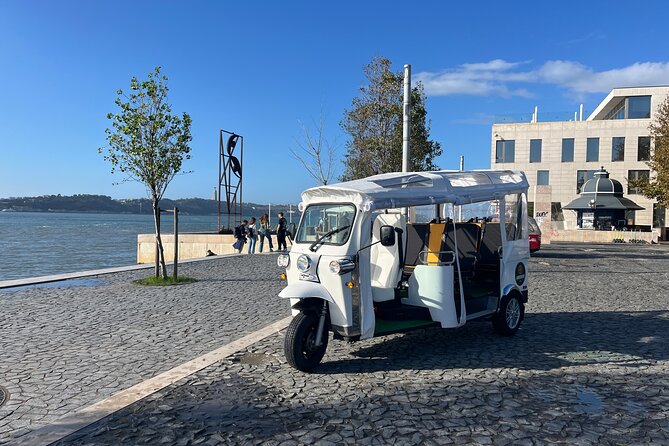
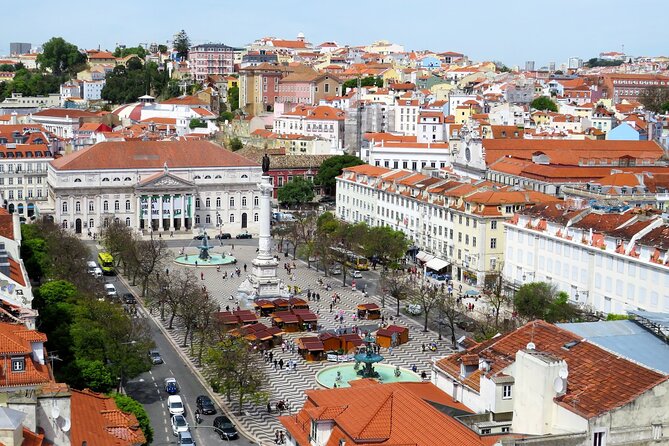
You start at Praça dos Restauradores, a public square at the southeast end of Avenida da Liberdade. This is a good kickoff point because it’s central enough to feel like the city’s main stage, and it sets you up for the historic sweep that follows.
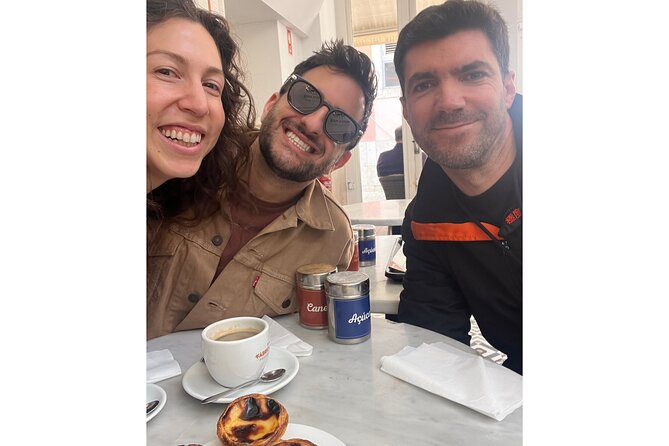
Right away, there’s a chance to taste one of Lisbon’s most famous sweets: pastel de nata (custard tart). The tour framing makes it clear this isn’t just a random snack stop; it’s connected to Lisbon’s food identity, so you’re tasting something meaningful while the guide explains where you are and why it matters.
After that, you roll through the core of downtown, including the lively Rossio (King Pedro IV Square). Even if you’re only passing through, you get a quick sense of the city’s street-life and scale. Then there’s a pass by a Portuguese theater in the downtown area with a seating capacity of 948—an interesting detail if you like architecture and cultural landmarks.
From there, you approach Baixa, Lisbon’s historic center built after the 1755 earthquake. The value here is the context: you’re not just seeing old streets, you’re learning why the urban layout looks the way it does. If you enjoy understanding how a city got shaped by real events, this is one of the smarter parts of the route.
Finally, you get exterior views of Lisbon’s Roman Catholic cathedral of Saint Mary Major, often called Sé. You’re not doing a long interior visit here, but seeing the building from outside still gives you that anchor landmark feeling.
Miradouros for photos: Portas do Sol, Senhora do Monte, and Sao Pedro de Alcantara

Lisbon viewpoints are not optional if you want the full experience. This tour builds in multiple chances to look out over the city, each with a different feel.
At Miradouro das Portas do Sol, you get a viewpoint that works like one big balcony above the Alfama area. The stop is short, but that’s part of why it works: you’re there long enough to get your photos and learn what you’re looking at. For first-timers, the guide’s narration helps you stop thinking in terms of random buildings and start recognizing Lisbon’s neighborhood logic.
Then you move on to Miradouro da Senhora do Monte, near the Chapel of Senhora do Monte. This is another “grab your camera, take a breath” moment. The stop is longer—about 15 minutes—so you’re not rushed. This is the kind of time window where you can actually enjoy the view instead of just snapping and moving.
There’s also Miradouro de Sao Pedro de Alcantara, where you get a quick photo and then keep rolling. Don’t expect long lounging here; expect a well-placed sight on the route, timed so you don’t lose momentum.

Historic Lisbon beyond the viewpoints: Sé, monastery, and the Pantheon area
Not every great Lisbon moment is a view. Some are about the stone-and-stories places that explain what the city has valued over time.
You’ll pass by the Church and Monastery of São Vicente de Fora, located in the São Vicente area. The tour notes that it was built outside the old walls, which is a helpful detail because it explains the origin of its name: São Vicente de Fora. That’s the kind of small historical clue that makes a passing sight more than just a background photo.
You’ll also slow down near the National Pantheon area in Santa Clara, a huge church building originally intended for Santa Engrácia. Again, the tour approach is “learn while moving.” You won’t spend ages inside, but the guide’s framing helps you understand why the building looks so massive and why it became important.
One of the best parts of this section is pacing. You’re not trying to cram seven indoor stops. Instead, you get a sequence of exterior landmarks that build a mental map of the city’s religious and cultural backbone.
Alfama walking and ginjinha: where Lisbon feels like a village

The tour’s most emotional neighborhood stop is Alfama. This is where Lisbon starts to feel less like a capital and more like a close-knit hillside community. The tour gives you a short walk through narrow streets—enough to feel the texture of the place without turning it into a long hike.
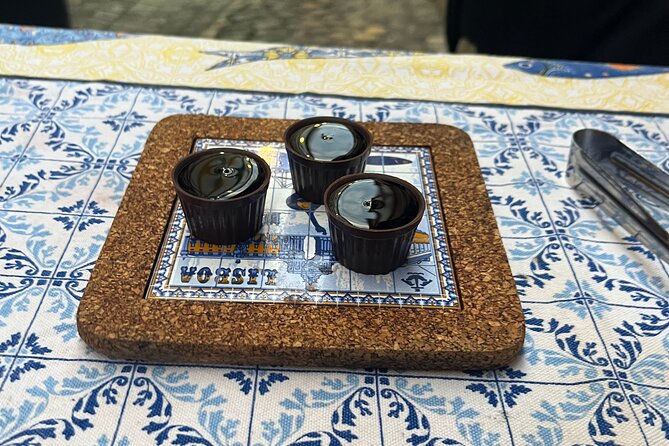
The big cultural tasting here is ginjinha, a traditional cherry liqueur. You’ll stop to try it, with the important legal note that alcohol is only allowed if you’re 18+. That means if you’re under 18, you can still enjoy the walk and the neighborhood atmosphere, but the drink isn’t for you.
The value of this stop isn’t just the liqueur. It’s the way the guide uses it as a shortcut to understand local habits: what people drink, where they gather, and why this neighborhood’s identity is still tied to everyday community life.
Pink Street and Bairro Alto during the day: nightlife culture, without the chaos

After Alfama, the tour moves toward Cais do Sodré and includes a stop at Pink Street (Rua Nova do Carvalho). This is one of those places that went through a dramatic transformation from a notorious past into a lively cultural and nightlife hub.
The tour stop time here is brief, but it’s still useful because the guide gives you the story behind the shift. You get the vibe of the area without committing to a late-night plan.
Then you cross Bairro Alto from south to north. The key is that it’s daytime quiet here. You’re essentially getting a snapshot of how the neighborhood changes: it’s calm during the day and flips into one of Lisbon’s busier bar and restaurant zones at night. Even if you don’t plan to go out that evening, understanding the day/night rhythm makes your own Lisbon wandering make more sense.
Finishing sweep: squares, riverfront energy, and return to Restauradores
The back half of the tour keeps stacking viewpoints and city context.
There’s a pass through Praça Martim Moniz, including a bit of historical background tied to its namesake role in Portuguese history. You also pass by another emblematic square—plus get a sense of how Lisbon moves people from landmark to landmark.
Around the Alfama-to-riverfront area, you’ll pass Ribeira da Naus, a former shipbuilding yard that now functions as public space after major intervention. This is a good spot for a mental shift: you’re going from old hillside Lisbon to a more open, river-facing part of the city.
The tour also references the biggest and most famous square in Lisbon, describing its split use among government departments, cultural and promotional activity, hotels, restaurants, and cafes. Even if you’re only passing through for photos, the guide framing helps you recognize why this part of the city feels like a stage.
Finally, you loop back to Praça dos Restauradores to end where you started. It’s a tidy finish, especially since you’re likely heading back to your hotel right after.
Food and drink: pastel de nata and ginjinha, with the practical 18+ rule
This tour is built around simple Lisbon comfort foods, not complicated meals. You get pastel de nata as an optional snack, plus ginjinha as an optional sip for guests over 18.
If you’re sensitive to alcohol or you just want to taste without committing, plan for a small sip rather than thinking of it like a cocktail night. The tour also makes the legal rule clear: by Portuguese law, alcoholic drinks are only allowed if you’re 18 or older. It’s better to know that up front than to get stuck at the tasting moment.
And if you don’t drink, you’re still getting a key cultural moment through the Alfama walk and the guide’s narration.
Who this tour fits best (and who should skip it)
This is a strong fit for:
- First-time visitors who want Lisbon orientation plus viewpoints in half a day
- People who like neighborhood stories as much as monument photos
- Travelers who’d rather avoid steep walks and still see the city’s “wow” angles
- Anyone who enjoys food culture like pastel de nata and the ritual of ginjinha
It may be less ideal if:
- You want long museum interiors or detailed guided stops inside cathedrals and churches
- You dislike tours where you’re mainly riding and getting narration on the move
- Your idea of fun does not include humor and a guide with personality (this one explicitly isn’t for boring people)
The weather reality: what happens if conditions are bad
This experience requires good weather because viewpoints and outdoor timing are part of the plan. If it’s canceled due to poor weather, you’ll be offered a different date or a full refund.
My practical advice: if your schedule is tight, build in flexibility for this day. Lisbon’s best views often depend on clear skies, and your enjoyment will track with that.
Should you book this Lisbon Essentials tour?
I’d book it if you want a fast, guided start that stitches together Lisbon’s main neighborhoods, squares, and viewpoint hits—while keeping logistics simple with hotel pickup and a quiet tuk-tuk. The price feels fair when you account for private transport, a local guide, and included culture tastings you can opt into.
Skip it if you’re the type who prefers to spend hours in one place, or if you’d rather design your own route without timed stops. In that case, you can still see all these spots on your own—but you won’t get the same structure and narration that helps everything click.
If you’re trying to pick one “first day” experience that helps the rest of your trip make sense, this one is a solid choice.
FAQ
How long is the Lisbon Essentials tuk-tuk tour?
It lasts about 3 hours 30 minutes.
How much does the tour cost?
The price is $144.49 per person.
Is pickup and drop-off included?
Yes. Hotel pickup and drop-off are included.
What language is the tour offered in?
The tour is offered in English.
Are food tastings included?
You get optional pastel de nata (custard tart) and optional ginjinha (cherry liqueur for guests over 18). Souvenirs or extra food/drink are not included.
Do I need to be 18 to drink the ginjinha?
Yes. By Portuguese law, alcoholic drinks are only allowed if you are 18 or older.
Is this a private tour?
Yes. It’s private, meaning only your group participates.
Does the tour run in any weather?
It requires good weather. If it’s canceled due to poor weather, you’ll be offered a different date or a full refund.
What’s the cancellation window for a full refund?
You can cancel for a full refund up to 24 hours before the experience’s start time.