
REVIEW · LISBON
The Portuguese Tiles
Book on Viator →Operated by Lisbon Experience · Bookable on Viator
Lisbon speaks in tile. On this 3.5-hour walk, I love how the route shows blue-and-white tiles starting from early church roots, and I love that guide Miguel Cardoso connects each wall to Lisbon’s bigger story. The one possible drawback: it’s a lot of walking and it depends on good weather, so plan for slippery spots if rain shows up.
I also like that the stops are carefully mixed: you’ll see famous facades, but you’ll also get the kind of close-up tile details that you’d miss when you’re sightseeing on your own. Many entrances are free at each stop, with one key exception that adds a little “payoff” without blowing your budget.
If you’re trying to get your bearings fast and learn how tiles became part of Portuguese identity, this is an efficient way to do it. In a small group (max 9), Miguel keeps the pace friendly and the explanations practical, and you’ll finish in a different location than where you started in Lisbon.
In This Review
- Key Things You’ll Notice on This Portuguese Tiles Tour
- Starting at Av. da Liberdade: the 10:00 am Tile Hunt
- Casa do Alentejo: where Moorish influence meets Lisbon romance
- Convento De São Pedro de Alcântara: the early blue-and-white chapter
- Igreja de São Roque: signed 16th-century panels in place
- Trindade: the oldest brewery in Lisbon, covered in 1800s tiles
- Largo Rafael Bordalo Pinheiro: Masonic motifs and a famed façade
- Livraria Bertrand in Chiado: blue-and-white tiles on a bookshop icon
- Alcôa pastry shop: from lottery roots to ceramic artistry
- Praca Dom Pedro IV: tiles meet the city’s main stage
- Viuva Lamego showroom: the tile factories behind the look
- Rua da Misericórdia: tile shop energy that feels like a museum
- How the pacing really feels: good shoes win
- Price and value: $60.24 for a lot of visible craft
- Best timing: when to book if you want a spot
- Should you book this Portuguese Tiles tour?
- FAQ
- How long is the Portuguese Tiles tour?
- What time does it start, and where does it meet?
- Is the tour offered in English?
- How large is the group?
- Are tickets included for all stops?
- Does this tour use a mobile ticket?
- What happens if the weather is poor?
- What is the cancellation window?
- Is it hard for most people to participate?
Key Things You’ll Notice on This Portuguese Tiles Tour
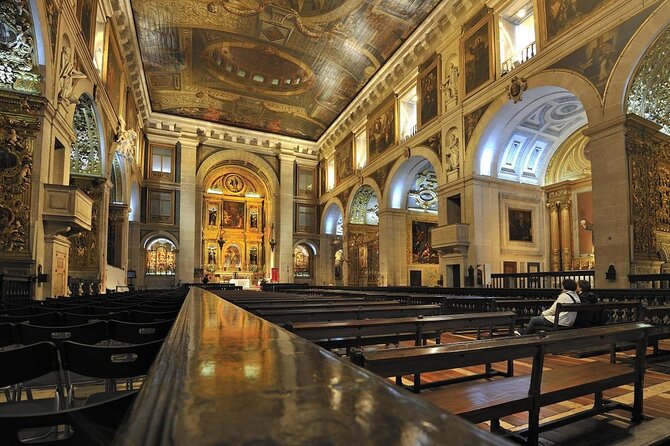
- Small-group feel (max 9): more time for questions and slower moments when you want them
- Tile history that connects places: church to brewery to bookstores, each stop has a reason
- Real in-situ examples: panels and facades you can see where they were meant to be seen
- Miguel Cardoso’s storytelling style: art details tied to Lisbon’s bigger historical layers
- One paid highlight included: the Viuva Lamego showroom ticket is part of the tour
- Good photo opportunities: lots of close, colorful architecture for snapshots
Starting at Av. da Liberdade: the 10:00 am Tile Hunt
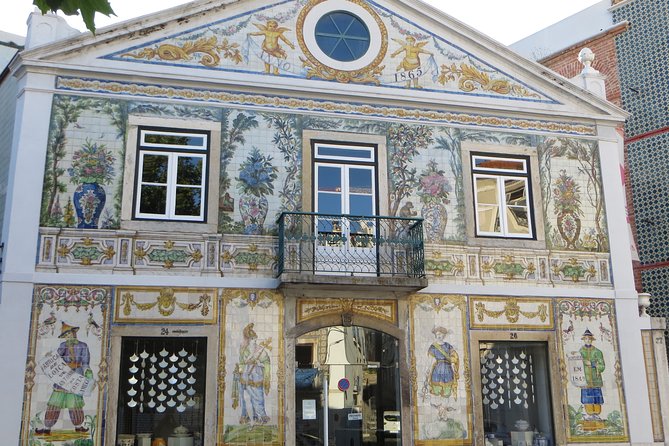
The meeting point is Av. da Liberdade 6, and the tour starts at 10:00 am. I like this early timing because Lisbon’s main streets and viewpoints tend to feel less frantic, and you get your tile “training” before the rest of your sightseeing days.
From the start, you’re not just looking at prettiness. The walk is built around teaching you how to read tiles like a visual map: which buildings used tiles as decoration, which used them for messaging or identity, and how styles shifted over centuries.
One more practical note: the tour ends in a different location. That’s good if you want to continue exploring afterward, but it does mean you should plan your next move with that in mind so you’re not cramming your schedule.
You can also read our reviews of more tours and experiences in Lisbon.



Casa do Alentejo: where Moorish influence meets Lisbon romance
Your first stop is Casa do Alentejo, a historic building that was once an aristocratic house and was later remodeled in the 19th century, when it also became Lisbon’s first casino. That mix matters, because tiles weren’t always just “craft”—they were part of how people displayed taste, status, and modern identity.
Here you get a Moorish-influenced decorating theme tied to the romantic style of the period. It’s a strong opener because it primes you for what comes next: Portuguese tiles didn’t appear out of nowhere. They grew from influences, then developed a recognizable local voice.
Even though the visit is brief, it sets the tone for the whole tour: look at the tile patterns and ask what they’re trying to communicate—comfort, identity, education, or prestige.
Convento De São Pedro de Alcântara: the early blue-and-white chapter
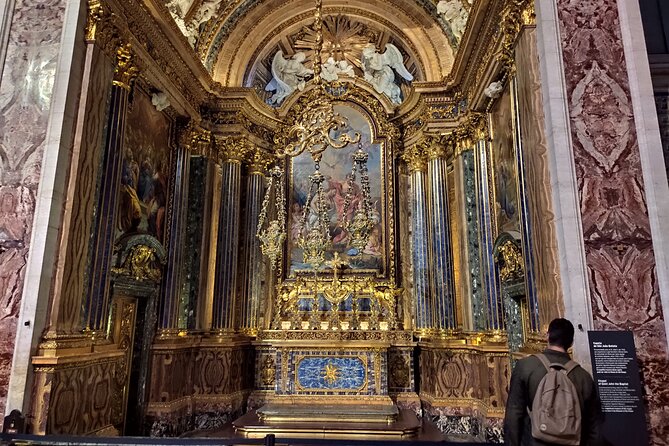
Next you’re at the church of S. Pedro de Alcântara (Convento De Sao Pedro De Alcantara), where you’ll discover some of the earliest blue-and-white tile roots in Portugal. This church holds tiles from the end of the 17th century and the beginning of the 18th century, and that time window is key for understanding why Portuguese tiles became so recognizable.
This stop is also a reminder that tiles often traveled through faith and everyday life. When tilework survives on church walls, you can see how formal religious spaces helped preserve artistic styles long enough for them to evolve into something distinctly Portuguese.
If you’re the type who likes to understand “why this looks like this,” this is one of the best moments on the tour.
Igreja de São Roque: signed 16th-century panels in place
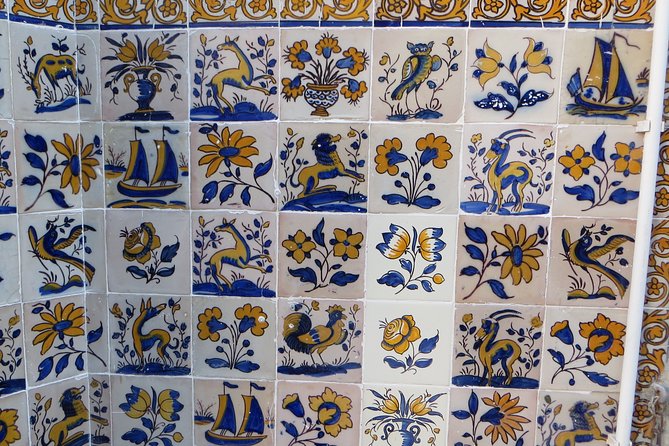
At Igreja de São Roque, you’ll see some of the oldest tile panels in Lisbon in their original setting. The key detail here is that these are 16th-century panels and they’re signed, marking a transition from Moorish tradition to a more Portuguese tile brand.
I like this stop because it teaches you to separate “style” from “when it happened.” When you can link a look to a specific century, you start spotting patterns around Lisbon later with less guesswork.
And since the panels are in situ, you’re not looking at tiles removed from their context. You’re seeing how they were designed to work with the building around them.
Trindade: the oldest brewery in Lisbon, covered in 1800s tiles
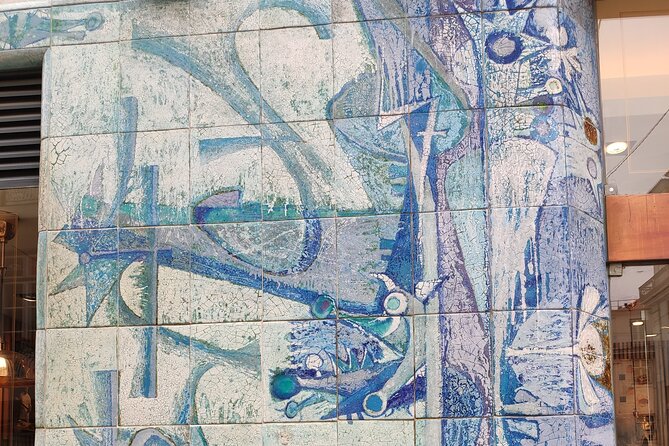
Then it’s a quick change of mood at Trindade, described as Lisbon’s oldest brewery, fully covered with 19th-century tiles. This is important because tiles aren’t only for churches and “heritage tourism.” They also show up on everyday commercial spaces.
This stop helps you understand a big point: tiles are durable, easy to maintain compared to many building materials, and visually loud in the best way. On the brewery walls, that practical durability meets the expressive style Lisbon became known for.
Expect a faster, more visual stop here. It’s a good shift when you’ve already had a couple of church interiors and you want a different kind of architectural vibe.

Largo Rafael Bordalo Pinheiro: Masonic motifs and a famed façade
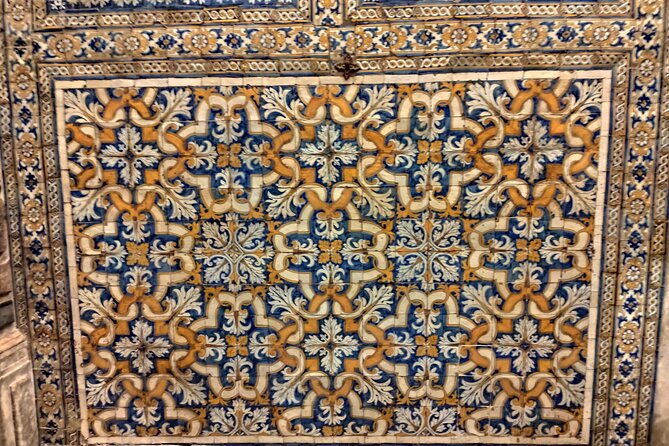
At Largo Rafael Bordalo Pinheiro, you get a 19th-century tile façade with Masonic motifs. Even if symbols aren’t your thing, you’ll likely appreciate the storytelling because symbols in Portugal often reflect secret societies, education, and civic identity from the 1800s.
You’ll also learn about the man behind this iconic façade—Rafael Bordalo Pinheiro—and why his name is tied to Lisbon’s public-facing art and design. This is one of those stops that makes you slow down, because the detail is built for people to look closely.
It’s short, but it adds texture to the tour by showing a different purpose for tiles: not only decoration, but coded meaning.
Livraria Bertrand in Chiado: blue-and-white tiles on a bookshop icon
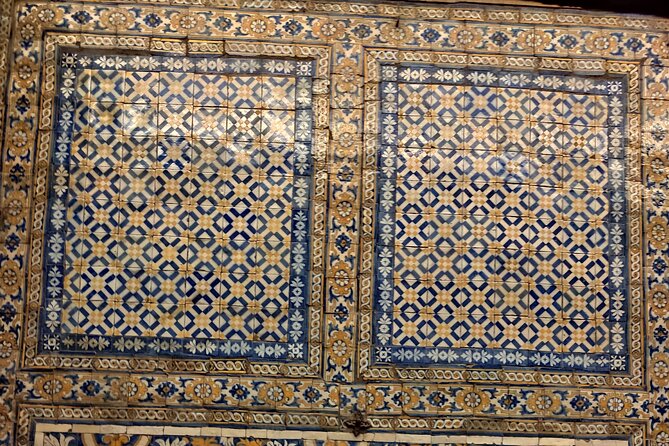
Next is Livraria Bertrand in Chiado, which is the oldest bookstore in the world still in operation. The building’s luxurious facades are covered with 19th-century blue-and-white tiles, and that pairing of books and tiles makes sense. Both are about culture that you can return to again and again.
This stop is ideal if you want a calmer moment. You can take your time noticing how the tilework frames the storefront feeling and how it supports the building’s identity as something worth lingering in.
If you like browsing art supplies, maps, or postcards while you’re on the road, this is also a great place to reset your pace before continuing on.
Alcôa pastry shop: from lottery roots to ceramic artistry
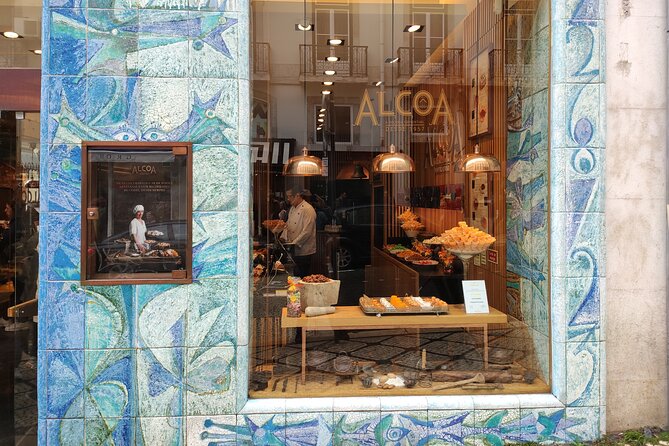
At Alcôa, you’ll find an iconic Lisbon pastry shop, but with a tile twist. It was once a lottery shop, and in that context it was covered with ceramic work by one of Portugal’s greatest potters of the 20th century.
Even if you don’t make this a food stop, the story is useful. It explains why tiles show up in places you’d never expect: they can turn a functional public space into something memorable.
This is also a good moment to think ahead about your own photos. Alcôa is visually busy in a good way, and the tiles help the storefront look like it belongs to a specific Lisbon era.
Praca Dom Pedro IV: tiles meet the city’s main stage
Then you reach Praca Dom Pedro IV, described as Lisbon’s most important square. This stop is about context, not just decoration. The square is a hub for history and stories, and it helps you place everything you’ve seen so far into real city life.
In other words, tiles aren’t isolated art projects here. They’re part of how Lisbon organized public space: entrances, streets, gathering points, and the visual identity that people walked past every day.
If you want a breathing pause after several stops, this square works well because you can step back and observe how architecture and public life mix.
Viuva Lamego showroom: the tile factories behind the look
Viuva Lamego is a key highlight and the one stop where the admission ticket is included. This is where you’ll learn about the site of one of Lisbon’s two most important tile factories, and today it works as a showroom.
I like this kind of stop because it pulls the thread together. Earlier you learned about tile styles and examples; now you get a sense of how production and branding shaped what ended up on buildings across the city.
It also helps if you’re the type who can’t stop looking after a tour. A showroom gives you permission to keep studying. You’ll probably notice different patterns and feel a clearer sense of how styles changed from century to century.
Rua da Misericórdia: tile shop energy that feels like a museum
Finally, you’ll visit Rua da Misericórdia, a store that’s described as almost a museum. Here you can enjoy tiles from almost every era, which makes this a perfect closing stop if you want souvenirs that actually feel connected to what you learned.
This is where I recommend you slow down and look for tile types that match what you liked most earlier: the cooler church tones, the brighter 19th-century architectural coverage, or the symbolic façade patterns you found interesting at Largo Rafael Bordalo Pinheiro.
If you’re shopping, set a small budget before you enter. Tile pieces can tempt you fast, especially when you understand what you’re buying.
How the pacing really feels: good shoes win
A 3 hours 30 minutes walking tour can feel longer than the math if you’re constantly standing in doorways or reading architectural details. The good news is that the pace is adjustable. Miguel has a reputation for not rushing, and he’s attentive to comfort—especially in bad weather.
One practical concern: tiles and church steps can be slippery in rain. If the weather looks questionable, bring grippy shoes and take it slow near thresholds and shaded stones.
You’ll also benefit from having a simple plan for energy: water, a light layer, and a short mental break when you need it. This tour is packed with stops, so you’ll enjoy it more if you don’t force yourself to keep moving like a tourist robot.
Price and value: $60.24 for a lot of visible craft
At $60.24 per person for about 3 hours 30 minutes, this isn’t a bargain tour. But it also isn’t a money-sink. You’re paying for guided interpretation plus access to a tightly chosen route where most stops don’t require paid entry.
Many of the visits are free at the location, and the big ticket included part is the Viuva Lamego showroom. That matters because you get both: exterior-and-in-place architecture and one indoor context stop that helps you understand how tiles got made.
The small group size (max 9) also affects value. Less crowding means you can actually see tilework without elbowing for a spot. If you’ve ever tried to take photos at a busy façade, you know why that’s worth paying for.
Best timing: when to book if you want a spot
The tour is popular enough that it’s commonly booked about 37 days in advance. If your dates are fixed, I’d book early rather than assuming you can wait.
Also keep an eye on weather. The experience requires good weather, and if it’s canceled due to poor weather, you’ll be offered a different date or a full refund. In a city where rain can turn stone into a skating rink, that’s not just fine print—it affects the whole tour experience.
Should you book this Portuguese Tiles tour?
Book it if you want Lisbon in a specific lens: tiles as art, tiles as history, and tiles as city identity. This tour is ideal as an early part of your trip because it teaches you what to look for as you wander later.
Skip it if you’re dealing with limited mobility or you strongly dislike walking in hills and crowds around central Lisbon. While it can be paced kindly, it’s still a walking route with multiple short stops, including churches and public squares.
If you’re a first-time visitor or you’re the kind of traveler who reads façades like pages of a book, this one is worth your morning time. You’ll come away with a sharper eye, and you’ll start noticing Lisbon tiles on your own with much more confidence.
FAQ
How long is the Portuguese Tiles tour?
It’s listed at about 3 hours 30 minutes.
What time does it start, and where does it meet?
The start time is 10:00 am, and the meeting point is Av. da Liberdade 6, 1250-144 Lisboa, Portugal.
Is the tour offered in English?
Yes, it’s offered in English.
How large is the group?
The tour has a maximum of 9 travelers.
Are tickets included for all stops?
Most stops have admission ticket marked as free. The Viuva Lamego stop has an admission ticket included.
Does this tour use a mobile ticket?
Yes, it uses a mobile ticket.
What happens if the weather is poor?
This experience requires good weather. If it’s canceled due to poor weather, you’ll be offered a different date or a full refund.
What is the cancellation window?
You can cancel up to 24 hours in advance for a full refund.
Is it hard for most people to participate?
Most travelers can participate, and service animals are allowed. The meeting area is also near public transportation.