REVIEW · FATIMA, NAZARE & OBIDOS DAY TRIPS
Private, Historical Route: Óbidos, Nazaré, Alcobaça and Batalha.
Book on Viator →Operated by Outing Portugal · Bookable on Viator
Four towns. One clear storyline.
This private route ties together Portugal’s medieval past and Portugal’s ocean side in a single day. You’ll enjoy Óbidos’ stone lanes and 12th-century castle streets, plus the dramatic Nazaré cliff views that make the Atlantic feel close enough to touch.
What I like most is how the day is paced around meaningful stops, not random driving. You spend about 1 hour in each town/monument area, which is long enough to look, walk a bit, and get the context, without feeling totally rushed.
One thing to keep in mind: this is a tight 8-hour circuit with some walking on historic streets and up toward viewpoints. If you’re sensitive to crowds at popular photo spots, plan for busy times, especially around Nazaré’s overlooks.
In This Review
- Key highlights you’ll feel during the day
- Private-group flow from Lisbon (pickup, timing, and what it really means)
- Price and value: $650.91 per group up to 6
- Óbidos: medieval streets to the castle (and why this town works)
- Nazaré: cliff sanctuary views toward Praia do Norte
- Monastery of Alcobaça: Cistercian origins and royal tomb power
- Batalha Monastery: Santa Maria da Vitória and the Battle of Aljubarrota
- What to expect from the guide: stories you can actually use
- How the day stays manageable across four very different places
- Who this private tour is best for (and who should consider alternatives)
- Should you book this private historical route?
- FAQ
- FAQ
- How long is the Private, Historical Route from Lisbon?
- What’s included in the tour price?
- Is pickup available?
- Is this tour private or shared?
- What about admission tickets at each stop?
- Which monuments and locations are visited?
- Is the tour suitable for people with limited mobility?
- Are service animals allowed?
- What is the cancellation policy?
Key highlights you’ll feel during the day
- Óbidos’ Castle walls and medieval stone streets, with a route that stays focused on the old town core
- Nazaré’s Atlantic viewpoints, including the cliff area leading to Praia do Norte
- Alcobaça’s Gothic Cistercian setting, founded in 1153, with major royal tombs
- Batalha’s Santa Maria da Vitória, tied to the Battle of Aljubarrota and King D. João I
- Private-group attention up to 6, plus English guidance and a mobile ticket
Private-group flow from Lisbon (pickup, timing, and what it really means)
This tour is built for convenience. You get pickup offered, you’ll receive a mobile ticket, and it’s offered in English. Because it’s private (just your group, up to 6), you can move at a sensible pace instead of being pulled along by a large crowd.
Duration is listed at about 8 hours, and the on-site time is roughly 1 hour per stop. That structure matters. It keeps the day from turning into a long bus ride with one quick photo at each place.
The practical tradeoff is simple: the day is packed. You’ll be switching between towns and monasteries, so wear shoes you’re comfortable in, and expect a bit of uphill or uneven ground when you hit viewpoints and historic cores.
You can also read our reviews of more private tours in Lisbon



Price and value: $650.91 per group up to 6
At $650.91 per group (up to 6), this isn’t a cheap “hop-on, hop-off” style outing. But it is good value for what you’re buying: a private day that connects multiple UNESCO-level landmarks, with one route plan and guided context.
If you’re traveling as a family or small group, the math gets friendlier fast. The per-person cost drops as you fill the group size, and you avoid the frustration of trying to coordinate separate taxis or self-driving between four major sites.
Also, note the admission split. In the tour details, Óbidos and Nazaré list admission tickets as free, while Alcobaça and Batalha are not included. So you’ll want a little buffer in your budget for monastery entry.
Óbidos: medieval streets to the castle (and why this town works)
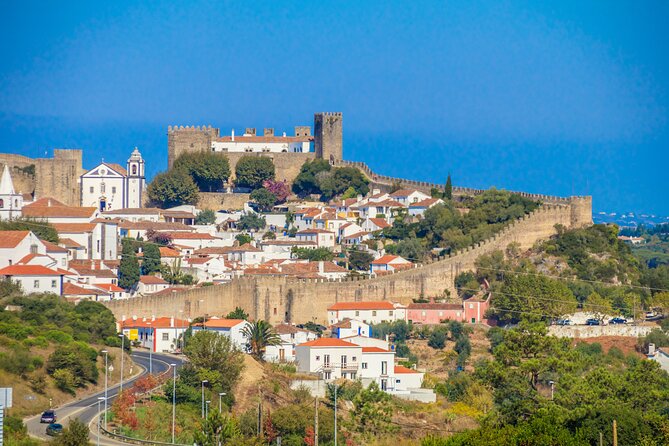
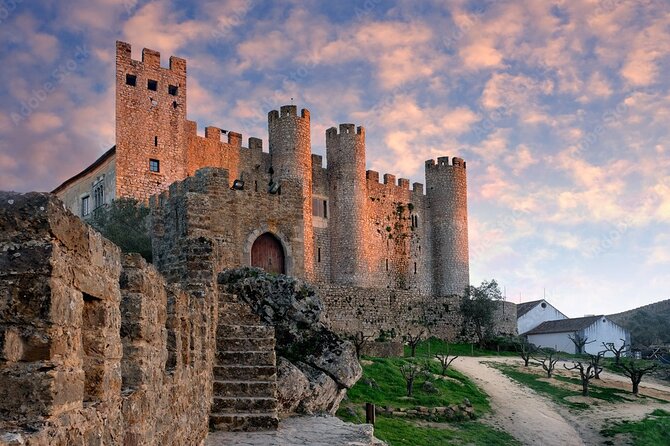
Óbidos is the kind of place where the street layout feels like a story. You arrive via a side access of the Villa, then you move along the medieval fabric that still sits on the ground: stone lanes, old sidewalks, and that unmistakable “timeless” medieval texture.
The route continues until you reach the castle, which has existed since the 12th century. This is one of those stops where it helps to have guidance, because the town’s charm can look effortless—but the details (walls, layouts, and why buildings sit where they do) make it far more interesting than just taking photos.
One smart way to use your time here is to treat Óbidos as both a viewpoint town and a walking town. Look back often. The best angles tend to come from walking a little, then stopping and turning around to see what the next bend frames.
A small consideration: Óbidos can be a magnet for day-trippers, so at certain times the sidewalks can feel tight. Private pacing helps, but bring patience for photo moments near the most scenic viewpoints.
Nazaré: cliff sanctuary views toward Praia do Norte
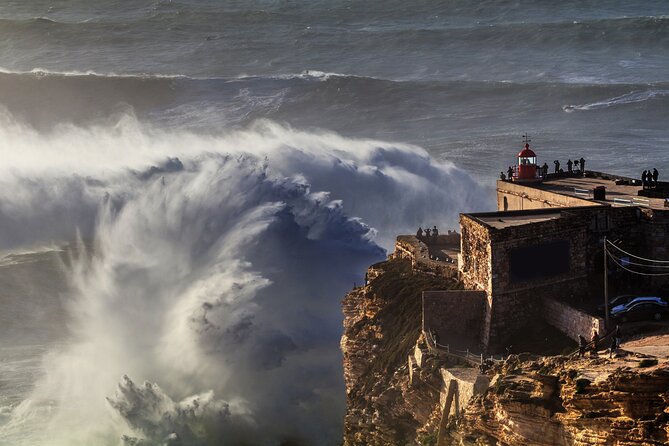
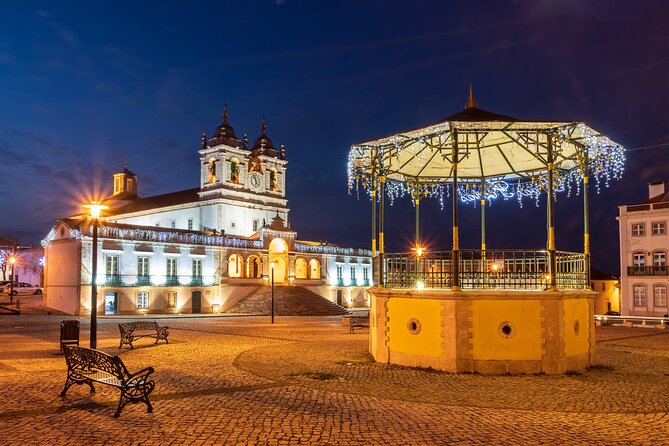
From Óbidos’ walled medieval mood, Nazaré hits you with the sea. The town is centered on the Atlantic Ocean, with viewpoints that make the coastline feel huge, not distant.
Your focus is the Sanctuary at the top of the cliff, facing the direction of Praia do Norte. That matters because Praia do Norte is tied to the Giant Wave world championship scene, so even if you’re not there for an event, you’re standing in a place defined by ocean scale and strong surf.
You’ll have about 1 hour here, which is enough to get your bearings and take in the cliff-side perspective without rushing. I’d suggest saving some of that hour for simply standing still and watching the horizon shift as the light changes. At Nazaré, movement in the sea is part of the show.
Possible drawback: viewpoints can get busy, and the most dramatic angles can attract people with cameras ready. If you’re chasing perfect photos, go a bit slower and don’t assume you’ll always be able to stop exactly where you want.
Monastery of Alcobaça: Cistercian origins and royal tomb power
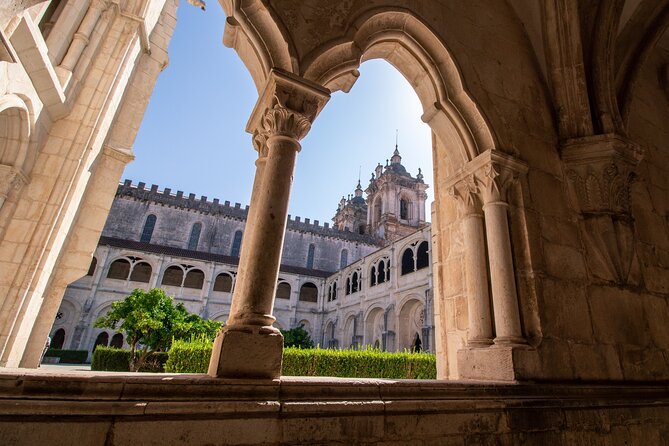
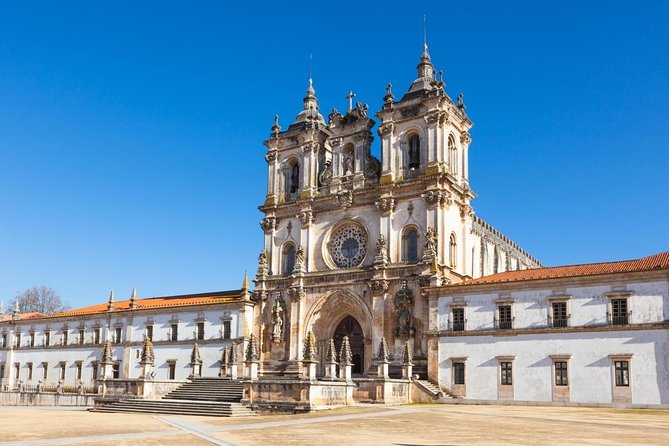
Alcobaça is where the day turns quieter and more architectural. This monastery was created by Cistercian monks in 1153, and the Gothic influence becomes part of what you feel when you walk inside.
You’ll spend about 1 hour at the Monastery of Alcobaça, and this stop is listed as having admission ticket not included. That’s important because you’ll want to plan for entry costs on-site (or at least be ready to pay when you arrive).
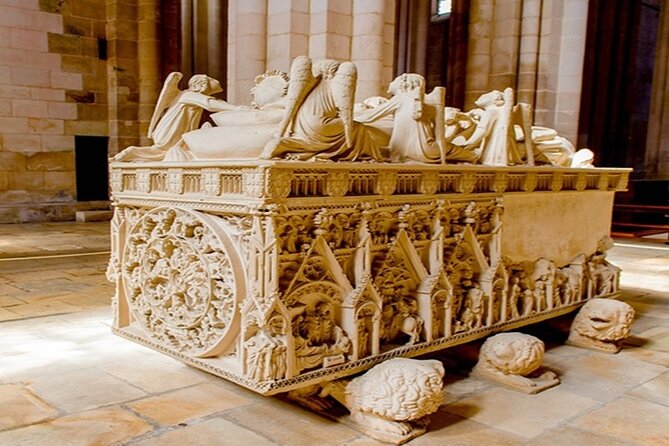
What makes Alcobaça stand out—specifically in the information you’ll get on the tour—is what’s inside the kings’ spaces. In the kings’ room, you’ll find the tombs of Inês de Castro and Pedro I. These names carry weight, but what really sticks is seeing them in the setting that was built to hold that story.
If you enjoy history that has a physical footprint—stone, arches, the sense of time—this is one of the best stops on the route. It’s not just a monument; it’s where political and personal drama became part of the landscape.
What to watch for here: monasteries can feel cool or dim compared to the street. Wear layers if you run cold easily, and take your time adjusting your eyes once you step inside.
You can also read our reviews of more historical tours in Lisbon





Batalha Monastery: Santa Maria da Vitória and the Battle of Aljubarrota
Batalha shifts from personal royal stories to national conflict. The monastery is known as the Monastery of Santa Maria da Vitória, built after King D. João I’s important victory over the Castilians in the Battle of Aljubarrota.
This stop is also listed as admission ticket not included, with about 1 hour on-site. The timing is usually enough to understand the big picture, then focus on the elements that connect the building to that victory and Portugal’s medieval political identity.
Why it’s valuable: many visitors see the outside of great churches and move on fast. In this kind of guided stop, you get help noticing how the monastery’s story is tied to the way rulers wanted history remembered—through monumental architecture.
A small practical note: since this is a long day, your energy level matters. If you know you get tired in enclosed spaces, pace yourself here. Take a breath, walk slowly, and keep your focus on the key points your guide highlights.
What to expect from the guide: stories you can actually use
The tour is private and guided, and that’s where a big chunk of the value shows up. One guide name that comes up in past experiences is Diogo Sampaio, praised for turning medieval facts into something you can picture on the street. People also note his teaching style feels both didactic and spontaneous, and that he often has a sense of where to find good food and pastries.
Even if you don’t get the same guide, the best versions of this tour share the same goal: you don’t just see monuments, you understand what you’re looking at while you’re still there. That makes your photos better too—because you’re not just framing scenery, you’re capturing story.
The tone also matters. Past experiences describe a welcoming mood, and that’s the kind of day you want when you’re spending many hours moving between sites.
How the day stays manageable across four very different places
Four stops in one day sounds like a lot, and it is—yet the structure helps. You move from Óbidos’ medieval street rhythm to Nazaré’s sea views, then you switch to monastery interiors (Alcobaça, then Batalha). That change of scene prevents the day from feeling monotonous.
Still, there are two realities to respect:
- It’s weather dependent. The experience notes that it needs good weather. If conditions are poor, you may be offered a different date or a full refund.
- You’ll have a moderate physical demand. The tour asks for moderate physical fitness, which usually means you’re doing walking and standing for sustained stretches, plus some climbs related to viewpoints and historic paths.
My advice is simple: plan your outfit for walking, keep water handy, and don’t overpack. If you’re the type who likes to linger, you’ll probably want to choose where to slow down most—Óbidos for medieval streets, or Nazaré for the ocean edge.
Who this private tour is best for (and who should consider alternatives)
This fits best if you want a guided day that links history across towns without stress. It’s also a good match if you’re traveling with a small group and want control over your pace.
You’ll especially like it if:
- you like medieval Portugal and want the “why” behind what you see
- you want a strong balance of architecture + viewpoints
- you prefer private attention over joining a larger group shuffle
It may be less ideal if you:
- hate crowds at scenic lookouts
- want more free time in just one town (this is a circuit)
- need lots of downtime between stops
For travelers with families: the private format helps, because you’re not stuck behind strangers walking at a different speed.
Should you book this private historical route?
I’d book it if your priority is a smart, guided connection between Óbidos, Nazaré, Alcobaça, and Batalha in one day. The route is built around major places with clear story links—castle-era Óbidos, ocean cliff Nazaré, Cistercian Alcobaça with Inês de Castro and Pedro I, and Batalha’s Santa Maria da Vitória tied to D. João I and Aljubarrota.
Pass on it only if you’d rather slow down in one location for half a day, or if you know you’re sensitive to weather and crowds at viewpoints.
If you do book: bring comfortable shoes, keep an eye on the weather, and give yourself permission to pause for views. This day rewards you when you stop moving and actually look at what the landscape is doing.
FAQ
FAQ
How long is the Private, Historical Route from Lisbon?
It runs for about 8 hours (approx.).
What’s included in the tour price?
The price is $650.91 per group for up to 6 people. A mobile ticket is provided, and the tour is offered in English.
Is pickup available?
Yes. Pickup is offered, and you’ll meet the group at your starting place for pickup.
Is this tour private or shared?
It’s private. Only your group participates.
What about admission tickets at each stop?
Óbidos and Nazaré list admission tickets as free. The Monastery of Alcobaça and the Batalha Monastery list admission tickets as not included.
Which monuments and locations are visited?
Óbidos, Nazaré, the Monastery of Alcobaça, and the Batalha Monastery (Santa Maria da Vitória).
Is the tour suitable for people with limited mobility?
The tour notes travelers should have a moderate physical fitness level.
Are service animals allowed?
Yes, service animals are allowed.
What is the cancellation policy?
You can cancel for free up to 24 hours in advance for a full refund. The experience also requires good weather, and if it’s canceled due to poor weather, you’ll be offered a different date or a full refund.