REVIEW · ALFAMA & OLD TOWN TOURS
Lisbon’s 7 Hills on Tuk-Tuk
Book on Viator →Operated by Everyday Is Sunday™ · Bookable on Viator
Lisbon is made for slow looking, not getting lost. This private Tuk-Tuk tour helps you cover Lisbon’s 7 hills fast, with door-to-door pickup and a guide who drives and narrates in English as you hop between viewpoints and landmarks. I love that it feels easy on your legs while still hitting the city’s most meaningful spots, especially the miradouros. I also love the pacing: short stops where you can step out, look around, and be back in the ride before fatigue sets in. One drawback to plan for: it’s still a city of hills, so wind and chilly weather can make the ride feel cooler than you expect.
What makes it especially worth your time is the structure. You’re not wandering solo through Lisbon’s twists—you’re guided from stop to stop, with enough explanation to connect the dots (religious history, revolutions, old neighborhoods, and big panoramic views) without turning the whole experience into a long lecture.
In This Review
- Key highlights worth your attention
- Why a Tuk-Tuk on Lisbon’s 7 hills makes sense
- Price and what you actually get for $216.27
- Pickup, meeting point, and how the private ride feels
- Stop-by-stop: St. Anthony, Portas do Sol, and the calm start
- Church of St. Anthony (free stop)
- Miradouro das Portas do Sol (free viewpoint pause)
- Graça to Senhora do Monte: where the best views earn the climb
- Graça-era context and neighborhood shifts
- Miradouro Da Senhora Do Monte (the standout view, free)
- Old Lisbon on a loop: flea market streets, Santa Engrácia, and an 18th-century bookstore
- Ladra flea market area (old market roots)
- Santa Engrácia Church and the Bragança dynasty link
- Chic district energy: theatres, bookshops, and old shops
- Largo do Carmo and the 25 de Abril Revolution site
- Miradouro São Pedro de Alcântara, plus the garden break
- Parliament at Assembleia da República and Basilica da Estrela
- Assembleia da República (Portuguese parliament)
- Basilica da Estrela and the Sacred Heart connection
- Jardim da Estrela: your last walk with a romantic feel
- What I’d do to get the most out of it
- Who this tour suits best
- Should you book the Lisbon 7 Hills Tuk-Tuk tour?
Key highlights worth your attention
- Door-to-door pickup and drop-off so you start and end right from your hotel or apartment
- Miradouro-heavy route built around Lisbon’s best viewpoints, including Senhora do Monte
- Free pauses at many landmarks so you can spend time looking instead of lining up tickets
- A private format with live English commentary plus group insurance
- Dominique-style guiding: clear stories, fun attitude, and practical photo help
Why a Tuk-Tuk on Lisbon’s 7 hills makes sense
Lisbon’s hills don’t just look steep on a map. They control how your day feels. If you try to “see everything” by yourself, you’ll either end up walking too much or waiting too long for buses and trams that may or may not work with your timing.
A Tuk-Tuk solves the main problem: you get the views and the context without paying the full physical price. The vehicle does the climbing while your guide handles navigation. That means you can focus on what matters—stepping out for the best viewpoints, then relaxing while the next neighborhood comes into view.
This route also makes a smart promise: you’re not meant to rush through. It’s designed as an in-between option for travelers who want a top-sights outline but don’t want the stress of building a day plan on their feet.
You can also read our reviews of more tours and experiences in Lisbon.



Price and what you actually get for $216.27
At $216.27 per person, this is not a bargain-basement activity. But it doesn’t price itself like a generic city bus tour either. You’re paying for a private Tuk-Tuk, hotel pickup/drop-off, live English commentary, and a guide who actively narrates as you move.
Two practical value points:
- It’s private. That matters when you want the ride to match your pace and you want questions answered instead of waiting your turn.
- Group discounts can lower the per-person cost. The more people in one booking, the lower the price per passenger, so it can work better if you’re traveling with friends or family.
Also, the time math matters. The tour runs about 1 hour 30 minutes to 2 hours, and that includes travel between points plus guide storytelling and little facts at the stops. If your schedule is tight, you’re buying concentrated Lisbon in one sitting.
Pickup, meeting point, and how the private ride feels
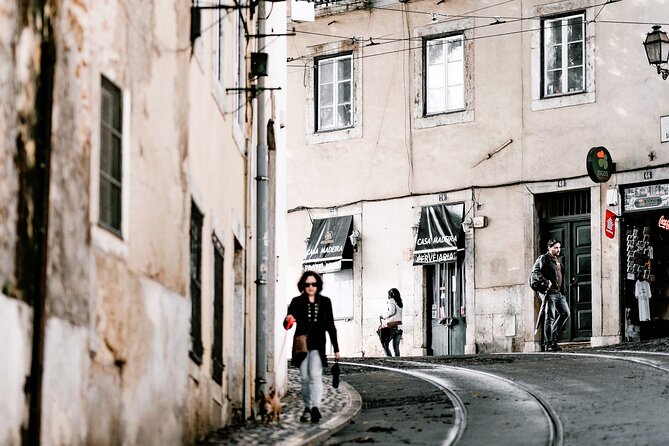
You meet at Praça da Figueira, near the Dom João I statue. That’s a useful anchor point: it’s central, and it’s easy to orient your day around.
You’ll also get door-to-door transportation from your hotel or apartment. Before you go, your guide contacts you with pickup details. That’s the kind of small service feature that saves real time—especially in Lisbon, where small streets can slow down taxis and walking routes.
The format is private, meaning only your group rides. That matters because a private Tuk-Tuk route can flex a bit, instead of rigidly following a large group’s pace.
Two extras I like in the setup:
- Mobile ticket (so you’re not hunting for paper)
- Service animals allowed and the meeting point is near public transport
Stop-by-stop: St. Anthony, Portas do Sol, and the calm start
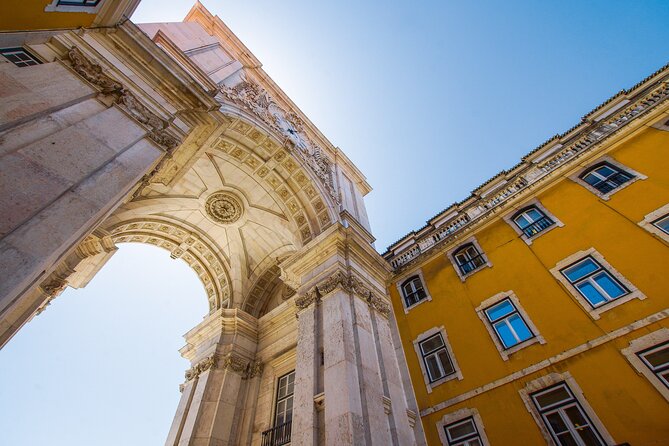
This tour begins with history that’s close to people, not just monuments.
Church of St. Anthony (free stop)
The Church of St. Anthony is described as the place of birth of one of the famous Catholic saints. Even if you’re not a religious-history person, this is a great opening because it sets a tone: Lisbon’s story isn’t only about viewpoints—it’s also about faith, figures, and the way devotion shaped neighborhoods.
The stop is brief (about 10 minutes) and marked as free, so it works well as a “warm-up” without stealing time from the big panoramas later.

Miradouro das Portas do Sol (free viewpoint pause)
Next up is Miradouro das Portas do Sol, a viewpoint over the oldest Lisbon district. This is one of those spots where you can instantly understand why Lisbon developed the way it did. You see the layers of roofs and streets, and you start imagining the city as it grew upward.
You’ll get another short 10-minute window here. That’s enough time to find a good angle and take photos, without turning the stop into a long queue situation.
A big reason this helps: Portas do Sol often gives you the “big picture” early. Then when you reach the top-end miradouros later, your brain already has a map.
Graça to Senhora do Monte: where the best views earn the climb

Lisbon viewpoints are never just about scenery. They’re also about geography—how neighborhoods stack, how sunlight shifts, and how wind moves across the city.
Graça-era context and neighborhood shifts
As the ride moves along, the itinerary references the Graça Convent, with origins around the XIII century, and connects it to a XIX-century industrial district story. You don’t need to memorize dates. What you’re really absorbing is that Lisbon has multiple eras stacked in the same small area. That makes your later viewpoint stops feel less random and more meaningful.
Miradouro Da Senhora Do Monte (the standout view, free)
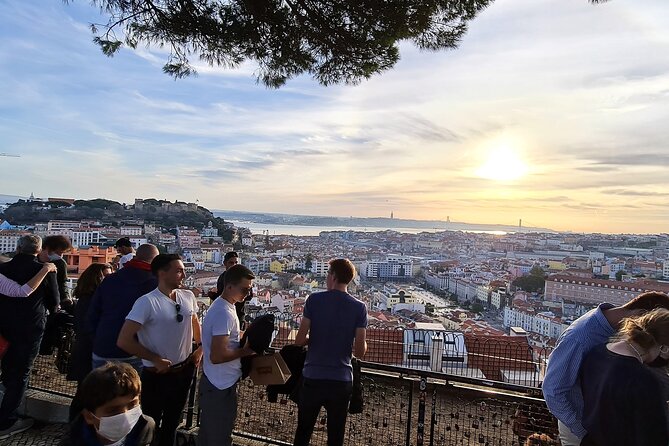
Then you hit what this route treats as the star: Miradouro Da Senhora Do Monte. It’s presented as Lisbon’s most breathtaking view, and the note that neither the bus nor the tram can arrive here is a big clue. This viewpoint isn’t a simple roadside stop. It’s slightly more remote, which often means more of that “wow, we actually reached the top” feeling.
Time here is about 10 minutes, also marked free. You’ll want to dress for the conditions. Even on mild days, viewpoints can get breezy because you’re open to the elements.
One practical tip: don’t try to do too much at this stop. Look first. Then grab photos. After that, reboard so you’re not fighting the wind for extra time.
Old Lisbon on a loop: flea market streets, Santa Engrácia, and an 18th-century bookstore
After the major viewpoints, the tour pivots into neighborhood texture: markets, churches, and everyday Lisbon culture. This is where you start feeling the city as a place people lived and worked—not just something you look at.
Ladra flea market area (old market roots)
The route references one of the oldest flea markets in Europe, originally known by the Moors as aleadhra market, later evolving into Ladra market. Even if you don’t shop, this gives context for what you’re walking through: a street-level tradition that’s been reshaped over centuries.
If you like markets, you’ll enjoy that the stop ties language evolution to real place. It’s not just a trivia fact; it helps you understand why the area feels older than the rest of the city.
Santa Engrácia Church and the Bragança dynasty link
Next comes Santa Engrácia church, connected to an architectural description from the XVII century and also described as the house of Bragança’s dynasty pantheon. The stop notes it took almost 300 years of construction before becoming one of Portugal’s national pantheons, receiving prominent national heroes.
This is a good moment to slow down mentally. When Lisbon’s viewpoints are your first impression, you sometimes assume the city is all scenery. Santa Engrácia reminds you it’s also about national identity and big historical chapters—just told through stone and church-scale patience.
Chic district energy: theatres, bookshops, and old shops
The tour then references a district described as one of Lisbon’s chic areas, with theatres, bookshops, and beautiful 19th-century shops. This is exactly the kind of area where a short stop works: you can peek into the storefront mood and get a sense of the streets without needing hours.
A standout detail here is the mention that this area includes the oldest bookshop in the world, dating to 1732. Even if you only see it from the street, it’s a fun contrast to the earlier viewpoint stops. Lisbon can look like a postcard, but it also runs on everyday institutions.
Largo do Carmo and the 25 de Abril Revolution site
Then comes a quick, high-meaning stop at Largo do Carmo. The note that in 1974 the 25th April ended the Carnation Revolution adds weight to what could otherwise be just another plaza.
You don’t need a long guided history lecture to feel what this kind of stop does. It grounds the city in the modern era and reminds you Lisbon isn’t only a museum city. It’s a living place that remembers its turning points in public space.
Time here is about 5 minutes, marked free—so it slots in perfectly between longer viewpoint stops.
Miradouro São Pedro de Alcântara, plus the garden break
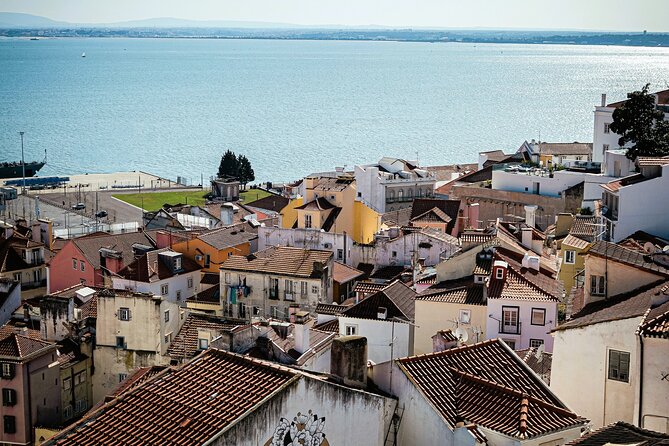
At Miradouro São Pedro de Alcântara, you get a 19th-century viewpoint looking toward Lisbon’s medieval area. The route also includes a wonderful 19th-century garden.
This is a nice reset after the earlier history stops. Even with hills, Lisbon’s best moments often come when you can sit for a minute and let the city unfold around you.
If you’re the type who takes photos, this is a good stop to do it without rushing. You get a clear “look” at the medieval feel of the city, plus some greenery that makes the viewpoint experience more comfortable.
Parliament at Assembleia da República and Basilica da Estrela
The tour keeps moving through Lisbon’s big institutions, and it’s done in a way that helps you understand how the city’s story evolves.
Assembleia da República (Portuguese parliament)
You’ll pass by Assembleia da República, described as Portugal’s parliament. The stop explains that by the XVI century it was Lisbon’s biggest monastery, and in the early XX century it became Portugal’s house of democracy.
That’s a powerful shift in one location. You see how architecture can change jobs—religious life to political life—without ever losing the dramatic scale that made the building important in the first place.
Basilica da Estrela and the Sacred Heart connection
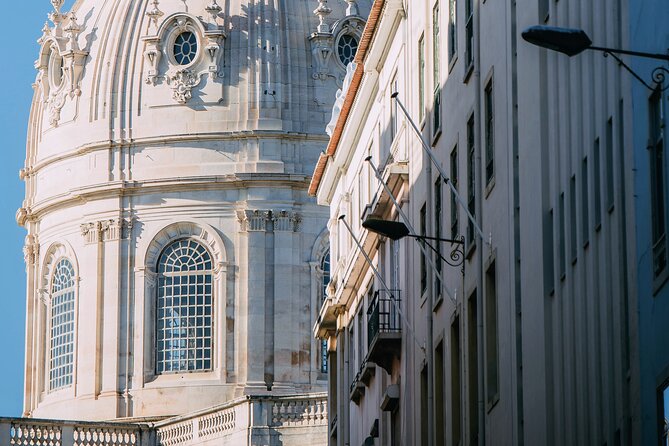
Finally, you reach Basilica da Estrela, marked as a Barroco highlight. The notes say it’s from the late XVIII century, and it’s the first Catholic temple in the world dedicated to the Sacred Heart of Jesus.
Even if you don’t go inside (the info you provided focuses on free stops), the exterior and its role in the area help you understand why this area is treated as a highlight: it’s not a random church stop. It’s a focal point with a clear religious and architectural identity.
Jardim da Estrela: your last walk with a romantic feel
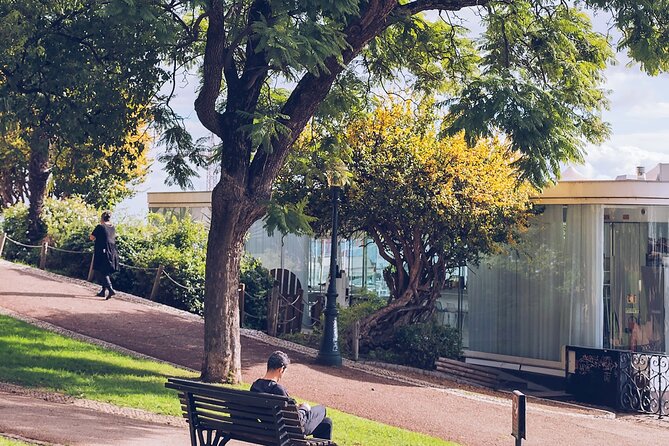
The tour ends with Jardim da Estrela Park, described as a 19th-century-romantic walk feeling.
This is a smart ending. Viewpoints and monuments can make you feel like you were “on fast forward.” A park finish gives your body a softer landing and lets you absorb Lisbon with a slower rhythm, even if your total tour time is still tight.
If you’re traveling with someone who doesn’t love standing around for photos, this ending can also work well. It gives a chance to relax and sit for a moment.
What I’d do to get the most out of it
This kind of tour works best when you treat it like a guided orientation, not a museum day.
A few practical moves:
- Wear shoes you can stand in for 10–15 minutes at viewpoints and church areas.
- Bring a layer. Even when Lisbon is warm, open viewpoints can feel chilly.
- Plan to ask for photo spots. One guide moment that stood out in the provided info: Dominique offered to take nice pictures and handed out blankets when it got chilly. That’s the kind of care that makes a short tour feel more complete.
- Use the drive time to listen. The guide’s stories are built to connect stops, like the revolution-era moment at Largo do Carmo and the parliament’s monastery-to-democracy transformation.
And if you like eating local afterward, this tour can be a springboard. The provided guide notes include a recommendation for an authentic Portuguese tavern called Tasquinha Da Linha—exactly the kind of place that’s easier to find when your guide points you in the right direction.
Who this tour suits best
This is a strong match for:
- You want to see a lot without walking a lot
- You’re short on time and want an efficient Lisbon orientation
- You like history, but you want it explained in plain language while you travel
- You want a private guide experience in English
It might be less ideal if:
- You want long stays in indoor museums or cathedral interiors
- You prefer total freedom with no scheduled stops
- You’re looking for a full-day deep dive type itinerary (this one is intentionally short)
Also, many stops are marked free, but keep in mind that Lisbon Cathedral entrance is not included. The cost listed is 5€ for adults and 3€ for children aged 5–12, if you choose to add that.
Should you book the Lisbon 7 Hills Tuk-Tuk tour?
I’d book it if your goal is simple: see Lisbon’s big skyline viewpoints and key landmarks with a driver doing the hard navigation. The combination of private ride + live English guide + door-to-door pickup is the kind of convenience that pays off quickly in a hill city.
I’d hesitate only if you’re hoping for long museum time or you’re traveling when weather makes open miradouros miserable. Otherwise, this is a smart way to get your bearings, learn the city’s story fast, and end with a calmer walk in the park instead of a chaotic trek home.