REVIEW · FATIMA, NAZARE & OBIDOS DAY TRIPS
Fátima Sanctuary & Little Shepherds’ Village from Lisbon
Book on Viator →Operated by Cooltour Lisbon · Bookable on Viator
Fatima feels huge, but the tour keeps it simple. You get a smooth ride out of Lisbon, then a guided walk through the places tied to the 1917 story—ending with the peaceful village where the shepherd children grew up.
I like the small group setup (up to 8 people), because it stays calm and personal instead of crowded and rushed. I also love the 1917 context your guide provides right at the sanctuary, so the statues and chapels mean something before you wander on your own.
One drawback to plan for: this kind of van day can be uneven depending on where you sit, and narration may not feel constant from every seat. If you care a lot about hearing every word, pick a front or middle seat and be ready for some walking.
In This Review
- Key highlights I think are worth your attention
- Leaving Lisbon at 8:00: the comfort factor that saves your day
- Sanctuary of Our Lady of Fátima: why the orientation makes everything click
- A simple tip that helps
- Basilica of Our Lady of the Rosary: neo-Baroque drama in a prayer setting
- Capela das Aparições: the exact spot that turns a story into a place
- Holy Trinity Basilica: a modern counterpoint in Fátima’s prayer world
- Aljustrel: where the shepherd children’s homes make the story human
- The best way to experience Aljustrel
- What your free time actually needs: candles, photos, and not getting rushed
- A practical tip for your own comfort
- Getting the most out of the van ride: audio, walking, and seat choice
- Price and value: what you’re paying for at $96.79 per person
- Who this tour suits best (and who might want to skip it)
- Should you book this Lisbon-to-Fátima small-group tour?
- FAQ
- How long is the Fátima Sanctuary & Little Shepherds’ Village tour from Lisbon?
- Where do we meet in Lisbon?
- Is pickup available?
- What’s included besides the sanctuary and village visits?
- Do I need to buy tickets for the sanctuary?
- Is Mass at Fátima guaranteed?
- How many people are in the group?
- Are meals included?
- What language is the tour in?
- Can the tour be canceled for a refund?
Key highlights I think are worth your attention
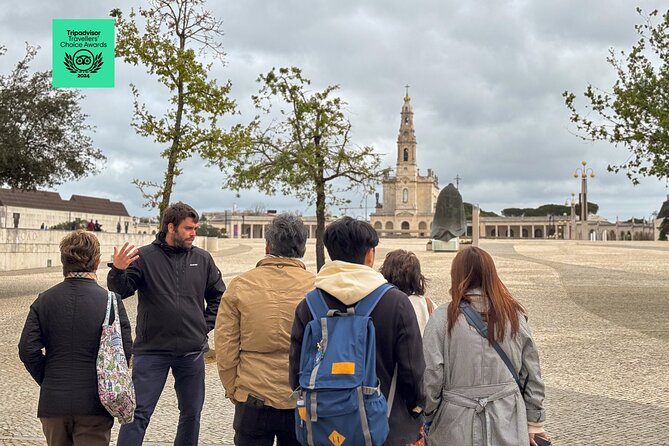
- Small group size (max 8) for a more personal feel at a famous, often busy site
- Mass at the sanctuary is part of the plan, if timing works with your visit
- Capela das Aparições is the centerpiece, built on the spot tied to the apparitions
- Two very different basilicas: neo-Baroque Our Lady of the Rosary and modern Holy Trinity
- Aljustrel houses and paths that recreate the shepherd children’s everyday lives
- Free time built in so you’re not stuck only listening or only photographing
Leaving Lisbon at 8:00: the comfort factor that saves your day
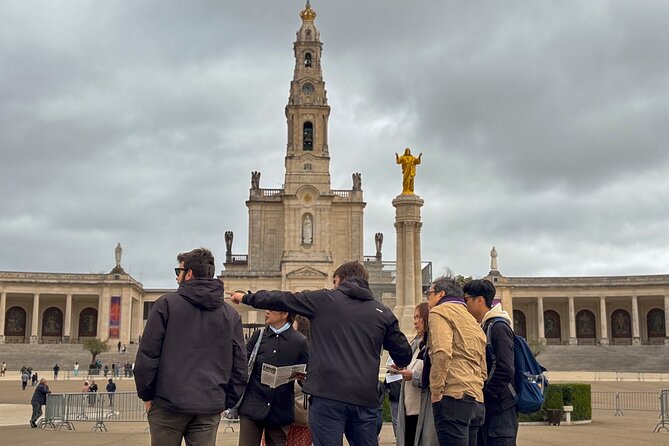
This is the kind of day trip that works because it removes friction. You meet at Praça da Figueira at 8:00am (or you’re picked up in the Lisbon area if you selected that option), then you leave early enough to make the most of a single day.
The ride is in an air-conditioned vehicle, and the group stays small—up to 8 travelers per vehicle. That matters on a day like this. Fátima is not hard to reach, but it is easy to lose time if you’re coordinating your own transport, parking, and timing.
At the end of the day, you’re dropped back in Lisbon city center, close to public transit and restaurants (the meeting point listed for the end is near Marquês de Pombal). That setup makes the day feel less like an all-day detour and more like a planned outing you can actually build into your itinerary.
One more practical point: bring a little flexibility. The drive takes time, and religious schedules can shift what feels best to do first on arrival. The tour is built to handle those changes, but you’ll still want to be mentally ready for a real half-day-to-full-day flow rather than a quick checklist.
You can also read our reviews of more tours and experiences in Lisbon.
Sanctuary of Our Lady of Fátima: why the orientation makes everything click
When you arrive at the sanctuary complex, you don’t just get dropped at the gates. You start with a short guided tour and an explanation of the 1917 events tied to the three shepherd children.
That orientation is one of the best parts of the experience because it keeps you from feeling like you’re looking at random pretty buildings. Instead, you know what each location represents. You learn the basic story of the apparitions and why this place became a major pilgrimage destination.
Then you get time to explore. Depending on the day and schedule, it’s often possible to attend Mass at the Fátima Sanctuary during your free time window. The tour framework is designed around that reality: you’re not just touring for views; you’re visiting a living religious space where timing matters.
What you’ll notice right away is the scale. Even if you’ve seen photos, the sanctuary’s open plaza and the sheer layout can feel bigger in person. This is where the small group format helps again. You can follow along during the key points, then breathe and slow down in the spaces that actually invite quiet.
A simple tip that helps
After your guide’s orientation, pick one direction to follow and commit to it for a bit. The sanctuary is large, and it’s easy to zigzag and waste time. Your goal is to see the important stops plus enjoy that calm that Fátima does so well.
Basilica of Our Lady of the Rosary: neo-Baroque drama in a prayer setting
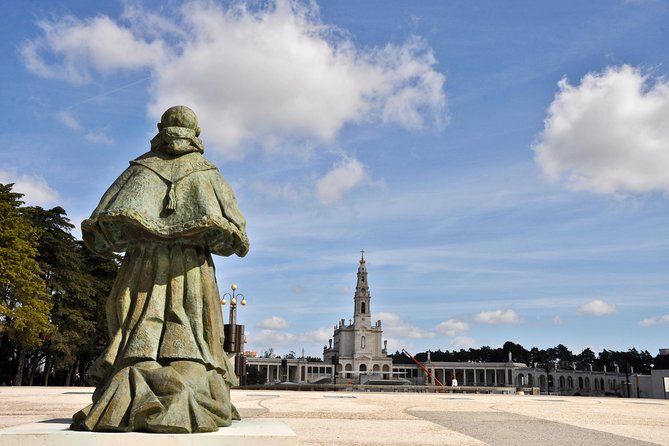
The Basilica of Our Lady of the Rosary is the classic Fátima landmark people come to see. It’s neo-Baroque, with an elegant bell tower and a design that feels both grand and intentionally devotional.
Inside and around it, you’ll have chances for photos, but I’d treat this as a place to look with your whole attention, not just your camera. The basilica connects to the sanctuary’s continuing devotional life, so it’s not a museum stop. Even if you’re not Catholic, the atmosphere can be surprisingly moving.
A nice feature of this tour is that your guide doesn’t just point out architecture. They connect the basilica to the story of 1917 and the pilgrimage tradition that grew from it. That context makes the chapels and religious details feel purposeful rather than decorative.
If Mass is available while you’re there, the basilica is often the most powerful place to experience it. The guide helps set you up so you know where to go and what to do once you’re inside.
Capela das Aparições: the exact spot that turns a story into a place
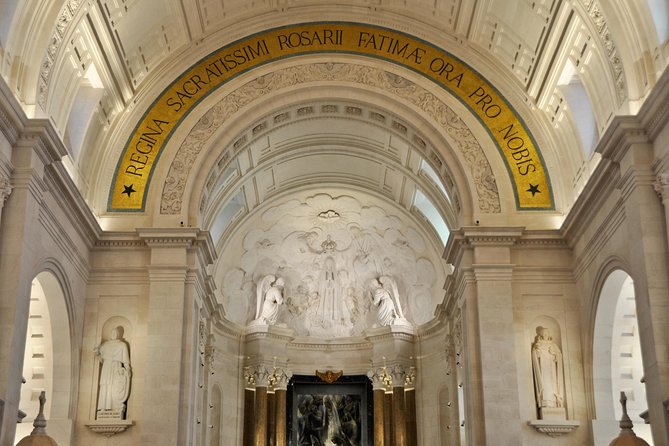
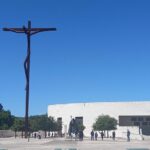
The Capela das Aparições is built on the spot associated with the Virgin Mary’s appearances to the three shepherd children in 1917. This stop is the emotional center of the whole sanctuary visit.
You’ll be guided to this area, then you can spend time taking in the space. The chapel’s design is simple, but it has a serious feel—like the focus is kept on the meaning, not on spectacle. You’ll also see religious statues and commemorative plaques that reinforce how long this story has drawn pilgrims.
If you want the most personal, reflective moment of the day, this is it. I’d plan to slow down here. Don’t rush to the next photo spot. Sit for a minute, look around, and let the place do its work.
Also: since this stop is so central, it can draw attention from groups arriving at the same time. That’s normal. The tour’s pacing and small group size help you avoid getting stuck behind a wall of people.

Holy Trinity Basilica: a modern counterpoint in Fátima’s prayer world
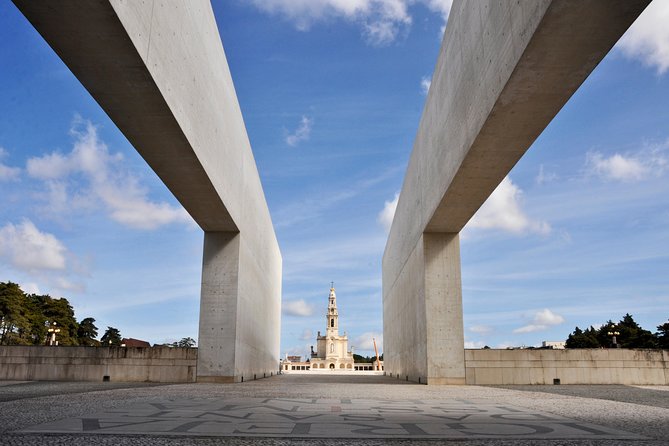
Between the historic and the modern, the sanctuary complex gives you an interesting contrast. You’ll pass by the Basilica of the Holy Trinity, a striking modern church known for its contemporary architecture and the ability to host thousands of pilgrims.
This part of the day can feel like a visual reset. If the neo-Baroque basilica makes a big architectural statement, the modern Holy Trinity basilica does it in a different way—through spacious lines and scale meant for gathering.
Your guide shares what matters here: how this basilica functions within the larger sanctuary complex and why the sanctuary includes both old and new expressions of devotion. Seeing that blend helps you understand that Fátima is not frozen in time. It’s a continuing place of worship that has grown to meet the needs of pilgrims across generations.
Aljustrel: where the shepherd children’s homes make the story human
After the sanctuary, the tour shifts to a quieter, more intimate place: Aljustrel. This is the village connected to the shepherd children’s everyday lives before the apparitions.
You’ll visit homes of Francisco, Jacinta Marto, and Lucia, where their simple rural lives are recreated using period pieces. This is one of the reasons I recommend this tour to first-time visitors. It goes beyond the big pilgrimage postcard and gives you a sense of the setting that shaped the children.
Your guide walks you through the village areas tied to their childhood environment. As you stroll along the narrow streets and paths, you’ll pass small chapels and local landmarks that help connect the 1917 story to real, lived routines.
This stop also has a different emotional tone than the sanctuary. It’s more about atmosphere than architecture. The village feels like a place where faith is grounded in daily life.
The best way to experience Aljustrel
Take a slower pace here than at the sanctuary. Don’t treat it like another photo loop. Let yourself notice details: the pathways, the scale of the homes, and the sense of ordinary life that contrasts with the extraordinary events later remembered here.
What your free time actually needs: candles, photos, and not getting rushed
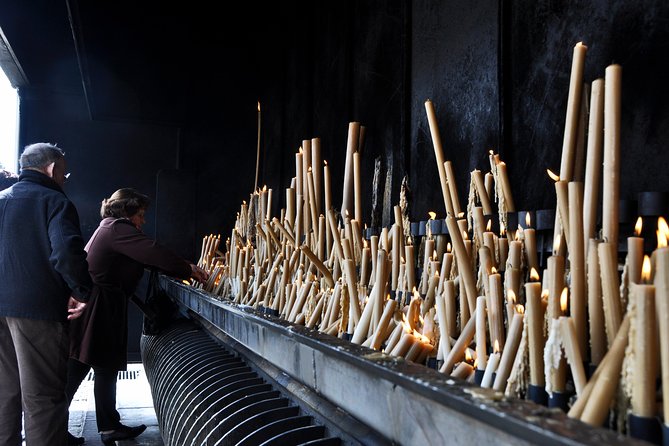
A major value of the tour is that it includes planned guided moments plus independent time. That’s ideal at Fátima, because some people want to pray, some want to walk quietly, and some want photos. Your schedule supports all three.
During your free time, you’ll be able to visit key areas like the chapel and chapels within the basilica complex, and you can explore the grounds, statues, and the main prayer spaces at your own pace.
One thing I’d keep in mind: Fátima is active. Even on days when crowds feel manageable, you’ll still want to expect movement and lines around the most important spots. Your small group size helps, but it won’t turn the sanctuary into an empty stage.
A practical tip for your own comfort
This is a day where food planning matters. One review specifically warned that you should bring snacks/breakfast because everything can be closed early and food options may be limited. If you’re leaving Lisbon at 8:00am, pack something simple so you’re not spending your energy hunting for coffee or a quick bite.
Getting the most out of the van ride: audio, walking, and seat choice
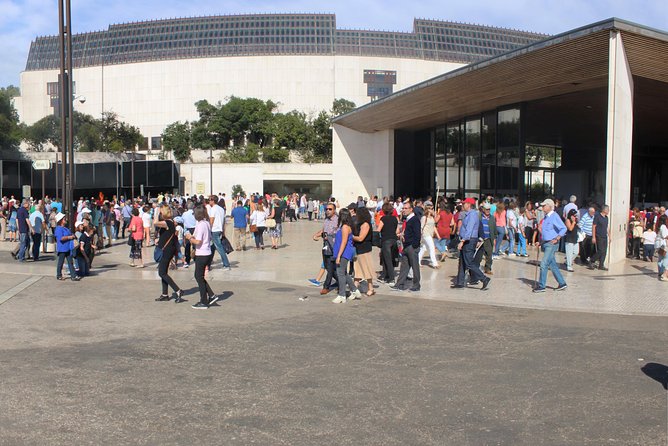
Even with a friendly, organized plan, van days have logistics. The tour includes driving in a comfortable vehicle, but you’re seated, and you’ll be listening to a guide during key parts of the day.
Here’s the honest consideration: on some days, people reported they couldn’t clearly hear the guide from seats farther back. So if sound quality matters for you, sit closer to the front or middle when possible. That one decision can make the difference between feeling like you got the story and feeling like you were only transported.
Also, plan for walking. This is not a sit-and-watch itinerary. You’ll explore the sanctuary grounds and then walk around Aljustrel’s village areas. Comfortable shoes matter more than fashion.
If you’re sensitive to long walks or lots of standing during Mass, I’d go in with that mindset. You might still love the day, but you’ll enjoy it more if your body is prepared.
Price and value: what you’re paying for at $96.79 per person
At $96.79 per person for about 5 hours (approx.), the value comes from what’s bundled rather than the sticker price.
You’re getting:
- A professional guide who explains the 1917 context and points you to the meaningful places
- Round-trip transportation from Lisbon in an air-conditioned vehicle
- Mass attendance at the sanctuary as part of the experience design
- Admission ticket free for the sanctuary stop area noted in the itinerary details
- Travel insurance compliant with Portuguese regulations
If you try to DIY this, you can absolutely do it. But you’ll be paying time costs: figuring out transport timing, sequencing the basilicas and chapel efficiently, and trying to fit Mass into your own schedule. This tour handles that structure for you.
Where the price won’t feel as “worth it” is if your personal expectation is constant narration every second. Some reviews describe cases where the experience felt more like a ride than a deeply guided storytelling day. That seems not to match the overall quality pattern, but it’s the one drawback to consider if you’re very sensitive to how guided the tour feels.
Who this tour suits best (and who might want to skip it)
I think this tour is especially good for:
- First-time visitors to Fátima who want the big stops explained clearly
- People who value a small group and want a calm experience at a high-meaning destination
- Anyone trying to fit Fátima into a Lisbon-based schedule without the stress of transport logistics
- Catholics who want a chance to attend Mass at the sanctuary during the visit
- Shoppers? Not the main event. You’ll find devotional items and small purchases around the area, but this day is built around pilgrimage sites and the story, not a shopping spree.
It may be less ideal if:
- You want an all-day, non-stop narrated tour where every minute is storytelling from the same seat
- You hate walking or long periods outdoors (even if the atmosphere is peaceful, there is still movement)
Should you book this Lisbon-to-Fátima small-group tour?
If your goal is to see the Sanctuary of Our Lady of Fátima and the shepherd children’s world at Aljustrel, without worrying about transport timing, I’d say yes. The combination of guide context, key places like Capela das Aparições, optional Mass, and the small max 8 group size is the right recipe for making Fátima feel real instead of just famous.
Book it if you like structured moments plus breathing room to pray, reflect, and wander. Skip it if you’re only interested in a quick highlight loop and you don’t care much about the 1917 story being explained before you look.
FAQ
How long is the Fátima Sanctuary & Little Shepherds’ Village tour from Lisbon?
It’s listed as about 5 hours (approx.).
Where do we meet in Lisbon?
The start meeting point is Praça da Figueira, 1100-241 Lisboa. The tour also lists an end location near HF Fénix Lisboa in the city center.
Is pickup available?
Pickup and drop-off are available within the Lisbon area, depending on the option you choose (shared or private). The driver-guide meets you at your hotel or a central meeting point you select.
What’s included besides the sanctuary and village visits?
The tour includes a professional guide, transport in an air-conditioned vehicle, mass attendance at the Fátima Sanctuary, and travel insurance compliant with Portuguese regulations.
Do I need to buy tickets for the sanctuary?
Admission is listed as free for the sanctuary stop noted in the itinerary details.
Is Mass at Fátima guaranteed?
Mass attendance is included in the tour, but the itinerary also notes that it may be possible to attend depending on timing during your visit.
How many people are in the group?
The tour is limited to a maximum of 8 travelers per vehicle.
Are meals included?
No. Meals and drinks are not included, so plan to bring snacks if you’ll need them early in the day.
What language is the tour in?
The tour is offered in English. A multilingual guide may be used depending on group composition.
Can the tour be canceled for a refund?
Yes—free cancellation up to 24 hours in advance is stated, with a full refund if you cancel at least 24 hours before the experience start time.