REVIEW · FATIMA, NAZARE & OBIDOS DAY TRIPS
Fátima and Tomar – Heritage, History & Religion
Book on Viator →Operated by BLUELANE® · Bookable on Viator
Faith and Templars, in one long day.
This private outing links Portugal’s biggest Sanctuary of Fatima moments with Tomar’s Order of the Templars legacy, all with air-con comfort, bottled water, and a driver who can explain what you’re looking at. I especially liked the way you get time to take in Fatima beyond the main church—then shift to Tomar, where the Convento de Cristo is a concrete, UNESCO-listed walk-through of centuries. And I really appreciated hearing guide-style stories from drivers like Ricardo and Clayton, who made the day feel personal and practical. One thing to think about: the Convento de Cristo ticket isn’t included, and if you’re traveling near May 13 or October 13, you should expect more people at the sanctuary.
For me, the best part is the pacing: you’re not just driving past famous places. You stop in places that explain why these sites matter, from the children’s simple homes in Aljustrel to the grand Templar complex inside Tomar. If religion and monuments are your kind of day, you’ll likely enjoy the mix more than a purely sightseeing tour. The main drawback is simple: since it’s an 8-hour day, you’ll want to plan what you want to do at each stop, especially if you’re hoping to light a candle—there’s advice to give yourself time for that kind of moment.
In This Review
- Key points worth knowing before you go
- Why this Fatima + Tomar day trip clicks from Lisbon
- Entering the Fatima Sanctuary area: Nossa Senhora do Rosário de Fátima
- Aljustrel and the shepherd cottages: Os Três Pastorinhos
- Tomar’s Templar story: how the city traces back to 1159
- Convento de Cristo: UNESCO’s Templar-to-Knights of Christ monument
- Mata Nacional dos Sete Montes: the Forest of Seven Hills and the Charolinha tower church
- Price and logistics: what you’re really paying for
- Who this tour suits best (and who might want to look elsewhere)
- Should you book this Fatima and Tomar experience?
- FAQ
- How long is the Fatima and Tomar tour?
- Is pickup included?
- Is this tour private?
- What sites are included during the day?
- Are tickets included?
- What’s included in the tour price besides transportation?
- Is there group pricing or discounts?
- What are the operating hours?
- Is free cancellation available?
Key points worth knowing before you go
- Private group feel with a driver who explains what you’re seeing, not just a car ride
- Multiple free stops along the way, with only Convento de Cristo requiring a separate ticket
- Fatima details that help you understand the pilgrimage dates (especially May 13 and October 13)
- Aljustrel’s shepherd cottages let you picture the children’s everyday life up close
- Tomar’s Templar roots connect to Afonso Henriques and Dom Gualdim Pais
- A short nature break at Mata Nacional dos Sete Montes, tied to the Convent’s crop-growing past
Why this Fatima + Tomar day trip clicks from Lisbon
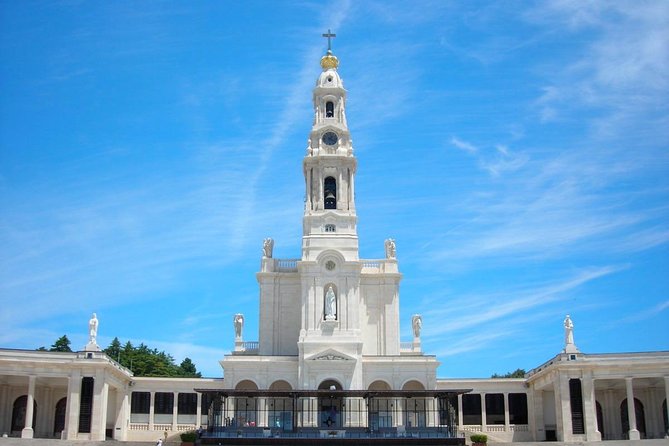
A lot of Lisbon day trips focus on one theme. This one stitches two big spiritual-and-historic stories into a single workday: Fatima (pilgrimage, faith, and the places connected to the children) plus Tomar (Templars and the Knights of Christ, inside a UNESCO monument). That pairing matters because it helps you go from devotion to architecture and back again—without feeling like you’re starting over from scratch.
The “private” part is also real value. You’re not squeezed into a huge group rhythm, and it’s easier to ask questions while you’re on the move. The tour also includes practical comforts—air-conditioned vehicle, bottled water, and even free Wi‑Fi—so you’re less drained before you hit the churches and monument time.
Price-wise, it can feel surprisingly reasonable for what you’re getting. At $286.91 per person, you’re paying mainly for the long-distance transport plus guided-style context across multiple key sites. And since several stops are free entry, the day doesn’t quietly turn into a ticket-heavy bill—except for the one big monument that does require a paid entry: Convento de Cristo.
You can also read our reviews of more historical tours in Lisbon


Entering the Fatima Sanctuary area: Nossa Senhora do Rosário de Fátima
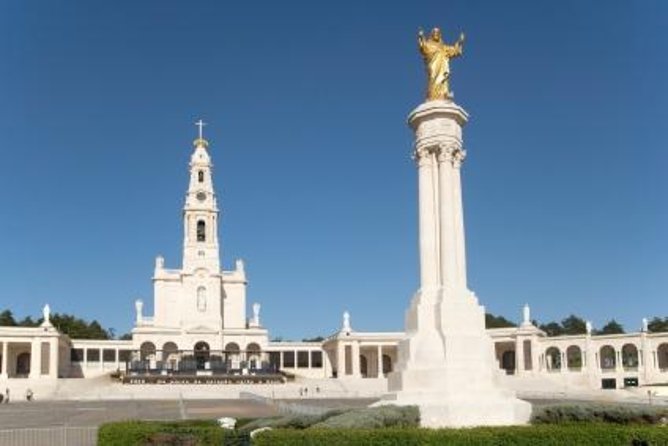
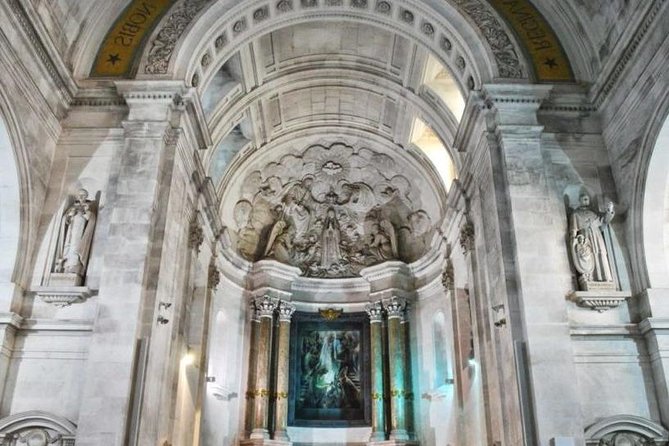
The day’s Fatima time centers on the church at Nossa Senhora do Rosário de Fátima, part of the broader Sanctuary of Fatima. This is one of those places where the atmosphere is tied to real dates. If you’ve ever heard people talk about the apparitions, this stop gives you the physical anchor for that story.
Here’s what I find useful to know before you arrive: the sanctuary sees major surges around May 13 (the first apparition) and October 13. If your visit lines up with those dates, plan for more people, more movement, and more waiting around the most in-demand moments.
Another nice angle is how the sanctuary links outward. The visit isn’t just about the main church building; it also points you toward the nearby places connected with the three children. That turns a one-stop visit into a deeper understanding of why pilgrims come here in the first place.
What to watch for: this is a sacred site, and it’s busiest when the calendar is loudest. If you hate crowds, try to be strategic with timing and expectations for how much stillness you’ll find.
Aljustrel and the shepherd cottages: Os Três Pastorinhos
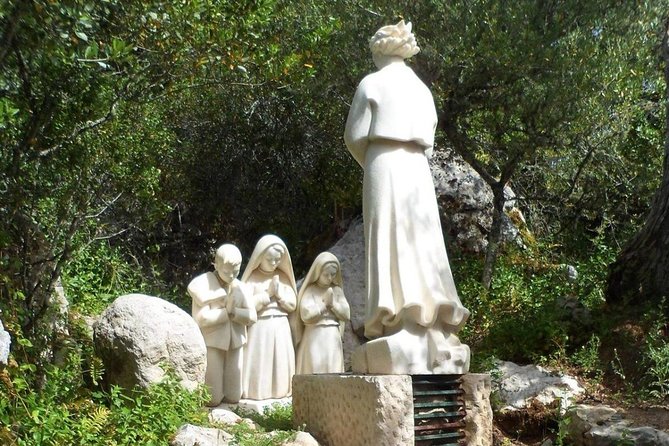
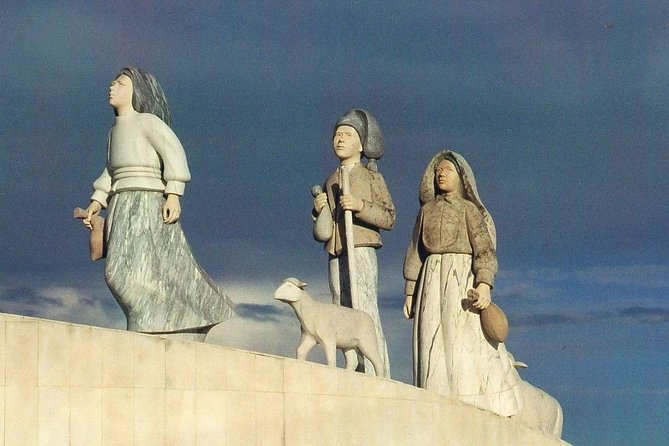
About two kilometers from the sanctuary is Aljustrel, and that’s where Os Três Pastorinhos becomes more than a name on a sign. You’re given time at the shepherd children’s homes—simple, single-storey cottages that are open to the public.
I like this stop because it puts the story into everyday form. You’re not only looking at grand religious spaces; you’re looking at where ordinary life happened. The cottages are described as very similar in architecture and simplicity, and you can see a layout that reflects how close the families lived. The house of Francisco and Jacinta was built in 1888, while Lucia’s house dates to 1885 and is about 200 meters away.
There’s also a House-Museum of Aljustrel next to Lucia’s home. It focuses on daily-life objects—tools, cooking items, clothing, and furniture—meant to show what mountain dwellers used in the early 20th century. Even if you’re not a museum person, the point here is clear: you get context, not just a pilgrimage photo.
Practical tip: allow yourself to move at a slow pace here. The details in small household objects are the kind you might miss if you rush.
Tomar’s Templar story: how the city traces back to 1159
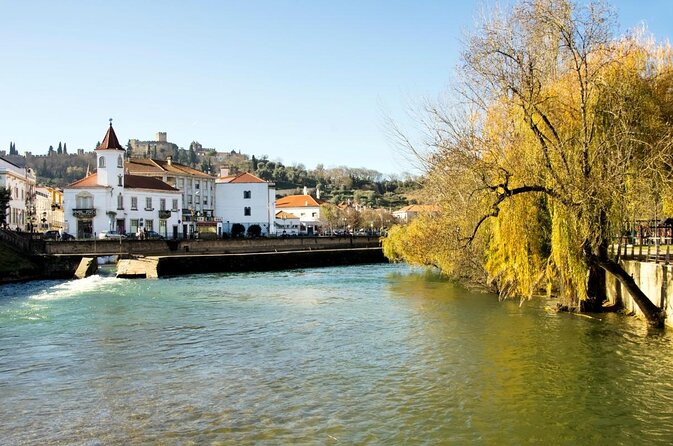
Then you shift gears from sanctuary devotion to medieval power and Portuguese identity. Tomar is famously linked to the Order of the Templars, and the story you hear on the day ties the city to the broader Reconquista era.
A key date in the background is 1159, when the Templars received these lands as reward for assistance connected to Dom Afonso Henriques, Portugal’s first king. That’s not just trivia—it helps you understand why Tomar developed the way it did and why you keep seeing Templar references in architecture and place-names.
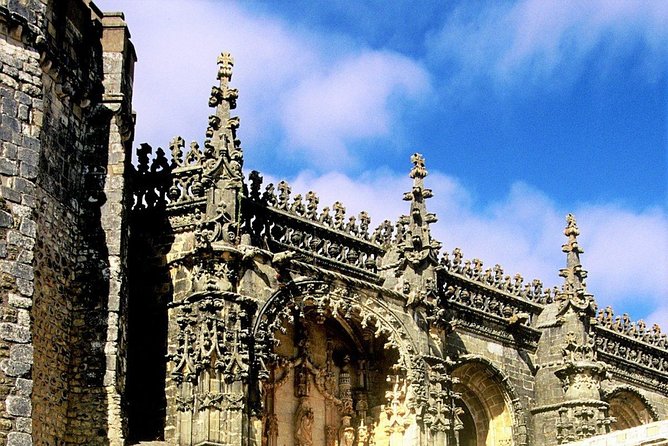
The spotlight then falls on Dom Gualdim Pais, described as the first Grand Master in Portugal, who founded the castle and the remarkable Convent of Christ inside. You’ll also hear that the monument has been enlarged and altered over centuries, reflecting different architectural styles. That layering matters because it explains why the complex feels both unified and oddly multi-era when you’re standing in it.
This is also where UNESCO enters the picture: Tomar’s Convent complex is a World Heritage site. Knowing that before you arrive makes it easier to read what you’re looking at as part of a bigger global story, not just a local attraction.
Potential consideration: Tomar is a walking-and-looking kind of place. If you come in expecting a quick drive-by, you’ll likely feel rushed.
Convento de Cristo: UNESCO’s Templar-to-Knights of Christ monument
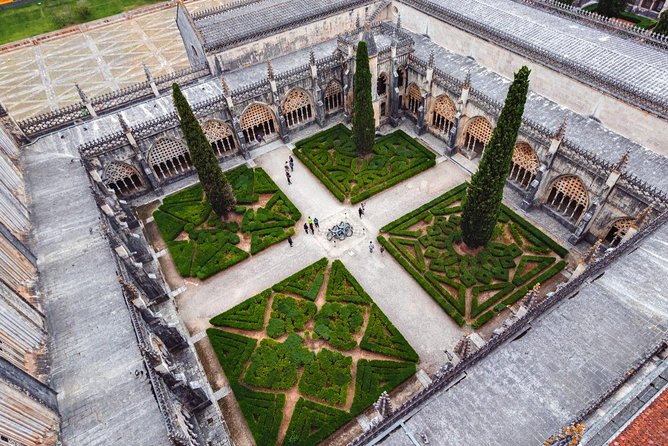
The heart of Tomar is the Convento de Cristo. UNESCO awarded World Heritage status in 1983 to the Templar Castle and the Convent of the Knights of Christ, and this is described as unique in the history of the western world. That phrasing might sound big, but the key for your visit is simpler: it’s a monumental complex with a long timeline, built on a site that was originally used for Roman worship.
The complex is presented as covering seven centuries of Portugal’s history, and it’s set up like a guided journey through time—different functions, different rulers, different styles, all within one location. If you’re the kind of person who likes to understand what changed and why, this is where you’ll feel your patience paying off.
You’ll also hear the personal connection to Portugal’s founding myth. Afonso Henriques bestowed lands between the Mondego and Tagus to the Knights of the Temple of Jerusalem, and there’s even a legend mentioned about inspiration upon reaching the region. Legends aren’t proof, but they do show how people explain meaning to power—something you can see reflected in how these places are remembered.
One more practical reality: the Convento de Cristo admission ticket isn’t included. So you’re not getting a fully all-in price for every single stop. Still, many other stops are listed as free, which helps balance the overall cost of the day.
How long to plan here: the time on this stop is about one hour. For such a big complex, that’s just enough if you go in with a target: pick what you want to see first, then let the rest be bonus.
If you like good explanations: the best days are the ones where a driver like Ricardo or Clayton helps you make sense of what you’re walking through. Their strength shows up in the way the day becomes understandable, not just photographed.



Mata Nacional dos Sete Montes: the Forest of Seven Hills and the Charolinha tower church
After the monumental stops, you get a breather at Mata Nacional dos Sete Montes, also called the Forest of Seven Hills National Woodland. It’s a 39-hectare park right in the center of Tomar, and it’s described as forming a link to the castle and the Convent area.
The big idea here is that this wasn’t just scenery. It was part of the Convent’s working environment: the woodland is also known as the Convent Enclosure because the Order of Christ used it for growing and harvesting crops. That turns the woods into another layer of the story—architecture plus agriculture.
The stop includes specific features that make it fun even in a short visit:
- It includes centuries-old cypress trees, plus Judas trees, oaks, and olive trees
- There’s a miniature church shaped like a cylindrical tower called the Charolinha
- The Charolinha is described as appearing like a replica of lantern towers of the Convent of Christ
You only have about 30 minutes here, so it’s not a hike. It’s more like a calm reset and a visual connection between city, Convent, and the surrounding land that supported the order.
Small planning note: if you’re hoping for deeper nature time, you might want to add extra hours on your own. This tour gives you the story link, not a long outdoor escape.
Price and logistics: what you’re really paying for
At $286.91 per person for an 8-hour day from Lisbon, the value depends on two things: what you’d otherwise pay for transport and how much you care about explanations.
This day includes:
- Private transportation in an air-conditioned vehicle
- Pickup offered
- Bottled water
- Free Wi‑Fi
- Mobile ticket
- Group discounts
Entry costs are mixed. Several stops are listed with free admission tickets, and only Convento de Cristo is marked as not included. Meals and gratuities aren’t included, either.
So I think of the pricing like this: you’re paying for one organized day that links multiple major sites without you needing to coordinate trains, buses, and timed tickets. You also pay for the benefit of a driver who can explain what you’re seeing. The reviews you shared emphasize that exact point, especially the helpful, explanatory style of Ricardo and Clayton.
One more practical consideration: it’s a private tour, which means the day runs with your group pace. That can be great if your group wants flexibility. It also means you’ll get more value if you actively decide what matters most to you: sanctuary moments, cottage time, or monument time at Convento.
Who this tour suits best (and who might want to look elsewhere)
This tour fits people who want more than a checkbox day. If you enjoy the way religion, architecture, and local life connect, Fatima plus Tomar is a strong combo.
It’s also a good match if:
- You like a structured day with meaningful stops
- You want context while you’re in transit
- You prefer private pacing rather than a packed group
It might be less ideal if:
- You dislike crowds and you’re visiting around May 13 or October 13, when sanctuary attendance rises
- You only want one site and don’t care about historical connections between Templars and Portuguese kings
- You’re hoping for a fully all-inclusive ticket price (since Convento de Cristo requires its own entry)
Should you book this Fatima and Tomar experience?
I’d book it if your goal is a single, well-linked day from Lisbon that covers both Portugal’s modern-era pilgrimage center and one of its major medieval monument stories. The mix of free stops, the included comfort (Wi‑Fi, bottled water, air-con), and the private feel make it easier to enjoy instead of stress.
I’d think twice if you’re the type who hates waiting and you’re traveling during the busiest sanctuary dates. In that case, you can still go, but you’ll want to manage your expectations for how long it takes to reach the moments that matter most to you.
If you decide to do it, go with one plan for Convento de Cristo and one plan for Fatima’s quieter meaning. And if a candle is on your list, remember the simple advice: build in extra time for the moments like that.
FAQ
How long is the Fatima and Tomar tour?
It runs about 8 hours.
Is pickup included?
Yes. Pickup is offered.
Is this tour private?
Yes. It’s listed as a private tour/activity, so only your group participates.
What sites are included during the day?
You visit the Church of Nossa Senhora do Rosário de Fátima in Fatima, Os Três Pastorinhos in Aljustrel, Tomar, Convento de Cristo, and the Mata Nacional dos Sete Montes (Forest of Seven Hills).
Are tickets included?
Some entries are listed as free (including Fatima’s church area, Os Três Pastorinhos, and the other free stops). The Convento de Cristo ticket is not included.
What’s included in the tour price besides transportation?
The tour includes free Wi‑Fi, an air-conditioned vehicle, bottled water, and private transportation.
Is there group pricing or discounts?
Yes. The experience lists group discounts.
What are the operating hours?
It lists operation Monday through Sunday, 8:00 AM to 7:00 PM.
Is free cancellation available?
Yes. Free cancellation is available up to 24 hours in advance for a full refund.