REVIEW · SINTRA DAY TRIPS
Sintra & Cascais
Book on Viator →Operated by BLUELANE® · Bookable on Viator
Sintra and Cascais feel like two different worlds in one day. You’ll start with UNESCO Sintra charm, then swing by Cascais’ sea air and Portuguese coastal drama.
I like how the day is paced for a private group—less waiting, more smooth transitions between viewpoints and interiors. I also love the practical touch of onboard Wi‑Fi (plus bottled water and an air-conditioned vehicle), so the hours in transit feel less painful.
One thing to consider: car time adds up. If you’re sensitive to motion, I’d plan for it, because the winding roads and frequent stops can make some people feel a bit nauseous.
In This Review
- Key highlights worth planning around
- A day that turns Sintra’s mystery into real stops
- Queluz Palace: rocaille rooms and the Neptune Basin
- Sintra’s historic center: UNESCO’s cultural landscape feel
- Monserrate Park and Palace: romantic gardens with 2,500+ species
- Cascais by the sea: from fishing port to royal summer town
- Boca do Inferno: the sea’s jaws in 30 minutes
- Price and logistics: what you really get for $308.77
- Who this private Sintra and Cascais day is best for
- Should you book? My practical take
- FAQ
- Is this tour private?
- How long is the Sintra and Cascais experience?
- Is hotel pickup included, and where does it start?
- Are tickets included for the palaces and attractions?
- Which stops have free admission?
- Is Wi-Fi provided during the tour?
- What language is the tour offered in?
- Can I choose my starting time?
Key highlights worth planning around
- Private pacing with real guide attention: guides like Rui and Samir Costa get praise for keeping you on track and for practical routes.
- Queluz Palace details you’ll actually notice: rocaille-style rooms, mirrored walls, and the Throne Room with gilded woodwork.
- Sintra as a cultural landscape (UNESCO): the historic center sits under the mountain range in Sintra–Cascais Natural Park.
- Monserrate’s garden scale: more than 2,500 plant species and a romantic mix of paths, ruins, waterfalls, and lakes.
- Cascais history in a walkable dose: a former fishing port turned royal summer scene, then a modern seaside hangout.
A day that turns Sintra’s mystery into real stops
This is the kind of tour day that works best when you accept one simple truth: Sintra is not a checklist. It’s tight roads, steep viewpoints, and palaces that feel like they belong in a movie. Doing it with a guide and private transport helps because you’re not spending your energy hunting for the right entrance or figuring out timing.
The total day runs about 8 hours, and you can usually pick your start time (within the service window). That flexibility matters—an early departure gives you better light for the coastal views in Cascais, and it can also reduce your stress around popular interiors.
Also, your comfort is built in. You get an air-conditioned vehicle, bottled water, and onboard Wi‑Fi, plus a mobile ticket format for getting through the day. Small things, but they add up when you’re moving from hill towns to the sea.
You can also read our reviews of more tours and experiences in Lisbon.



Queluz Palace: rocaille rooms and the Neptune Basin
Queluz (Palácio Nacional e Jardins de Queluz) is the first stop for a reason: it’s a strong “wow” start without the full chaos of the most famous Sintra palaces. This one is tied to Portuguese royalty in the late 1700s, built on the orders of Pedro III—the husband of D. Maria I—and used as a royal residence.
Inside, the palace leans hard into decorative luxury. I love that it’s not just big rooms; it’s the kind of place where your eyes keep catching details—rocaille style decorations, mirror-lined walls, and carved gilded woodwork. The Throne Room is a highlight for that reason: it’s designed to impress.
There’s also an important museum of decorative arts included in the palace complex. Many pieces belonged to the royal family, and they’re displayed in rooms meant to fit the objects, not shoved into random space.
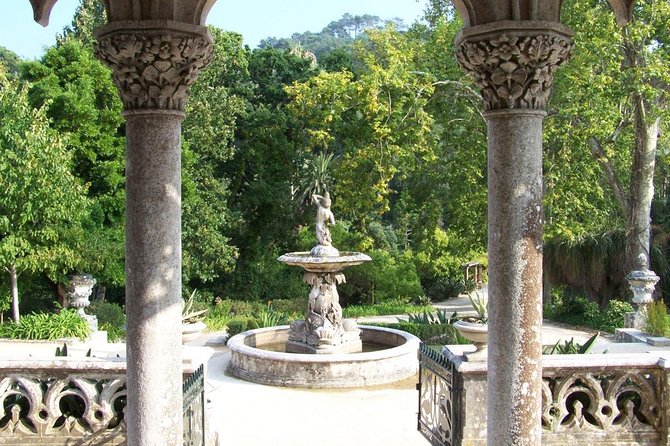
Then you step outside and the gardens take over. You’ll see fountains and ornamental ponds where water spouts from mythological figures. One standout area is the group of sculptures around the Neptune Basin—a perfect example of how Portuguese garden design likes drama, not just symmetry.
Practical note: tickets are not included here. If you want to keep the day flowing, make sure you plan for entrance fees in advance. One guide-related tip from past experiences that’s worth copying: purchasing the required palace ticket ahead of time can save you stress when you arrive.
Sintra’s historic center: UNESCO’s cultural landscape feel
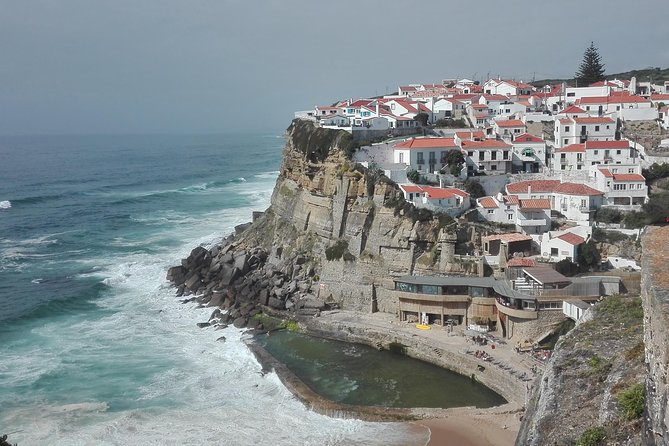
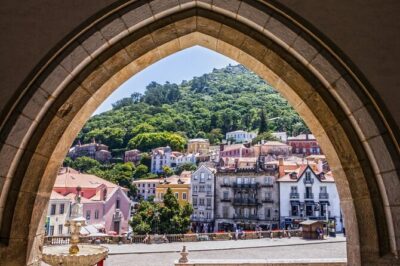
After Queluz, you head into the Centro Histórico de Sintra, where the town itself becomes part of the story. Sintra is UNESCO World Heritage, but what I find more interesting than the label is the logic behind it: UNESCO classifies it as a cultural landscape—meaning the mountains, natural setting, and historic buildings all work together.
This is where the day shifts from palace interiors to street-level atmosphere. You’ll be at the foot of the Sintra mountain range, with lush vegetation around you, and the sense that the town’s character is shaped by the natural park system nearby.
You’re there for about 1 hour, which is just enough time to get your bearings, walk a little, and soak in the mountain-town vibe without rushing. And because the admission here is free, you’re not tied to a timed entry ticket.
If you’re the type who likes photos, this stop is where you’ll get them. Sintra’s charm comes from tight streets, atmospheric views, and that mix of stone, color, and vegetation.
Monserrate Park and Palace: romantic gardens with 2,500+ species

Monserrate (Parque e Palacio de Monserrate) is where the tour leans into the more imaginative side of Sintra. This park and palace combination is famous for being Romantic in spirit—full of winding paths, “surprise” corners, and carefully staged scenes.
The garden has a layered origin story. It started as a rented farm with orchards and fields, then shifted through the hands of several key figures. William Beckford fell in love with the Serra de Sintra and helped shape the vision. Later, Francis Cook—the first Viscount of Monserrate—worked with people like landscape painter William Stockdale, botanist William Nevill, and master gardener James Burt to build the contrasting scenes you see today.
What I love here is the way the garden feels both natural and designed. Narrow footpaths braid through ruins and tucked-away nooks. There are waterfalls and lakes, and the “disordered” look is clearly intentional.
And yes, it’s genuinely plant-nerdy if you’re into that. There are more than 2,500 species, including plants native to Portugal like arbutus trees, holly trees, and cork oaks—and also species from across the world (Australia, Mexico, Japan, and beyond).
Inside the palace, the interiors add another layer of drama. You can see the Music Room and reception rooms like the Indian living-room, the dining-room, and the library. These are the kinds of rooms where it’s easy to spend too long just looking at what’s on the walls and how the spaces are arranged.
Monserrate is about 2 hours, and tickets are not included. Given that you’re walking a lot on uneven garden paths, wear comfortable shoes. If you’ve got any walking limitations, plan to go slower—this stop doesn’t feel like a “see it in five minutes” place.
Cascais by the sea: from fishing port to royal summer town
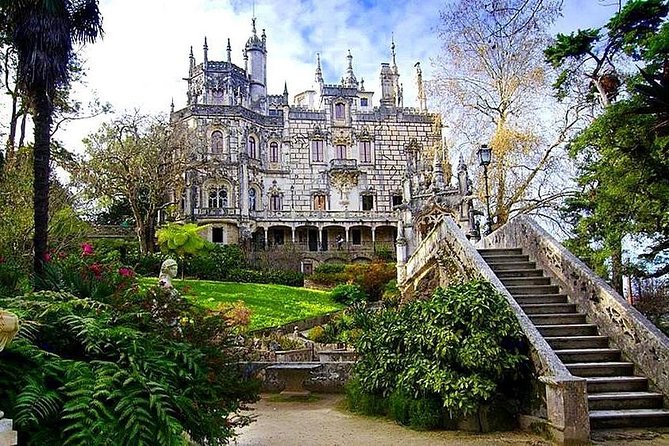
Then the day shifts to the coast. Cascais is close to the sea and historically started as a fishing village. It became important as a stopping point for boats headed to Lisbon around the 14th century, which made it a busy port for that era.
Later, in the second half of the 1800s, sea bathing helped transform Cascais into a fashionable summer resort. Dom Luís I played a key role by converting the Fortaleza da Cidadela into a summer residence of the Portuguese monarchy in 1870. The nobility followed, building palaces and elegant villas that changed the town’s look.
Another neat historical detail: the rail line between Pedrouços and Cascais opened in 1889, helping people reach the seaside more easily. It’s one of those “small infrastructure moment” stories that actually changes tourism patterns.
Today, Cascais mixes old aristocratic atmosphere with a modern, lively feel. You’ll have about 1 hour here, and it’s the best kind of time for a walking stop: stroll through streets with quality shops, pause at outdoor cafés, and grab something simple to eat if you want.
This is also the part of the day that refreshes you mentally. Sintra can be steep and intense; Cascais gives you sea air and calmer streets.

Boca do Inferno: the sea’s jaws in 30 minutes
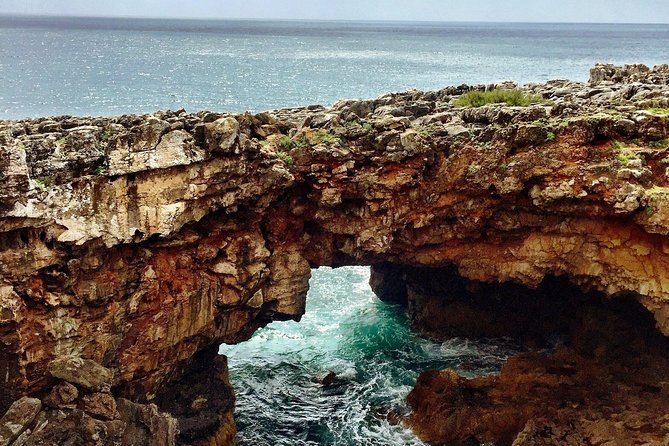
Boca do Inferno (the name literally means the Jaws of Hell) is a quick stop with big power. It’s an inlet along the coast surrounded by steep rocks and caves, and the whole point is watching how the sea works.
This is not about museums. It’s about physics and drama. Waves push into the rocks, water surges through and around the caves, and the view feels slightly otherworldly—especially when the sea is active.
You’ll have about 30 minutes, and admission is free. That short time matters because it fits well into the flow of the day. It also helps if your legs are tired from Sintra’s walking.
Price and logistics: what you really get for $308.77
At $308.77 per person for about 8 hours, this is priced like a “do it right” day from Lisbon: transport, guide help, and comfort built in. The tour includes private transportation (in an air-conditioned vehicle), bottled water, onboard Wi‑Fi, and free pickup in any hotel or accommodation in Lisbon.
What’s not included is just as important: tickets, meals, and gratuities aren’t covered. And entrance fees do matter for the two interior stops where ticketing applies—Queluz Palace and Monserrate. That’s why one of the clearest pieces of practical advice is simple: if you’re going to be in Sintra anyway, plan your palace and Monserrate tickets ahead of time so your day doesn’t wobble.
The value also comes from the format: it’s a private tour/activity, meaning only your group participates. That usually pays off when you want a day that feels personal rather than rushed. You’re not sharing your timing decisions with strangers.
One more logistics point that matters in real life: the day includes car time between hill towns and the coast. A past note from a similar experience included motion discomfort due to lots of driving between points. If you’re prone to motion sickness, I’d bring your usual remedy and sit where it feels most stable in the vehicle.
Who this private Sintra and Cascais day is best for
This tour is a strong fit if you want:
- A first-time Sintra day that still covers meaningful places beyond one famous palace.
- A smoother plan than trying to coordinate multiple entrances and transfers on your own.
- Comfort perks like Wi‑Fi, air-conditioning, and bottled water.
- A guide who can help you keep the day efficient—especially for ticket timing at the palaces.
It’s also a good match for couples, small families, and anyone who wants fewer decision points. Since most travelers can participate and the tour is private, you can usually move at a pace that makes the day feel human.
If you’re the type who loves walking for long stretches, you’ll enjoy it more. Sintra and Monserrate both involve real walking—Monserrate especially with its paths, slopes, and garden complexity.
Should you book? My practical take
I’d book this if your goal is a full Sintra + Cascais day without the logistical stress. The combination of Queluz Palace, historic Sintra, Monserrate’s romantic gardens, and Cascais coastal drama gives you variety, and the included comfort items make the transit easier.
The only real reason to hesitate is if you strongly dislike car travel or you’re likely to feel motion sickness. If that’s you, plan ahead so the ride doesn’t steal your energy.
Also, don’t wait until the last minute for entrances at the paid palace sites. Planning ahead for palace tickets is one of the simplest ways to protect your day.
If you want a guide-led, private-feeling day that hits the big themes—UNESCO Sintra charm, Portuguese decorative luxury, garden imagination, and sea views—this is the right style of tour.
FAQ
Is this tour private?
Yes. It’s a private tour/activity, so only your group participates.
How long is the Sintra and Cascais experience?
It’s listed as about 8 hours (approx.).
Is hotel pickup included, and where does it start?
Free pickup is offered in any hotel or accommodation in Lisbon. You’ll need to provide your pickup address.
Are tickets included for the palaces and attractions?
Tickets are not included. The admission details vary by stop (some are free, and some require tickets).
Which stops have free admission?
Admission is listed as free for Centro Histórico de Sintra, Cascais, and Boca do Inferno.
Is Wi-Fi provided during the tour?
Yes. Free Wi‑Fi internet is included, along with bottled water.
What language is the tour offered in?
The tour is offered in English.
Can I choose my starting time?
Yes. It’s custom-made, and you can choose your starting time within the service hours (8:00 AM to 7:00 PM).