REVIEW · SINTRA
Sintra and Cascais with a Local Guide – Group tour starting from Sintra
Book on Viator →Operated by Local In Lisbon · Bookable on Viator
A day in Sintra can feel like a postcard marathon. This tour is built to hit the big sights with a local guide, smart timing, and comfortable air-conditioned transport. I like the way it packs multiple icons into one 6–8 hour outing, and I also like that the guide helps you make sense of what you’re seeing instead of just pointing. One catch: it’s a lot of ground in a hilly area, and the paid monument tickets are mostly on you.
You’ll start around Sintra’s train area, then finish at Cascais Train Station—easy for the return to Lisbon. It’s ideal if you want maximum payoff and clear guidance, even if you don’t want to plan a route all day yourself. Just keep in mind that “some sites may be closed” can happen, especially with fire-risk closures—so stay flexible.
In This Review
- Key highlights you’ll feel right away
- Why this Sintra–Cascais combo makes sense for one day
- Meeting points, trains, and getting back to Lisbon without stress
- Price and value: what $99.84 buys (and what it doesn’t)
- Stop-by-stop: how each place fits the day
- Sintra National Palace: the 15th-century royal start (quick look)
- Castelo dos Mouros: fortress walls and wide views with limited time
- Pena Park and National Palace: the 1.5-hour showstopper
- Quinta da Regaleira: caves, towers, and puzzle-box symbolism
- Valverde Palácio de Seteais: a quick palace glimpse
- Monserrate: new-Arabic architecture in a short stop
- Cabo da Roca and Guincho: the ocean resets your brain
- Cabo da Roca (westernmost point of Continental Europe)
- Praia do Guincho: beach views with no entry hassle
- Cascais Centro Histórico: end with sea-town charm
- Group tour size and why your guide matters here
- Weather, closures, and fire-risk days: stay flexible
- Who this tour suits best (and who should look elsewhere)
- Should you book this Sintra and Cascais day trip?
- FAQ
- How long is the Sintra and Cascais tour?
- Where does the tour start and where do I end?
- Is pickup offered?
- Is the tour in English?
- Are entrance tickets to the monuments included in the price?
- Is lunch included?
- What’s included besides the guide and transportation?
- What’s the group size?
- Can I cancel for a full refund?
- Are service animals allowed?
Key highlights you’ll feel right away

- Skip-the-line ticket help so you spend less time queuing and more time looking.
- Local storytelling that turns each palace and viewpoint into something you can actually place in time.
- Comfort on the move with an air-conditioned vehicle and a group capped at 33.
- Pena + Regaleira get the most time, so you’re not rushed through the showpieces.
- Cabo da Roca and Guincho add coastal variety after Sintra’s hilltop castles.
- Finish in Cascais at the train station, making the Lisbon return straightforward.
Why this Sintra–Cascais combo makes sense for one day
Sintra has a superpower and a problem. The superpower: it’s packed with palaces that look like they belong in a fairy tale. The problem: getting between them takes time, and you can burn your whole day just on logistics.
This tour solves that by running a tight circuit. You’ll see the major Sintra landmarks, then pivot west to Cabo da Roca and the coast around Cascais. The rhythm matters. You get hilltop views first, then you hit the heavier “wow” stops (especially Pena and Quinta da Regaleira), and only after that you switch to sea air and clifftop scenery.
I also like the pacing structure. A couple stops are quick photo-and-orientation moments, while Pena and Regaleira get longer blocks so you can actually look around, not just stand near a ticket gate and hope for the best.
You can also read our reviews of more guided tours in Sintra


Meeting points, trains, and getting back to Lisbon without stress
Your day is set up around rail. The start is at the Sintra Train Station Tourism Office area (Av. Dr. Miguel Bombarda is listed as the official tourist office starting point). The end is at Cascais Train Station.
Here’s the practical part: buy a going-and-return train ticket as suggested—use it to get to Sintra from Rossio in the morning, and then use it again to return to Lisbon from Cascais later that day. That keeps you from scrambling at the end when you’re tired and your legs have opinions.
If you’re coming from Lisbon, this is one of the cleaner ways to do a Sintra day trip. You don’t need to rent a car, and you’re not stuck waiting around for a pickup time that changes based on traffic. Still, do plan to arrive at the meeting point a little early so you can match your group without a last-minute sprint.
Price and value: what $99.84 buys (and what it doesn’t)

At about $99.84 per person, you’re paying for organization and reduced friction, not for all the monument entry costs.
What’s included:
- Air-conditioned vehicle (you’re in comfort between stops)
- All fees and taxes
- Private transportation (you’re not crammed with strangers in a shared shuttle)
- Skipping the lines at the ticket office
- Mobile ticket
- Local guide in English
- Stops that are free by nature (beaches/streets viewpoints) are treated as no extra entry
What’s not included:
- Most monument tickets (Sintra palace, Castelo dos Mouros, Pena, Quinta da Regaleira, Seteais, Monserrate are listed as admission not included)
- Lunch (no food is included)
There’s real value here if you hate queues and want a guide who helps you “read” the sites. Skipping the ticket-office lines can save a surprising amount of time in Sintra. But you should budget extra for palace and fortress entrances. One review you’ll want to take seriously is a complaint about misunderstanding what’s paid vs free; the lesson is simple: don’t assume every stop is included just because the tour visits it.
Stop-by-stop: how each place fits the day
Sintra National Palace: the 15th-century royal start (quick look)
The tour begins at the Sintra National Palace, with an option to visit. This is where the kings started building back in the 15th century.
You only get about 10 minutes here. That means this is more of an orientation stop than a deep interior visit. If you love royal interiors and ceramic tiles, you’ll likely want a longer visit on another day. For this day trip, the main value is seeing the palace context, then using your guide’s explanations to connect it to the bigger story of Sintra’s power and taste.
Practical tip: if you want photos, 10 minutes is enough to get a few good angles, but it’s not enough to wander slowly. Be ready.




Castelo dos Mouros: fortress walls and wide views with limited time
Next up is Castelo dos Mouros, a fortress up on the mountain. The selling point is the view and the long stretch of walls you can walk.
Again, plan for about 10 minutes. That’s short, but it can still work if your expectations match the format. You’re going for the viewpoint and a quick sense of how the fortification sits above the town. You’re not turning this into a full hike.
The consideration: the area is hilly and can be uneven. Comfortable shoes matter more than stylish ones. Also, don’t assume you’ll get a perfect “golden hour” moment—this is a schedule-driven stop.
Pena Park and National Palace: the 1.5-hour showstopper
If you want the day’s big centerpiece, Pena Park and the National Palace of Pena is it. You’ll get 1 hour 30 minutes, and that time block is one reason this tour is worth serious consideration.
This is a 19th-century monument known for its eccentric architecture. The palace sits at about 529 meters, which is why the views are such a big part of the experience.
Why the longer stop matters: you’ll need time to move around, find viewpoints, and take photos without feeling like you’re sprinting the entire time. If your legs can handle it, this is the stop where you’ll feel the “worth it” payoff.
What to watch for: Sintra and Pena are hilly. Even if you pace yourself, you’ll be doing uphill walking. One of the most helpful pieces of advice from a past guide-experience is that guides often try to park as close as possible to reduce climbing. That can make the difference between manageable and miserable.
If you know you struggle with uphill walking, bring patience and expect some stairs.
Quinta da Regaleira: caves, towers, and puzzle-box symbolism
Quinta da Regaleira is where the day turns magical in a different way. You’ll spend about 50 minutes here, and this place is famous for its caves and towers plus the stories tied to it.
This is a 20th-century palace, and the guide’s storytelling matters a lot. Without context, you might see a stunning complex. With context, you’ll understand why certain features exist and why people talk about it like a riddle you can walk through.
Drawback to note: 50 minutes goes fast once you’re inside. If you stop for photos at every turn, you can end up rushing your way through the more interesting sections. Pick a few must-see areas first, then fill the rest in.
Valverde Palácio de Seteais: a quick palace glimpse
Valverde Palácio de Seteais is listed as an 18th-century palace that was transformed into a hotel. You’ll get around 10 minutes.
This stop is mainly about architecture and atmosphere from the outside and nearby viewpoints, plus a brief chance to take in the style shift compared to Pena and Regaleira. Don’t expect a full tour of a hotel property.
If you’re the type who loves architecture details, you’ll enjoy the quick contrast. If you want maximum interior access, save that for a separate visit.
Monserrate: new-Arabic architecture in a short stop
Then comes Parque e Palacio de Monserrate, another 19th-century palace, this time with new-Arabic architecture.
Again, you’re looking at about 10 minutes. So it’s a “check it out” stop: a chance to understand what makes it distinct, not a long browse. The guide’s explanation is what makes this work. Without that, you might just see a pretty structure and move on.
Still, it’s a good way to keep the day varied. Pena and Regaleira bring one kind of theatrical design. Monserrate adds another style, and that variety keeps Sintra from feeling repetitive.
Cabo da Roca and Guincho: the ocean resets your brain
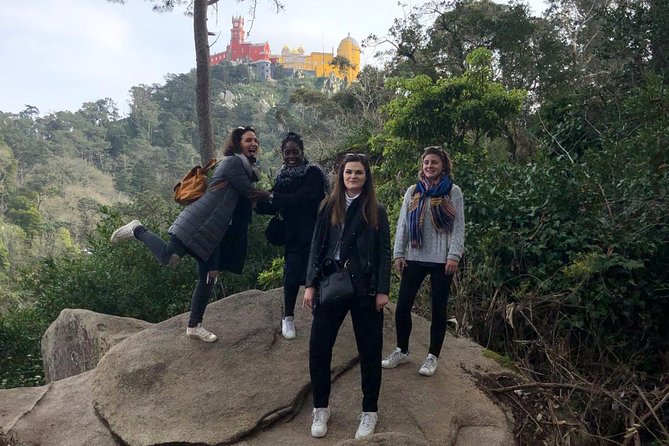
Cabo da Roca (westernmost point of Continental Europe)
The first coastal stop is Cabo da Roca, described as the westernmost point of Continental Europe. You’ll have about 30 minutes, and the ticket is listed as included.
This is where Sintra’s hilltown energy gives way to cliffs and open air. In practical terms, it’s also a nice mental break: standing, looking, and letting wind do some of the work.
Expect strong weather changes. Cape regions can feel colder and windier than you’d think, even when the rest of the day feels mild.
Praia do Guincho: beach views with no entry hassle
Then you’ll head to Praia do Guincho. It’s listed as an amazing west-coast beach and admission is free.
This is a straightforward stop. No ticket lines. No long indoor wandering. Just a coastal break that helps balance out the packed palace schedule.
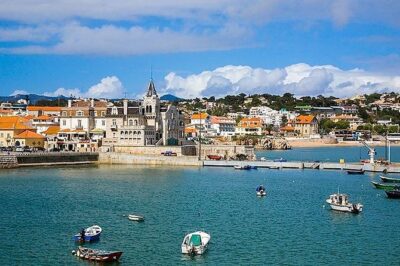
Cascais Centro Histórico: end with sea-town charm
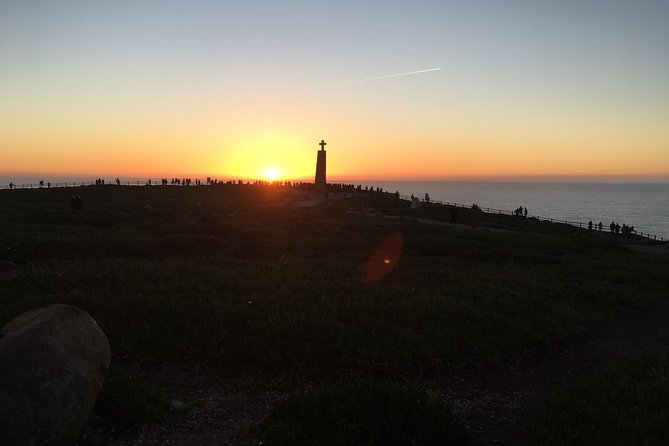
The last sight is Centro Historico de Cascais, described as an old fisherman village with nice views.
You’ll have free access here too. Since the tour ends at Cascais Train Station, this works as a low-pressure finish—enough time to appreciate the town vibe, grab a snack if you want (since lunch isn’t included), and then head to your train back.
This ending also helps with energy management. You’re not ending on another uphill viewpoint after a long day. You’re ending in a town area that’s easier to transition out of.
Group tour size and why your guide matters here
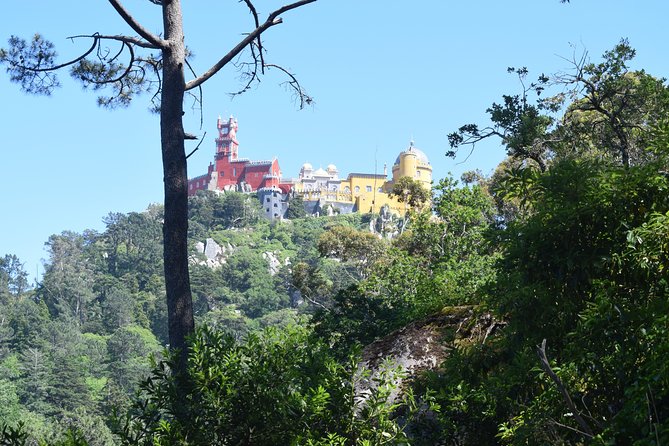
The group cap is 33 travelers. That size is big enough to feel efficient, but small enough that a good guide can still keep the flow moving.
From recent guide-name patterns on this itinerary, you might be led by people like Carlos, Antonio, Helena, Diogo, Nuno, Pedro, or Paulo. Daniel has also led a trip according to past experiences. The common thread in the positive feedback is that these guides work hard to make the day understandable, not just scheduled.
What you should look for during your day:
- Clear explanations about why each site looks the way it does
- Quick ways to understand what you’re seeing before you walk into crowded areas
- Practical adjustments, especially around Sintra’s hills
And yes, there’s one real caution from a less-happy experience: pricing confusion can ruin the mood. The safeguard is simple—assume monument tickets are separate unless the stop is explicitly listed as included or free. The guide can’t fix every misunderstanding if the wrong expectation is already set.
Weather, closures, and fire-risk days: stay flexible
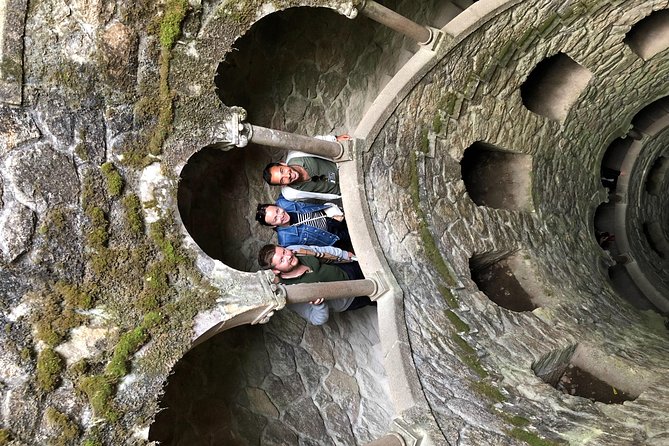
This experience requires good weather. There’s also a note that if the tour is canceled due to poor weather, you’ll be offered another date or a full refund.
More importantly, Sintra area closures can happen for safety reasons. One past experience included official sites closing due to fire risk. When that happens, a good guide can still get you to alternatives and keep the day worthwhile, but you should expect the schedule to shift.
So pack for real outdoor conditions and be mentally ready for the day to adjust.
Who this tour suits best (and who should look elsewhere)
This works best if:
- You want a high-hit-day in Sintra without planning every route segment
- You enjoy palace and viewpoint stops and can handle short bursts of walking
- You’d rather pay for organization than stress over tickets and timing
- You like having a guide explain what you’re seeing, especially at Pena and Regaleira
You might want another option if:
- You want long, slow time inside palaces
- You’re sensitive to uphill walking and stairs
- You prefer total free time over a structured schedule
- You don’t want to budget for monument entrance fees
Should you book this Sintra and Cascais day trip?
I think this is a strong buy if you want maximum Sintra payoff with less friction. The biggest value drivers are the AC transport, the ticket-office skip help, and the way the longer stops (Pena and Quinta da Regaleira) actually get enough time to matter.
Book it if you can handle hills and you’re willing to pay monument tickets separately. Avoid it if you want guaranteed interiors, slow wandering, or fully included admissions.
If you do book, my advice is to go in with two mindsets: (1) pick a few “must-see” moments and let the rest support them, and (2) bring some extra budget for those monuments that are not included. That’s how you turn a packed day into a genuinely satisfying one.
FAQ
How long is the Sintra and Cascais tour?
It runs about 6 to 8 hours.
Where does the tour start and where do I end?
It starts at the Sintra Train Station Tourism Office (near Av. Dr. Miguel Bombarda in Sintra) and ends at Cascais Train Station.
Is pickup offered?
Yes, pickup is offered, and the provided guidance is to meet at Sintra Train Station Tourism Office.
Is the tour in English?
Yes, the tour is offered in English.
Are entrance tickets to the monuments included in the price?
Most monument admissions are not included. Cabo da Roca is listed as admission included, and Praia do Guincho and Centro Histórico de Cascais are listed as free.
Is lunch included?
No. Lunch is not included.
What’s included besides the guide and transportation?
The package includes skipping the lines at the ticket office, an air-conditioned vehicle, all fees and taxes, and private transportation, plus a mobile ticket.
What’s the group size?
The tour has a maximum of 33 travelers.
Can I cancel for a full refund?
Yes. You can cancel up to 24 hours in advance for a full refund. Weather cancellations due to poor conditions also offer a different date or full refund.
Are service animals allowed?
Yes. Service animals are allowed, and most travelers can participate.