REVIEW · SINTRA
Private Tour Sintra & Mafra
Book on GetYourGuide →Operated by My Tuk Life Tours · Bookable on GetYourGuide
Sintra to Ericeira in one smooth day is a clever move. I like this tour because it focuses on three high-impact stops (Pena Palace, Mafra National Palace, and Ericeira) without wasting your day on a long, empty drive. I also like that your guide handles the pacing and logistics with pickup and drop-off included, plus water along the way. One thing to consider: palace tickets and lunch aren’t included, so you’ll want to budget for admissions before you go.
Sintra works because of its microclimate—mountain air meets Atlantic wind—and that changes the feel of each stop. Mafra works because the palace is huge and layered, not just a pretty photo spot. And Ericeira is a breather: cobblestone lanes, sea views, and a surf culture you can feel even if you don’t ride a board. The one drawback is simple math: in 7 hours, you’ll move through a lot of ground, so comfortable shoes and a flexible mindset matter.
In This Review
- Key points to know before you go
- Why this private Sintra–Mafra–Ericeira day makes sense
- Lisbon pickup to Sintra: how to start your day right
- Pena Palace: the royal drama you can actually walk through
- Getting a handle on Sintra’s town vibe between palaces
- Lunch strategy in Sintra: let your guide match your preferences
- Mafra National Palace: a Baroque complex built at a huge scale
- The gardens and grounds at Mafra: where the palace relaxes
- Ericeira: seaside streets, surf culture, and real Portuguese coastal energy
- Optional Queluz Palace: the Portuguese Versailles add-on if you have extra room
- Value and cost: is $141 per person a smart buy?
- Who this tour suits best (and who should plan differently)
- Should you book this private Sintra & Mafra with Ericeira day?
- FAQ
- FAQ
- How long is the private Sintra, Mafra, and Ericeira tour?
- Does the price include pickup and drop-off in Lisbon?
- Are palace tickets and lunch included?
- What languages is the live guide available in?
- Is this tour a private group?
- What’s the cancellation policy?
- Can I reserve and pay later?
Key points to know before you go
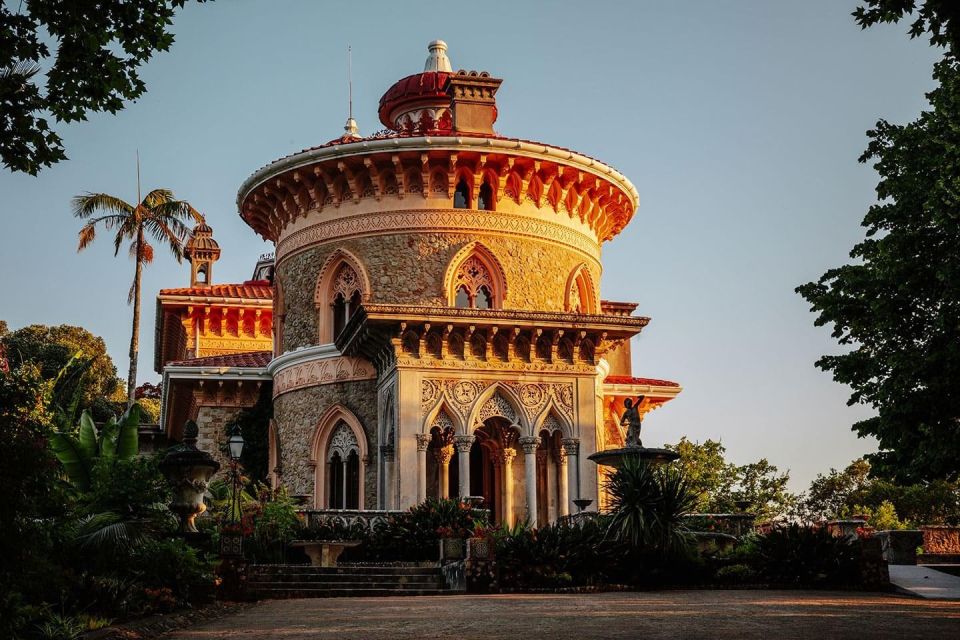
- Pena Palace is the star: vivid design, royal atmosphere, and a classic Sintra payoff for views.
- Mafra National Palace is massive: a full Baroque complex with library, hospital, convent, and basilica.
- Ericeira adds seaside balance: surfing capital energy plus seafood and walkable streets.
- Optional Queluz Palace can level up your day: Renaissance, Baroque, and Neoclassical all in one visit.
- Your guide can recommend lunch: helpful if you want Portuguese food matched to your tastes.
- Private format means less waiting for strangers: you get smoother pacing for your group.
Why this private Sintra–Mafra–Ericeira day makes sense
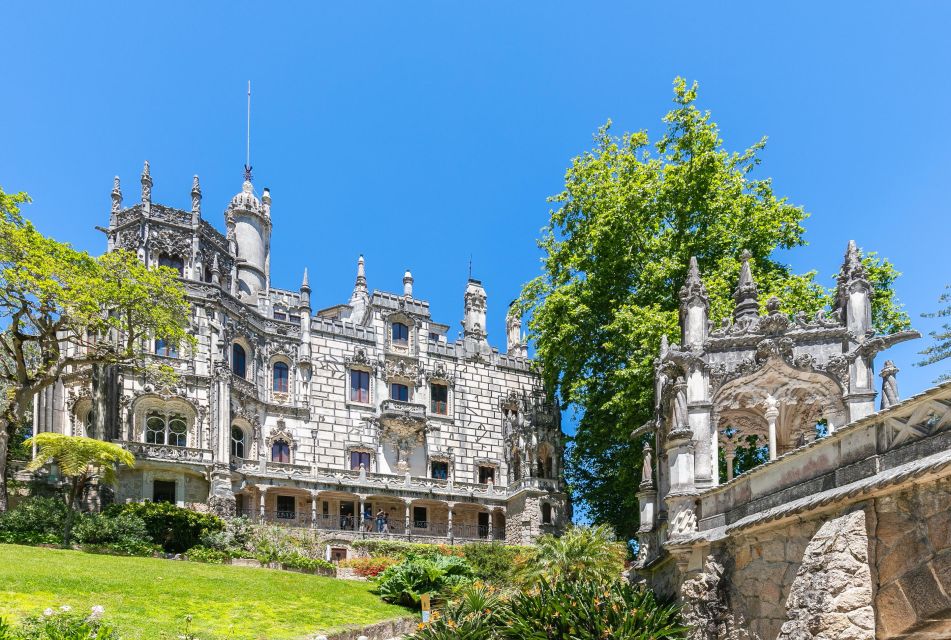
If you’re basing yourself in Lisbon, this route is the classic “Portugal highlight day” that still feels real. Sintra gives you palaces shaped by royal power and local mythology. Mafra gives you something more unusual: a palace complex that functions like a self-contained world—library, hospital, convent, basilica, and formal gardens. Ericeira then changes the mood with sea air, beach town streets, and surf culture.
The private setup matters more than you might think. You’re not stuck following a rigid group tempo. A good guide can help you decide what to prioritize inside each site and how to time your walking so the day feels fun instead of frantic.
You can also read our reviews of more private tours in Sintra


Lisbon pickup to Sintra: how to start your day right
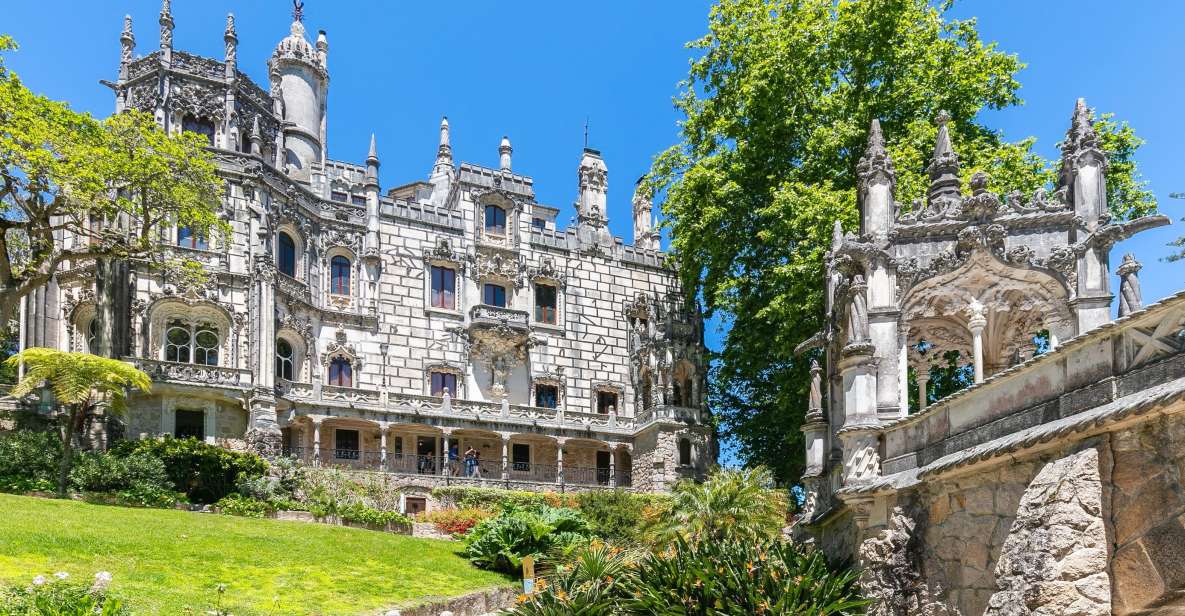
Pickup is included, and the guide arrives about 10 minutes early. That’s a small detail, but it reduces morning stress and helps you use the day’s clock wisely. You’ll travel from Lisbon into the Sintra area, where the mountain slope meets the Atlantic. This is where Sintra’s microclimate shows up in practical ways—temperatures and light can feel different from Lisbon, and the air can change fast once you move up into the hills.
I’d treat Sintra like a layers day. Even in mild months, you’ll likely appreciate something you can take on and off as you move between courtyards, terraces, and shaded areas. Also, plan on walking. Even if you’re not doing a long hike, palaces and viewpoints reward good footwear.
Pena Palace: the royal drama you can actually walk through
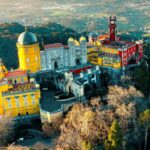
Pena Palace is one of the most recognizable names in Sintra for a reason. It’s not subtle. The design and overall atmosphere scream royal ambition, and the setting gives it that fairytale impact people associate with the town.
What you’ll like most here is the feeling of movement. As you go from one area to another, the palace reads differently—details pop, viewpoints change, and the overall experience becomes more than a single “stand and snap” moment. You’ll also get a sense of why Sintra became a stage for status and creativity. This is where Portugal’s royal storytelling becomes visible in architecture.
A practical note: Pena Palace is one of those places where you’ll enjoy it more if you pace yourself. Don’t rush straight to the biggest overlooks. Take a moment to look at the mix of forms and colors and how they fit into the hilltop setting. That’s where the magic shows up.
Getting a handle on Sintra’s town vibe between palaces
Sintra isn’t only about one palace. The historic center is one of the best parts of the day because it’s compact and walkable, and it lets you slow down for real Portuguese flavor.
If you want the classic sweet stop, the Piriquita shop is the place to sample travesseiros and queijadas. Travesseiros are pastry pillows, usually with a custard-style filling. Queijadas are cheese-based cakes. Both are made for snacking, not for a heavy sit-down meal, which makes them a good fit while you’re touring.
This is also the moment to wander. Sintra’s “romantic town” reputation isn’t just marketing; the streets feel designed for wandering. You’ll see small shops, local craft and food items, and the kind of street texture that makes photos look better without trying too hard.
A balanced expectation: if you’re chasing only architecture, you can still enjoy Sintra here. But if you’re open to the food-and-street pace, you’ll probably get more satisfaction out of the day.
Lunch strategy in Sintra: let your guide match your preferences
Lunch isn’t included, but you’re not left guessing. Your guide can recommend restaurants in the Sintra area based on what you want and your budget. If you’re the type who likes Portuguese food without ending up in an overly touristy trap, this helps a lot.
Some popular options mentioned for this area include Incomum, Metamorphosis, and Tascantiga. I’d use your guide like a filter: tell them if you want something more traditional or more modern, and whether you’re after a quick meal or a longer sit-down.
Even if you end up choosing something else, the value here is decision support. Instead of spending your energy hunting, you spend your energy enjoying.



Mafra National Palace: a Baroque complex built at a huge scale
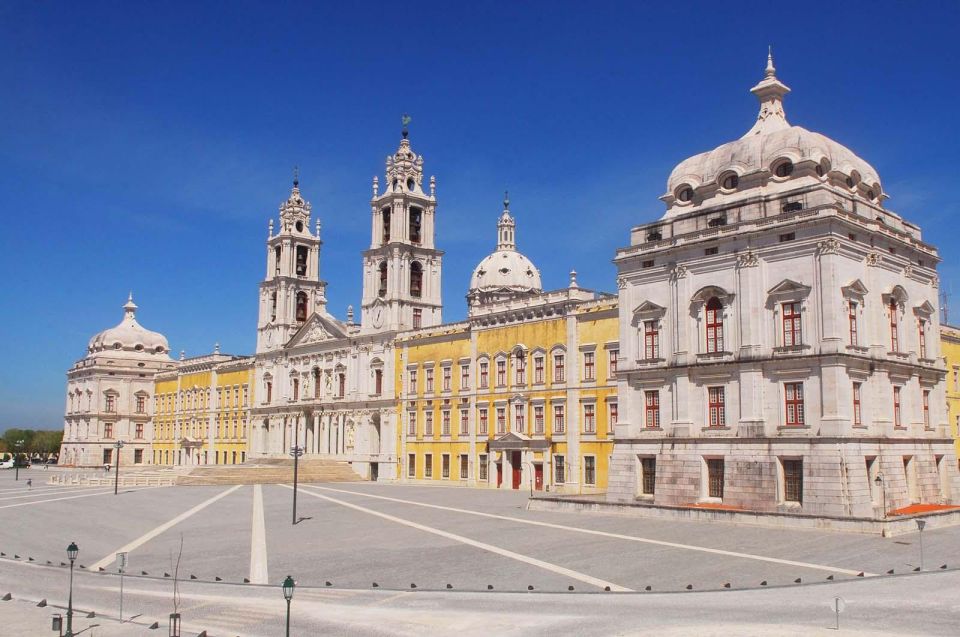
Then comes Mafra, and it’s a different kind of wow. The Palácio Nacional de Mafra is often described as the most imposing palace in Portugal, and the scale makes that claim feel logical fast.
This palace was built in the 18th century by King John V. The key detail that gives context is the funding source: gold from Minas Gerais, in Brazil, which was a Portuguese colony at the time. That connection helps explain why Mafra looks like a power-project rather than a small getaway. This wasn’t built to be charming. It was built to be impressive.
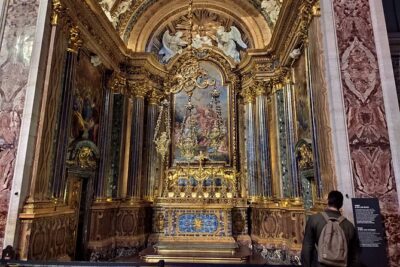
Inside, you’re looking at Baroque design with major stops that aren’t just decoration. The library, hospital, convent, and basilica are all part of the complex experience, and you can see Italian sculptures and marble referenced in the interiors. And the palace layout is its own story: the King’s and Queen’s quarters sit at each end, separated by 232 meters. That distance isn’t a trivia fact. It changes how the place feels—like a functional city organized around royal life.
If you like architecture, this is the moment to slow down. Mafra rewards attention. Look at how spaces relate to each other, and notice the range—from religious areas to educational and care functions. It’s not only a palace; it’s a self-contained system.
The gardens and grounds at Mafra: where the palace relaxes
Mafra isn’t only buildings. The complex includes the Cerco Garden, and there’s also the Mafra National Hunting Park as part of the larger setting. You’ll likely feel the shift when you step outside—less “royal interior” and more open space.
Even if you don’t spend forever wandering, it’s worth using a small chunk of time here. A palace day can get mentally heavy. Garden air and open views bring you back to Earth and help you enjoy Ericeira later without feeling wiped out.
Ericeira: seaside streets, surf culture, and real Portuguese coastal energy
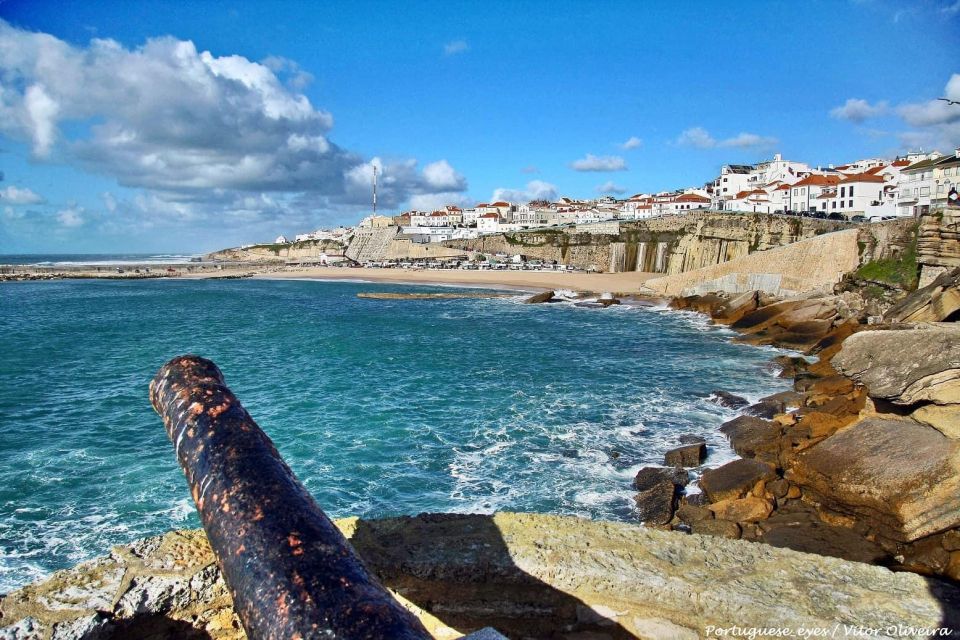
Ericeira is where the day turns from monuments to coastline. Located on Portugal’s western coast, Ericeira is known as the surfing capital of Europe. It’s credited with forty beaches, and it was declared a World Surfing Reserve. Even if surfing isn’t your thing, the town’s identity is shaped by waves and sea sports.
What I like about Ericeira for a tour day is the balance. You get cobblestoned streets and cultural character, but you’re not stuck in a museum loop. It’s the kind of place where you can walk, look, and eat seafood without needing a tight plan.
There’s also a history layer to the town’s appeal. Ericeira was a popular summer retreat for Lisbon families in the 1940s and 1950s. That helps explain why it feels like a lived-in coastal town rather than a theme-park version of one.
For food, lean toward seafood. The town’s reputation and the day’s timing point you there. And if you do want to watch surfers, you can usually build it into your walking route without it taking over the day.
Optional Queluz Palace: the Portuguese Versailles add-on if you have extra room
Some versions of this experience include an optional visit to Queluz Palace, often described as the Portuguese Versailles. If you like palaces that feel like theater sets, this is worth considering.
Queluz brings together three architectural styles: Renaissance, Baroque, and Neoclassical. That blend matters because you can see the evolution of design ideas, not just one style frozen in time. The gardens also get attention: French-style gardens with fountains by English artists, Italian statues, and a famous 18th-century tiled canal (described as a swimming pool).
There’s a strong royal backstory too. Queluz was the official residence of King John VI. You can also visit a room connected to King Pedro I of Brazil—where he was born and where he later passed away. That kind of historical specificity can turn a pretty palace into a more meaningful visit, especially if you enjoy understanding who lived where and why.
If your group likes variety—one palace with dramatic color plus another with different architectural grammar—this option can make the day feel fuller without adding a whole extra stop category.
Value and cost: is $141 per person a smart buy?
At $141 per person for 7 hours, this tour is priced like a private day tour that includes the main services you’d otherwise have to coordinate yourself. What’s included is the expensive convenience: pickup and drop-off, a live guide, water, Wi-Fi, and taxes and fees.
Tickets admissions and lunch aren’t included, which is important for budgeting. Palaces can add up fast, especially if you enter multiple sites. If you want a comfortable lunch, set aside extra money too. Still, the structure of the day can be good value because you’re paying for expert handling of the route and pacing across multiple major locations.
Where this feels especially worthwhile is if:
- You want a curated route without spending time planning transportation.
- You prefer a guide to help you prioritize what matters at Pena and Mafra.
- You want Ericeira as a real coastal break, not a rushed photo stop.
Who this tour suits best (and who should plan differently)
This tour fits you if you want a high-quality “Portugal highlights” day from Lisbon with minimal stress. It’s also a good choice if your group includes people with different tastes: palace lovers will focus on Pena and Mafra, while sea-walk fans will get a strong payoff in Ericeira.
It may be less ideal if you want a slow-paced day with long meals and lots of free time. The itinerary is dense by nature because it tries to hit three major destination types in 7 hours. If you’re the kind of traveler who needs downtime between attractions, you might feel the schedule, even with a private guide.
Should you book this private Sintra & Mafra with Ericeira day?
I’d book it if you want the classic arc of Sintra’s palaces, Mafra’s monumental Baroque complex, and Ericeira’s coastal soul—done in one organized day with pickup and a guide steering the plan. The strong point is focus: the day targets the biggest names and uses the time efficiently.
I’d hold off if admissions and lunch are likely to feel like added friction for your budget, or if you want a more relaxed itinerary with lots of unplanned wandering. In that case, you might choose fewer stops and give each one more breathing room.
FAQ
FAQ
How long is the private Sintra, Mafra, and Ericeira tour?
The tour lasts 7 hours.
Does the price include pickup and drop-off in Lisbon?
Yes. Pickup and drop-off are included, and the guide arrives about 10 minutes before the tour starts.
Are palace tickets and lunch included?
No. Tickets admissions and lunch (food and drinks) are not included.
What languages is the live guide available in?
The guide is available in English, Portuguese, French, Spanish, and Italian.
Is this tour a private group?
Yes. It’s listed as a private group.
What’s the cancellation policy?
You can cancel up to 24 hours in advance for a full refund.
Can I reserve and pay later?
Yes. The tour offers reserve now & pay later.