REVIEW · SINTRA
Private Tour Sintra, Cabo Da Roca E Cascais
Book on Viator →Operated by Fantastic Ride · Bookable on Viator
Sintra can feel like a movie set, but this route is more practical. You’ll hit Palácio da Pena, the Moorish Castle area, and the Unesco core of Sintra, then continue west to Cabo da Roca and seaside Cascais.
I especially like how the day is built around major “must-see” stops without pretending you’ll do everything at once. Two highlights for me are the Pena Palace viewpoint (that hilltop arrival changes the whole mood) and the Cabo da Roca cliffs—that dramatic mainland edge is a fast gut-check in the best way.
One thing to consider: a long day means timed entries matter. If you’re even a little late or the pace feels tight, you could lose some of your window—so plan to be ready when the guide calls your group.
In This Review
- Key points to know before you go
- Why this Sintra–Cabo da Roca–Cascais route makes sense
- Pickup, Wi‑Fi, and the private-minivan reality
- Moorish Castle: old walls, later Christian power, real ruins
- Pena Palace: why the hilltop matters more than the checklist
- Sintra village core: the UNESCO lanes between big sights
- Sintra National Palace: two chimneys, several room personalities
- Quinta da Regaleira and Monserrate: symbolism you can actually see
- Cabo da Roca: the westernmost mainland edge in 30 minutes
- Cascais promenade: from fishing village to royal summer town
- Boca do Inferno: waves, caves, and a name that fits
- Price and value: what $210.84 per person buys
- Guide quality matters more than people think
- Timing tips: how to pace a 9-hour day without burning out
- What to pack (and what to skip)
- Should you book this Private Tour Sintra, Cabo da Roca e Cascais?
- FAQ
- How long is the tour?
- What time does the tour start?
- Does the tour include pickup and drop-off?
- Is Wi‑Fi available during the tour?
- Are tickets to the palaces and attractions included?
- What places does the day include?
- Is there food included?
- What’s the cancellation policy?
Key points to know before you go
- Private-group comfort with onboard Wi‑Fi, so you can share photos and maps as the day moves.
- Pena Palace + Quinta da Regaleira give you two very different Sintra “wow” styles: royal Romanticism and garden symbolism.
- Cabo da Roca is quick but memorable, with big-sky cliff views over the Serra de Sintra coast.
- Cascais + Boca do Inferno balance classic town strolling with dramatic wave-and-rock scenery.
- Some museum/palace tickets aren’t included, so you’ll want to factor that into your budget and timing.
Why this Sintra–Cabo da Roca–Cascais route makes sense
This is one of those days that only works because the driving route is efficient. You start in Sintra, where the architecture and gardens are the headline, then you slowly pivot toward the coast. By the time you reach Cabo da Roca, you’ve already absorbed the inland story, so the cliff views feel like a satisfying payoff—not a random detour.
What also helps: you’re not doing this as a grab-bag of bus stops. You’re given a structured flow through the places that are hardest to stitch together on your own in one day—especially if you want pickup and a stress-free return to Lisbon-area lodging.
The tour’s private setup matters too. With your own group, your guide can adjust photo timing, pacing, and bathroom breaks without playing the schedule-whack-a-mole that group shuttles sometimes turn into.
You can also read our reviews of more private tours in Sintra



Pickup, Wi‑Fi, and the private-minivan reality
Pickup is part of the value here. You can be collected from your hotel, AirBnB, train station, airport, or Lisbon port (on agreement). That cuts down “getting there” time and keeps your day from starting with transit anxiety.
You also get Wi‑Fi on board. It sounds small, but when you’re moving between hill towns and coastal viewpoints, being able to check maps, review photo locations, or message family can genuinely reduce friction.
Also note the fine print in real life: this is a private tour, but it still runs in a minivan. So you’ll want to be ready for a day that’s comfortable, not silent. Expect some talk—good talk if you get a strong guide, and sometimes too much talk if the guide style isn’t your favorite. (I’ll come back to this in the guide-quality section.)
Moorish Castle: old walls, later Christian power, real ruins
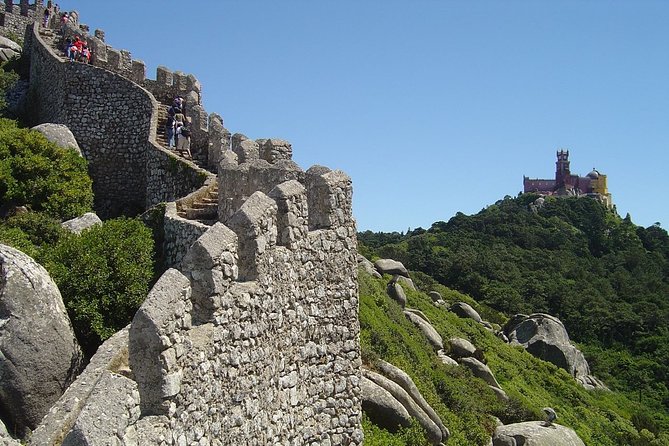
The Moorish Castle stop is a smart opener because it gives you context before you go full royal-palace mode. You’re looking at remains tied to early Moorish occupation of the peninsula, traced back to the 8th century.
The story layer is what makes it more than a pile of stones. After struggles over centuries, the site was taken by Dom Afonso Henriques in 1147. He’s tied to the shift toward Christian rule, including mention of the first Christian chapel in Sintra dedicated to St. Peter of Penaferrim.
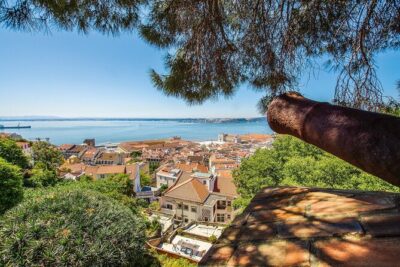
I like that the stop also touches the later restoration era—especially the 1860 work under Dom Fernando II, who restored walls and even wooded the surrounding areas. Inside the castle you can find the Moorish cistern and the Royal Tower, which gives you something concrete to look for even if you’re not reading every sign.
Practical tip: plan for a bit of uphill walking and uneven ground. Wear shoes you don’t mind getting dusty.
Pena Palace: why the hilltop matters more than the checklist

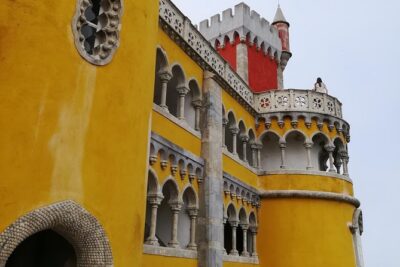
Pena National Palace is the big Sintra headline, and the hilltop setting is the point. The palace sits on Monte da Pena, built on the site of a former monastery. It was created after D. Fernando de Saxe Coburg-Gotha (who married Queen Dona Maria II in 1836) bought the convent and surrounding lands to create a summer palace.
This stop is built for about 2 hours, and tickets aren’t included. That’s important: you’ll want your timed entry handled smoothly so you don’t lose time hunting for the right line while you’re already on a full-day schedule.
What you’ll see tends to impress even people who usually don’t care about palace rooms. It’s the dramatic mix of 19th-century Romanticism and the view-facing layout. There’s also mention of a restaurant wing with a terrace view over the Sintra Mountains and out toward the coast. If the weather is on your side, this is where you slow down for a few minutes and actually take in the “Sintra = stage set” effect.
Potential drawback: because this is a top attraction, timing can be strict. If your group arrives late to the timed entry window, you may feel the squeeze. So be ready to move when your guide says move.
Sintra village core: the UNESCO lanes between big sights
The Centro Histórico de Sintra stop is shorter—about 30 minutes—but it’s not filler. This is your chance to step back from palaces and see the town itself as the UNESCO “frame.”
It’s described as moving from municipal heritage to world heritage, with buildings and remains spanning different periods and cultural movements. In plain terms: you’ll get the old Sintra vibe so the palaces don’t feel like isolated islands.
Since this stop is free and brief, treat it like a repositioning break. Grab water, use a quick restroom if you need one, and take a few photos of streets you can recognize later when you compare memories. Then you’re ready to go inside the royal palace that anchors the village story.




Sintra National Palace: two chimneys, several room personalities
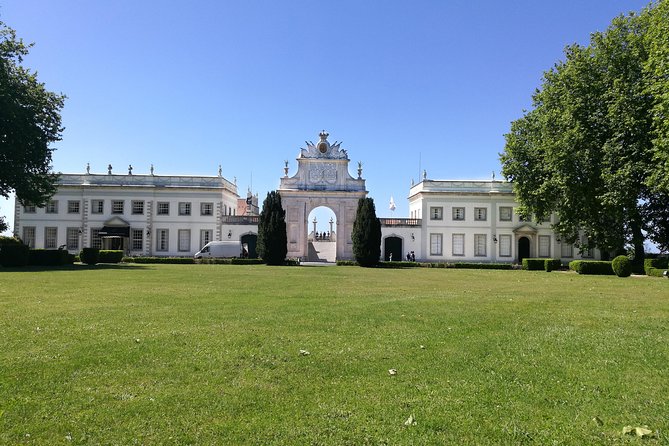
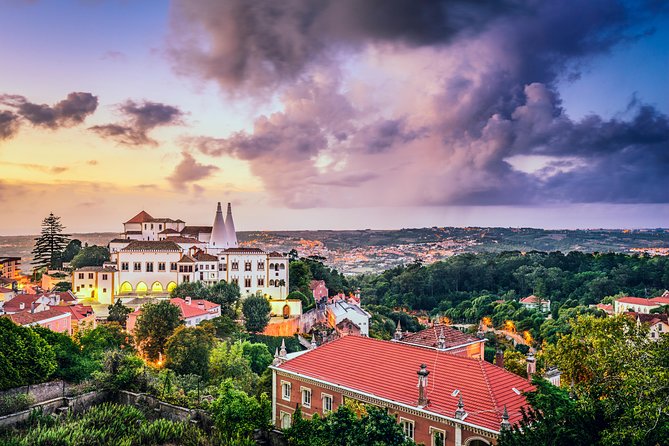
The Sintra National Palace is unique among Portuguese royal medieval palaces and it’s one of the most distinctive buildings in the village.
You’ll learn that Sintra was a royal favorite for kings and queens, but the palace you see today is tied to specific rulers. It’s connected to Dom João I rebuilding the palace and to Dom Manuel I enriching decoration and adding a new wing.
Inside, the rooms get named in ways that make it easier to track what you’re seeing. The tour style here helps you spot the decor themes rather than just walking through and hoping it sticks. Noted rooms include the Swan Room, the Armory Room, the Magpie or Reading Room, and a chapel.
Outside, the signature feature is hard to miss: the palace’s kitchen has two large conical chimneys measuring about 33 meters each. They’re now treated as Sintra’s symbol.
If you’re doing this day as a “best of,” this is the stop that keeps the day grounded. It ties the royal story together before the gardens and the coast start stealing your attention.
Quinta da Regaleira and Monserrate: symbolism you can actually see
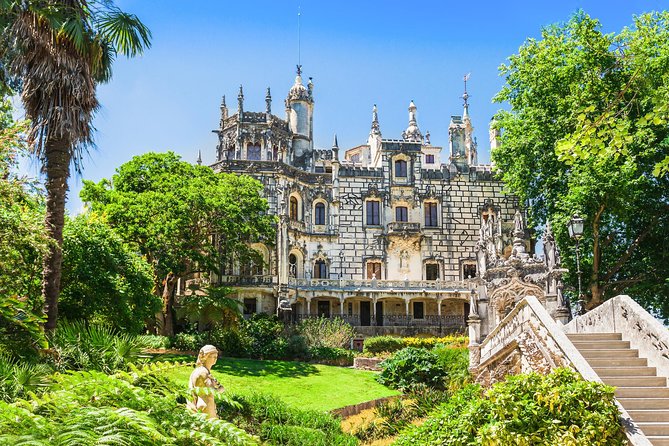
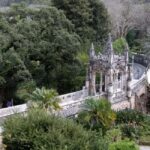
Quinta da Regaleira is where Sintra turns strange in a good way. It was built in the early 20th century by millionaire Antonio Augusto Carvalho Monteiro (1848–1920), with scenographic architect Luigi Manini. The setting is lush and close to the historic center, so it feels like an escape without the hassle of leaving the area.
Expect a romantic revivalist style that imitates Gothic, Manueline, and Renaissance forms, mixed with mythical and esoteric symbolism. The phrase “esoteric” can scare people off. Don’t worry—you don’t need to be an expert. You just need to notice the architecture and the way the site guides your movement.
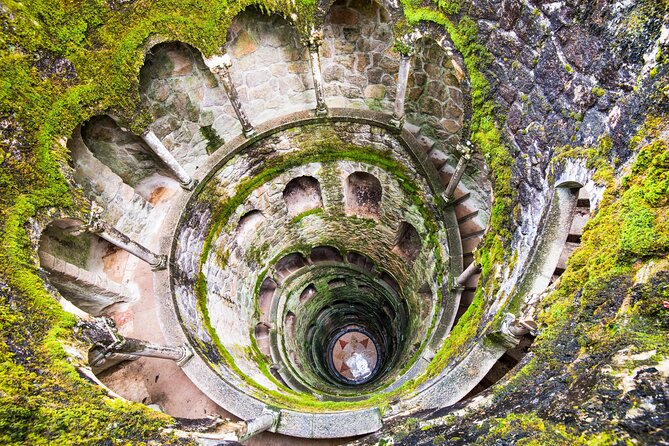
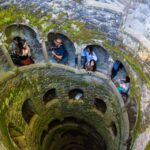
The standout is the Holy Trinity Chapel. You can take a spiral staircase down to the crypt to see the initiation pit, which leads through a cave to a lake hidden in the gardens.
This stop is about 2 hours, and tickets aren’t included. Since it’s not just a quick stroll, you’ll want to enter ready to walk and look slowly.
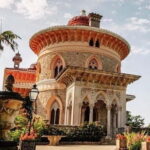
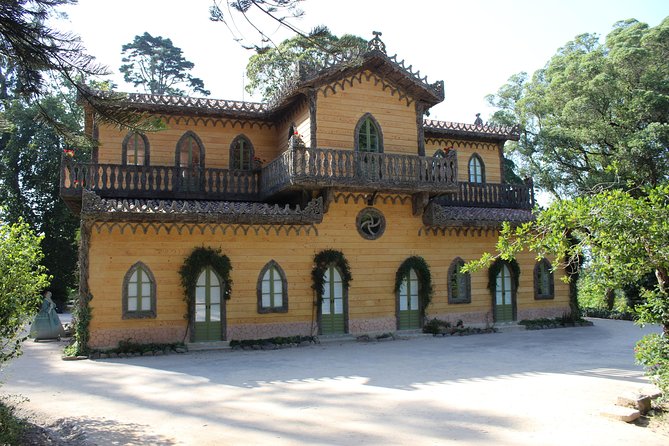
Also, your schedule includes Park and Palace of Monserrate. William Beckford is tied to the Romantic park’s creation after he fell in love with the Sintra Mountains. If time is tight, prioritize the park areas that give you the best views and easiest paths. If you’ve got energy, the park-to-palace pairing makes this part feel like two stops that rhyme.
Cabo da Roca: the westernmost mainland edge in 30 minutes

Then you go west.
Cabo da Roca is the westernmost point of mainland Europe, sitting around 150 meters above the sea. It’s also within Parque Natural de Sintra–Cascais, and it’s a key coordinate for sailors. Even if you’re not into navigation trivia, the latitude/longitude mention adds a fun sense of place: this isn’t just a viewpoint; it’s a named, documented location.
You’ll also hear about a 17th-century fort that guarded the entrance to Lisbon’s harbour, with a defensive coastal line during the Peninsular Wars. Today, only traces remain, alongside a still-important lighthouse.
The stop is about 30 minutes and is free. That’s about right. The place is powerful, but you don’t need an hour to understand it. What you do need: a clear moment for photos and a steady look at how the coast bends away.
Practical note: wind can be intense here. Bring a layer.
Cascais promenade: from fishing village to royal summer town
Cascais is the calmer counterweight to Sintra’s hills and Cabo da Roca’s raw coast.
You’ll start with its fishing-village past and the way it developed in the 14th century as an important port stop for boats heading to Lisbon. Then the timeline jumps to the second half of the 19th century, when sea bathing became fashionable and transformed Cascais into a summer resort.
A big turning point is Dom Luís I. In 1870, he converted the Fortaleza da Cidadela into the summer residence of the Portuguese monarchy. Nobility followed, building palaces and villas, which changed the town’s look fast.
The 1889 railway line between Pedrouços and Cascais also made the town easier to reach, helping it become lively and cosmopolitan while still keeping an aristocratic atmosphere.
What to do here with your time: walk the streets, pop into outdoor cafés, and treat seafood as a serious suggestion—not as a “someday” idea. Fresh fish and shellfish are a local specialty, and the town’s beach areas give you options if you want a shorter shuffle toward sand.
This stop is about 30 minutes and is free, so plan it as a quick town taste rather than a full beach day.
Boca do Inferno: waves, caves, and a name that fits
Boca do Inferno (Jaws of Hell) is a coastal inlet on the Costa da Guia, west of Cascais. It’s famed for the destructive impact of waves against steep rocky cliffs.
What I like about the site is that it’s explained in plain terms: the rock is carbonated, and erosion—rainwater containing dissolved carbon dioxide—helps dissolve carbonate. Over time, cavities and caves can form. Then layers collapse, leaving dramatic open cavities and cliff features.
When the sea is rough, the name becomes obvious. Waves rise into white foam for tens of meters and keep wearing down the rock. There’s even a historical note that an Englishman Henry Short filmed the scene in 1896, which gives you a sense that the power here isn’t a modern performance.
This is also a caution stop. The cliffs are dangerous and unprotected in places. You don’t need to be nervous; just keep your feet planted and follow any signage.
This portion is about 30 minutes and free. It’s one of those stops where you’ll see a lot from one vantage point—then you’ll want photos, then you’ll just stand and watch the sea for a while.
Price and value: what $210.84 per person buys
At $210.84 per person, the value is about time saved and coordination delivered.
You’re covering multiple major sights in one day: Moorish Castle area, Pena, Sintra’s village core, Sintra National Palace, Quinta da Regaleira (plus Monserrate park time), then the coast through Cabo da Roca, Cascais, and Boca do Inferno. Doing that efficiently on your own with smooth transfers usually takes more planning than most people want.
The included stuff helps: air-conditioned minivan, hotel pickup/drop-off, bottled water, Wi‑Fi on board, and taxes/handling. Tickets are not included, so you’ll still budget for entry fees—especially for Pena and Quinta da Regaleira.
Private tours are also a math game. If your group is small, you’ll pay more per person than a shared bus. If your group is a few people, the per-person cost starts to feel more reasonable compared with paying for separate transport and trying to line up timed entries yourself.
Bottom line: this tour is best when you want structure more than spontaneity.
Guide quality matters more than people think
Here’s the honest truth: this experience can be brilliant—or noticeably stressful—depending on the guide and driver approach.
In service feedback I reviewed, Jorge shows up with the kind of calm competence that makes the day feel easy. One write-up credited him with walking guests into Pena Palace smoothly, handling practical logistics, and even arranging something like a lunch reservation plus weather prep with umbrellas. Another guide named João (John) was praised for being flexible, warm, and able to manage requests like photo stops without turning the day chaotic.
Miguel also received strong notes for friendly, informed guiding and safe driving.
On the flip side, one negative account described major problems: late pickup, an unclean van, erratic driving, unanswered WhatsApp calls when timing slipped, and uncomfortable conversation topics. Another mixed account said the guide felt overwhelmed and complained about traffic and parking, leading to a rushed feeling and an older van.
So here’s how you protect yourself:
- If timed entries matter to you, be ready to move fast and confirm your exact return plan for each stop.
- Go in with clear expectations: this is a full day with lots of driving and walking.
- If you’re sensitive to conversation styles, tell your guide early that you prefer history and logistics over personal topics.
Most days will feel smooth with a strong guide, but your mindset helps either way.
Timing tips: how to pace a 9-hour day without burning out
This is a long loop. Even with the structured stops, you’ll be walking uneven terrain, climbing some stairs, and spending time outdoors by the coast.
To make the day feel better:
- Bring a light layer for wind at Cabo da Roca and Boca do Inferno.
- Use the short town stops (Sintra Centro and Cascais Centro) strategically: water, restroom, photos.
- Wear comfortable shoes. The itinerary includes walking areas around castles and gardens, plus time outdoors.
Also, start at the given 9:00 am time. If you show up flustered, the day punishes you—because the timed sites can’t be bullied into being slower.
What to pack (and what to skip)
You don’t need a huge day pack. Just don’t arrive unprepared.
Bring:
- Comfortable walking shoes
- A light jacket or layer
- Phone power (you’ll use Wi‑Fi, cameras, and photos)
- A small water bottle even though bottled water is included
Skip heavy expectations:
- Don’t plan to linger forever at every viewpoint.
- Treat this as a “see the big things and connect the dots” day.
Should you book this Private Tour Sintra, Cabo da Roca e Cascais?
Book it if you want one guided day that hits the essentials of Sintra’s UNESCO palaces and then swaps in the coast drama at Cabo da Roca and Boca do Inferno. This tour is a strong choice for people who hate logistics—pickup, routing, pacing, and the timed-entry headache.
Skip it or at least rethink the timing if:
- You’re extremely sensitive to delays or rushed palace entries.
- Your group needs long beach time in Cascais.
- You prefer self-paced wandering over a structured route.
If you do book, I’d choose it with one mindset: show up ready to move, and you’ll walk out with a day that feels like Portugal’s greatest hits—without the stress of stitching it all together yourself.
FAQ
How long is the tour?
It runs about 8 to 9 hours.
What time does the tour start?
Start time is 9:00 am.
Does the tour include pickup and drop-off?
Yes. Pickup is offered from hotels, AirBNBs, the train station, airport, and Lisbon port (on agreement), with drop-off included.
Is Wi‑Fi available during the tour?
Yes, there is Wi‑Fi onboard.
Are tickets to the palaces and attractions included?
Tickets are not included. The itinerary notes admission tickets for Pena National Palace and Quinta da Regaleira are not included, while some stops like Cabo da Roca and Boca do Inferno are free.
What places does the day include?
You’ll visit Sintra highlights (including Moorish Castle, Pena Palace, Sintra National Palace, and Quinta da Regaleira) plus Cabo da Roca, Cascais historic areas, and Boca do Inferno.
Is there food included?
No. Food and drinks aren’t included.
What’s the cancellation policy?
Free cancellation is available up to 24 hours in advance for a full refund.