
REVIEW · LISBON
Passeio Privado de Lisboa
Book on Viator →Operated by walkborder · Bookable on Viator
Lisbon is easier when someone else handles the route. This private day tour gives you flexibility with a local guide, plus the comfort of a dedicated vehicle and pickup from your hotel or chosen spot. You’re not stuck in a rigid schedule, so you can slow down for viewpoints, linger for photos, or simply adjust based on your mood.
Two things I really like: the private, fully flexible format (you set the pace), and the way the guide turns neighborhoods into stories you can actually use while you explore. One possible drawback to plan for: you’ll pay separately for some monument entry (the cathedral and Jerónimos-related stops aren’t included), so your final budget depends on what you choose to go inside.
If you want a smooth first day in Lisbon that still feels local, this is a strong fit—especially if you’d rather avoid the language-friction of asking for directions on a packed walking route.
In This Review
- Key highlights you’ll feel immediately
- A private, flexible Lisbon day that lets you set the pace
- What you’re paying for: value beyond the sticker price
- Pickup, comfort, and a guide who actually explains
- Parque das Nações: Lisbon after Expo 98, built for everyday life
- Alfama: the oldest Lisbon streets and why fado feels inevitable
- Lisbon Cathedral and the story of St. Anthony’s beginnings
- Baixa, Rossio & Restauradores: the 1755 earthquake you can see in the streets
- Parque Eduardo VII views and the Tejo at Belém
- Jerónimos and Pastéis de Belém: iconic stops, known costs
- Who this tour suits best (and who might prefer something else)
- Should you book this private Lisbon tour?
- FAQ
- How long is the private Lisbon tour?
- Is this tour private or shared?
- Do you get hotel pickup and drop-off?
- Can I choose the start time?
- Are monument entry tickets included?
- What’s included in the tour price?
- Is there anything provided for children or bad weather?
- Is cancellation free?
Key highlights you’ll feel immediately
- Private and fully flexible: choose your start time and shape the day to your interests
- Hotel pickup and drop-off: less stress, more sightseeing time in the city
- Real local guidance: you get context that makes sights click, not just checklists
- Lisbon at your pace: modern districts to old alleys, with stops spaced for comfort
- Comfort included: an extremely comfortable vehicle, Wi‑Fi, and bottled water
- Family extras: child seats and rain hats are available
A private, flexible Lisbon day that lets you set the pace
For a first trip to Lisbon, the big problem isn’t seeing too little—it’s trying to see too much. This is the kind of tour that helps you avoid that trap. You’re in control of the flow: you can pause, ask questions, and spend more time where you’re genuinely interested. That matters in Lisbon because the city changes fast. You can go from wide modern streets to steep, maze-like lanes in a short span of time.
The private format is also practical. No squeezing into a group photo line, no waiting for someone who needs one more coffee. It’s just your party, with a guide who can respond in real time. If you’re traveling as a couple, with family, or with friends, you’ll likely appreciate that the guide can tailor small details—like what to look for from a viewpoint or what order makes sense for easier walking.
The other nice bonus is language help. Lisbon’s history is everywhere, but so is the chance of getting turned around when you’re trying to ask for directions. Having a guide along means you can ask in plain terms and get an answer that matches what you actually need at that moment.
You can also read our reviews of more tours and experiences in Lisbon.



What you’re paying for: value beyond the sticker price

The price is $254.50 per person for about 8 hours. On paper, it may sound like a premium. In practice, you’re paying for a few things that add up quickly in Lisbon: private transport, a licensed guide, and time savings from hotel pickup and smooth routing between neighborhoods.
Here’s how to think about value:
- If you would otherwise hire a taxi for long stretches and still want a guide’s context, the private tour can feel like a cleaner deal.
- If you’re a group (and group discounts apply), the per-person cost typically makes more sense.
- You’re also getting small included comforts—Wi‑Fi and bottled water—that keep the day from feeling like constant logistics.
Just keep one budgeting note in mind: monument entrances and meals are not included. Some stops are free to enter, and some aren’t. That means your total “trip cost” depends partly on how many sights you choose to go inside during the Jerónimos and cathedral-related moments.
Pickup, comfort, and a guide who actually explains
A Lisbon day can be physically demanding if you’re constantly climbing and descending hills without a plan. This tour helps by starting and ending at your hotel or another chosen location. That matters because you lose less time in transit, and you arrive at each area with less hassle.
The vehicle is described as extremely comfortable, and the tour also includes Wi‑Fi and bottled water. Those sound like minor perks until you’re halfway through the day and you’re grateful for a place to cool off, check your photos, and recharge for the next stop.
The guide quality shows in the feedback. People praised punctuality, attentiveness, and deep local knowledge, with named guides like André and Carlos Souza specifically highlighted for making schedules feel smooth and information feel useful. That’s the kind of guide you want for a first-time visit—someone who can connect the dots between old quarters, rebuilding after disasters, and what Portugal’s maritime era left behind.
One more detail that’s genuinely helpful: you get mobile tickets. That usually means fewer paper headaches while you’re moving between sights.
Parque das Nações: Lisbon after Expo 98, built for everyday life
You’ll start in Parque das Nações, a district tied to Lisbon’s Expo 98 story. What I like about opening here is the contrast. You begin in a modern, planned area that’s easy to reach and easy to understand—then you gradually shift into the older, more winding parts of the city.
This neighborhood was born from urban change. After Expo 98 ended, the spaces that once hosted major event infrastructure were repurposed into cultural and business areas. The area’s scale is large—about 330 hectares—and it’s a good example of how Lisbon can reinvent itself. You’re not just looking at buildings; you’re watching the city grow up and modernize.
A practical win: Parque das Nações is directly linked to the train and metro system. Even if you’re only doing a single day tour, it’s useful to know this connection exists. Later, when you want to explore on your own, you’ll remember that transport link and you’ll feel less stuck.
Some things to watch for here are visual rather than dramatic: the planning, the newer architecture, and how the district supports daily use—offices, cultural spaces, and easy transit.
Alfama: the oldest Lisbon streets and why fado feels inevitable
Then you move into Alfama, Lisbon’s oldest neighborhood. This is where the city stops being tidy and starts being charming in a very physical way—narrow lanes, small rows of houses, and lanes that feel designed for getting lost. That’s not a bug. With a guide, getting turned around becomes part of the experience instead of a problem.
The guide context matters a lot in Alfama. You’ll learn how the area once functioned as a defensive system during the period when the region’s Muslim civilization shaped Portugal from the 8th century onward. Later, after the Christian reconquest, the story continues with how populations and culture shifted across nearby hills. It’s the kind of historical explanation that makes the present-day streets feel less random.
And then there’s fado. Alfama is presented as a birthplace of this music style, tied to a mood Portuguese people call saudade. Even if you don’t plan to hear fado live during your visit, you’ll understand why people associate this neighborhood with that strange, sweet melancholy.
What to do with this information? Slow down. Alfama is a walk-through museum, but it’s also a lived-in neighborhood. You’ll get more from it if you take your time, look up and down the lanes, and let the guide point out the details you might otherwise skip.
Stop length is around an hour, which is a good time window. You don’t need hours to feel the vibe, but you do want enough time to step into side streets without rushing.

Lisbon Cathedral and the story of St. Anthony’s beginnings
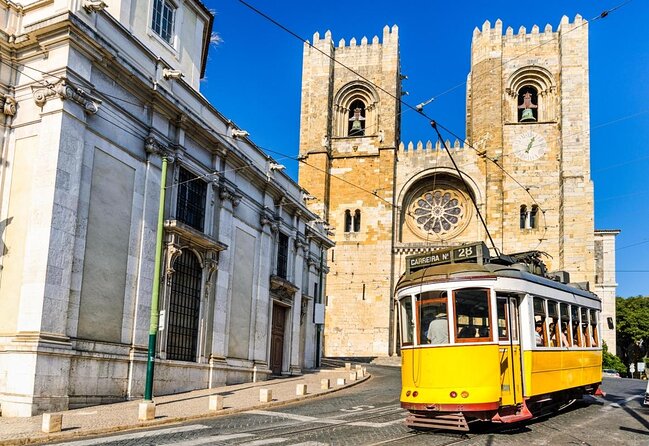
Next comes Lisbon Cathedral, centered on the story of Santo António (St. Anthony). The tour frames the cathedral area as built on the exact site associated with his birth. That detail is useful because it turns a church visit into something more personal: you’re not only looking at architecture; you’re standing near a point of origin.
The cathedral’s construction is tied to the 12th century and the era of D. Afonso Henriques, identified here as the first king of Portugal. If you’re curious why Portuguese history repeats certain themes—faith, reconquest, legitimacy—this is the kind of stop that gives you a real anchor.
One practical note: the cathedral admission is not included. If you want to go inside, expect an extra cost. If you’re aiming to keep spending predictable, you might treat this as a stop to understand from the outside and decide on entry once you’re there.
Baixa, Rossio & Restauradores: the 1755 earthquake you can see in the streets
You’ll then head into the heart of central Lisbon, often called the “Baixa,” plus Rossio and Restauradores. This stop is more than a walk through busy streets. It’s a tour lesson about how the city was rebuilt after the 1755 earthquake and how that changed Portuguese thinking, architecture, and public life.
What I’d plan for here is a “slow-and-look” mindset. After the earthquake, Lisbon’s rebuilding created wider streets and more open squares, and the design reflected a new approach to construction. You’ll hear about anti-seismic ideas tied to the 18th century, and the role attributed to Marquês de Pombal in reconstruction and social-economic change.
You don’t need to be an architecture nerd to enjoy this. The best payoff is mental. Once you understand that the street grid and building approach weren’t always like this, the city starts making sense. Even if you later explore on your own, you’ll notice the differences.
The time here is around two hours, which is smart. Central Lisbon moves fast, and you’ll want breathing room to take photos and process what you’re seeing.
Parque Eduardo VII views and the Tejo at Belém
After the historical center, the tour moves to elevation at Parque Eduardo VII. This is a “take a breath” stop. You’ll get a wide view of the city and learn about the relationship between Portugal and England through treaties and alliances.
This part of the tour also connects geography to explanation. The guide helps you understand Lisbon’s seven-hill reputation and why the “Baixa” name matters in relation to the city’s topography. And you’ll see the imponent statue of Marquês de Pombal, tied back to earlier earthquake rebuilding context.
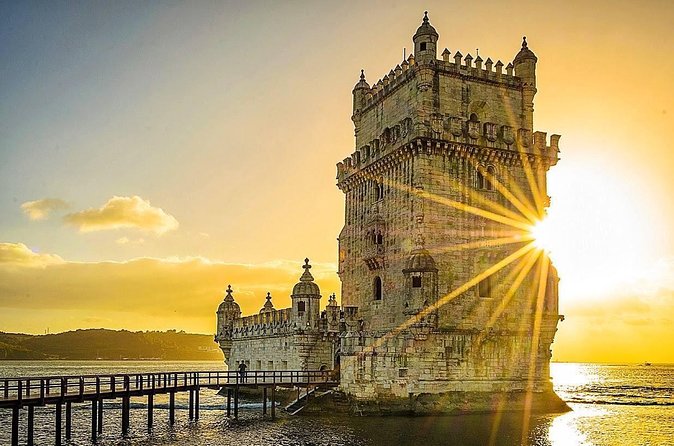
Then you head west toward Belém. Belém is presented as an essential Lisbon district, with historical monuments, museums, and attractive gardens along the Tejo estuary. This is where Lisbon’s maritime story becomes visible again. The tour ties Portuguese exploration in the 15th century to journeys toward India, Africa, and Brazil, and to the wealth that flowed back into Portugal.
If you like photos with water in the frame, this is your moment. Even if you don’t go inside museums, the district’s overall setting—the river edge, the historic atmosphere, and the monuments—helps you understand Lisbon’s role in the wider world.
Belém also receives about an hour in this plan, which is enough to get the main feel. If you want to go deeper with museums, you’d likely add extra time on your own.
Jerónimos and Pastéis de Belém: iconic stops, known costs
The final sequence centers on Mosteiro dos Jerônimos (Jerónimos Monastery). The tour presents it as a must-see from the 16th century and also connects the monastery area to monuments tied to explorers, with mention of the nearby Torre de Belém as part of the broader story.
Here’s the practical reality: entrances here are not included. If you want to go inside, factor that into your budget. The tour also includes a stop for Pastéis de Belém tasting, described as an obligatory moment in the experience. Pastéis de Belém is a famous pastry house associated with a long-running tradition, and it’s framed as part of the same historic vibe as Jerónimos.
That’s the key point: you’re not just eating a dessert. You’re pairing a famous flavor with a place that helped define Portugal’s “explorer era” identity.
The timing is about an hour for this final portion, so you’ll want to decide in advance how much of your hour you want to spend inside versus how much you want for the tasting and the surrounding viewing.
Who this tour suits best (and who might prefer something else)
This experience fits best if you:
- are visiting Lisbon for the first time and want a guided foundation
- prefer private pacing over a crowded group schedule
- want a mix of old Lisbon (Alfama), central Lisbon (Baixa/Rossio), and modern Lisbon (Parque das Nações)
- would rather have a guide explain why things look the way they do, instead of guessing on your own
It might feel less ideal if you:
- plan to spend lots of time inside many museums, since meals and monument entrances aren’t included and the day is timed at roughly 8 hours
- expect a fully walking-only style, since there’s vehicle transport and stops are designed for comfort rather than maximum foot coverage
Should you book this private Lisbon tour?
Yes—if you value clarity and comfort on a first visit. For the price, you’re getting more than sightseeing: you’re buying a guided day that helps you understand Lisbon’s layers in the order that makes sense. The flexible private format is especially worth it if your group has different interests, or if you know you’ll want to pause for photos, views, or questions.
Book it when you want the day to feel smooth and local, not rushed. Just remember to budget for monument entry and any food you choose beyond what’s stated as not included.
If you can tell me your travel dates and whether you’re going with kids or seniors, I can also suggest what to prioritize at each stop so your 8 hours feel perfectly matched to your style.
FAQ
How long is the private Lisbon tour?
It runs for about 8 hours.
Is this tour private or shared?
It’s private, meaning only your group participates.
Do you get hotel pickup and drop-off?
Yes. It starts and ends at your hotel or another location you choose.
Can I choose the start time?
Yes, you can pick a start time that fits your schedule.
Are monument entry tickets included?
No. Entrances are not included. Some stops have free admission, but others have admission you’ll need to pay separately.
What’s included in the tour price?
A credited guide, a private flexible tour format, an extremely comfortable vehicle, Wi‑Fi, bottled water, and mobile tickets. Meals are not included.
Is there anything provided for children or bad weather?
There are child seats available, and there are rain hats.
Is cancellation free?
Yes, you can cancel for a full refund if you cancel at least 24 hours before the experience start time.