REVIEW · LISBON
Fall in love in Lisbon!
Book on Viator →Operated by Lisbon Sight Sailing · Bookable on Viator
A sailboat turns Lisbon lights into something you can feel. I love the private, romantic pacing and the way the crew spot the best angles for photos and views. I also like the sparkling wine and fruit tasting, because it makes the whole thing feel like a real moment, not just sightseeing. The main drawback? The price is high for a group of up to two, so it’s worth booking only if a sunset sail is your top priority.
On this 2 hours 30 minutes trip, you float past major Lisbon landmarks along the Tagus with skipper Luís and steward Joana, plus a careful, safety-first approach on a large, comfortable boat. If you’re hoping to hop out and explore like a walking tour, this is not that kind of experience. You’ll watch and learn from the water instead—great for views, less ideal if you want lots of time on foot.
In This Review
- Quick hits before you book
- Why this Lisbon sunset sail hits so well
- How 2 hours 30 minutes works with Lisbon’s river views
- What you’ll see near the start: Discoveries Monument to the river stations
- Jerónimos Monastery and the river’s grand departures
- MAAT and the modern contrast you’ll appreciate later
- Alfama and the hilltop icons: São Jorge Castle’s real dominance
- Belém Tower and Bugio Lighthouse: Lisbon’s defensive edge
- The bridges and the line between Lisbon and Almada
- Cais do Sodré and the port’s shifting identity
- Lisbon’s river-built science and institutions you can spot from the water
- The cultural sweep: art museums, folk art, and old churches you can read from the deck
- The big rupture: 1755 earthquake and why Terreiro do Paço matters
- Christ-King monument and the Almada silhouette
- Safety, comfort, and how the crew makes it feel easy
- The tasting and the navigator certificate: romance with a practical edge
- Price and value: is $833.47 for two worth it?
- Who should book this, and who might prefer something else
- Should you book this sunset sailing trip?
- FAQ
- How long is the sunset sailing experience?
- Is this tour private, and how many people can be in the group?
- What’s included in the romantic tasting?
- What locations will I see during the sail?
- Is hotel pick-up or drop-off included?
- Can I change or get a refund if I cancel?
Quick hits before you book
- Sunset from the Tagus: you get a front-row seat to Lisbon’s changing light
- Private by default: only your group aboard, so the pace feels personal
- Skipper Luís and steward Joana: friendly, safety-focused, and tuned to the best viewpoints
- Romantic tasting included: Portuguese sparkling wine, fruit, and a sweet
- Landmark spotting all along the river: from Belém defenses to Alfama hilltop icons
- Navigator certificate: a fun keepsake for the trip
Why this Lisbon sunset sail hits so well
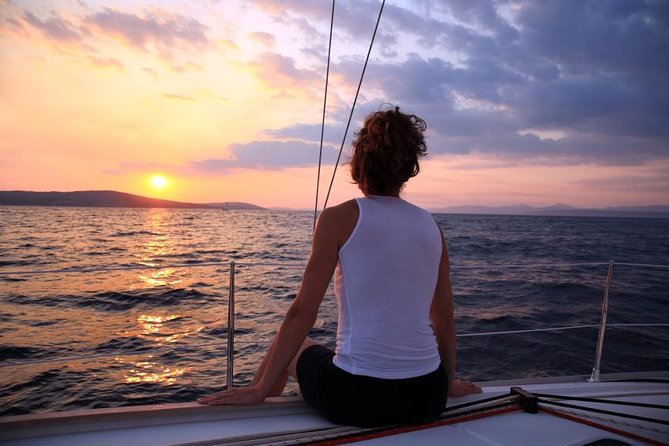
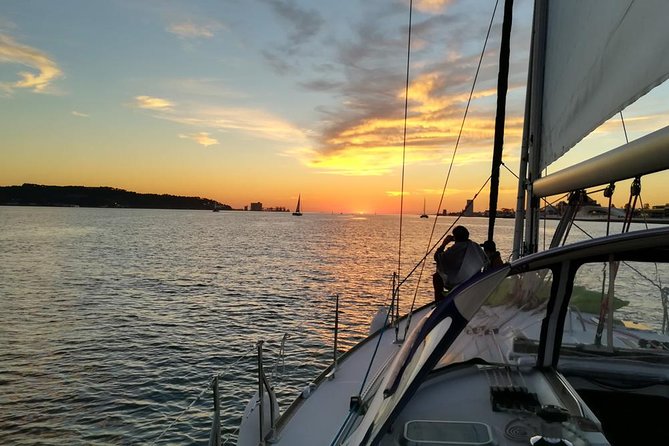
Lisbon is famous for sunsets, but from a sailboat the whole city behaves differently. The river slows you down, the hills look taller, and landmarks that usually crowd your photos suddenly have room to breathe. When the sun starts dropping, you don’t just see a view—you feel the temperature shift and the water turn mirror-smooth.
I also like that this isn’t a “grab photos and move on” style tour. You’re on a private boat with a crew that pays attention to safety details, including care around prevention norms. On a calm trip, it’s an easy kind of romance: sit back, look up, and let the river do the storytelling.
The boat itself matters, too. The experience described a large, safe, and comfortable ride, which is a big deal on open water, especially if you’re traveling with someone and want it to feel relaxed, not tense.
You can also read our reviews of more tours and experiences in Lisbon.


How 2 hours 30 minutes works with Lisbon’s river views
This trip is timed for the classic sunset window, but it’s still long enough to get more than one “wow” moment. You’ll spend the time cruising past key places on both sides of the Tagus, so you see how Lisbon’s identity stretches from maritime Belém to hillside neighborhoods.
And because it’s private, you’re not stuck waiting for other people to finish photos or arguing over where to point the camera. In a group of two, the crew can angle the boat for what you care about most—cathedral towers, castle viewpoints, bridge structure, or plain old horizon line.
What you should consider: since it’s sailing, you won’t be walking into museums or climbing castle steps. This trip is about sightlines, narration from the river, and that sunset hour when everything looks newly painted.
What you’ll see near the start: Discoveries Monument to the river stations
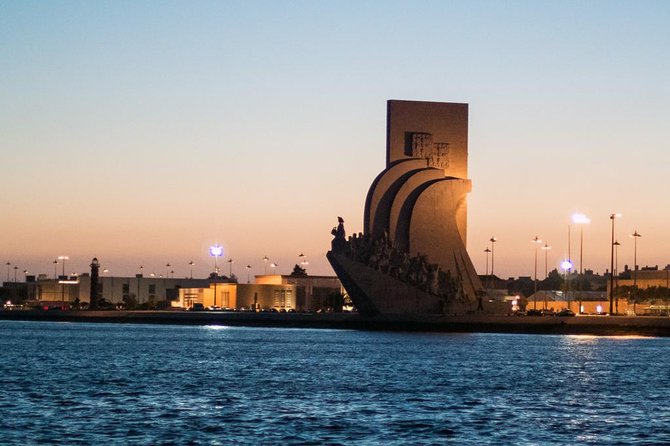
One of the first landmarks you’ll likely recognize from the water is the Monument of Discoveries. It’s built to resemble a ship, with a prow ending in a statue of Prince Henry, Henry the Navigator. Up close, the monument’s details are meant to be read like a timeline—figures tied to the Age of Discoveries, including Fernão de Magalhães, Luís de Camões, Pedro Álvares Cabral, and Vasco da Gama.
Cruising by, you get a sense of the scale without standing in the tourist crowd. It’s the kind of view that makes you understand why the Tagus mattered so much: ships, departures, and a city built around water routes.
Then you head toward the South and Southeast River Station at Commerce Square area. This spot is historical, tied to transport and river crossings. It was inaugurated in 1932, later renovated, and the latest renovation was completed in May 2021. From the water, it’s easier to see how the station sits as a gateway—less museum-like, more like Lisbon’s working shoreline.
Jerónimos Monastery and the river’s grand departures
Sailing near Jerónimos Monastery gives you one of the best “Portugal on a postcard” views, because the monastery sits in a powerful monumental setting along the Tagus. It’s a 16th-century Portuguese architecture masterpiece and a national monument.
Between the monastery and the river you’ll also encounter Empire Square, described as a place where Portuguese navigators departed. That detail matters. From the deck, you’re not just looking at a building—you’re looking at the coastline where movement began.
Possible drawback: Jerónimos can be visually busy from certain angles depending on light and traffic onshore. The fix is simple—lean into what the crew recommends. The value here is getting guided positioning, not trying to outsmart sunset geometry by yourself.
MAAT and the modern contrast you’ll appreciate later
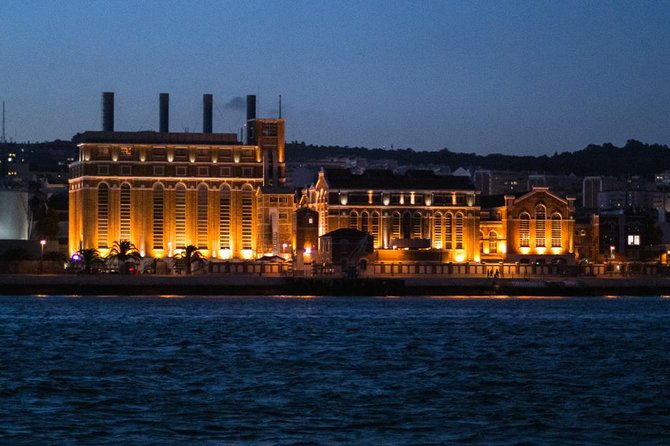
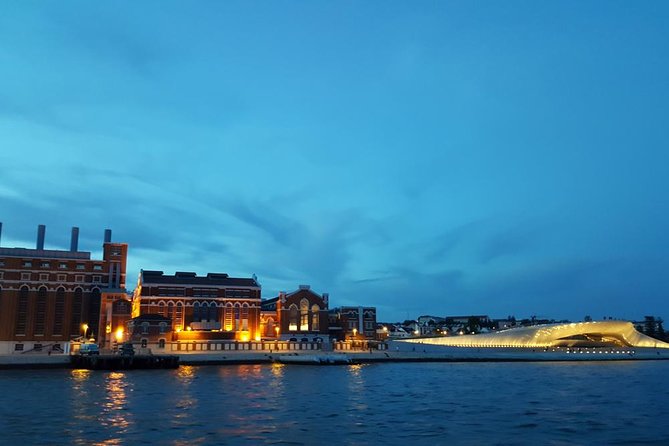
Not all the highlights are old stone. You’ll pass MAAT (Museum of Art, Architecture and Technology), opened in 2016 and designed by British architect Amanda Levete. It’s known for contemporary exhibitions and programs, and from the river it looks like a clean, modern counterpoint to the older monuments.
This stop works even if you’re not a museum person, because it breaks the “only medieval Lisbon” rhythm. You see how the city keeps reinventing itself along the waterline.
If you’re the type who likes to photograph different eras in one frame, this is one of your chances.

Alfama and the hilltop icons: São Jorge Castle’s real dominance
From the Tagus side, Alfama feels like Lisbon’s oldest self—narrow cobbled streets, colorful houses, and those slopes rolling down toward the water. It’s also the home of Lisbon’s musical culture and fado venues, though on the sailing trip you mainly get the neighborhood’s physical presence and the viewpoint it creates.
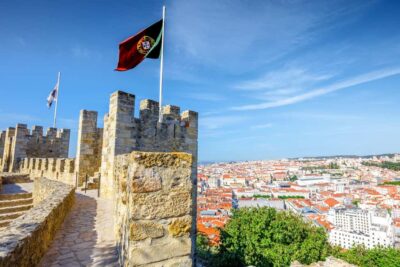
The big visual anchor is São Jorge Castle. It rises on a dominant hill in Lisbon’s historic center. The castle’s roots go back to the 10th and 11th centuries, when Lisbon was an important Muslim port city. In 1147, Portugal’s first king, D. Afonso Henriques, conquered the castle and city from the Moors.
From the deck, the castle reads like a landmark, not a climb. It’s a powerful reminder that Lisbon’s beauty isn’t flat—it stacks.
One practical note: if the sun is low, shadows from the hills can change the look quickly. That’s why the private setting helps—your crew can adjust the boat’s position so you’re not stuck with one harsh angle for the whole time.
Belém Tower and Bugio Lighthouse: Lisbon’s defensive edge
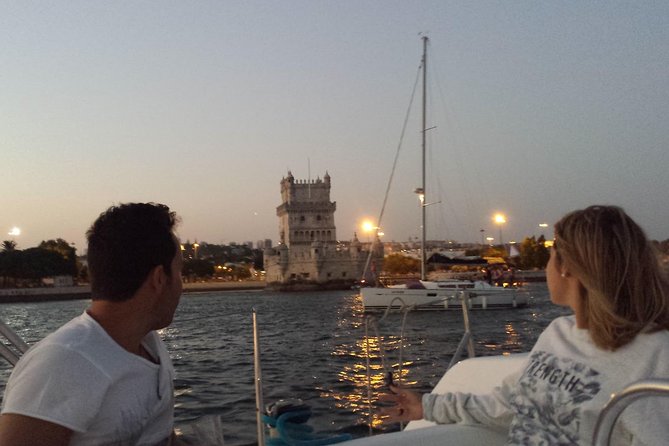
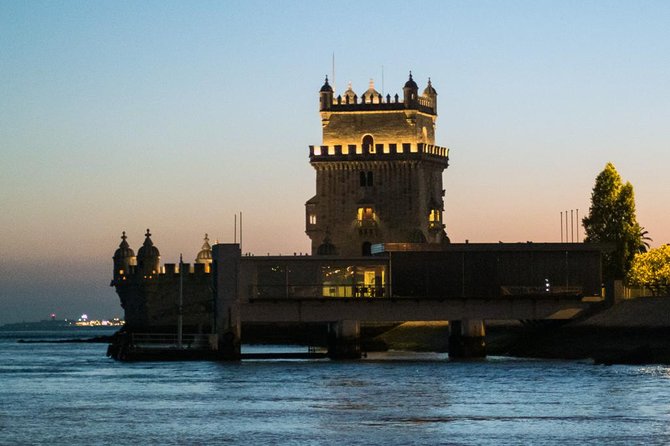
If Lisbon’s “romance” is the sunset, Belém is the “why the ships mattered.” The Belém Tower was built at the narrowest point of the Tagus estuary to defend Lisbon. It started as an island-like structure in water, and today it’s symbolically linked to land by a pedestrian bridge to preserve the original context. It’s been a UNESCO World Heritage Site since 1983.
Then there’s Bugio Lighthouse, standing on a sandbank at the mouth of the Tagus where rivers meet the Atlantic’s tides. It’s a historical and cultural monument, with distinctive architecture. From the water, a lighthouse feels less like a “photo stop” and more like a working piece of the maritime world—steady and slightly dramatic.
When you mix Belém’s defenses with the open horizon, you get a fuller view of Lisbon than the usual viewpoints from land.
The bridges and the line between Lisbon and Almada
You’ll also pass the “Portuguese Golden Gate Bridge”—officially called Ponte Salazar. It’s been compared to San Francisco’s suspension bridge because of similarities, and it was even attributed to the same North American company after more than 50 years of ideas and projects. Construction was faster than expected and cost less than anticipated, which is part of why it’s remembered.
This bridge connects Lisbon and Almada, so from the water it feels like a literal link between story chapters: old maritime Lisbon, then the modern city’s movement across the estuary.
Cais do Sodré and the port’s shifting identity
At Cais do Sodré, you see another Lisbon layer. Historically it was the “Port of Vessels,” with ships leaving for Portuguese colonies. Later, it became a bar-and-entertainment zone attracting sailors and adventurers.
From the Tagus, this kind of place reads as “more alive,” even if you’re not stepping into nightlife. You get that sense of ongoing motion—people, boats, and the river acting like a street.
Lisbon’s river-built science and institutions you can spot from the water
Some of the stops on this route feel unexpected, but that’s part of the fun. Central Tejo is a thermoelectric plant that supplied electricity to the Lisbon region. Built in 1908, it produced electricity from 1909 to 1972. It reopened to the public as the Electricity Museum in stages: first in 1990, then definitively reopened in 2006 after restoration.
There’s also the Champalimaud Foundation, created by António Champalimaud to support advanced biomedical research and interdisciplinary clinical care. It’s described as an institution known for excellence in scientific research, with more than 1,200 scientific articles and major awards.
Even if these are not your priority topics, they matter for two reasons. First, they show Lisbon didn’t only build monuments—people built systems. Second, they add variety to a sunset sail that could otherwise turn into only architecture watching.
The cultural sweep: art museums, folk art, and old churches you can read from the deck
The route you sail includes several cultural landmarks that help explain Portuguese art across centuries.
- National Ancient Art Museum: founded in 1884 in the former Palácio dos Condes de Alvor, with a collection covering more than 500 years and including sculpture, painting, goldsmithing, and decorative arts from Europe, Africa, and the Orient.
- Lisbon’s Folk Art Museum (FAM): its roots trace back to a pavilion for the Popular Life Section at the 1940 Portuguese World Exhibition, later transformed into a museum and opened July 15, 1948.
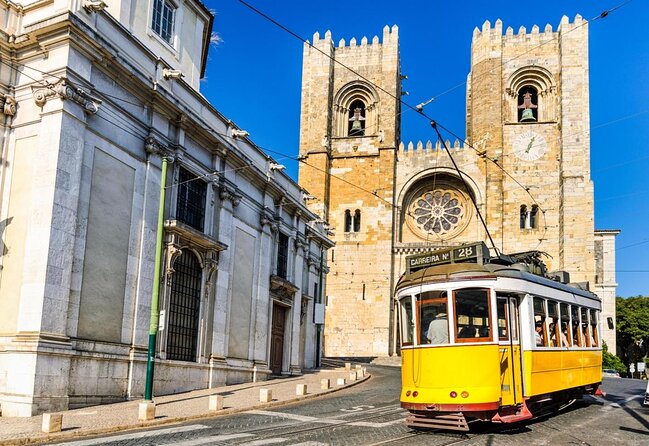
And you’ll also catch the spiritual and civic architecture angles, even if you never step inside. Lisbon Cathedral construction began in the second half of the 12th century after the city was conquered from the Moors, making it the oldest church in Lisbon. The Monastery of São Vicente de Fora, in Alfama near the National Pantheon and Feira da Ladra flea market, is another highlight, and the viewpoint from there is a draw in its own right.
The National Pantheon (Church of Santa Engrácia) is also in Alfama and known for panoramic views, with the remains of exceptional Portuguese people. From the Tagus, these religious structures give Lisbon that vertical rhythm: roofs, domes, and facades stacked against the sky.
The big rupture: 1755 earthquake and why Terreiro do Paço matters
Lisbon’s skyline is shaped by disaster as much as by ambition. The earthquake that destroyed Lisbon started around 9:30 a.m. on November 1, 1755, with massive collapse in downtown and hillside areas around Chiado. The reconstruction plans included the creation of Terreiro do Paço, a majestic square open onto the Tagus estuary.
From the water, Terreiro do Paço feels like the city’s way of saying: we rebuilt facing the river, not hiding from it. It’s a useful detail because it reminds you that Lisbon’s architecture isn’t just pretty—it’s the result of survival and rebuilding.
Christ-King monument and the Almada silhouette
As the sail continues, you may also spot Christ-King in Almada. The monument includes a 75-metre-high portico topped with the statue of the Most Holy Redeemer with open arms facing Lisbon. The pedestal brings the total height to 82 meters.
The story behind it is distinct: it was built to fulfill a vow from the Portuguese episcopate in 1940 asking God to free Portugal from participating in the Second World War. The country stayed neutral, and António Oliveira Salazar preferred to remain that way.
From the river, monuments like this read like a compass point on the skyline—big enough to make you understand you’re not only looking at Lisbon. You’re viewing a broader regional map.
Safety, comfort, and how the crew makes it feel easy
This is where the experience gets strong marks. The trip descriptions highlight that the crew is attentive to safety and the right norms on board. The boat is described as large, safe, and comfortable, with the crew careful and fun in a grounded way.
I take that seriously, because a sunset sail can go two ways: either it feels like a relaxed floating date, or it feels like nerves and fine print. Here, the emphasis is on calm control—so you can spend your energy on looking out at the water.
Also, when you’re paying for a private sailing experience, “soft service” counts. The tone matters. Friendly crew energy plus competence is what turns a good view into a memorable one.
The tasting and the navigator certificate: romance with a practical edge
The tour includes a romantic tasting: Portuguese sparkling wine, fruit, and a sweet to wake all the senses. Bottled water is included, and alcoholic beverages are part of the package. This is one of those inclusions that sounds simple, but it changes the mood.
Instead of bringing your own snacks and trying to time it with sunset, the tasting becomes a ritual. You can look up while you sip, and you’re not stuck rummaging or calculating.
You also receive a Lisbon Sight Sailing Navigator certificate. It’s a small thing, but I like small proof of experience—especially for couples who want something tangible after a private trip.
Price and value: is $833.47 for two worth it?
At $833.47 per group (up to 2), you’re paying for privacy, a crew, and a boat time slot designed around sunset light. That’s not cheap, and you should own that reality.
But here’s the value logic: a sunset sail is hard to replicate. You’re paying for (1) being on the water at the right time, (2) the crew’s ability to position the boat for viewing, and (3) the included wine tasting and keepsake. If you’d otherwise spend money on separate dinner plus a less personal boat experience, this can feel like a cleaner spend—one coordinated night with fewer moving parts.
I’d treat it as a “special occasion” item: anniversary, proposal season, or a first visit when you want one iconic experience that feels Lisbon-specific.
Who should book this, and who might prefer something else
Book it if you want romance and river views more than museum time. This is ideal for couples who like the idea of a private sail, plus anyone who enjoys structure and safety on the water.
You might choose another kind of tour if you’re expecting frequent stops on foot, long indoor visits, or deep time at specific monuments. This trip is designed for passing landmark after landmark from the deck, not for touring buildings room by room.
Should you book this sunset sailing trip?
If sunset is your priority, I think this one earns its place. The combination of a private boat, a careful crew (including Luís and Joana), and the included sparkling wine tasting turns the evening into a real experience, not a checklist.
If the price feels heavy, ask yourself a simple question: would you rather pay for a once-in-a-lifetime viewpoint, or try to piece together river sightseeing on your own? For many couples, the answer is yes—especially when you’re starting in Lisbon for the first time and you want one unforgettable hour on the Tagus.
FAQ
How long is the sunset sailing experience?
It lasts about 2 hours 30 minutes.
Is this tour private, and how many people can be in the group?
Yes, it’s a private tour/activity, and the group price is for up to 2 people.
What’s included in the romantic tasting?
You’ll get Portuguese sparkling wine, fruit, and a sweet, plus bottled water. Alcoholic beverages are included.
What locations will I see during the sail?
From the water, you’ll pass major Lisbon landmarks such as the Monument of Discoveries, Jerónimos Monastery, St. George’s Castle area viewpoints, Belém Tower, and more along the Tagus.
Is hotel pick-up or drop-off included?
No. Pick up and return are not included. The experience starts and ends back at the meeting point.
Can I change or get a refund if I cancel?
No. The experience is non-refundable and cannot be changed for any reason.
If you tell me your travel month (and whether it’s a first Lisbon trip), I can suggest the best way to pair this sail with the rest of your evening ashore.