REVIEW · SINTRA
Private Evening Walk Inside the Forest: “Sintra Mountains Inbetween Wolves”
Book on Viator →Operated by MIGUEL BOIM ESTEVES MARQUES · Bookable on Viator
Silence, then stories in the dark. I love the serra’s near-silence at dusk—wind, distant owl calls, and nothing else—and I love learning Sintra through Miguel Boim, a historian/writer who brings the past to life. The one real consideration: this is a night walk in the mountains, roughly 5 km on irregular terrain, so you’ll want solid shoes and comfort moving in the dark.
You’ll be picked up at Sintra Train Station about two hours before sunset, and you’ll start walking after the forest starts closing in around you. Expect a slow, thoughtful pace, scheduled stops for stories, and a sunset moment with the Atlantic Ocean visible in the distance.
Inside access to monuments isn’t part of the program, and the experience runs in “almost all weather,” so plan for cool, damp, and changing conditions. Also, since it’s a private activity for only your group, you’ll get that focused, ask-anything vibe without sharing the guide’s attention.
In This Review
- Key things you’ll notice right away
- The hook: why a forest walk in Sintra feels different
- Meet Miguel Boim: the historian behind the walk
- From Sintra station to the mountains: timing that matters
- Stop in the Sintra Mountains: a 5 km night circuit with real effort
- Sunset and the Atlantic: one of the best planned moments
- What you’ll do at the stops (and why they’re more than “breaks”)
- Practical logistics that actually affect your experience
- What to bring (so the forest night feels fun, not uncomfortable)
- Is it worth $137.57 per person?
- Who this walk is best for (and who may not love it)
- Should you book Sintra Mountains Inbetween Wolves?
- FAQ
- How long is the evening walk in Sintra Mountains?
- Where do I meet the guide, and what time does it start?
- How do you get to the walking area?
- Is this tour private?
- Do I need tickets or pay admission for monuments?
- What should I wear and bring for a night hike?
- What happens if the weather is poor?
Key things you’ll notice right away
- Miguel Boim’s storytelling style: historian perspective, specific spots on the route, and room for questions about Sintra’s heritage
- The night atmosphere: you’re walking under a black sky with stars overhead, guided through what you can hear and notice
- A real sunset viewpoint: you’ll time the hike so you catch light fading over the Atlantic in the distance
- A manageable but meaningful hike: about 5 km over ~4 hours on regular and soft irregular terrain
- Safety support: you’ll be given a safety vest so you stay visible in the dark
- No monument tickets required: the experience includes the walk and guide, not interior access to sites
The hook: why a forest walk in Sintra feels different
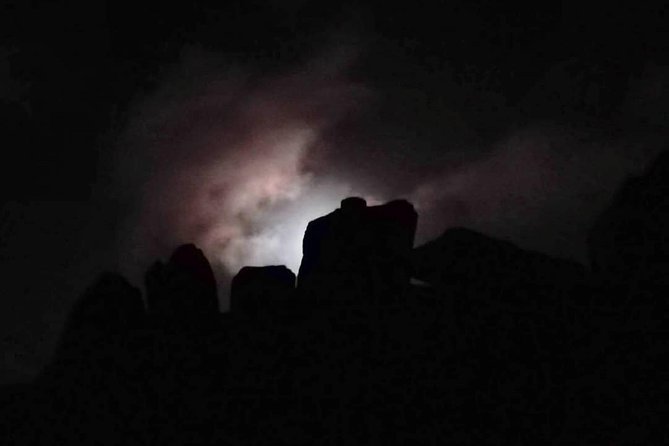
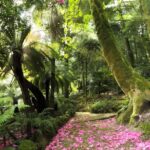
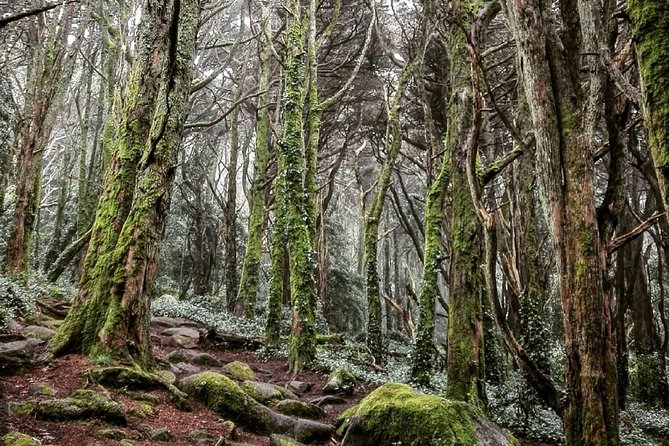
Sintra at night doesn’t feel like a “tour” in the usual sense. It feels like stepping into a slower world where the senses do more work than your phone camera. You’ll hear the wind moving through the trees and the night calls—especially owls—while the sky shifts from sunset colors to stars.
That quiet matters because it changes how you absorb information. Instead of rushing between attractions, you’re paying attention to place: the shape of the mountain, the movement of air, and the way the forest soundscape becomes a kind of background for the stories. The whole idea—walking “in between wolves,” in a dark, less-touched part of the Serra—leans into atmosphere, not sightseeing checklists.
I also like the practical structure. You’re not left to guess what’s going on. Your historian is directing you to specific points, then turning those moments into past-and-place context you can actually remember.
You can also read our reviews of more walking tours in Sintra
Meet Miguel Boim: the historian behind the walk
The biggest strength here is the guide. Miguel Boim is a writer and historian associated with Sintra Lendária (2nd edition), and he’s given lectures and speeches to over 12,000 people (as of 2018 data). That background shows up as confidence: he isn’t reciting random facts, he’s framing Sintra as a place shaped by stories worth hearing at night.
One useful detail: you’re not just listening. You can ask questions related to Sintra’s history and heritage at will. That makes the walk feel interactive in a calm way—like a conversation you’re having while the landscape does its nighttime thing.
From the way the experience is described, Miguel uses your environment as part of the teaching. You may notice hints of guided sound-play or sensory moments—some people even mention choosing to walk with eyes closed to heighten the experience. If you like learning that uses more than just visuals, this is your kind of format.
From Sintra station to the mountains: timing that matters
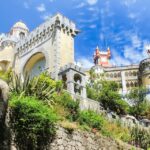
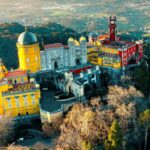
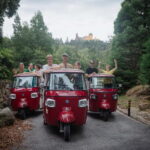
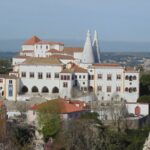
The schedule is simple, and that’s a good thing. About two hours before sunset, you’re picked up by car at Sintra Train Station. On the ride toward the starting area, you’ll get a distant view of major landmarks—Sintra Castle and Pena Palace—and you’ll watch the forest slowly take over the scene.
Why that matters: it gives you orientation before the dark starts. Sintra can feel visually chaotic in daylight, but at dusk you’re building a mental map while you still have enough light to recognize the mountain silhouette and the direction of the ocean.
Start time is 5:00 pm at the meeting point: Avenida Doutor Miguel Bombarda (Av. Dr. Miguel Bombarda, 2710 Sintra). You end back at the same meeting point after returning to the train station.
Stop in the Sintra Mountains: a 5 km night circuit with real effort
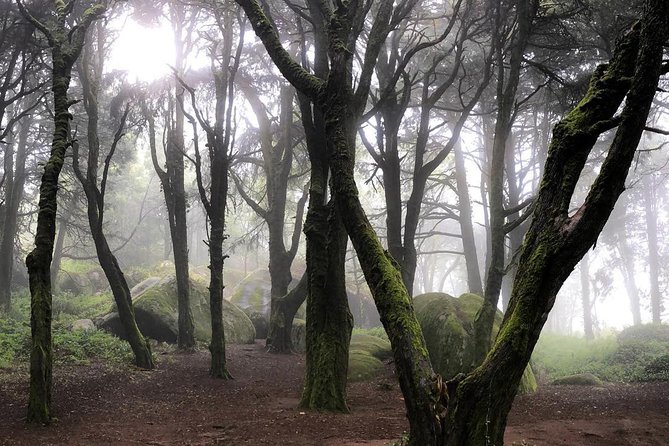
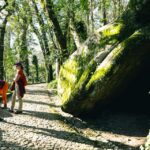
Once you’re out in the western part of the Sintra Mountains, the walk begins and the storywork follows. The core route is about 5 kilometers and takes around 4 hours total walking time, with pauses at specific points. The terrain is described as regular and soft irregular—so you’re not dealing with technical climbing, but you will be stepping on uneven ground.
The effort is comparable to strolling around Sintra’s Historical Center for an entire afternoon, with all the ups and downs that implies. That’s a nice benchmark if you’re trying to judge fitness: it’s not a gentle flat walk, and the darkness adds difficulty because you can’t rely on detailed visual cues.
You’ll spend time under the black arc of the sky, with stars overhead. Even if you’re not a “star person,” this part usually lands. Night hiking in Sintra becomes memorable because the landscape feels less like a postcard and more like a place that existed long before you arrived.
Tip for your comfort: wear shoes with good traction and bring layers. Since you’re outdoors for hours and the route runs under almost all weather conditions, you’ll feel it if you show up under-dressed.
Sunset and the Atlantic: one of the best planned moments
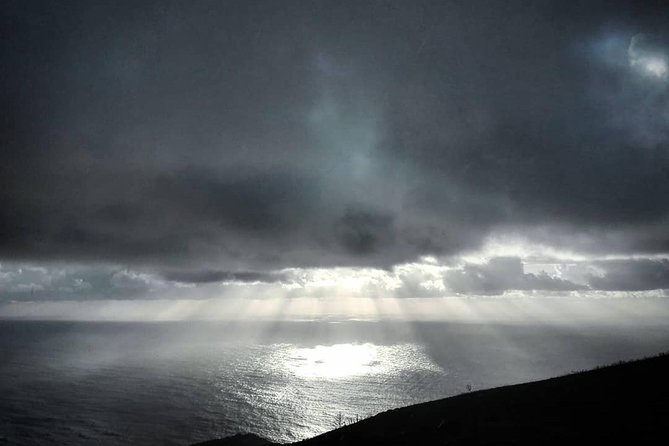
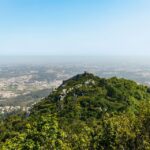
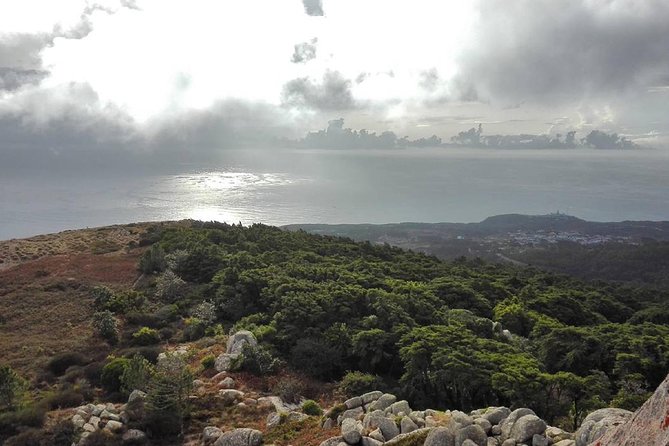
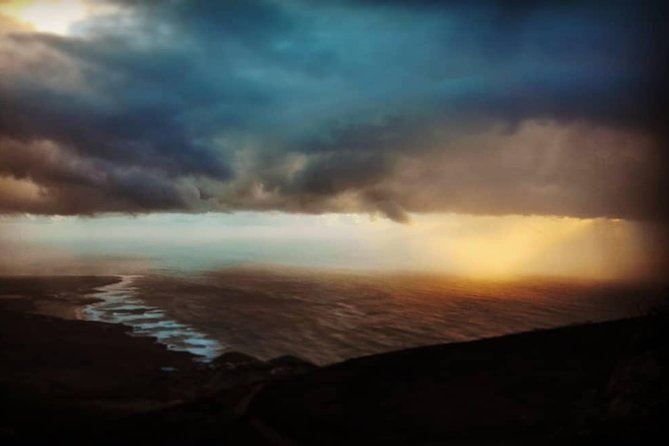
A standout feature is the sunset with the Atlantic Ocean in the distance. That detail is important because many Sintra experiences focus heavily on forest, ruins, and palaces, and skip the “where the mountains meet the ocean” feeling.
Here, the hike timing is built around the light. Since you’re picked up early and you start walking before sunset, you’re positioned to reach a viewpoint as the sky changes. The payoff isn’t just the view—it’s the moment of contrast: night starting in a forest while the sea horizon stays visible in the distance.
If you care about photography, this is where you’ll want to be mentally ready. Low light plus motion can make images tricky, but even simple phone photos often improve when you catch sunset first and then switch to slower, steadier shots once the stars show up.
You can also read our reviews of more private tours in Sintra


What you’ll do at the stops (and why they’re more than “breaks”)
The walk includes stopping at specific points where you’ll hear unusual tales and facts about Sintra’s past. These aren’t just rest stops. They’re cues for attention—where the historian connects what you see (or feel around you) to what happened here.
This format works well because it prevents the “floating narration” problem. Instead of hearing a history lesson while you’re still figuring out where you are, you’re being guided from one meaningful location to the next.
It also keeps the group engaged, especially on a long night schedule. Even for people who usually prefer practical info over stories, the point-by-point structure makes the listening feel tied to place.
And yes, the atmosphere can turn emotional or reflective for some people. Several accounts highlight peace and even a sense of challenge—like pushing past fear of darkness—while the stories and nighttime sounds create a protective, guided feeling.
Practical logistics that actually affect your experience
This is a private activity, meaning only your group participates. That matters more than people think. In a night walk, you want a guide who can manage pace, attention, and comfort without weaving around other groups. Here, you can keep a steadier rhythm and ask questions without feeling rushed.
You’ll also be given a safety vest so you’re visible in the dark. That’s a small detail, but it boosts confidence, especially when visibility drops quickly. It also helps your group stay together—no one gets “lost behind” when light is limited.
Included in the experience:
- Historian (Miguel Boim)
- Transport pickup from Sintra Train Station to the starting area
- Stops at specific points for history and tales
- Safety vest for visibility
Not included:
- Bottled water
- Inside access to monuments
One more practical note: smoking isn’t allowed. Also, the route can be altered for city council events, festivals, or constructions so participants aren’t affected while still enjoying a version of the experience.
What to bring (so the forest night feels fun, not uncomfortable)
Because the walk happens under almost all weather conditions, pack like it’s a cool outdoor evening, not a quick stroll. The guide info is clear that proper clothing and footwear are important.
Here’s what I’d plan around:
- Traction shoes for irregular ground (dark + uneven = slips happen)
- Warm layers (even if you start at 5:00 pm in mild weather, it can cool fast)
- A small personal item like a refillable water bottle, since bottled water isn’t included
- A light rain layer or wind protection if the weather turns
If you tend to get cold easily, don’t assume you’ll “warm up” from walking. The pace may be slow and story-based, and night air stays chilly.
Also, this is the kind of experience where you’ll benefit from letting your phone battery rest. When you’re listening to the wind and owl calls, you don’t want to spend the whole time checking a screen.
Is it worth $137.57 per person?
The price—$137.57 per person—can look steep at first glance. But for a private night experience in the Sintra Mountains, it’s easier to judge value when you break down what you’re actually paying for.
You’re paying for:
- A full-length guided hike (about 5 hours total)
- A named historian with specialized knowledge of Sintra
- Pickup and transport from Sintra Train Station
- Safety equipment (a vest)
- A guided route with planned stop-points rather than “walk and talk”
If you compare it to a standard group walking tour, the “private” part often costs extra. Here, that private focus helps in exactly the right moment: nighttime visibility, attention, and questions.
One more value point: admission tickets are listed as free, and interior monument access isn’t part of the plan. That means you’re not paying extra for sites you won’t actually be entering. You’re paying for the hike-and-story experience itself.
If you’re visiting with a small group and you want something more personal and atmospheric than palace-crowds, this price often starts to feel fair.
Who this walk is best for (and who may not love it)
This experience is described as suitable for most people, but night hiking has a personality. It’s best for you if you enjoy:
- Walking with a guide who explains place through story
- Quiet, sensory experiences (wind, owls, stars, nighttime soundscape)
- A challenge that feels gentle but real (5 km with ups/downs)
- Asking questions and getting direct answers from a specialist
It may not be the right match if you strongly dislike:
- Darkness and moving outdoors for hours
- Uneven ground, even if it’s not technical
- Cold or wet weather (since it runs in almost all conditions)
On the positive side, some accounts mention the walk working well even with teens, especially because the nighttime setting and the guide’s style make it feel like an adventure rather than a lecture.
Should you book Sintra Mountains Inbetween Wolves?
If you want Sintra without the usual rush, I think this is a strong choice. The combination of quiet forest, a named historian (Miguel Boim), and a sunset moment with the Atlantic in the distance makes the evening feel intentionally designed. It’s also the kind of experience where a guide’s voice matters, because the stories are tied to where you stand.
Book it if you:
- Want a memorable night atmosphere with a guided structure
- Like history that connects to specific places, not random facts
- Are comfortable walking about 5 km in the mountains at night
Skip it if you:
- Want daytime monument entry and ticket-based sightseeing
- Struggle with dark paths or uneven terrain
- Don’t want to dress for shifting night weather
FAQ
How long is the evening walk in Sintra Mountains?
The walk is about 5 kilometers and takes around 4 hours, with the full experience lasting about 5 hours total including pickup and getting back to the start.
Where do I meet the guide, and what time does it start?
You meet at Avenida Doutor Miguel Bombarda (Av. Dr. Miguel Bombarda, 2710 Sintra, Portugal). Start time is 5:00 pm.
How do you get to the walking area?
You’re picked up by car at Sintra Train Station about two hours before sunset and transported to where the walk begins.
Is this tour private?
Yes. It’s a private tour/activity, so only your group participates.
Do I need tickets or pay admission for monuments?
Admission tickets are listed as free, and inside access to monuments is not part of the program.
What should I wear and bring for a night hike?
Wear proper clothing and footwear suitable for night conditions and changing weather. Bottled water isn’t included, so consider bringing water yourself.
What happens if the weather is poor?
This experience happens under almost all weather conditions, except situations that may imply risks or safety warnings. If it’s canceled due to poor weather, you’ll be offered a different date or a full refund.