REVIEW · CASCAIS
Surf and Bodyboard Classes in Sintra
Book on Viator →Operated by Surf At Surf School · Bookable on Viator
Your first wave starts with calm coaching. Surf At Surf runs English-language surf and bodyboard classes along the Sintra/Cascais coast, using Praia das Maças and Praia de Carcavelos when the sea cooperates.
I like the 1 instructor for every 5 students setup because you’re not stuck watching while others get the attention. All the gear is included too, which makes it easy to show up and start learning. One thing to consider: start times can shift with tides and sea conditions, so treat your schedule as flexible.
In This Review
- Key things to know before you go
- Surf and Bodyboard Classes in Sintra, made simple
- What the class format means for your learning
- Praia Grande meeting point in Colares: arrive ready
- Stop 1: Praia das Maças and the basics that stick
- Stop 2: Praia de Carcavelos and putting skills under pressure
- Summer vs off-season timing: plan around tides
- Coaching for mixed levels: how they keep it fair
- Equipment included: the part that saves you trouble
- English-friendly instruction for faster confidence
- Praia days are weather-dependent: what that means for your plans
- Value check: is $41.40 per person a good deal?
- Who should book these surf and bodyboard classes
- Should you book Surf At Surf in Sintra?
- FAQ
- Where do the surf and bodyboard classes start?
- What beaches are used during the experience?
- How long is the experience?
- Are the lessons offered in English?
- What group size should I expect?
- Is equipment included?
- When do the classes run in summer?
- How do schedules work outside summer?
- What happens if the weather is poor?
- Can I get a refund if plans change?
Key things to know before you go
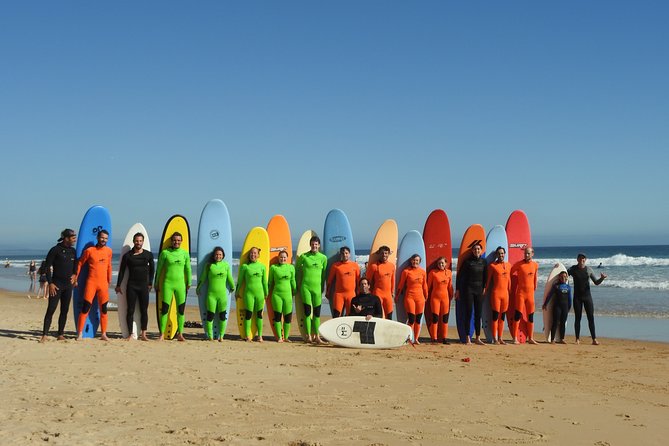
- Small-group vibe (max 10 travelers) keeps coaching practical
- Teacher-to-student ratio is set around 1 instructor for every 5 students
- All equipment included, so you only need to bring yourself
- Two beach options: Praia das Maças and Praia de Carcavelos
- Level-mixed instruction with special attention to different groups
- English offered for easier communication and faster learning
Surf and Bodyboard Classes in Sintra, made simple
If you’ve got limited time on the Sintra Coast, these surf and bodyboard classes are a clean way to get started without turning the day into a logistics project. You’re learning on real beaches (not a pool, not a demo-only session), and you’re doing it with enough attention that progress actually makes sense.
This is also a good choice if you’ve already tried surfing elsewhere and want a tighter, more technical feedback loop. The structure aims to match instruction to what your body can do right now, not what you wish you could do.
And yes, it’s aimed at different experience levels. That matters because the biggest frustration in group surf lessons is getting treated like a beginner when you’re not—or feeling lost when you are.
You can also read our reviews of more tours and experiences in Cascais
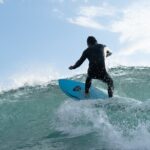
What the class format means for your learning
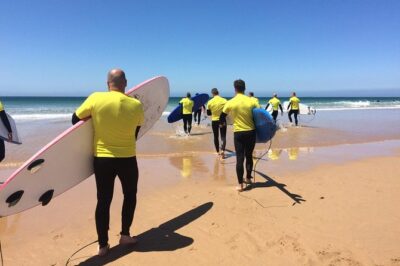
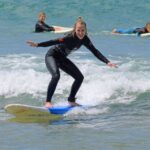
The class runs about 1h30 of actual lesson time, with an overall total around 2 hours including setup and movement. It’s a shared class, so you won’t get a private coach. But the school keeps the experience small: maximum group size is 10 travelers, and instruction is organized with roughly 1 instructor for every 5 students.
That ratio is the sweet spot for most people. It’s not crowd-control. It’s close enough that your instructor can spot what you’re doing wrong and correct it quickly, then help you try again.
It also explains why the teaching style feels structured. You typically get a warm-up, then basic instruction for the moves that matter most, and only then do you work on the ocean part. If you’re first-timer nervous about getting started, this pacing is a relief.
Praia Grande meeting point in Colares: arrive ready
You meet at Surf at Praia Grande, Av. Alfredo Coelho 41, 2705-329 Colares, Portugal, and the activity ends back at the same place.
Why that matters: Colares is set up for practical beach days. If you’re using public transportation, the meeting point is described as near public transport, so you’re less likely to spend half your trip stuck in a taxi.
Tip for making this smoother: show up a little earlier than you think you need, especially if you’re trying to change quickly, apply sunscreen, and get your gear sorted without stress.
Stop 1: Praia das Maças and the basics that stick
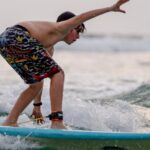
The first beach stop is Praia das Maças. This is where you’ll usually feel the learning curve. The goal is to get you comfortable enough that when you’re in the water, you’re not mentally wrestling your equipment.
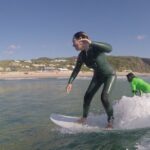
Even in a mixed-level group, the teaching is designed to keep everyone moving forward. You’ll get guidance on fundamentals—how to position yourself, how to handle the board/bodyboard basics, and what to focus on during your attempts. When instructors stay close and explain what to adjust, it’s faster than guessing.
A useful takeaway from how this type of coaching is described: you’re not just told what to do once. You’re coached through what’s happening in the moment—what’s good, what needs improvement, and how to correct it before you lose the pattern.
Possible drawback: Praia conditions can change quickly along this coastline. If the sea is rough or the timing isn’t ideal, the lesson flow may shift to keep everyone safe and learning effectively.
Stop 2: Praia de Carcavelos and putting skills under pressure
The second beach stop is Praia de Carcavelos. This is where you typically start applying what you practiced at the first beach.
Think of this as the “test run” stage. If you took the basics seriously, you’ll feel more confident stepping into the next set of attempts. If you were still getting oriented, Carcavelos gives you a chance to lock in the technique with continuing feedback.
This is also where bodyboard learners often appreciate the pacing. Bodyboarding has its own rhythm, but good instruction helps you line up with the waves rather than just hoping they’ll do the work for you.
Again, sea state matters. The whole approach is tied to what the ocean is offering that day. It’s not a fixed demo schedule. It’s an adaptive lesson plan.

Summer vs off-season timing: plan around tides
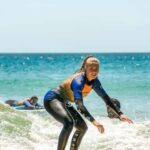
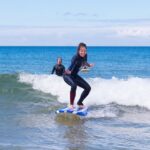
Class frequency depends on the season. During summer, classes run every day of the week at least twice a day. Outside summer, classes run once a day every day of the week and weekends.
Start times are also defined according to the state of the sea and the time of the tides. That’s a key detail. It means you’re not booking into one rigid slot where the conditions are guaranteed. You’re booking into a lesson framework that can shift for safety and learning quality.
For your travel planning, do this:
- Keep a bit of breathing room on your schedule.
- If you’re coordinating with other activities in Cascais/Sintra, avoid stacking things back-to-back on the same coastline hour.
If you get flexible with time, you’ll likely enjoy the class more, because you’ll spend less of the session thinking about clocks and more of it learning how to read waves.
Coaching for mixed levels: how they keep it fair
Surf and bodyboard groups often feel chaotic: one person is flying, another can’t stand up, and both get the same instruction. Here, the teaching is designed to prevent that.
The format is described as shared classes with special attention to different levels in each group. In practice, that usually means you’re grouped in a way that helps your instructor explain and correct the right things for where you are.
If you’re bringing kids, this kind of level-aware coaching matters even more. A calm, organized session reduces the stress factor, and it keeps energy positive even if someone is still learning how to get up.
If you’re an adult first-timer, mixed-level teaching can still work well. You’ll get basics, then guidance for improvement, and you’ll see others progressing, which helps motivation. Just don’t expect every moment to feel like a private lesson. That’s the tradeoff for affordability and group energy.
Equipment included: the part that saves you trouble
All the necessary equipment is included. That’s the kind of detail that quietly makes a big difference.
Surf gear can be pricey, heavy to carry, and annoying to pick up at the last minute. With this class, you show up and you’re provided what you need for your session. That helps you focus on the only goal that matters: learning.
If you’ve ever tried to rent a board on the same day as your first lesson, you know how much time that can steal. Here, the included equipment reduces the hassle before you even hit the sand.
English-friendly instruction for faster confidence
The lessons are offered in English. That matters if you’re trying to translate surf terms while also managing your stance and timing.
When communication is straightforward, you spend less energy decoding instructions and more energy practicing the corrections. It’s one of the main reasons surf lessons can feel either smooth or frustrating.
Even if you know a bit of Spanish or Portuguese, English support makes the session easier for most visitors coming through the Cascais/Sintra region.
Praia days are weather-dependent: what that means for your plans
This experience requires good weather. If it’s canceled due to poor weather, you’ll be offered a different date or a full refund.
That’s normal for surf coaching, but it’s worth planning for. If your trip schedule is tight, pick a day with some flexibility. Coastal weather can change fast, and surf schools adjust to keep everyone safe and learning effectively.
Also remember the tides and sea conditions can shift start times. So treat this as a lesson day, not a quick add-on.
Value check: is $41.40 per person a good deal?
The price is $41.40 per person for about 2 hours total (with roughly 1h30 teaching time). That price can be a strong value for a few reasons.
First, you’re not just paying for boards and time in the water. You’re paying for coaching with a structured ratio (around 1 instructor per 5 students). Most “cheap” surf rentals don’t include real instruction, and that’s where progress usually slows down.
Second, equipment is included. When equipment is bundled into the lesson fee, you avoid extra rental costs and the stress of finding the right gear.
Third, your session includes a progression arc: warm-up, basics, then more time to test what you practiced. That combination is what turns a beach outing into an actual learning block.
The main value risk is common to all shared surf lessons: you’re not getting one-on-one coaching. If you want maximum individualized attention, you’d look for private sessions. But for most people—especially first-timers and families—this setup is a smart balance.
Who should book these surf and bodyboard classes
This course is a good fit if:
- You’re visiting the Sintra/Cascais coast and want a practical activity that doesn’t require prior gear.
- You want a structured first step into surfing or bodyboarding.
- You like small-group instruction rather than a chaotic crowd.
- You’re traveling as a couple, group of friends, or family, and you want everyone to stay engaged.
It’s also described as suitable for most travelers. If you have mobility concerns, ask ahead about fit for your level, since the program is tied to real ocean conditions.
Should you book Surf At Surf in Sintra?
If you want an easy win—good instruction, included equipment, and a small-group feel—this is the kind of booking that usually pays off. The strongest reasons to choose it are the small max group size (10), the coaching ratio around 1 instructor per 5 students, and the fact that start times adapt to tides and sea conditions to keep the lesson usable.
I’d book it if your priority is learning fast without making the day complicated. I’d hesitate only if your schedule is rigid to the minute or if you’re looking for private-level attention.
If you’re planning a surf moment during your Sintra/Cascais stay, this hits a nice middle ground: serious enough to improve, relaxed enough to be fun.
FAQ
Where do the surf and bodyboard classes start?
They start at Surf at Praia Grande, Av. Alfredo Coelho 41, 2705-329 Colares, Portugal.
What beaches are used during the experience?
The class uses Praia das Macas and Praia de Carcavelos.
How long is the experience?
It’s about 2 hours total, and the class itself is 1h30.
Are the lessons offered in English?
Yes, the experience is offered in English.
What group size should I expect?
The tour has a maximum of 10 travelers, with instruction organized at about 1 instructor for every 5 students.
Is equipment included?
Yes. All necessary equipment is included in the class.
When do the classes run in summer?
During summer season, classes take place every day of the week at least twice a day (times vary based on sea and tide conditions).
How do schedules work outside summer?
Outside summer, classes take place once a day every day of the week and weekends, with times agreed based on sea conditions and class level.
What happens if the weather is poor?
If it’s canceled due to poor weather, you’ll be offered a different date or a full refund.
Can I get a refund if plans change?
Free cancellation is available up to 24 hours in advance for a full refund. If you cancel less than 24 hours before the start time, the amount paid is not refunded.