REVIEW · SINTRA
Sintra Walking Tour – The Portuguese Fairytale
Book on Viator →Operated by Hi Lisbon Walking Tours · Bookable on Viator
Sintra feels like a storybook trail. This 2.5-hour walk links some of the town’s biggest “Portuguese fairytale” sights into one logical route, with an English guide and a mobile ticket to keep things simple. You move from Moorish-era roots and Templar-style symbolism to 19th-century palace drama, then finish in the elegant Seteais area.
Two things I really like: the way the guide explains what you’re looking at, not just where it is, and the mix of major palaces with shorter city stops that make the whole day feel like more than a checklist. In one route, you get architecture styles stacked on top of each other, plus atmosphere in spots like Fonte Mourisca and a chance to taste Sintra’s famous queijadas.
One consideration: the big palace entrances are not included, so you’ll want to budget extra for admissions. Also, each stop is timed tightly, so if you want long, slow wandering inside buildings, you may need to plan a second visit later.
In This Review
- Key Highlights You’ll Feel on the Ground
- Why This Sintra Walk Works So Well
- Starting Point and the “Get Your Bearings Fast” Advantage
- Quinta da Regaleira: The Palace With Hidden Meaning
- Sintra National Palace: Moorish Roots and Mixed Styles
- Castelo dos Mouros: Fortress Walls and King Fernando II
- National Palace of Pena: 19th-Century Drama in Multiple Styles
- Camara Municipal de Sintra and Fonte Mourisca: Small Stops With Big Payoff
- Anjos Teixera Museum: The First Open-Air Museum in Portugal
- Casa Piriquita: Queijadas and a Royal Connection
- Igreja de Sao Martinho and the Lawrence Hotel Moment
- Valverde Sintra Palácio de Seteais: A Stylish Finish
- Price and Value: Why This Tour Can Be a Great Deal
- How to Prepare for a Smooth 2.5-Hour Fairytale Walk
- Who This Tour Fits Best
- Should You Book the Sintra Portuguese Fairytale Walking Tour?
- FAQ
- How long is the Sintra Walking Tour – The Portuguese Fairytale?
- Is the tour offered in English?
- Are admission tickets included for the palaces and castle?
- What is the maximum group size?
- Where does the tour start and end?
- Is free cancellation available?
Key Highlights You’ll Feel on the Ground

- Quinta da Regaleira symbolism: Templars, Rose Cross, Order of Christ, and Masonry references woven into what you see
- Big views and fort walls: Castelo dos Mouros built by Moors and refurbished in the 1800s by King Fernando II
- Pena’s style mash-up: Neo-Manueline, New-Gothic, Neo-Renaissance, and Neo-Islamic influences all in one palace
- Old-town breaks that matter: Neo-Manueline city hall, Moorish-style fountains, and a true first open-air museum
- Small group pacing: maximum 15 people keeps questions practical and the walk moving
- Weather-dependent route: the experience runs best in good conditions
Why This Sintra Walk Works So Well
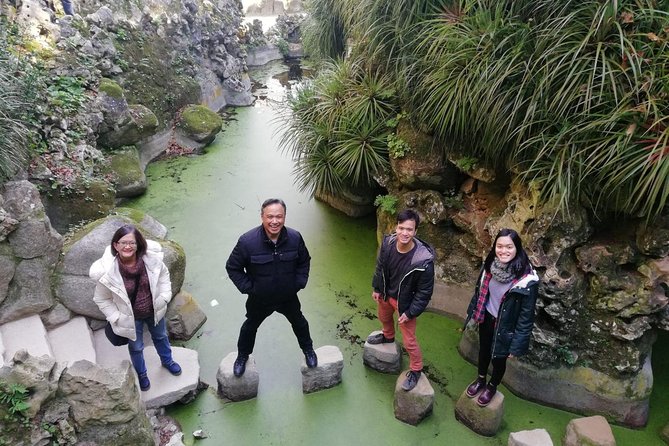
Sintra can be overwhelming fast. The town is packed with palaces, castles, and styled-from-different-centuries architecture, all competing for your attention. This tour’s strength is that it gives you a tight path through the highlights without turning your day into constant decision-making.
I like the pace because it’s long enough to make sense of the sites, but short enough that you’re not stuck in one place for hours. You’ll see the places most people come to Sintra for, then you’ll also get a slice of everyday town charm at stops like Casa Piriquita and the old parish church area.
And there’s another practical win: because it’s a walking format with a small group, you’re not waiting around for a big crowd to reorganize every time you turn a corner. If you’re the kind of visitor who likes to understand what you’re looking at while you walk, this fits well.
You can also read our reviews of more walking tours in Sintra


Starting Point and the “Get Your Bearings Fast” Advantage

You start in the Sintra area at Jardim Correnteza, on Alameda Combatentes da Grande Guerra 11. The tour finishes at Valverde Sintra Palácio de Seteais on R. Barbosa du Bocage 8, so it ends in the Seteais zone rather than back at the beginning.
That matters because Sintra’s sights are spread out and the routes can feel tricky. This direction gives you a clear flow through palace territory and back toward the elegant hotel-and-palace outskirts. If you’re trying to make the most of limited time, finishing at Valverde can be handy for planning what comes next after the 2 hours 30 minutes (approx.) tour.
Quinta da Regaleira: The Palace With Hidden Meaning
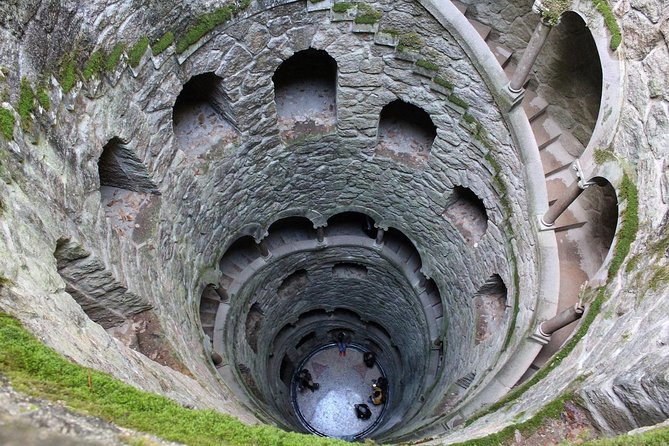
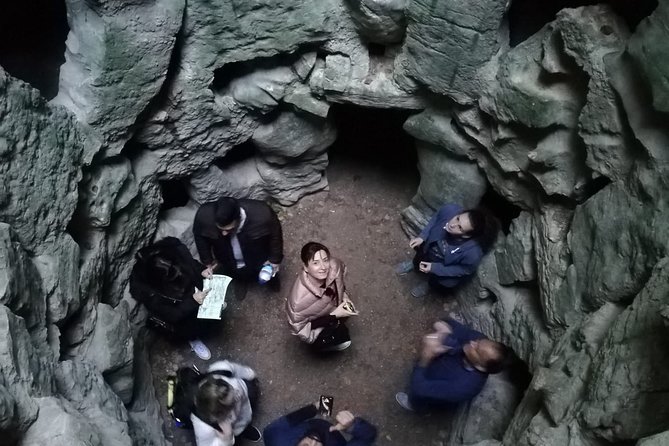
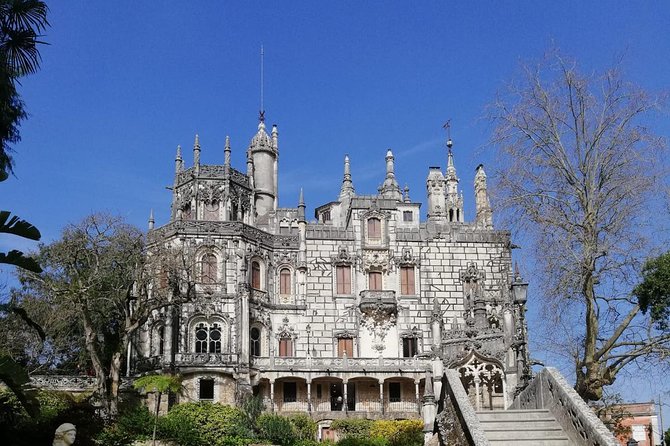
Quinta da Regaleira is where the tour turns from sightseeing into story. This is one of Sintra’s most incredible palaces, and it’s known for heavy symbolism and for the way the grounds are built like a world of passages and surprise.
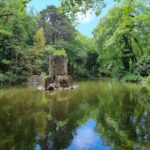
You’ll spend about 10 minutes here with key context that helps you read the place. The guide frames it through influences tied to the Templars, the Rose Cross, the Order of Christ, and Masonry, which gives you something to look for instead of just admiring shapes. You also learn how the massive property is covered with plants from all over the world, so it feels landscaped and staged rather than random.
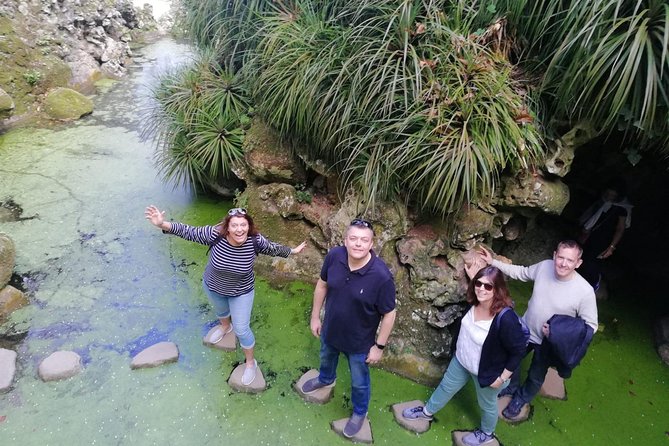
One more practical note: Regaleira’s gardens and tunnels can be easy to miss if you wander without a plan. You get the benefit of pointing out what connects where, which makes the property feel less like a maze and more like a designed experience.
Good to know: Admission is not included, so you’ll likely see parts of it from outside/where the tour routes allow, and then decide separately whether you want to go in with a separate ticket.
Sintra National Palace: Moorish Roots and Mixed Styles
Next comes the Sintra National Palace, the oldest palace in Sintra. It traces back to the Moorish rule, built in the 8th century, and it was a favorite of many Portuguese kings.
This stop is about 15 minutes, and it works best when you treat it like a quick architecture lesson. The tour highlights that the palace isn’t one-style only. You’ll hear about influences that include Gothic and Manueline, so you can recognize the idea of Portugal absorbing and reshaping styles over time.
A short stop like this won’t give you a full museum-style walkthrough. But it does give you a foundation: you leave knowing that Sintra’s palaces are not only pretty, they’re also historical layers.
If you love interiors: plan for extra time elsewhere or a return visit, since the admission ticket isn’t included and the tour time here is limited.
Castelo dos Mouros: Fortress Walls and King Fernando II
Castelo dos Mouros brings you back to the defensive side of Sintra. This castle was built in the 8th century by the Moors to protect the area, and it was later refurbished in the 19th century by King Fernando II.
You’ll have around 10 minutes at this stop, which means your focus should be on the bigger picture: why this location mattered and what the walls were built to do. With the guide’s framing, the place feels less like “just another castle” and more like a key piece of how Sintra stayed safe and strategic.
The castle also helps your whole day click. When you pair Moorish-era defensive structures with what you’ll see next at Pena, the contrast becomes part of the enjoyment. You’re seeing Sintra’s shift from protection to spectacle.
Watch your timing: short stop means you’ll want to take your photos early and then let the history context land while you’re still looking out across the area.





National Palace of Pena: 19th-Century Drama in Multiple Styles

If you want the classic Sintra moment, Pena National Palace is it. This is one of the most incredible palaces in Europe, built by King Fernando II in the 19th century, and it’s often described as a must-see.
You’ll spend about 15 minutes here, and the point of the stop is to understand what makes Pena so visually loud and intentionally mixed. The guide connects the palace’s look to influences including Neo-Manueline, New-Gothic, Neo-Renaissance, and Neo-Islamic styles. That “multiple styles at once” detail helps you avoid the common mistake of trying to label the palace as one neat style. It’s more like a design conversation across centuries.
It’s also considered one of the 7 wonders of Portugal, which is the kind of statement you should treat as a clue. The value isn’t the label; the value is that when you learn the stylistic sources, the palace’s choices become easier to appreciate.
Important practical point: admission is not included, so you’ll want to decide in advance whether you’re paying extra to go inside. If you do, you’ll likely want a little extra time beyond the tour to do it properly.
Camara Municipal de Sintra and Fonte Mourisca: Small Stops With Big Payoff
After the heavier palace and fortress stops, the tour shifts into the city. This is where Sintra slows down just enough to feel human.
You’ll see Camara Municipal de Sintra, the town hall, for about 5 minutes. It’s noted as a beautiful example of Neo-Manueline style, and even in a quick glance, it helps you notice that Sintra’s style isn’t only on palace walls. It’s in civic buildings too.
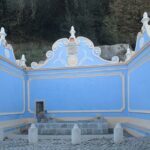
Then there’s Fonte Mourisca, a fountain built in the 20th century to remember the Moorish fountains of the Arabic world. That sounds like a small detail, but it’s a great example of how Sintra keeps reaching back for identity. In a short stop, it’s a photo-friendly moment and a concept-friendly one.
Both stops are brief, but they break up the heavy sightseeing so you don’t feel like you’re sprinting nonstop. They also make your route feel like a real day in Sintra rather than only palace-time.
Anjos Teixera Museum: The First Open-Air Museum in Portugal
One of my favorite “quick learning” stops is the Anjos Teixera Museum, about 10 minutes. It’s described as the first open-air museum in Portugal, and that fact alone tells you it won’t feel like a traditional indoor museum.
When you hit an open-air museum, the context changes. Instead of being guided by walls and lighting, you’re guided by placement—objects and art set into real public space. In this tour format, it’s the kind of stop that makes you slow down for a moment without needing long ticket lines.
If you like the idea of art and history living in the street-level world, this is a smart pause.
Casa Piriquita: Queijadas and a Royal Connection
Now you get the payoff for all that walking: Casa Piriquita, a small pastry shop that became famous for making queijadas for King Carlos I in the late 19th century, and it’s still in business.
You’ll have around 15 minutes here, which is a good chunk of time for a snack stop during a tight schedule. The best way to use this time is simple: buy what you want, taste it, then keep moving. Don’t turn it into a long lunch break, because you still have several stops left.
Even if you don’t care about pastries, this stop matters. It anchors the day in daily Sintra life. Palaces can start to blur together, but food is a memory you can carry with you.
Igreja de Sao Martinho and the Lawrence Hotel Moment
The tour continues with Igreja de Sao Martinho, where the parish of Sintra started to be built in 1147 after the conquest by King Afonso Henriques. Expect about 10 minutes, so it’s not about a long church interior visit. It’s about grounding Sintra’s timeline in a key moment: after conquest, a parish takes shape.
Right after that you’ll pass the Lawrence Hotel, noted as the oldest hotel in the Iberian Peninsula. You’ll have about 5 minutes at this stop, and it’s a quick historical wink. It connects Sintra’s transformation from fortified landscape to a place that invited visitors to stay.
This is how the tour stays interesting: it keeps switching the lens. Castle and church, then back to the story of how Sintra became a destination.
Valverde Sintra Palácio de Seteais: A Stylish Finish
You end at Valverde Sintra Palácio de Seteais after about 10 minutes. The building dates to the 18th century and now holds a luxury hotel.
Even if you don’t go in, finishing here makes a lot of sense. The route has taken you from earlier eras and defensive origins to palace spectacle and town charm. Ending at Seteais gives you a final atmosphere shift toward elegant hospitality.
It’s also a convenient landing point if you want to keep walking after the tour or if you’re heading back to your lodging. The tour ends right in the Seteais area, so you’re not left with a long “now what” moment.
Price and Value: Why This Tour Can Be a Great Deal
At $3.60 per person, this tour is priced like it’s meant to be accessible. That’s the headline, but the real value is what you get for that price: a professional guide, a route that covers major Sintra sights plus town stops, and an experience that keeps time tight and information focused.
The catch is that admission tickets are not included for the palaces and castle stops. So the value depends on how you plan to handle entrances. If you’re okay with a mix of exterior/context viewing and then paying separately where you want to go in, the low guide price becomes a big win.
Group size is also part of the value equation. With a maximum of 15 people, you’re more likely to hear details and ask questions without losing the flow.
If you’re doing Sintra on a tight schedule, this is one way to make the day make sense.
How to Prepare for a Smooth 2.5-Hour Fairytale Walk
You don’t need much, but small choices help. Wear comfortable shoes, because the route includes palace grounds, slopes, and the kind of street-level walking Sintra is known for. Bring a small water bottle, especially if the weather turns warmer.
Two planning tips that make a real difference:
- Decide before you go which palaces you’ll pay to enter. The tour doesn’t include admissions, so your budget needs to account for that.
- Treat the timed stops like highlights, not full visits. Each location is short by design, so use the time for photos and context, then follow up later if you want more.
Also keep in mind the experience requires good weather. If conditions are poor, you may be offered another date or a full refund.
Who This Tour Fits Best
This tour is a strong pick if you want:
- A guided overview that connects architecture and eras, not just directions
- A compact way to see major Sintra landmarks in one afternoon window
- A small-group walk where the guide can keep the story coherent
It may be less ideal if you prefer slow, deep exploring inside buildings. The tour time per stop is short, so you’ll either feel rushed or you’ll need to return on another day.
For couples, solo visitors, and anyone trying to organize Sintra fast, the format is practical. And for people who like learning while walking, it’s a good match.
Should You Book the Sintra Portuguese Fairytale Walking Tour?
Yes, with a smart expectation. If you want a guided, efficient route through Sintra’s signature palaces plus classic town stops, this is excellent value for the price. The guide-style storytelling makes the sights easier to understand, and that adds real satisfaction, even when your time inside buildings is limited.
Book it if:
- you’re trying to cover major Sintra highlights without getting lost in planning
- you want an English guide and a small group experience
- you’re willing to pay separate admissions if you want full palace entry
Skip or plan differently if:
- you hate short stops and want long, uninterrupted time inside each landmark
- you’re counting on the price to cover palace tickets
If you choose it right, this walk can turn Sintra from a confusing map into a clear, memorable sequence.
FAQ
How long is the Sintra Walking Tour – The Portuguese Fairytale?
It’s approximately 2 hours 30 minutes.
Is the tour offered in English?
Yes, the tour is offered in English.
Are admission tickets included for the palaces and castle?
No. The Quinta da Regaleira, Sintra National Palace, Castelo dos Mouros, and National Palace of Pena admissions are not included. Some city stops are free.
What is the maximum group size?
The tour has a maximum of 15 travelers.
Where does the tour start and end?
It starts at Jardim Correnteza, Alameda Combatentes da Grande Guerra 11, 2710-569 Sintra, Portugal. It ends at Valverde Sintra Palácio de Seteais, R. Barbosa du Bocage 8, 2710-517 Sintra, Portugal.
Is free cancellation available?
Yes. You can cancel for a full refund up to 24 hours before the experience’s start time. If cancellation is within 24 hours, the amount you paid is not refunded. The experience also depends on good weather, and poor weather may lead to a different date or a full refund.