
REVIEW · SINTRA PALACE
Sintra: National Palace and Gardens Skip-the-Line Ticket
Book on GetYourGuide →Operated by Distributor: GetYourGuide Tours & Tickets GmbH · Bookable on GetYourGuide
A thousand years of power sits behind one palace door. The National Palace of Sintra is a compact way to see how Portuguese royalty lived, rebuilt, and decorated their home—starting with an 8th-century Moorish fortress and stretching into Manueline and Mudejar design.
Two things I really like: the palace is beautifully preserved in a way that feels personal, and the interior tiles, arches, and courtyards with water features make you stop and look again and again. One drawback to plan for is that some sections may not be accessible on your visit day, so you’ll want a little time cushion.
In This Review
- Key things to know before you go
- Why the National Palace of Sintra feels different from the bigger royal sites
- Skip-the-line ticket and timing: how to avoid wasting your day
- Your self-guided route through 1,000 years of palace life
- Moorish-to-Manueline connections you can actually see
- Manueline and Mudejar courtyards, plus water features
- The audio guide and the new audiovisual portraits
- Gardens: worth it, but don’t let them steal your time
- Crowds, stairs, and practical comfort tips
- Price and value: is $15 a smart move?
- Who should book this, and who might want a different Sintra plan
- Should you book the Sintra National Palace Skip-the-Line Ticket?
- FAQ
- What time does the National Palace of Sintra open?
- How long should I plan for this visit?
- Does this ticket include skip-the-line entry?
- Is there an audio guide included, and what languages are available?
- Is a guided tour included with this ticket?
- Is the audiovisual journey included?
- What’s included in the ticket?
- What’s not included?
- Is this ticket refundable?
- How do I find the meeting point?
Key things to know before you go
- Skip-the-line entry helps you get into the palace faster, especially when Sintra gets crowded.
- 1,000 years of building history shows up in the architecture, not just on signs.
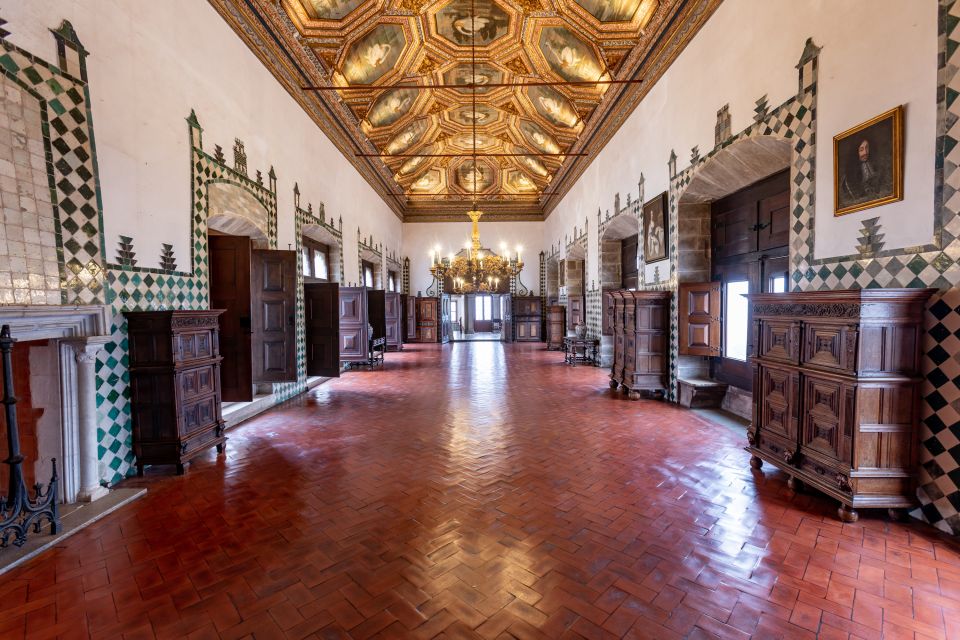
- Manueline + Mudejar details (including glazed tilework and shaped arches) are the visual star.
- Free audio guide in several languages keeps it self-paced and easy to follow.
- Courtyard water features add a calm rhythm as you move through the rooms.
- Expect lots of stairs and walking inside and around the hill town.
Why the National Palace of Sintra feels different from the bigger royal sites
Sintra can feel like a choose-your-own-adventure: castles, palaces, gardens, viewpoints, and tour buses all competing for your attention. The National Palace is a smarter first stop if you want something you can actually finish in a few hours. It’s not trying to be the biggest showpiece in town. It’s trying to be a lived-in royal home—over centuries.
What makes it especially worth your time is the way the building layers its story. It began as a Moorish castle after the 8th-century Umayyad conquest of Hispania. Later, the first king of Portugal expanded it in 1147. You don’t just read that on a plaque—you see it in the shape of spaces, the way courtyards work, and how later styles were grafted onto older structures.
And then there are the decorative details. If you love Portuguese tilework, you’ll keep noticing variations as you walk. If you care about architecture, you’ll spot the mix of Manueline and Mudejar influences in windows and interior features.
Skip-the-line ticket and timing: how to avoid wasting your day

This is a skip-the-line entry ticket, which is the whole point in a place that often has queues. The big value is not just speed; it’s control. You choose your pace once you’re inside.
A practical note: Sintra’s crowds swing hard by season and time of day. One visitor experience I’d use as a guide is that arriving in the afternoon on a Saturday still produced a smooth entry for at least some people, with little or no line at the entrance. That doesn’t guarantee your day will be that easy, but it tells you something important: timing can change the feel of the visit.
Plan your schedule around the official hours: 9:30 AM to 6:00 PM, with last admission at 5:30 PM. If you’re going for palace rooms plus gardens, don’t treat 6:00 PM like a suggestion. Build a buffer so you don’t feel rushed at the end.
Also, be aware that the meeting point can vary depending on what option you book. Keep your eyes open when you arrive in the area so you don’t waste time walking back and forth.
Your self-guided route through 1,000 years of palace life
This ticket is built for independent exploration. You enter the historic monument and follow your route using the included audio tools.
Here’s a route that works well in real life, even if you’re not a “follow every room” person:
Start with the big-picture orientation inside the palace. The audio guide helps you connect what you’re seeing—architecture, rooms, courtyards—to the long timeline: Moorish castle origins, then the Portuguese royal expansions. That context matters because the palace can look like a set of beautiful rooms. Without the timeline, it’s harder to feel why things look the way they do.
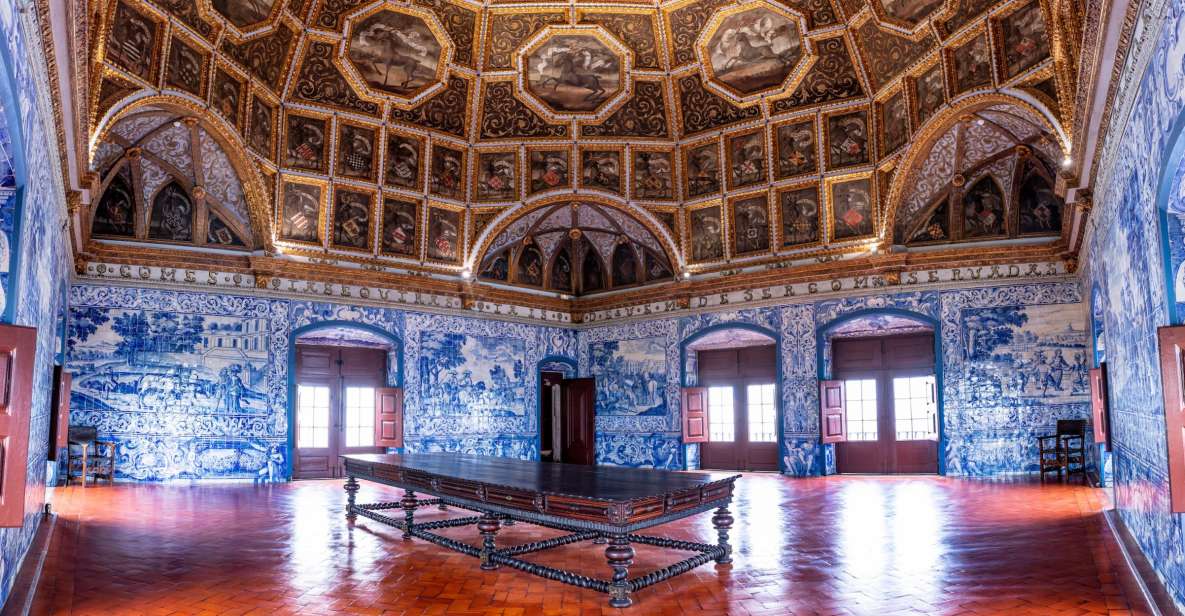
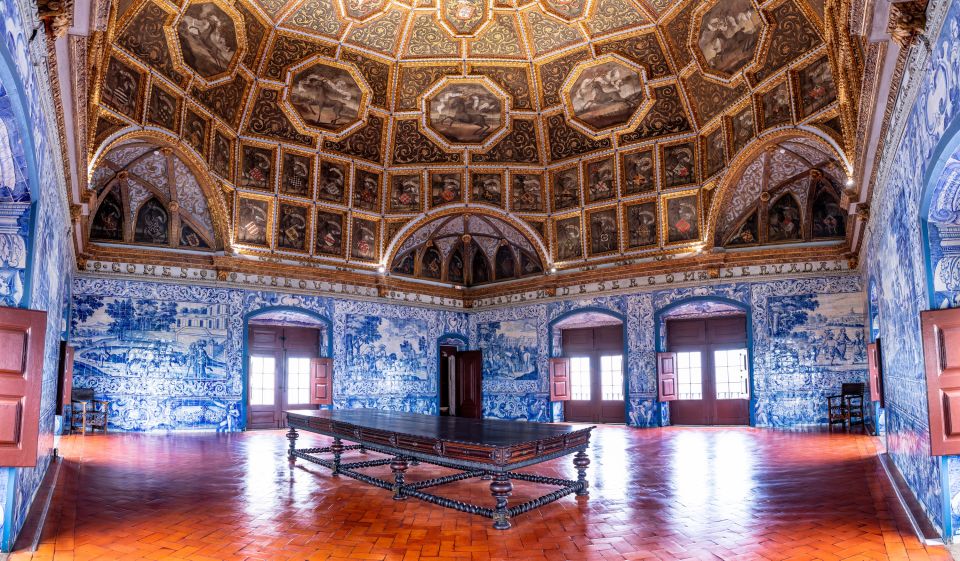
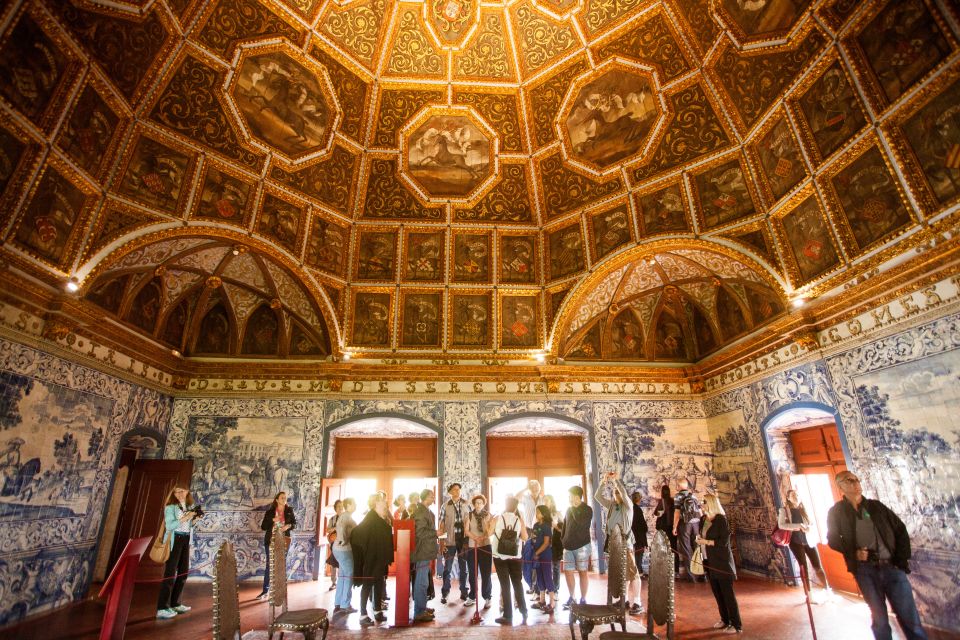
Then shift into rooms where details really pay off. People single out standout moments like the Heraldic Room and the Chapel. You’ll also see plenty of furniture and stair areas that are visually busy in the best way—worth slowing down for, especially if you’re the type who likes to look closely at decorative work.
One review highlight was also how the palace can feel very understandable with the audio, including English support. If you’re traveling with mixed language skills, you’ll appreciate that the audio guide is available across multiple languages rather than locked to one.
One more thing: be ready for staircases and walking. People who tried to do Sintra fast learned quickly that you don’t want to underestimate how physical the visit is.
Moorish-to-Manueline connections you can actually see
It’s easy to visit a palace and feel like you saw decorations. The National Palace of Sintra is different because the building history is visible.
You’ll see how later changes used the existing fortress structure and adapted to the landscape around it. The result is a palace that doesn’t feel like it was designed all at once. It feels like a home that kept evolving—stylistically and politically.
Architectural details you should train your eyes for include:
- windows with surmounted arches
- walls with glazed tilework showing geometric patterns
- indoor layout around courtyards that help light and airflow
These details aren’t just pretty. They explain why the palace feels so distinctive compared with other major sites in Sintra. When you notice the tiles and arches as you move from room to room, the visit becomes a story you’re reading with your feet.
Manueline and Mudejar courtyards, plus water features
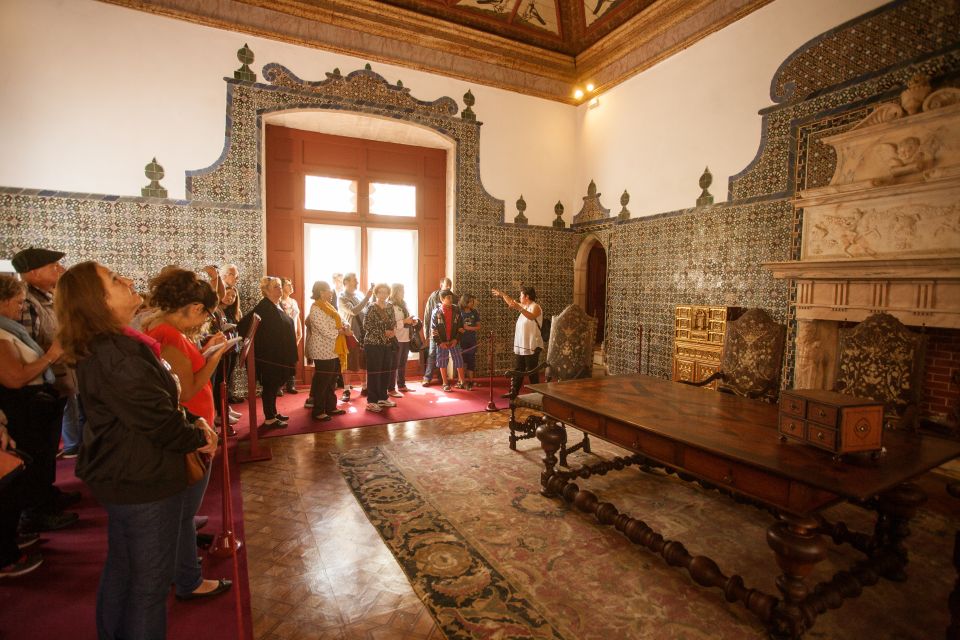
If you like architecture that uses light and water as part of the design, the courtyards are a major reason to pick this ticket.
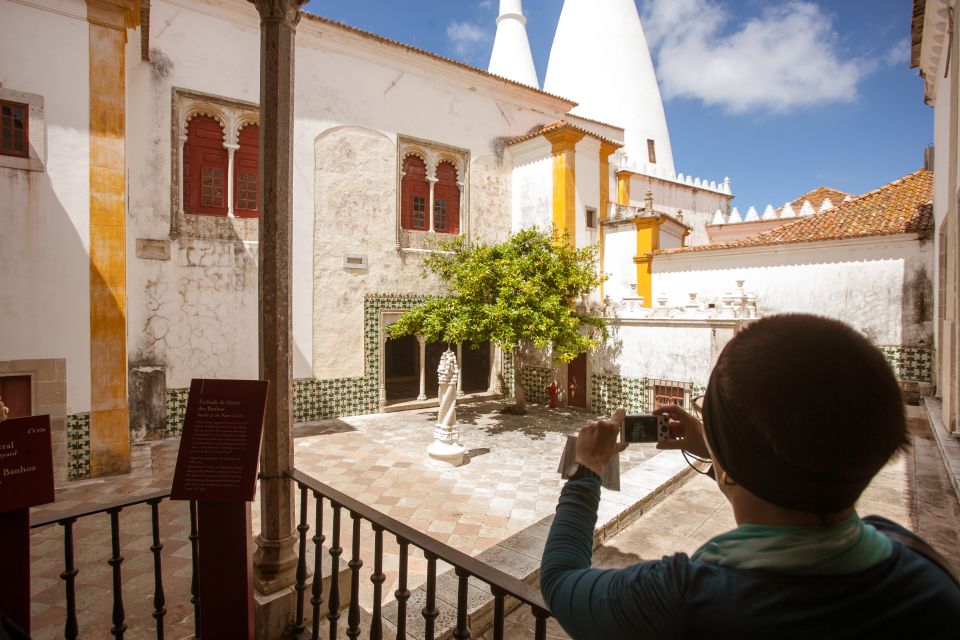
The palace’s courtyards are where Manueline and Mudejar influences become easier to spot. You’ll see windows with shaped arches and tilework that makes the walls feel like layered artwork. And the courtyards include water features, which change the mood of the visit. Even on a busy day, water adds a small pause in the middle of the walking.
One useful strategy: treat courtyards as your reset points. Stop. Look up at the tile patterns and arches. Then decide whether you want to rush to rooms or linger a bit longer.
The audio guide and the new audiovisual portraits
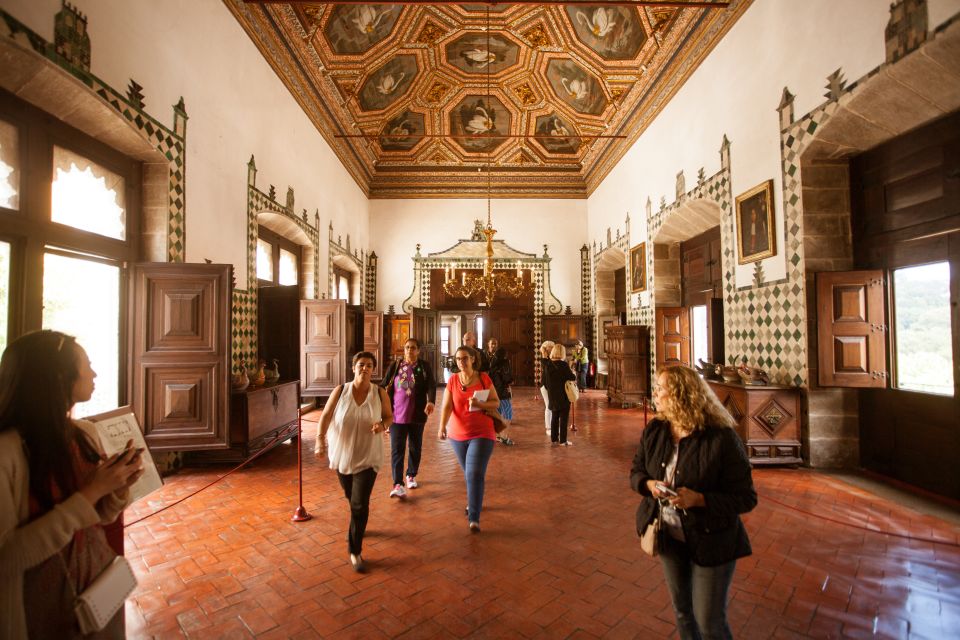
This ticket includes a free audio guide via an app, in Portuguese, English, Spanish, and French. That’s already a big plus for value because it means you’re not stuck with just labels on walls.
What also makes this experience feel more “human” is an added audiovisual journey embedded into the visitor route. It brings to life 14 historical figures, described as ranging from cooks to queens. Short films are woven into your path, which means you get pauses that feel connected to where you are—not a random lecture.
The portraits are voiced by renowned Portuguese actors and are available in Portuguese and English. If you like stories that explain what people did day to day, this style of storytelling can help the palace feel less like a museum and more like a working royal household.
It complements other tools you might encounter, such as audio, virtual tour elements, and a treasure hunt format.
Gardens: worth it, but don’t let them steal your time
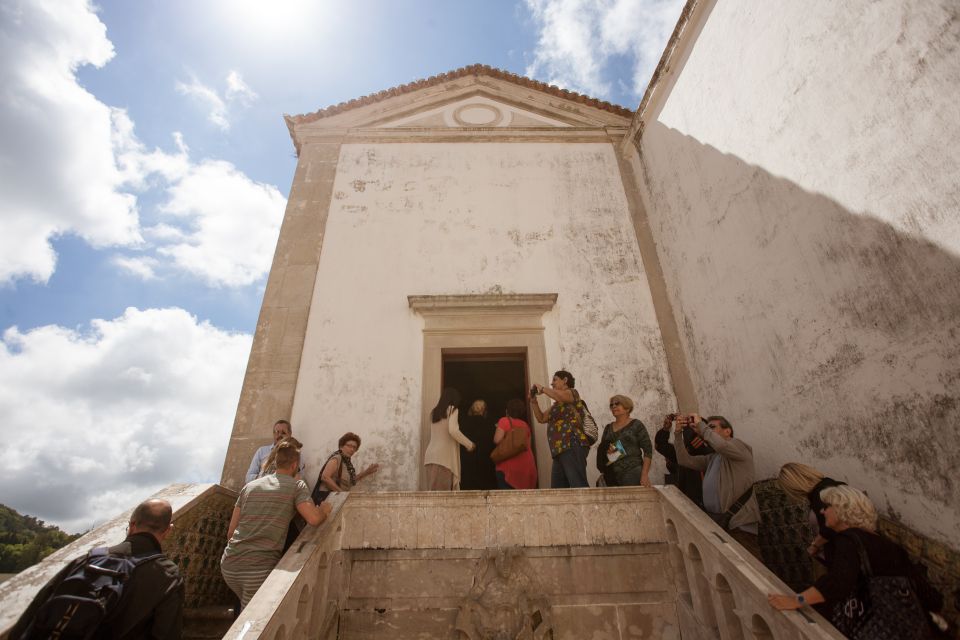
This ticket includes access to the National Palace and gardens, but you’ll want to plan the split.
A common lesson from Sintra visits: it’s easy to spend too much time inside the palace and then find you’re short on garden time. People have also described the gardens as less exciting than the palace itself. That doesn’t mean skip them. It means you should treat gardens as optional time—something you do if you still have energy and light.
Given the official last admission time (and the reality that closing moments can feel tighter than you expect), I’d prioritize the palace rooms and courtyards first. If you still have time, then take a slower loop through the grounds.
If you’re the type who likes photos and a bit of breathing room after indoor viewing, a short garden walk can be a satisfying finish. If your top priority is scenery and gardens, you may find another Sintra stop better fits that wish.
Crowds, stairs, and practical comfort tips
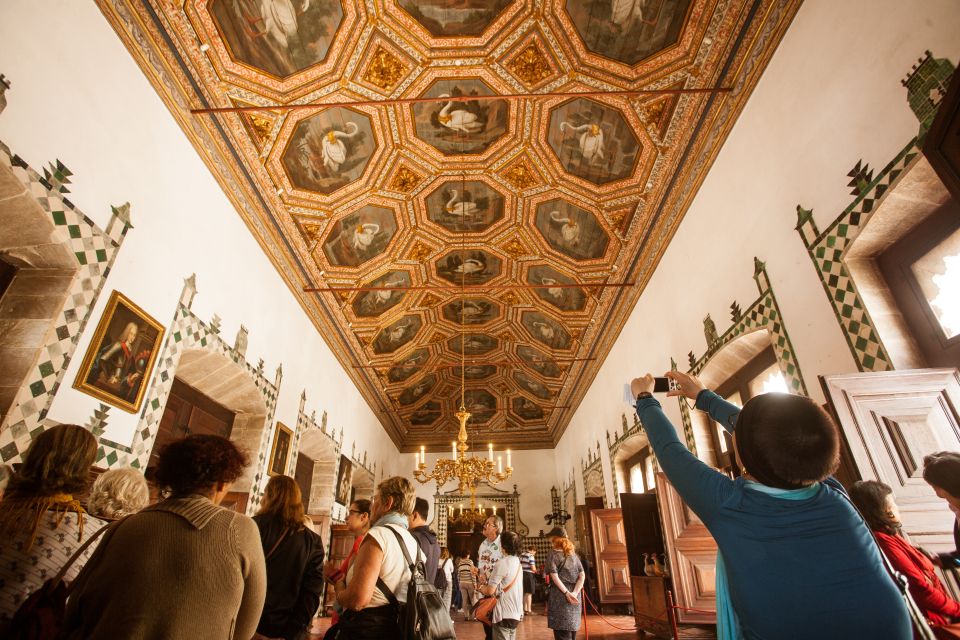
Sintra can go from manageable to packed quickly. Even when queues aren’t long, the space can still feel busy because the palace is a fixed footprint. That means you might sometimes see more tourists than you’d like.
Also, expect stairs. Several people specifically noted that it’s not ideal if you have mobility limitations. The feedback mentions difficulty and the lack of things like hand rails for steps. So if stairs are hard for you, you should think carefully before relying on this palace as your main plan.
A practical trick for crowds: go slow through the most detailed rooms. Don’t try to “finish” the palace. You’ll get more value by taking your time where it’s most visually rewarding, then moving on when other groups converge.
Price and value: is $15 a smart move?
At around $15 per person, this ticket sits in the value lane for Sintra. The main reason isn’t just the price tag. It’s what you get with it:
- Skip-the-line entry, saving time and frustration
- Free audio guide in multiple languages
- A self-paced visit that fits into a day trip without locking you into a full-day tour schedule
There’s another value angle too: this palace can be the right choice if you’re comparing it to other major Sintra sites. Some visitors chose it because it was cheaper than alternatives like Pena Palace, and they still ended up happy—especially with specific rooms like the heraldic and chapel areas.
One caution: if you’re visiting at a time when lines are already short, skip-the-line may feel less dramatic than you expected. But in a place where crowds are the norm, the ability to avoid lines still gives you peace of mind.
Who should book this, and who might want a different Sintra plan
This ticket is a strong match if you:
- want a high-impact Sintra highlight without a full-day tour machine
- love tilework, shaped arches, and architectural details
- prefer self-guided pacing with an audio guide
- like story-driven visits where the palace feels connected to real people
It may be less ideal if you:
- want a live guided tour as part of the package (a guided tour is not included here)
- care most about gardens over the palace interior
- struggle with lots of stairs and older building layouts
If you only have a short window—like a few hours—you’ll likely feel more satisfied focusing on the National Palace and not trying to force too many Sintra stops into one day.
Should you book the Sintra National Palace Skip-the-Line Ticket?
I’d book it if you want the best kind of Sintra bargain: an easier visit that still delivers major architecture. The palace’s design mix (Moorish roots through later Portuguese styles), the tilework, and the courtyards with water features give you plenty to see without needing a giant time commitment.
Book it confidently if you like self-paced touring with a strong audio guide. Skip it only if you know you need a guided tour, or if stairs and walking are a serious issue for you. If you’re planning your first trip to Sintra, this is often the smart anchor stop—then you can build the rest of your day around your energy.
FAQ
What time does the National Palace of Sintra open?
The National Palace of Sintra is open from 9:30 AM to 6:00 PM, with last admission at 5:30 PM.
How long should I plan for this visit?
The ticket is valid for 1 day. Many people find the palace can be covered in about an hour and a bit, but you may want more time depending on how slowly you explore.
Does this ticket include skip-the-line entry?
Yes. The ticket is specifically described as skip-the-line entry.
Is there an audio guide included, and what languages are available?
Yes, a free audio guide is included via an app. Languages listed are Portuguese, English, Spanish, and French.
Is a guided tour included with this ticket?
No. A guided tour is not included.
Is the audiovisual journey included?
The experience description includes an innovative audiovisual journey with short films featuring 14 historical figures embedded in the visitor route, with Portuguese and English availability.
What’s included in the ticket?
Included items are the entry ticket to the National Palace of Sintra and the free audio guide via app.
What’s not included?
Food and drinks and transportation are not included.
Is this ticket refundable?
No. The activity is non-refundable.
How do I find the meeting point?
The meeting point may vary depending on the option you booked, so you’ll need to check the specific option details you select.
If you tell me your travel month and whether you’re doing Pena or the Moorish Castle too, I can suggest a simple day plan that avoids rushing.