REVIEW · CARCAVELOS
Lisbon Surf Class
Book on GetYourGuide →Operated by Hurley Carcavelos powered by Cascais Waveriders · Bookable on GetYourGuide
Carcavelos surf is close, real, and taught fast. This Lisbon Surf Class pairs a short beach walk with warm-ups, land drills, and then real instruction in the waves off Carcavelos Beach.
I love how the team keeps it personalised to your size and your level, from beginner basics to sharper tips if you already surf. And the vibe is big-time positive: instructors like Marco, Alain (great with kids), and Adrien are known for being calm, funny, and very focused on fixing what you are doing wrong, not just saying what to do.
One small consideration: you’ll carry your board about 5 minutes each way between the school and the beach, which can feel like a warm-up you did not plan on.
In This Review
- Key points before you paddle out
- Getting to Carcavelos and getting geared up the right way
- Warm-up and land drills: the short practice that pays off in waves
- The hour in the water: coaching that fixes real mistakes
- Beginner to advanced: how the class adapts without making it feel complicated
- After the waves: shower, de-wetsuiting, Hurley surf shop, and where to eat
- Price and value: what you actually get for $50 per person
- Languages and group style: you can expect clear coaching
- Practical tips so your lesson feels easy (not messy)
- Who should book this surf class
- Should you book Lisbon Surf Class?
- FAQ
- How long is the Lisbon Surf Class?
- Where does the class take place?
- What is included in the price?
- Do I need to bring my own surfboard or wetsuit?
- What languages are available for instruction?
- Is this class only for beginners?
- How much time will I spend in the water?
- Is there an option for private groups?
Key points before you paddle out
- Carcavelos Beach is the main stage, with quick access from the surf school area
- Warm-up plus land technique happens before you hit the water (roughly 10–20 minutes total)
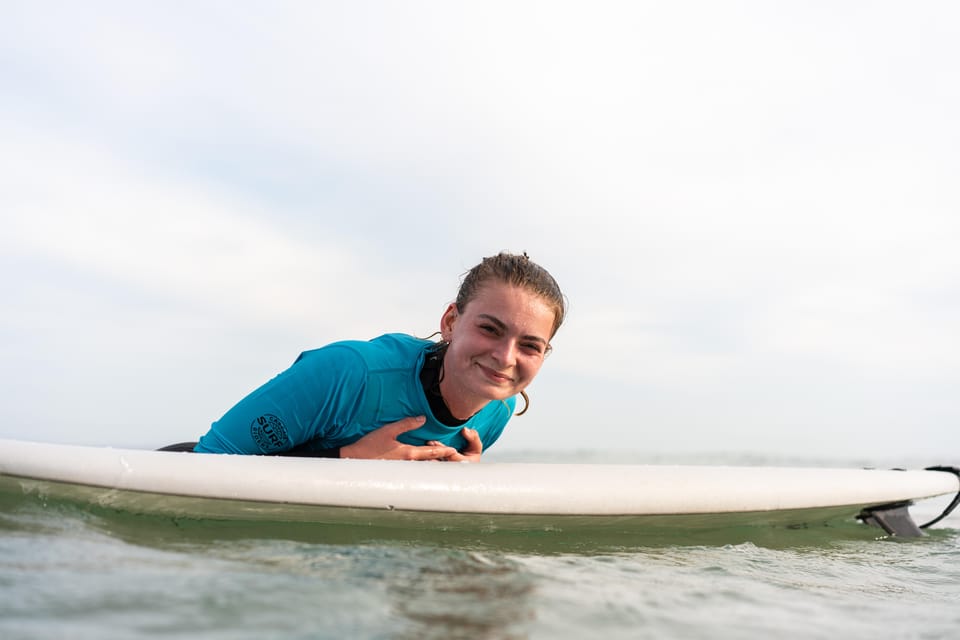
- About 1 hour in the water means real wave time, not just standing around
- Gear is included and fitted: wetsuit, board or bodyboard, leash, fins, and sun protection
- Instructors teach to errors you make, with patient, encouraging coaching
- Private group options are available, which is ideal if you want more attention
Getting to Carcavelos and getting geared up the right way
The class is based in the Lisbon District, with the actual surf time at Carcavelos. You start at the surf school venue in Carcavelos where you meet your instructor and get oriented right away.
A big part of why this works well is the way the equipment setup is handled. You get gear adapted to your size and level, so you are not trying to wrestle a board that is wrong for you. That matters. Wrong gear turns early surf practice into frustration. Correct gear turns it into learning.
After the staff welcome you and show you the school, you’ll dress for the water in the changing room. The school provides facilities like a WC, changing area, and shower, and they help you keep your belongings safe. Then, when everyone is ready, you head to Carcavelos Beach. The walk is about 5 minutes on foot, which keeps logistics simple and keeps you close to the action.
What to expect from the staff? Based on how the coaching shows up with instructors like Marco, Alain, and Adrien, you can expect humor and patience mixed together. The goal is to make you comfortable fast, then give you clear cues so you can try, fail, and improve without feeling embarrassed.
You can also read our reviews of more tours and experiences in Carcavelos
Warm-up and land drills: the short practice that pays off in waves
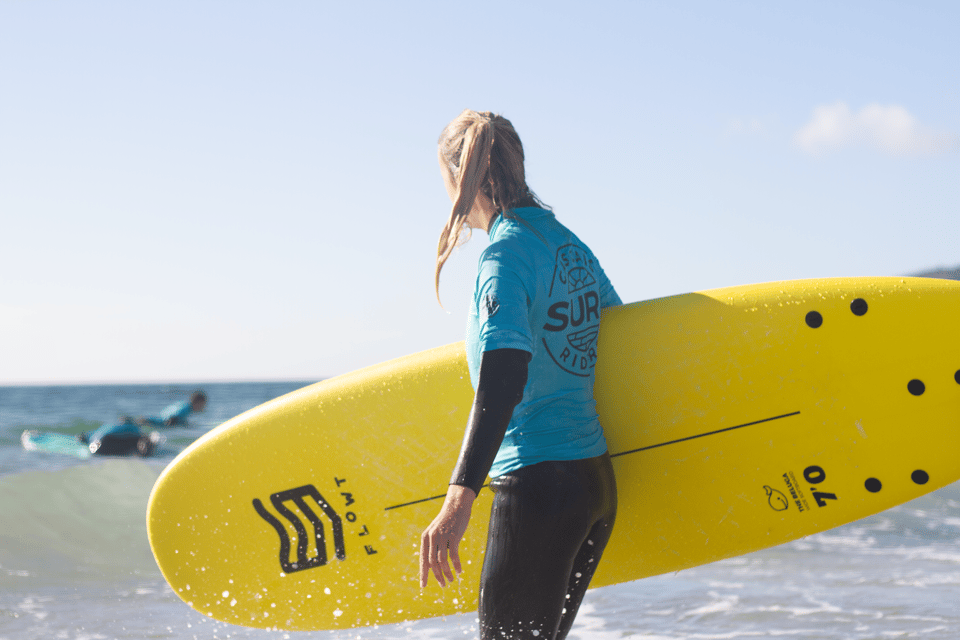
Before you get fully wet, you do a two-part warm-up and technique session.
First is a warm-up on the shore for roughly 5 to 10 minutes. It is not a gym workout; it is the kind of warm-up that gets your body ready for paddling, balancing, and the first time you feel water against the wetsuit.
Then you move to technical training outside the water for another roughly 5 to 10 minutes. This is where you learn the basics that usually get skipped in casual surf attempts. You’ll get coached on things like how to position yourself on the board, how to think about timing, and what to focus on before you commit to trying for a stand.
Here is why this step is valuable: it compresses the learning curve. If you figure out the technique basics on land, your first minutes in the water can turn into actual wave attempts, rather than guessing.
One practical note: even though the land portion is short, you’ll do better if you pay attention and ask questions. If you are a beginner, that’s the moment you want to ask how to handle the leash, where your body should be, and what success looks like for your current level.
The hour in the water: coaching that fixes real mistakes
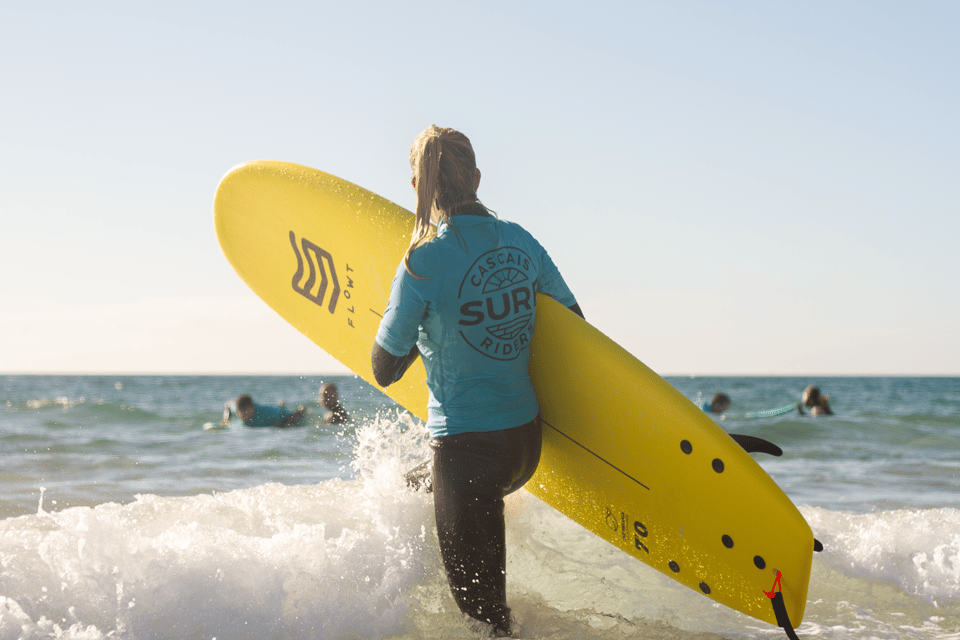
The most important part is what comes after you change and walk to the beach: you get in the water with an instructor and the fun starts.
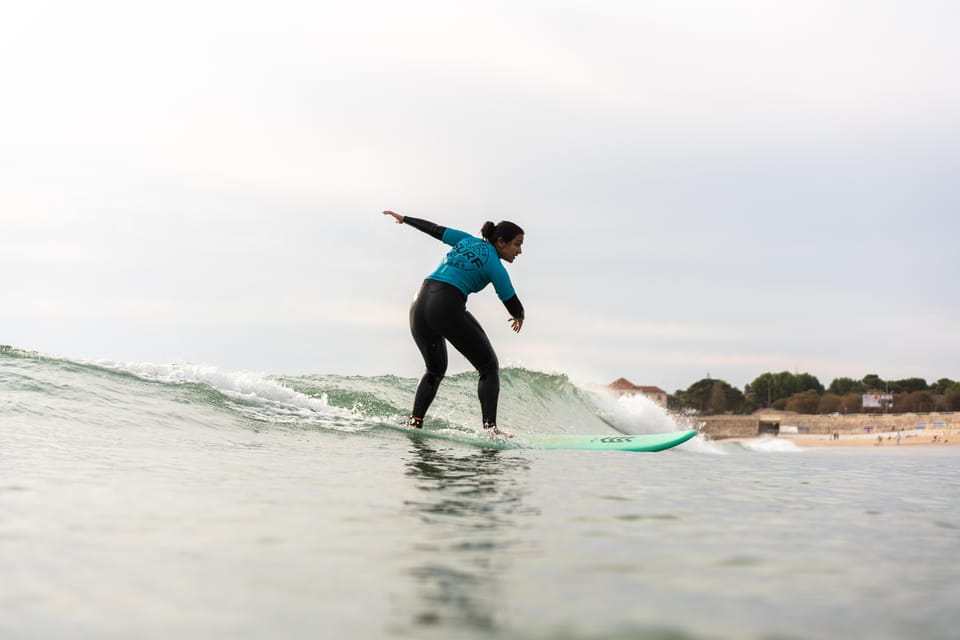
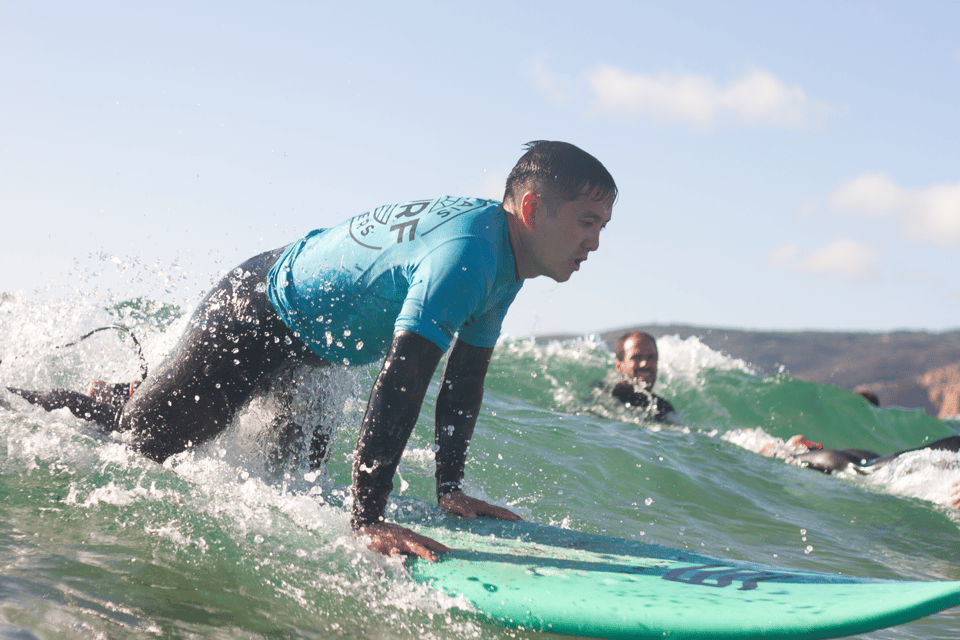
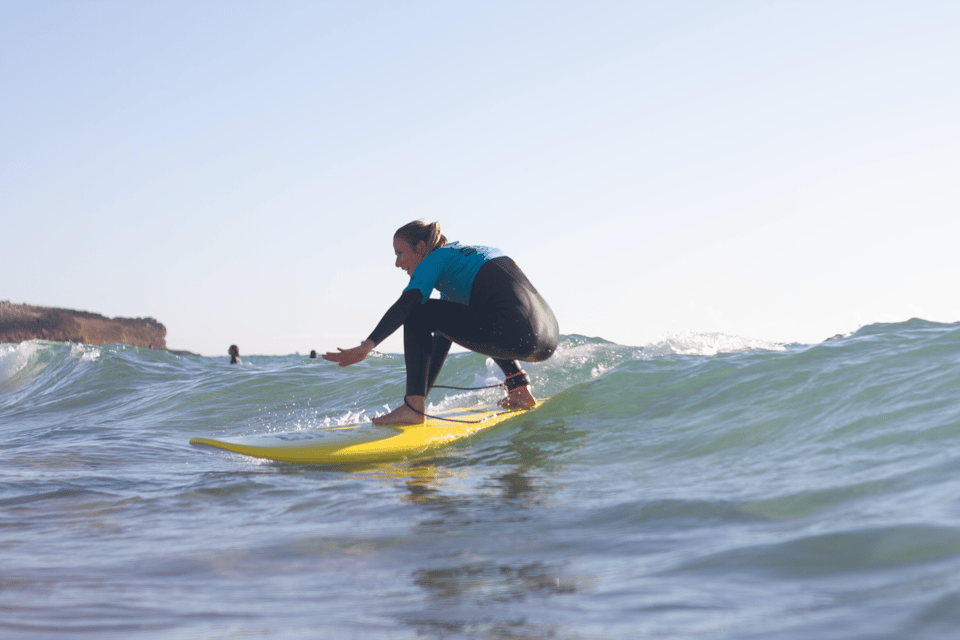
The in-water instruction lasts about 1 hour. That hour is built for wave time. You’ll work on catching waves, you’ll get cues to help you stand (hopefully), and you’ll get feedback in real time.
You might be surprised how much you can improve with consistent micro-corrections. In this class, coaching is aimed at the mistakes you make, not the mistakes you might make. For instance, Marco’s style is described as spotting errors quickly and pointing them out in a way that still feels supportive. That is exactly what you want when you are new: you want corrections you can apply immediately.
If you already have surf experience, you are not stuck repeating the same beginner steps. The format is designed to adapt to your level. That can mean more advanced tips on technique and timing, or more focused practice on the specific things you are trying to improve.
Either way, the structure stays the same:
- You warm up and do land technique first
- Then you go into the water with coaching
- Then you focus on actually catching waves and trying to ride
And yes, you should expect to catch lots of waves. If you are wondering whether two hours is long enough for a surf lesson, the honest answer is that it works because so much time is directed toward doing the activity itself.
Beginner to advanced: how the class adapts without making it feel complicated
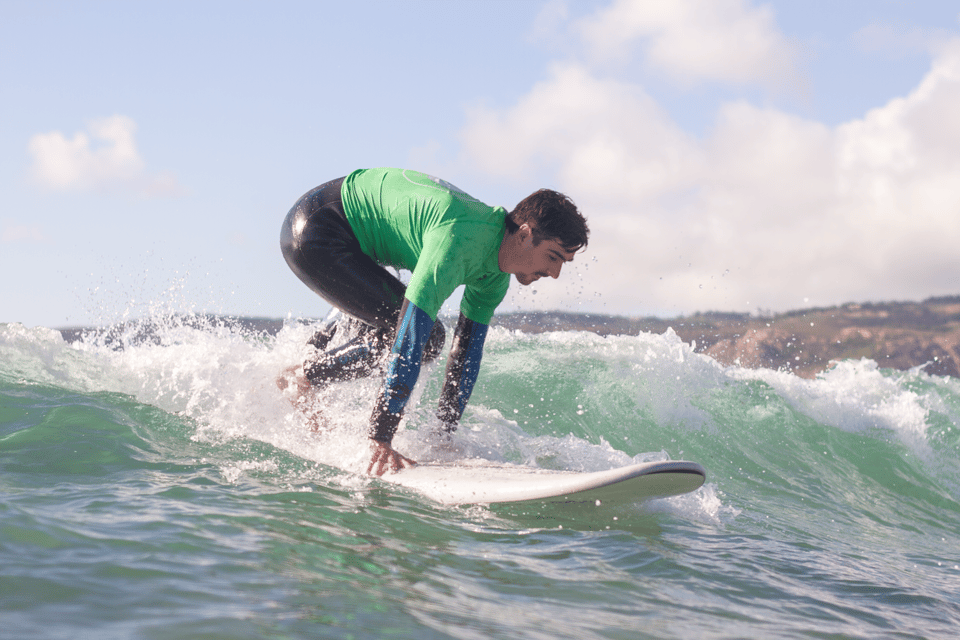
This is a surf class built for beginners and also suitable for more experienced surfers. The key is that equipment is adapted to your level, and instruction is adjusted while you are in the water.
If you are a first-timer, focus on the essentials:
- Listen to the land instruction and repeat it in your head once you’re floating
- Keep your expectations realistic for early attempts
- Use coaching cues immediately rather than thinking about them later
The class is also family-friendly in the sense that it is designed to be patient and encouraging. Alain, who coached kids around ages 7 and 9, is described as attentive and wonderful with children. That tells you a lot about the teaching tone: clear, kind, and paced for the students in front of them.
If you are more advanced, you’ll likely appreciate how the instructor can refine what you already know. Even experienced surfers tend to struggle with the same categories of issues, like takeoff timing, positioning, and balancing as you approach the wave. Because the class is adapted to your level, you should feel that the coaching is targeted rather than generic.
After the waves: shower, de-wetsuiting, Hurley surf shop, and where to eat
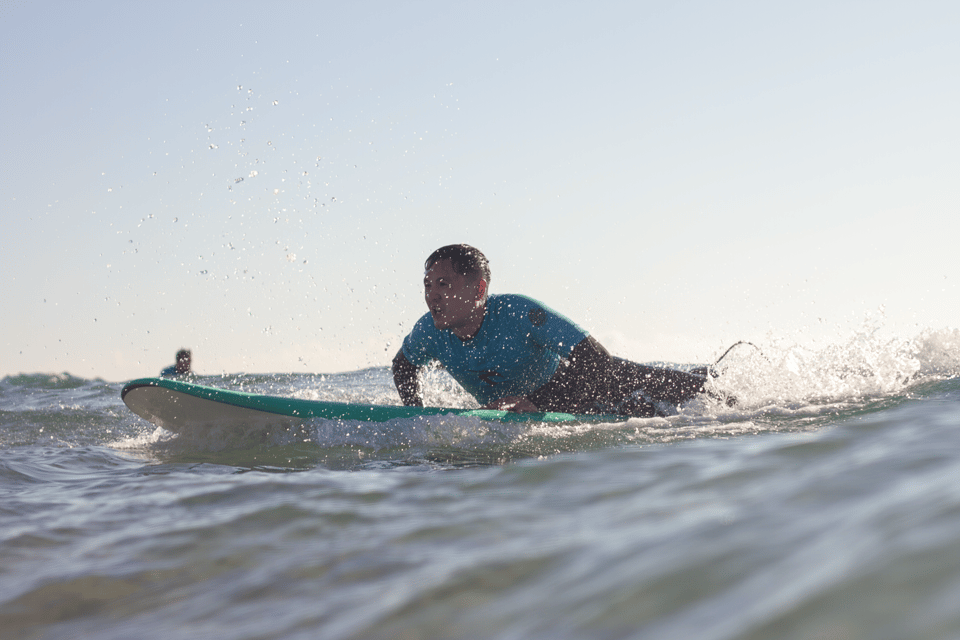
Once your in-water session ends, you head back to the surf school area. You’ll shower, take off your wetsuit, and use the facilities provided. That post-surf routine is not just comfort. It helps you finish the experience feeling human, not stiff and salty.
Then you can chill at the space. There is also a Hurley surf shop on site where you can browse and potentially buy surf equipment, surf and street wear, or even grab a small souvenir. That is handy if you decide mid-day that you want to keep surfing when you get home.
And because surfing uses a lot of energy, you’ll likely be hungry right after. The area offers plenty of options, including restaurants around the location and the famous Brazilian Açai. If you are planning a meal afterward, give yourself time to cool down, shower, and then eat. It makes the whole day feel like a proper outing instead of a rushed scramble.
Price and value: what you actually get for $50 per person
At $50 per person for a total duration of 2 hours, this class competes well because a lot of the cost you might expect to pay separately is already handled.
Included items cover the stuff that determines whether your lesson goes smoothly:
- Premium surf equipment
- Wetsuit
- SurfBoard or bodyboard
- Leash and fins
- Sun protection
- Towel
- Shower, WC, and changing room access
- Surf instruction
- Insurance
So you are not just paying for someone to yell from the shore. You’re paying for the full setup and the teaching, with protection included. That makes the lesson feel more like an organized experience and less like a rental with a quick demo.
The value also comes from time allocation. You get short warm-ups, then technical work on land, and then about 1 hour in the water. That ratio matters. Two hours can feel short for some tours, but for surfing, it is a good match because the learning is hands-on and the best improvements happen while you are actually trying.
Languages and group style: you can expect clear coaching
The instructor can teach in Portuguese, English, French, and Spanish, which is a big help if you want to understand cues without guessing. Clear instruction makes a noticeable difference when you are learning surf basics, and it also makes advanced tips more useful.
Group format is another plus. There is private group availability, which is ideal if:
- you want more one-on-one attention
- you’re traveling with kids and prefer a calmer, smaller setting
- you’d like coaching tailored more tightly to your pace
If you’re a solo traveler, a group lesson can also be a great value because you still get instruction and equipment, and you’re likely to feel encouraged by the shared attempt-and-improve rhythm.
Practical tips so your lesson feels easy (not messy)
A surf lesson is one part sport and one part logistics. Here’s how to set yourself up to enjoy the waves.
- Wear something you can change out of quickly. You’ll use the changing room and dress for the wetsuit there.
- Pay attention during the land drills. That short section is built to set you up for success once you’re paddling and catching waves.
- Plan to walk with the board. The class involves about 5 minutes each way carrying your board to the beach and back. If you have strong shoulders, great. If you do not, just treat it like a warm-up.
- Bring an appetite afterward. You’ll burn energy, so plan food nearby, including restaurants or açai.
Also, note the activity has clear on-site rules. Things like no sharp objects, no alcohol or drugs, and no smoking indoors are part of keeping the experience safe and pleasant. If you follow the rules, the day stays smooth.
Who should book this surf class
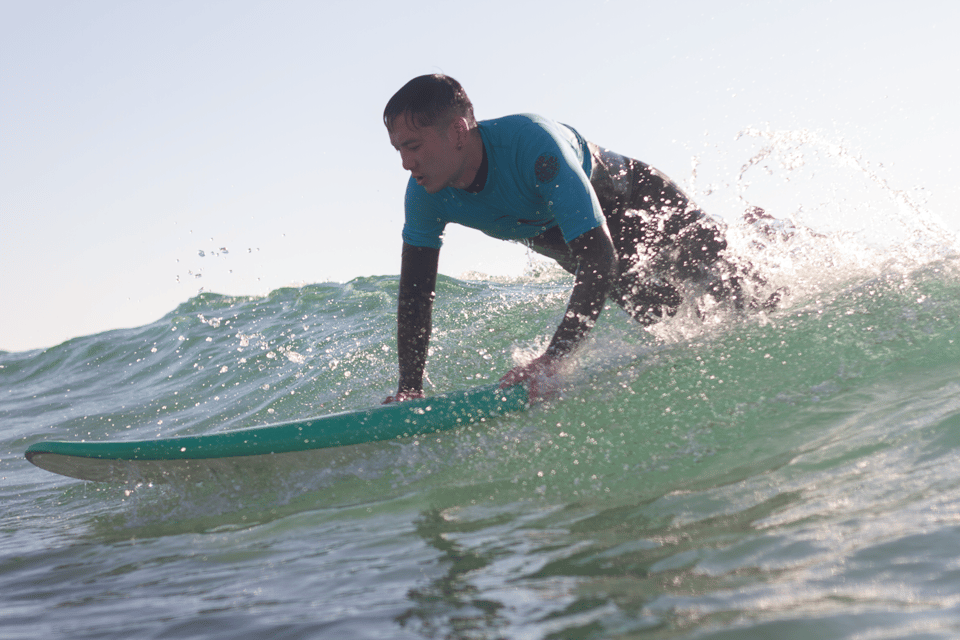
You’ll probably love Lisbon Surf Class if you want:
- a real surf experience in Carcavelos with real instruction
- a beginner-friendly start that still gives you a shot at standing on the board
- coaching that is patient and uses clear feedback
- included gear and facilities, so you can focus on learning
It’s also a strong pick for families, since the instruction style described with Alain seems tuned to kids without treating them like an afterthought.
This may not be your best match if:
- you dislike carrying equipment (the board walk is part of the plan)
- you expect a long, multi-hour surf trip with lots of downtime between sessions
Otherwise, $50 for two hours with wetsuit, board gear, insurance, and about an hour in the water is a sensible, hands-on way to try surfing in Lisbon.
Should you book Lisbon Surf Class?
Yes, I’d book it if your goal is simple: get on the water fast, learn the basics clearly, and get plenty of attempts. The class is built around practical coaching and adapted equipment, and the teaching style from instructors like Marco, Adrien, and Alain signals that you’ll get help when you need it.
If you are deciding between making this a once-in-a-while trip or a first step toward surf in Portugal, this is the kind of lesson that can flip the switch because you’re not stuck in theory. You’re in the water, with instruction, for about an hour.
FAQ
How long is the Lisbon Surf Class?
The class lasts 2 hours.
Where does the class take place?
It’s centered around Carcavelos Beach in the Lisbon District, with the surf school venue in Carcavelos and a short walk to the beach.
What is included in the price?
Premium surf equipment is included, plus a wetsuit, surfboard or bodyboard, leash, fins, sun protection, and a towel. You also get surf instruction, insurance, and use of facilities like shower, WC, and changing rooms.
Do I need to bring my own surfboard or wetsuit?
No. The surfboard or bodyboard, wetsuit, leash, fins, and other gear are provided.
What languages are available for instruction?
Instruction is available in Portuguese, English, French, and Spanish.
Is this class only for beginners?
It works for beginners and also adapts for more experienced surfers.
How much time will I spend in the water?
You’ll spend about 1 hour in the water with the instructor, after warm-up and land-based technical training.
Is there an option for private groups?
Yes, private group options are available.